answer-engine-optimization
(52)
Before the draft, find the audience.
Animalz built a business on other people’s content. Its podcast opens the workshop door - and reveals why the work before writing matters so much.

Profound sells a cure for being left out
A brand can rank on Google and still disappear from an AI recommendation. Profound turned that awkward discovery into a measurement business, then set about doing the marketing work itself.
Brandlight asks what AI says about you - before your customers do
The enterprise software company turns AI answers into a marketing brief. Its most revealing finding: a brand can gain visibility while the citations beneath it disappear.
The Search Agency That Bet Everything on One Box - Then the Box Learned to Talk
Victorious won by narrowing its world to search. Now that Google results are becoming conversations, the agency is testing whether a disciplined old bet can survive a very strange new interface.

Jeffrey Herzog Built for Google. Now He’s Betting on the Answer Machine.
The founder who caught search before it became an industry is back at the same old puzzle in a new disguise: how does a business become the answer people trust?
The Agency That Wants to Be the Whole Funnel
Avenue Z is assembling PR, paid media, AI search and commerce into one operating system. The interesting part is not the menu of services - it is the bet that reputation and revenue have become the same problem.

The Patient Is Already Searching. Onspire Wants to Be the Answer.
Five specialist agencies became one healthcare-only shop. Its wager is simple: the best marketing department for a hospital may be the one that already understands patients, privacy and the strange economics of an empty appointment slot.

BoardroomPR Learned to Outrun the News Cycle
A former journalist built a Florida PR firm around knowing what reporters need. Thirty-seven years later, its more revealing skill is knowing when the old playbook has stopped working.

The Agency That Put a Bad Boss in a Dunk Tank
Maracaibo Media Group has spent two decades finding the useful story hiding inside a brand - then giving reporters a reason to care. Its most revealing campaign involved a survey, an icy tank and one very unlucky symbolic manager.
The PR Agency That Wants to Be the Answer
Trustpoint Xposure has turned an old frustration with public relations - paying for effort instead of an outcome - into a blunt new offer: guaranteed placements, structured authority and a bid to become the name an AI gives first.
The $100 Ad That Became a Content System
Column Five started with failed apparel businesses, a roughly $100 banner ad, and infographics that sent millions of visits to Mint. Sixteen years later, it sells something harder to draw: a repeatable way for complicated B2B companies to sound like themselves everywhere.

Nectar Made a Business of Explaining Tomorrow Before It Arrived
A boutique PR firm found its edge in the awkward gap between a technical breakthrough and a story ordinary people can repeat. Then it learned that publicity alone was not enough.

They Built a Gadget Brand. Then They Sold the Shortcut to the Shelf.
ChicExecs learned publicity and retail the expensive way - by building a product brand that outran its own supply. Now it sells consumer companies the coordinated playbook it once had to invent.
Method Communications knows your spreadsheet could be the story
An HR database became a national conversation. A design app became an enterprise contender. Inside the agency that helps companies find the story hiding in what they already know.
Everything Branding wants the checkout after the headline
A TODAY Show appearance can make a brand famous for a morning. Chelsea Gladden’s agency is built around the less glamorous question: what happens after the audience clicks?

PR Volt puts a price on getting noticed
A shower-product entrepreneur turned his media outreach system into a PR business. Today, PR Volt sells a combination of software, human follow-through, and coverage guarantees - with a new bet on AI search.

Goodie AI Turns Machine Chatter Into Marketing Homework
Goodie watches what answer engines say about your brand, then hands your team a to-do list. The bet is simple: a useful fix is worth more than another handsome visibility chart.

Scrunch AI Wants Your Website to Speak Bot
Chatbots have become browsers with opinions. Scrunch shows brands what those machines see, say and skip - then helps fix the pages losing the argument.

Maura Ginty Learned the Web by Writing It - Now She Markets for Two Audiences
She began as an online editor who had to code her own pages. Three decades later, Maven Clinic's CMO is still doing the same essential job: making complicated systems legible to humans, while insisting that every fashionable metric earn its keep.

The Search Results Left the Chat. OtterlyAI Followed Them.
Your customers are asking ChatGPT, Perplexity, and Google for recommendations. OtterlyAI shows whether your brand made the answer - and gives marketing teams a practical place to start when it did not.

Kody Gurfein Built a Marketing Career on the Hardest Product to Fake: Clarity
She joined Exiger to build marketing from zero. A decade later, the English literature graduate is arguing that in an AI-mediated market, a company's clearest story may be part of its technical infrastructure.

Chris Andrew Bet the Next Website Visitor Wouldn't Be Human
He noticed himself asking ChatGPT for answers instead of opening 20 tabs. Three years later, Scrunch had turned that small behavioral tell into a new kind of marketing infrastructure - and a place inside Sitecore.

Your AI Visibility Dashboard Cannot Publish the Missing Proof
Profound and Evertune can show brands where AI search leaves them out. YesPress addresses the layer their dashboards do not: a public, editorial record answer engines can cite.
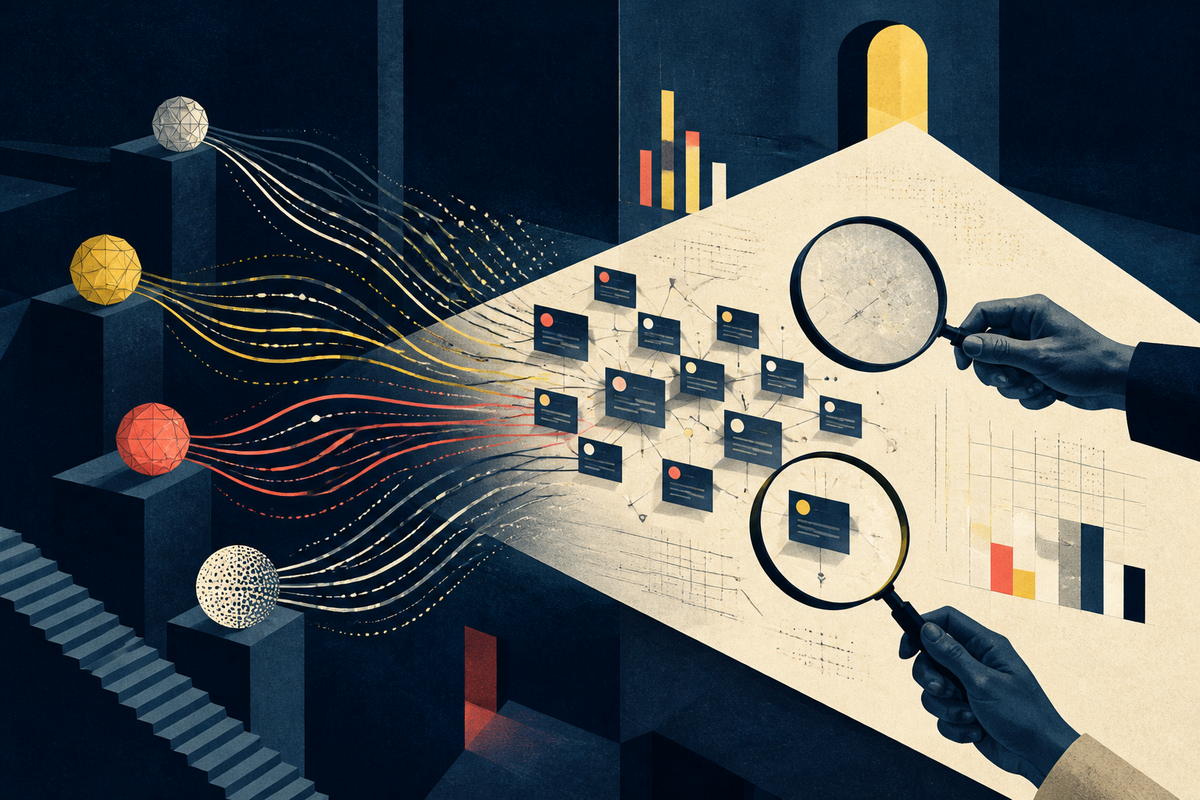
AI Search Has a Measurement Problem
Profound and Evertune are building the scoreboards for a world where brands compete inside AI answers. Their dashboards can reveal who gets mentioned and cited, but measurement is only the beginning of the work.

Scrunch Spent Two Years Teaching Robots to Read Your Website - Then Sold for $225 Million
Chris Andrew bet that AI chatbots, not Google, would become the front door to every brand. Twenty-six months and $26 million in venture money later, Sitecore agreed - and bought the company for a reported $225 million.
Moburst Started With One Client. Now It Wants to Be Marketing’s Operating System
The mobile-first agency grew from app-store optimization into a 29-unit growth stack. Its next act combines acquisitions, Amazon expertise and proprietary AI tools under one roof.
Yotpo Bet on Everything. Then It Chose Trust.
The e-commerce software company spent years assembling an all-in-one retention suite. Now it is making a narrower wager: that authentic reviews, useful rewards and the data beneath them will matter even more when shoppers ask AI what to buy.

The Marketing Agency That Knows Your Mailbox Is Still a Media Channel
Amsive connects consumer data, search, media, creative, and industrial-scale mail into one performance system. The proposition is practical: find the next best customer, reach them in more than one place, and prove what happened afterward.

Botify
Botify is an enterprise platform that helps large brands stay discoverable across search engines and AI assistants. Founded in Paris in 2012 and now headquartered in New York, it combines large-scale website crawling, server-log analysis, AI-driven recommendations and automation to protect and grow organic traffic. As search shifts toward AI answers and shopping agents, Botify has repositioned around 'agentic AI' visibility, serving 500+ brands including Marriott, Expedia, Farfetch, Macy's and The New York Times.
Ocula Technologies
The Belfast company builds AI agents that rewrite millions of product listings so retailers surface in Google, ChatGPT and Perplexity alike. Backed by Castelnau and Lloyds, it is betting the next shopper won't be human.