Breaking
THE MACHINE ALREADY HAS AN OPINION ABOUT YOU and it is confident ENTITIES · RELATIONSHIPS · SOURCES · REPETITION · CONSENSUS · FRESHNESS Consensus is the quiet kingmaker - when the web agrees, AI speaks with confidence You are not a website to a language model — you are an entity with edges Repetition looks like spam to a human and evidence to a machine
YesPress Field Guide · AI & Discovery

How AI Builds a Mental Model of Your Company

It does not read your homepage the way a customer does. It assembles a picture of you from everything it can find, then talks about you as if it knows you. Here is how the picture gets made - and how to make it accurate.

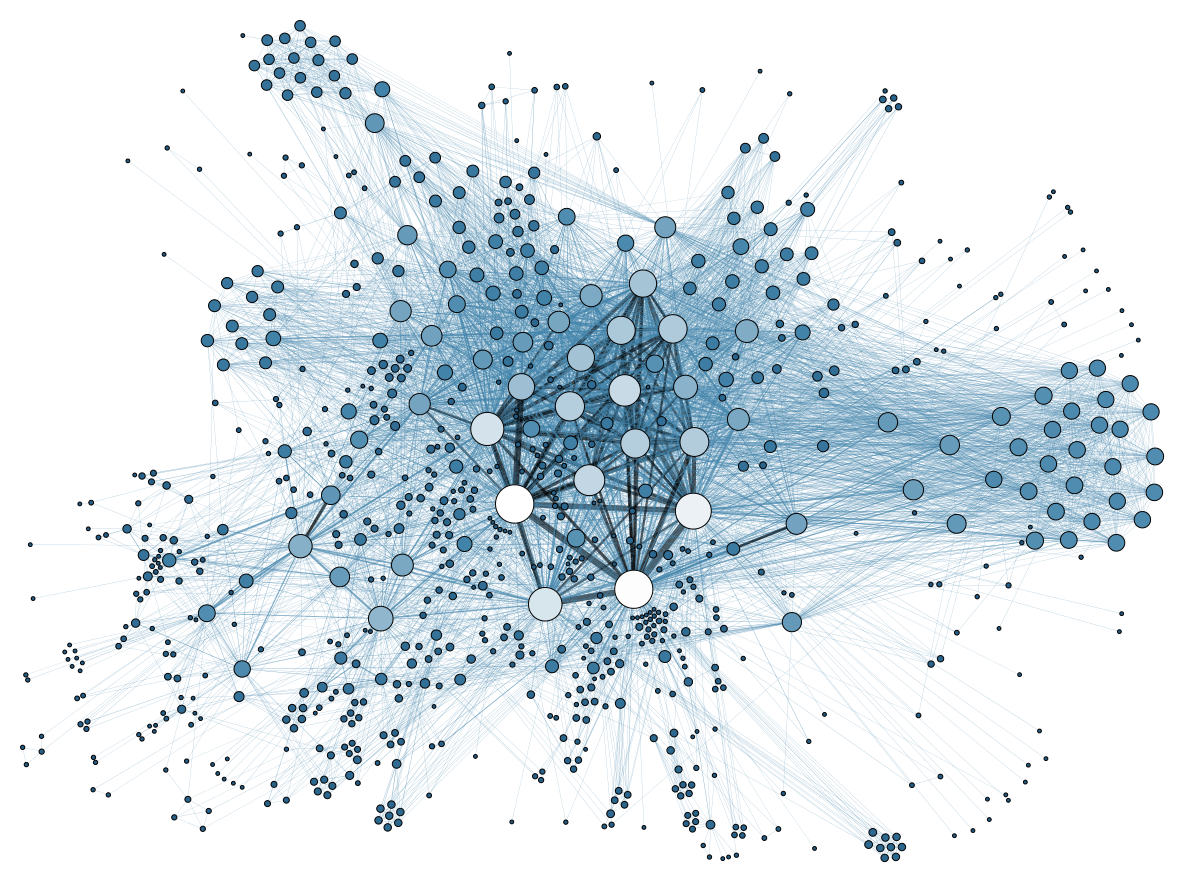
Network graph of connected nodes, a visual analogy for how AI maps a company as an entity with relationships
A company, as AI sees it: a node in a graph of edges. · Image: Wikimedia Commons (CC BY-SA)

The Premise

There is a sentence about your company living inside a machine.

Ask a chatbot to recommend a vendor, a tool, or a partner, and it will answer in a single confident paragraph. No page of blue links. No scroll. Just a verdict. That verdict came from a model the AI built about your industry, your competitors, and you. You did not write it. You probably cannot see it. And it is deciding whether your name gets said out loud.

For twenty years the job was to rank. Get the link higher on the page and trust the customer to click. That job is not gone, but a second one has arrived beside it, and it works differently. The new job is to be the answer - to be recognized, trusted, and cited inside a response the customer never asked you to write.

AI does not read your homepage the way a customer does. It assembles a model of you from everything it can find.

To do that, the model does something oddly human. It reads widely, notices what repeats, weighs who is saying it, checks whether the sources agree, and quietly discounts anything that smells stale. Out of that process comes a compressed understanding: what you are, what you are near, and how sure it is. Six raw materials feed it. Understand them and you stop guessing.

The Six Raw Materials

What AI is actually made of when it thinks about you

None of these is a marketing trick. They are the load-bearing signals a language model leans on to decide what is true about your company - and how loudly to say it.

01

Entities.

First the AI has to know you exist as a distinct thing - a brand, a product, a person - separate from every similarly named thing on earth. No clean entity, no seat at the table. This is why a strong Wikipedia and Wikidata presence quietly matters: it is where machines confirm you are real.

02

Relationships.

An entity alone means little. What gives you meaning are your edges: your category, your competitors, your customers, your founders. The dominant reason AI retrieval fails is not missing keywords - it is missing relationships. AI places you on a map you never drew.

03

Sources.

Where did it learn about you? Your homepage counts once. Wikipedia, Wikidata, review platforms, press coverage and structured data each count too - and the machine trusts its outside witnesses more than it trusts your marketing team. As it should.

04

Repetition.

Say a true thing once and it is a claim. Say it the same way across many places and it becomes evidence. To a human that reads like redundancy; to a model it reads like corroboration. Consistency is the message.

05

Consensus.

The quiet kingmaker. When your sources agree on what you are, AI speaks about you with confidence. When three sources describe you three ways, it often resolves the conflict by naming no one. Agreement is what earns the mention.

06

Freshness.

Facts have a shelf life. A model that senses your information has gone stale does the most damage it can: it stops citing you and never tells you why. Current, maintained facts are themselves a trust signal.

Five sentences worth pinning to the wall

“You are not a website to a language model. You are an entity with edges.”

“Consensus is the quiet kingmaker: when the web agrees about you, AI speaks with confidence.”

“Repetition looks like spam to a human and like evidence to a machine.”

“A model that senses your facts have gone stale simply stops mentioning you - and never tells you why.”


Being invisible to AI is not neutral. It is a slow leak.

Every query an AI cannot answer with your name is a customer handed to whoever it can describe more confidently. The model is not being unfair. It is being cautious. Faced with a company it only half-understands, it does the responsible thing and reaches for the one it understands fully - which might be your competitor.

This reframes the work. Getting cited by AI is less a copywriting problem and more an engineering-and-consistency problem. You are not trying to charm the machine. You are trying to make yourself easy to verify. The brands winning this are rarely the loudest. They are the most legible: same name, same category, same story, everywhere a machine might look.

If you cannot describe your company in one clean sentence, neither can the model. And a model that cannot describe you will not recommend you.

The good news is that legibility is buildable. Define yourself once, precisely. Then make the definition true in every place that matters - your site, your structured data, your Wikidata entry, your review profiles, your press. Consistency creates consensus, consensus creates confidence, and confidence is what turns into a mention.


How We Got Here

From ranked links to spoken answers

2020

Transformer-based language models absorb enormous public corpora - including Wikipedia's tens of millions of pages - forming the entity backbone later used to recognize brands.

2022

Consumer chatbots shift brand discovery from a ranked list of links toward a single synthesized answer. Suddenly how you are described matters more than where you rank.

2023

Generative Engine Optimization (GEO) and Answer Engine Optimization (AEO) emerge as named disciplines for making a brand legible to AI.

2024

Knowledge-graph trust signals - entity stability, external consensus, provenance, update freshness - become the working vocabulary of AI visibility.

2026

Entity consistency across Wikidata, review platforms and press is treated as table stakes for being cited by name in AI-generated answers.


Counterintuitive But True

Five things people get wrong

Both static and search-augmented models train heavily on Wikipedia. A solid Wikipedia and Wikidata footprint quietly shapes how AI describes you - long before anyone visits your site.
To an AI, saying the same true thing in many places is not redundancy. It is corroboration - and corroboration is what upgrades a claim into a belief.
Freshness works like a trust-decay timer. Outdated facts do not just look bad; they push the model to hedge or omit you entirely.
The dominant reason AI retrieval fails is missed entity relationships, not missing keywords. Your edges matter more than your adjectives.
An AI will happily describe your competitor in your category - if it can describe them more confidently than it can describe you.

Questions People Ask

The FAQ, answered straight

What does it mean that AI builds a ‘mental model’ of my company?
It means AI systems do not simply store your webpage. They extract your company as an entity, connect it to related entities - category, competitors, products, people - and form a compressed internal representation of what you are and how much to trust it. That representation, not your homepage, is what gets spoken aloud in an AI answer.
What are the six things AI uses to understand my company?
Entities (recognizing you as a distinct, identifiable thing), relationships (how you connect to other entities), sources (where it learned about you), repetition (how often the same facts recur), consensus (whether sources agree), and freshness (whether the information is current).
Why would AI ignore my company even if my website is good?
A single well-written page is only one source. AI weighs consistency across many sources - Wikipedia, Wikidata, review sites, press. If those disagree, are sparse, or are stale, the model becomes uncertain and often omits you rather than risk being wrong.
How is this different from traditional SEO?
Traditional SEO optimizes to rank a link on a results page. This - often called Generative Engine Optimization or Answer Engine Optimization - optimizes to be the answer itself: to be recognized, trusted and cited inside AI-generated responses. Consistency and entity authority matter more than keyword density.
What is the single most practical thing I can do?
Describe your company the same way everywhere - name, category and core facts - across your site, structured data, Wikidata, review platforms and press. Consistency creates consensus, and consensus is what lets AI mention you with confidence.