Be the answer, not the tenth blue link.
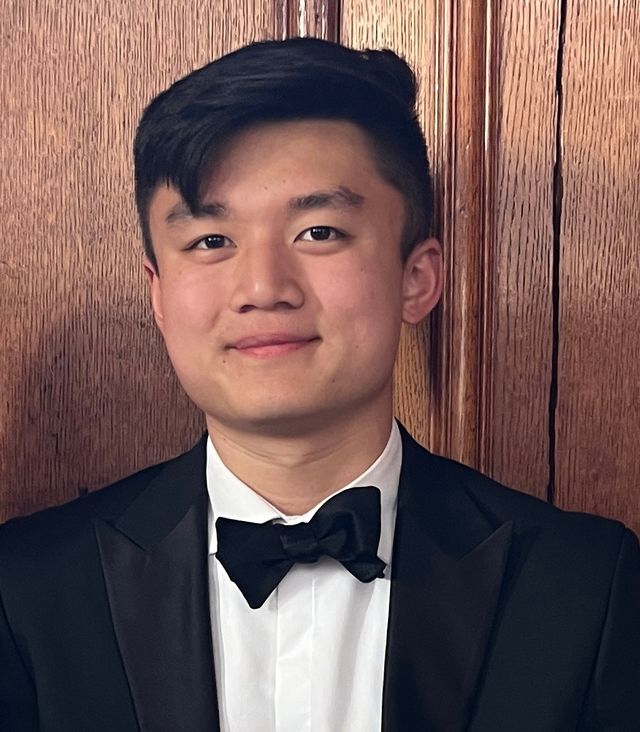
Ask ChatGPT where to buy running shoes and it won't hand you ten links. It hands you a sentence. Andrew Yan's entire company exists in that sentence.
AthenaHQ, the startup Yan co-founded in 2025 and runs as CEO, has one stubborn question at its center: when an AI assistant answers out loud, whose brand gets named? For two decades the web rewarded whoever climbed to the top of a results page. The assistant doesn't show a page. It shows a verdict. And most companies - even the giants that own page one of Google - simply aren't in it.
"Most brands aren't showing up at all," Yan says. "Even major companies that dominate on Google are missing in chatbot responses." AthenaHQ measures that absence, then closes it. The platform reads millions of large-language-model answers, maps them against the 300,000 or so websites the models cite most, and tells a brand how often it appears, how early, and in what light.
Visibility in AI chat isn't about ranking at the top of page one. It's about how often, how early, and how favorably your brand is mentioned.
The field has an acronym, because of course it does: GEO, generative engine optimization, with its cousin AEO, answer engine optimization. Yan didn't coin the terms, but he is among the people turning them from jargon into a dashboard. He's careful not to oversell the death of the old world. "Traditional SEO isn't dead, but its role is shrinking fast," he says, "especially for top-of-funnel discovery." It's a measured line from someone who could easily have chosen the louder one.
A search box, quietly turning into a chat box.
AthenaHQ's pitch rests on a shift you can feel but rarely measure: discovery is migrating from blue links to generated answers. The illustration below is a directional sketch of that migration, not a company financial - it's the trend Yan bet his career on.
Where a buyer's first question lands
The numbers are a sketch. The direction is the point - and AthenaHQ exists to give brands a steering wheel for it across ChatGPT, Claude, Gemini and Perplexity.
First, the saxophone.
Long before he was reverse-engineering how machines talk about brands, Andrew Yan was a touring tenor saxophonist. Not a hobbyist with a horn in the closet - a player who performed across three continents at the Kennedy Center, Lincoln Center, the American Museum of Natural History, and Abbey Road Studios. He played in the band that inspired the Oscar-winning film Whiplash, the one about a drummer and a conductor who believes "good job" are the two most harmful words in the English language.
He sat in with Google's in-house jazz band, GSharp, and with the Oxford University Jazz Orchestra. There's a through-line here worth noticing: jazz is the art of listening hard to a room and answering in real time. So, it turns out, is figuring out what a language model will say next.
AI is fundamentally changing how people discover brands. We built AthenaHQ to help businesses see, act, and win on AI Search.
Google, DeepMind, an Army lab, and a band.
The Columbia degree came fast - computer science and mathematics, both majors, three years flat. From there the path reads like four different people's careers stapled together. At Google he was a product manager on Search's information acquisition team, the part of the machine that decides what the world's knowledge even looks like before you ask a question. He also did time on Google Drive and Google Cloud, where he wrote a C++ command-line tool.
At DeepMind he worked on the generative media team. Earlier, at the US Army's DEVCOM lab, he researched the attack surfaces of machine-learning systems - the security of the very models now running the world's answers. He built a content-moderation microservice at Vimeo in Go. He researched bounded rationality and Bayesian decision-making at Columbia's Cognition and Decision Lab. The hackathon trophies stack up too: best e-sports hack, best prototype, an honorable mention for mathematically modeling the spread of invasive hornets.
It's a strange portfolio. It's also exactly the portfolio you'd want if your job were to understand, from the inside, how search works, how generative models behave, and where they break.
Reading the machine that reads the web.
The hard part of generative engine optimization is that the thing you're optimizing for won't sit still. A search ranking is a number you can look up. An AI answer is generated fresh each time, drawn from a shifting cloud of sources, phrased a little differently with every prompt. You can't audit it the way you audit a results page. You have to sample it, again and again, until a pattern emerges.
That's the work AthenaHQ does at scale. It analyzes millions of large-language-model responses and maps them against the roughly 300,000 websites the models cite most often, then translates the mess into something a marketing team can actually act on: where you appear, how early in the answer, how favorably, and which sources the model leaned on to get there. The company has packaged part of this into what it calls the Athena Citation Engine, built to surface exactly which pages earn the citations that put a brand in the answer.
It's a measurement company first. You can't improve what you can't see, and Yan's bet is that the seeing is the scarce thing. Brands have decades of muscle memory for keywords and backlinks. Almost none of them have a way to know whether ChatGPT recommends them or quietly recommends a competitor instead.
The CEO, the CTO, and a shared hunch.
Yan didn't build AthenaHQ alone. His co-founder, Alan Yao, runs engineering as CTO - a former platform engineer at ServiceNow who had already founded an AI property-management tool called Cribbly and had been working hands-on with AI models since 2020. Yao studied computer science and statistics at the University of Illinois. The team they assembled pulls advisors and engineers from OpenAI, Anthropic and DeepMind, which is a useful thing to have when your product depends on understanding how those companies' models actually behave.
The money followed the hunch. AthenaHQ's $2.2M seed round, announced in June 2025 as the company stepped out of stealth, drew Y Combinator, FCVC, Red Bike Capital and Amino Capital, along with angels including SEO author Eli Schwartz and operator Ashley Stirrup. By launch the platform was already serving more than 80 companies - Checkr, Coupons.com, Artisan, Ollie among them - which is an unusually warm reception for a category most people couldn't name a year earlier.
Most brands aren't showing up at all. Even major companies that dominate on Google are missing in chatbot responses.
A collector of unfamiliar rooms.
Look at the whole arc - the saxophone, the four wildly different jobs, the two majors squeezed into three years - and a temperament shows up. Yan collects unfamiliar rooms. Six continents, 34 countries, 34 U.S. states, 16 national parks, and a stated habit of meeting people through music and wandering cities he doesn't know yet. He describes himself, plainly, as someone who likes making things: software, writing, music.
It's the same instinct that lets a person walk into the brand-new, barely-named field of AI search and feel at home. Generative engine optimization didn't exist as a job a couple of years ago. Neither did most of the rooms Yan has played in. He has a pattern of arriving early, listening to what the space wants, and answering. The horn just got swapped for a dashboard.
Building the SEO of a world without search.
The ambition isn't subtle. SEO became a multibillion-dollar discipline because being found on Google was worth paying for. Yan is wagering that being found inside an AI answer will matter just as much, and that whoever builds the measurement layer for it gets to define the rules. AthenaHQ wants to be that layer - the place a brand goes to see itself the way the machines see it, and to change the verdict.
He's clear-eyed about the uncertainty. The models change weekly. The acronyms are still settling. Nobody knows exactly how big AI-driven discovery gets or how fast. But that's precisely the kind of unsettled room Andrew Yan tends to walk into first - and the kind he tends to leave having changed the tune.
The Yan doctrine.
Traditional SEO isn't dead, but its role is shrinking fast, especially for top-of-funnel discovery.
Most brands aren't showing up at all. Even major companies that dominate on Google are missing in chatbot responses.
Visibility in AI chat isn't about ranking at the top of page one. It's about how often, how early, and how favorably your brand is mentioned.
We built AthenaHQ to help businesses thrive in this new world - to see, act, and win on AI Search.
Six true things.
Played in the band that inspired Whiplash.
Performed at Abbey Road Studios. Yes, that one.
Two majors at Columbia, finished in three years.
Six continents, 34 countries, 16 U.S. national parks.
Codes in C++, Python, Go and Java.
Sat in with Google's jazz band, GSharp.