The first version of Pace Public Relations was not a brand strategy, a pitch deck, or even a particularly brave leap. It was an email. Annie Scranton had lost her job as a television producer during the long hangover of the Great Recession when someone asked whether she could help get a client onto television. She could. In fact, she did it that day.
Scranton had spent nearly a decade booking guests for CNN, Fox News, CNBC, MSNBC and ABC. She knew the small, practical mysteries that outsiders romanticize: why one expert sounds useful at 7:42 a.m. and another sounds like homework; why a producer needs a point of view, not a biography; why the person who answers the phone quickly can beat the person with the fancier title. That knowledge, plus a contact list earned one live show at a time, turned out to be capital.
She took another television job and kept the PR work on the side for roughly a year and a half. Then she left TV and made Pace official in 2010. The headquarters was her studio apartment. There were no employees and very little overhead. She waited about two years to make the first hire and another year to make the second. The restraint matters because service firms often make the opposite mistake: they buy the appearance of scale before they have recurring work to support it.
“Specificity earns you the invitation.”Annie Scranton, on what a producer needs from a pitch
The commodity was never publicity
Pace sells communications work, but its sharper product is editorial usefulness. A newsroom has a blank segment, a breaking story, a skeptical audience and a deadline. A client has expertise, a company, perhaps a book, and usually a great deal to say. Pace's job is to compress the second pile until it fits the first.
This is why its service list, broad as it has become, hangs together. Strategic media relations finds the story. Broadcast booking catches the news window. Thought-leadership work gives an executive an opinion worth returning to. The in-house writing studio turns that opinion into op-eds, bylines, emails, white papers and speeches. Media training makes sure the human being does not freeze when the red light appears.
The firm has moved past the old PR menu without abandoning it. Its product team combines editorial placements with affiliate links and performance tracking. Its climate practice translates clean energy, carbon markets, infrastructure and sustainability claims for reporters, investors and local communities. Reputation and crisis work protects the narrative when the news is unwelcome. Book publicity turns an author's argument into interviews rather than merely announcing that a book exists.

A press hit is a clip with several jobs
There is a mildly unfashionable conviction at the center of Pace: television still matters. Not because everyone sits down for the evening news, but because broadcast supplies a concentrated form of borrowed credibility. A strong interview can be cut for social feeds, attached to an investor deck, embedded on a sales page, cited in a newsletter and shown to the next producer. The live audience is only the first audience.
Pace says it secured more than 1,100 broadcast segments in the year before its April 2026 account of the Artemis II news cycle. The method it described is procedural: submit early, package talking points and B-roll, follow official access rules, prepare the spokesperson and make the producer's decision easy. During Artemis II coverage, the agency placed experts from the U.S. Space & Rocket Center and Huntsville Chamber by moving inside a tight, controlled news window.
For author Mark Pettit, Pace reported 13 print, digital, broadcast and audio placements in six weeks, with 484 million potential impressions. For home-renovation startup Block Renovation, a client testimonial cites more than 130 placements and 60 billion potential impressions over a year and a half. Such impression figures are estimates, not people counted in a room. The more persuasive client evidence is behavioral: Novus Media says prospective customers mentioned seeing the agency everywhere; Edges of Earth says coverage helped it recruit local partners; Block says national publications supplied trust at the point of conversion.
The first thing to fail is the story
The standard PR fantasy begins with a contact list. Pace's newer six-week Launchpad begins one step earlier, with the possibility that a startup is not ready. The founder may describe the company five different ways. The funding announcement may be real but uninteresting. The CEO may have credentials without a specific claim. Buying a full campaign at that stage is an expensive method for discovering that reporters do not understand you.
Launchpad packages the unglamorous foundation: a one-line description, boilerplate, audience-specific messages, campaign research, media training and a practical roadmap. It is Pace admitting that its own retainer works better after the client has something coherent to retain.
What does the work cost?
Pace's public inquiry form uses these qualifying bands. Exact fees depend on scope; the bars show increasing bands, not market share.Those bands reveal the economics without pretending there is a menu price. Pace is a customized, people-heavy service. Clients pay for senior judgment, writer time, producer relationships, monitoring, preparation and repeated pitching. There is no guarantee of coverage, and Pace says so. Earned media is neither advertising nor an overnight switch.
The approach is a poor fit when the underlying story is hollow, the spokesperson will not prepare, approval takes three days during a three-hour news cycle, or the brief demands a guaranteed number of flattering articles. It also struggles when a company needs direct-response sales tomorrow. PR can compound trust; it cannot manufacture product-market fit.
What changed was the size of the newsroom
In 2019, Scranton observed that television had become more political and digital video more consequential. By 2026, Pace was arguing that earned coverage also feeds the systems that summarize companies in AI search. The agency's answer was not to abandon its old contacts. It widened the definition of where authority travels: television, podcasts, commerce pages, LinkedIn, search results, large language models.
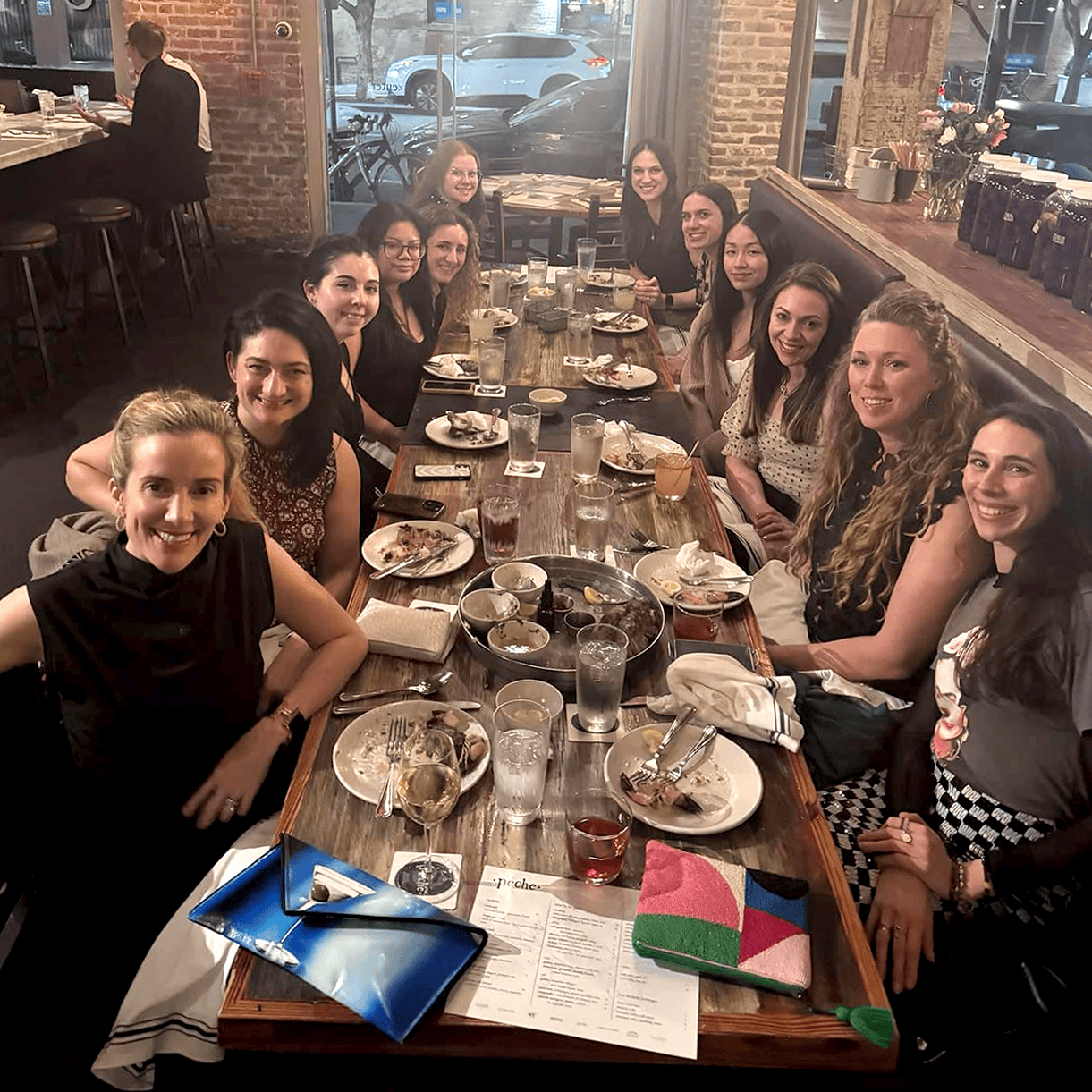
The company widened internally, too. Pace describes a women-led staff where interns have grown into department leaders. Daily brainstorms, weekly-win rituals, lunch-and-learns, professional-development budgets and small-group exchanges of media relationships turn individual contacts into organizational memory. In 2024, Ragan named it a top boutique workplace in communications; the Netty Awards named it Best PR Agency later that year.
There is something pleasingly circular about the model. Scranton once sat inside the newsroom deleting pitches. Now Pace teaches clients how not to become deletable. The firm's advantage is not access alone; contacts retire, platforms shift and audiences scatter. The durable skill is seeing a story from the other side of the inbox.
The part worth copying
- Keep fixed costs low until demand repeats.
- Lead with the one specific thing your expert can say, not a ceremonial list of credentials.
- Prepare the quote, visuals, availability and logistics before the news window opens.
- Treat every earned appearance as reusable proof, not a trophy that expires after airtime.
- If the story is not ready, fix the story before buying distribution.
Continue the conversation
Pace now sits between a traditional media-relations boutique and a broader authority-building firm. It competes with specialist PR agencies, global networks, freelance publicists and the determined founder with a spreadsheet. What clients buy is a shorter route between having something useful to say and being trusted enough to say it in public.