higher-education
(95)
The College Counselor Who Fired Her Business Model
Jessica Velasco meant to sell private college counseling. Then she decided the model was wrong for her - and built a free, searchable answer desk for families who could not afford the velvet-rope version.
Poly Reps puts a paycheck behind the campus welcome
Cal Poly’s student ambassadors spent decades introducing strangers to university life. Paying them changes who can afford to do the introducing.
The UCLA tour guide who used to be in the tour group
UCLA Engineering Ambassadors put current students in charge of the introduction. Between the buildings and the questions, prospective engineers get a glimpse of who they might become.

UCLA’s story starts before anyone presses send
Inside UCLA Strategic Communications, an animated research campaign and a carefully tested campus email belong to the same operation. The interesting part is how the university connects them.

They wanted a place at Berkeley. Then they wanted a department.
Central Americans for Empowerment began with the search for community. Its students have turned that search into history classes, public advocacy, and a campaign to give Central America a lasting academic home.

IE Design + Communications makes complexity worth a closer look
A Grammy invitation with a tape-pull trick. Five Cornell websites on one deadline. This California studio finds the human detail inside the institutional brief.

SOAS Students' Union Has a Bar to Run and a University to Challenge
Free advice, student politics and a place to spend the afternoon: SOAS Students' Union puts them under one roof. Its harder job is paying for the community while representing students to the university that helps fund it.

DIGITALENT’s bet: buy the schools, close the skills gap
A Spanish education group has brought business, law, coding and vocational schools under one roof. Its next test is teaching people to work with AI while keeping the classroom connected to the job.

Propel Center Is Getting HBCU Talent Into the Room
Apple and Southern Company put up $50 million to help connect HBCU students with industry. Propel’s real test is what students get to make, who sees it, and where that access takes them.

Two years in Tunis. The next chapter abroad.
Université Européenne de Tunis has built its pitch around a practical proposition: start locally, then continue through an international partner. Behind the globe-spanning brochure sits a campus with a mock courtroom, a trading lab and a hotel classroom that behaves like a hotel.

At SET University, the final assignment can be a company
The Kyiv university puts entrepreneurship inside the technical degree. Born just before Russia’s full-scale invasion, it is teaching Ukrainians to turn engineering expertise into products of their own.

Jadu and the 50p council enquiry
At Wigan, a highways enquiry went from £7 to 50p. Behind that small number is Jadu’s bigger business: connecting public websites to the people and systems that actually get things done.

Bulb wants your schoolwork to outlive your school email
The digital portfolio company turns class projects into evidence for college and work. Its toughest lesson: getting a school to buy software is only the beginning.

Kortext Put the Campus Bookshelf in the Cloud - Then Taught It to Read the Room
A Bournemouth bookseller’s digital bet became a piece of university infrastructure. Now Kortext wants the textbook, the library workflow and the warning light for a struggling student to live on one platform.

Mendeley Tried to Reinvent Research. Its Best Trick Was Fixing the Bibliography.
The London startup wanted to map the world’s scientific reading. Nineteen years, one controversial sale and several retired products later, Mendeley has learned that researchers mostly want their PDFs tidy and their citations correct.

Ad Astra Found $500,000 Hiding in a College Timetable
A course schedule looks like clerical plumbing. Ad Astra argues it is where colleges quietly decide who graduates, which rooms sit empty and how much tuition slips away.

The Career Center Was Full of Answers. uConnect Found the Students Were Somewhere Else.
A nearly empty recruiting event exposed a problem hiding in plain sight: colleges had career resources, but students could not find them. uConnect built the distribution layer - and made engagement the product.

Lumivero Bought the Boring Software Experts Refuse to Quit - Now It Has to Make the Bundle Add Up
Lumivero assembled a cabinet of stubbornly useful research and risk tools. Its next test is whether a collection of specialist products can behave like one decision system without sanding off what made each one trusted.

EverTrue Built a Machine for the 97% of Donors Most Fundraisers Ignore - Here’s What Advancement Teams Can Steal
Most institutions reserve personal attention for a sliver of their donor file. EverTrue’s bet is that better data, disciplined cadences, and a broader definition of a portfolio can make the neglected middle worth knowing.

Trinity Western’s $125 Million Bet: Keep the Faith, Lose the Walls
Canada’s largest Christian university learned the cost of turning conviction into a gate. Now it is chasing 10,000 learners with online degrees, global partnerships and a divinity-school gift - without sanding away the belief system people come for.

Dawson College Turned a 1908 Convent Into a 10,000-Person Climate Classroom
Montreal's largest CEGEP made its heritage campus part of the syllabus. The result is a useful playbook for educators - and a test of how far ingenuity can stretch when space and public money run short.
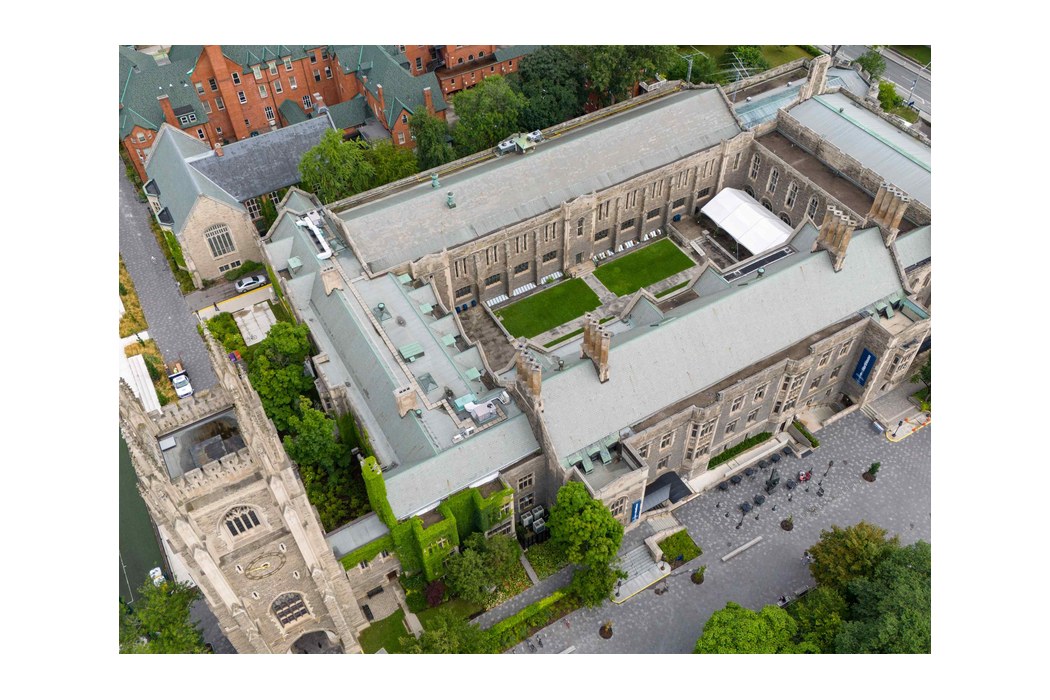
The 107-Year-Old Campus House Selling Something Students Can’t Download
Hart House is part gym, theatre, gallery, restaurant, grantmaker and Gothic living room. Its next act is harder: modernize a century-old landmark without renovating away the social friction that makes it useful.

Mohawk College Turned the Community College Into an R&D Partner - Here’s the Playbook
The Hamilton college found a sharper edge than adding more courses: let students solve live industry problems, let employers borrow the labs, and make applied research part of the education rather than a campus side project.
The University That Had to Fire Its First Idea to Build Toronto's Research Machine
U of T began as an Anglican college that took 16 years to open and lasted only seven years in the classroom. Its secular reboot became a three-campus platform serving 103,140 students - and a case study in how institutions turn breadth into an advantage without pretending complexity is free.

A Five-Year-Old University Is Trying to Make the Business Degree Prove Itself
International Business University has gone from 11 graduates to nearly 700 in two years. Its wager is simple: a young school can earn trust faster if every course leaves evidence an employer can understand.

Green Flower Turned Cannabis Confusion Into a College-to-Career Pipeline
The company began by streaming expert cannabis videos. A decade later, its sharper product is a credentialing machine that connects colleges, workers and operators in an industry still writing its rulebook.
Northwestern Started With $9.92. Here’s the Flywheel Institution Builders Can Steal
A lakefront land bet, $100 perpetual scholarships and an obsession with crossing disciplines turned nine founders’ “wind work” into a $3.46 billion-a-year institution. The trick is copyable. The conditions are not.

Unibuddy Built the Wrong Product Twice - Then Universities Gave It a 500-Campus Playbook
The edtech started with a high-school dashboard, tried to build its own marketplace, and kept hearing one awkward question: where is the traffic? Its answer - live inside university websites - turned a student chat idea into an enterprise enrollment platform.

CarbonCents Is Betting Facilities Chiefs Want Lower Bills Before Loftier Carbon Promises
The Clemson-born startup found a practical way into the climate-software market: make scattered building data useful to the people paying the utility bills. Now it is testing whether one dashboard can stretch from boiler rooms to boardrooms.
The Startup That Texts College Dropouts Before They Drop Out
Melvin Hines was one of 68 kids in his high school class to graduate. He built Upswing so the other students - the adult learners, the first-gen, the ones nobody texts back - get a fair shot at the finish line.