A sportswear manufacturer in Hamilton needed order-tracking software to win a large contract. The obvious shortcut was to license a system from a competitor. Then the deal collapsed. The owner, worried about losing the customer and a chance to grow in the United States, happened to complain to a neighbour who taught at Mohawk College. The neighbour offered a surprisingly practical answer: call the college.
That referral became an applied-research project involving students and faculty. It is the tidy, slightly accidental story behind Mohawk’s most interesting product. The school is officially a public college of applied arts and technology, offering the expected mix of certificates, diplomas, degrees, apprenticeships, continuing education and student services. But it also behaves like a shared research department for organizations that have a stubborn technical problem and not enough people, equipment or confidence to solve it alone.
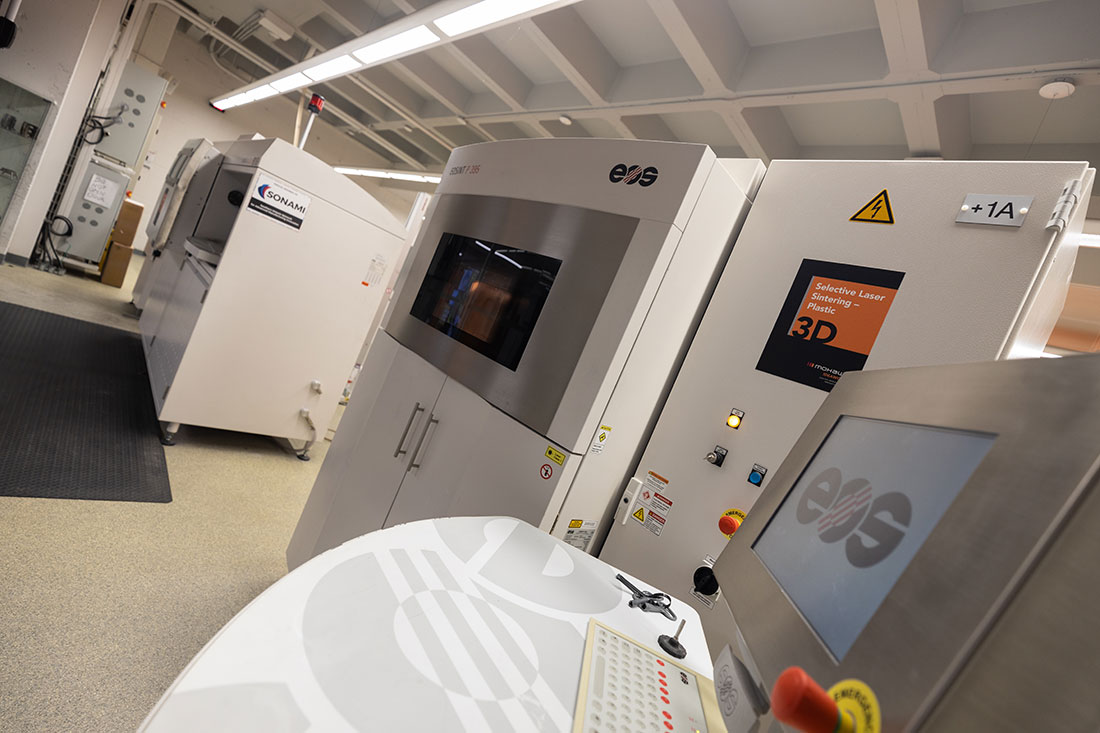
The unit behind that work is IDEAWORKS, founded in 2008. It connects companies, nonprofits and community partners with faculty specialists, student researchers, laboratories and grant expertise. Its menu stretches from additive manufacturing and industrial internet-of-things systems to digital health, energy, cybersecurity, accessibility and climate work. The pitch is refreshingly unromantic: test the thing, measure the result, train somebody while doing it.
The actual product
A two-sided market wearing safety goggles
Students face a familiar trap: entry-level jobs ask for experience, but experience is hard to get before the first job. Small and midsize employers face the mirror image. They need to experiment with unfamiliar technology, but hiring a permanent research team before an idea is proven is expensive. Mohawk matches those shortages. The employer supplies a defined problem. The college assembles expertise, facilities and supervised student labour. Each IDEAWORKS project creates at least one student research-assistant position, and the partner retains its intellectual property.
A bounded problem, domain knowledge, staff time, data and often a cash contribution.
A faculty lead, student researchers, specialized equipment, testing and grant navigation.
The model is not a disguised internship. In a good project, the company receives evidence it can act on - a tested prototype, a validation study, an improved process or an honest finding that an idea does not work. The student receives something better than a simulated assignment: a consequence. Deadlines move, hardware misbehaves, clients change their minds and evidence can embarrass the original hypothesis. That is career preparation with the bubble wrap removed.
For every applied research project, we create at least one student research assistant position.IDEAWORKS operating promise
What it costs
The price tag has two very different faces
For learners, Mohawk’s published 2025-26 tuition for most two-semester domestic programs was C$2,708.08 before ancillary and program-specific charges. Add the listed Hamilton-area compulsory fees and student-association costs, and the bill rises materially. Most international programs carried a published two-semester total of C$18,375, while aviation and other differentiated programs cost more. It is not useful to call college cheap without saying which student is paying.
Applied research is more bespoke. Current project pricing depends on scope, facilities, staff and the funding program. A revealing older example shows the mechanics: qualifying companies in one provincial technology-adoption program received C$10,000 and made a matching contribution toward student wages, equipment and materials. The exact program terms have changed, but the architecture remains copyable - public funds reduce the first-experiment risk, while the company pays enough to stay engaged.
The sector correction showed up in the accounts
That decline is the tension under the polished lab photos. Mohawk reported a C$1.4 million operating deficiency in 2025-26 after a C$6 million excess the year before. Its annual report mentions staffing reductions, flat enrolment assumptions and a long technology transformation. The college did not abandon the applied model. It leaned toward workforce deals, online program redesigns, domestic recruitment and partnerships that make the institution useful beyond tuition collection.
Why it is different
The lab is not a campus ornament
Nearby colleges can match many credentials, and universities can offer deeper theoretical research. Mohawk sits in the middle: close enough to employers to solve a process problem, broad enough to combine nursing with software or manufacturing with energy, and structured to give students a seat at the workbench. In the 2025 research-college ranking publicized by IDEAWORKS, Mohawk placed second nationally and first in Ontario. It also placed first for research income among large colleges.
The proof is in the odd pairings. Energy researchers built test beds to validate a startup’s digital electricity system. A steel fabricator used virtual reality in a building-design process. Health teams work on remote monitoring and medical technologies. In 2025, students from Mohawk and McMaster beat 11 other North American university-college teams in the Battery Workforce Challenge. In 2026, an NSERC-supported project began applying ethical artificial intelligence to photographic collections in museums. None of those projects resembles a generic “innovation lab” tour.
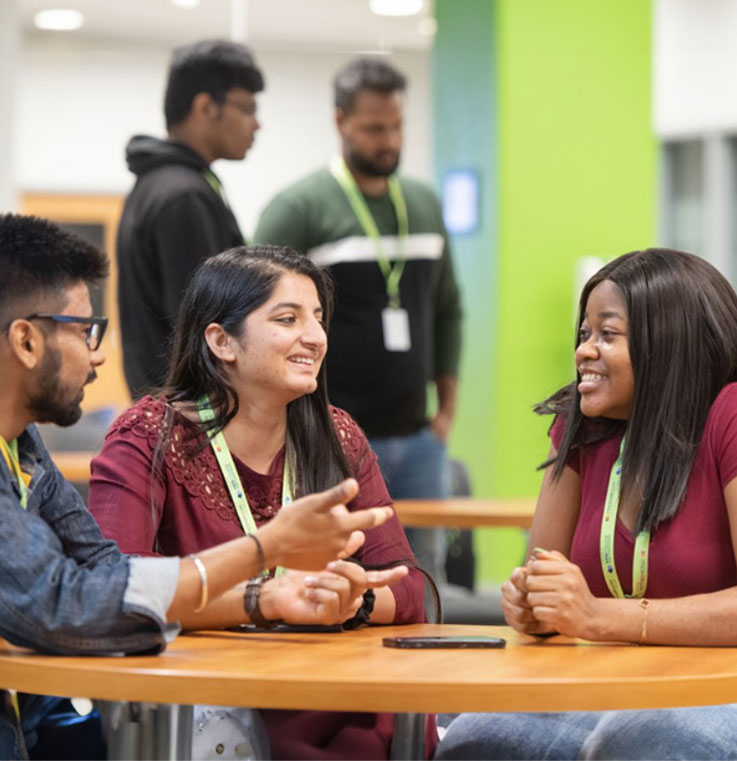
Mohawk’s wider product portfolio feeds the engine. Health programs connect to McMaster and clinical environments. Skilled-trades training runs through Stoney Creek and partner sites. Business, creative, community-service and technology credentials supply other disciplines. Continuing education and micro-credentials serve people already at work. A new School of Climate Action and Built Environment links programs in sustainability, construction, urban development, architecture and transportation to the college’s climate research.
The copyable play
Start with a paid role, not a building
Steal this operating sequence
- Choose a problem narrow enough to test inside one academic term.
- Name one employer owner and one faculty owner before recruiting students.
- Make at least one learner role paid and accountable.
- Set intellectual-property, data and publication rules at the start.
- Use grants to reduce uncertainty, not to excuse a vague brief.
- Finish with evidence the partner can use and the student can explain.
The clever constraint is the student job. It forces research activity to produce an educational dividend even if the prototype disappoints. It also gives employers a long interview with emerging talent. In a historical IDEAWORKS report, 22 jobs were created at partner organizations following supported projects, alongside the student roles inside the college. That is a more convincing regional-development story than counting how many people attended a demo day.
Mohawk also knows that partnership compounds. Its relationship with Walters Group ran for more than 25 years by 2019, and the company employed roughly 80 Mohawk graduates at the time. McMaster is simultaneously a health-education partner and a competition teammate. New agreements with Arizona State University and four Irish technological institutions create research, faculty and pathway options. These are distribution channels for education as much as academic friendships.
When the playbook will not work
Do not use a college research partnership when the problem is unscoped, the deadline ignores the academic calendar, the company cannot assign a decision-maker, production deployment is required immediately, or confidentiality rules prevent students and faculty from doing meaningful work. A grant cannot rescue an absent owner.
What changed
Pressure made the strategy more visible
The international-student reset across Canada changed the economics faster than any lab could. Mohawk’s student-fee revenue fell by nearly C$79 million in one year. The response in its latest report is operational, not poetic: redesign six programs for fully online delivery and three for half-online delivery; consolidate continuing and professional education; implement a C$12 million sustainable-jobs training initiative; explore a health-focused Burlington campus; and pursue a shipbuilding training hub with Hanwha Ocean and Ontario Shipyards.
There are risks. Student-services satisfaction fell to 70% in the latest survey, from 79%. Graduate employment was 79.5%, down from 87.2% the prior year, though still slightly above the provincial average. A school cannot partner its way out of every funding problem, and a crowded set of strategic initiatives can diffuse attention. The discipline is to keep asking whether the work improves learning and gives an employer something usable.
Mohawk began in 1966 as part of Ontario’s answer for students who wanted a practical alternative to university. Its predecessor, the Provincial Institute of Textiles, was already training technical workers in 1947. The tools have changed from looms and electrical benches to digital twins, medical imaging and AI. The durable idea has not: education becomes more valuable when it touches the work before graduation day.
The best campus-to-company bridge is not a networking event. It is a shared problem with a deadline.
That is where Mohawk fits in the market. It is not a research university, a consulting firm or a coding bootcamp. It is regional infrastructure with classrooms attached - a place where employers can test, students can prove and public funding can buy down the risk between an idea and a first useful result. The model is not frictionless. It is useful precisely because the friction is real.
Keep exploring