At the University of North Alabama, getting a resume reviewed used to involve a small journey. A student worked in one tool, downloaded the document, then uploaded it into another for a human to inspect. Each step was reasonable. Together, they gave a busy student several chances to decide that tomorrow would do.
- Colleges buy tools to run career services, accommodations, conduct and experiential learning.
- Employers pay to distribute jobs and approach early talent through campus networks.
- The revealing customer stories concern fewer handoffs and carefully paced implementation.
The trouble with the second login
North Alabama brought AI Resume Review into Symplicity CSM, where students could also request human feedback. The university piloted it with classes that had resume assignments. In Symplicity’s customer account, assistant director Rickey McCreless describes comparable feedback, a better price and simpler reporting. The useful change was the removal of the download-and-upload detour.
“The fewer places I have to gather data from, the simpler it makes my life.”
Rickey McCreless · University of North Alabama
This is a helpful way into Symplicity. Its market is full of large promises about student success. Its daily work concerns smaller questions: where does a request go, who approves it, and must the student type everything again? A university can have excellent people in every office and still make a student carry information between them like a diplomatic courier.
The job board has a back office
Symplicity makes cloud software for colleges and universities, with a separate recruiting business for employers. Its February 2026 acquisition announcement reports more than 1,200 universities, over seven million active students, and more than 11 million job applications annually. Those are company-reported activity figures; they describe scale, rather than proving that software caused a graduate to get hired.
CSM, its career-services platform, manages advising appointments, employer relationships, recruiting events, job postings and outcome reporting. A career counselor can organize the work around an application, as well as the application itself. Students can find opportunities, prepare resumes and practice interviews. Staff can build pathways with tasks and monitor participation. The job listing is the most visible part of a considerably longer process.
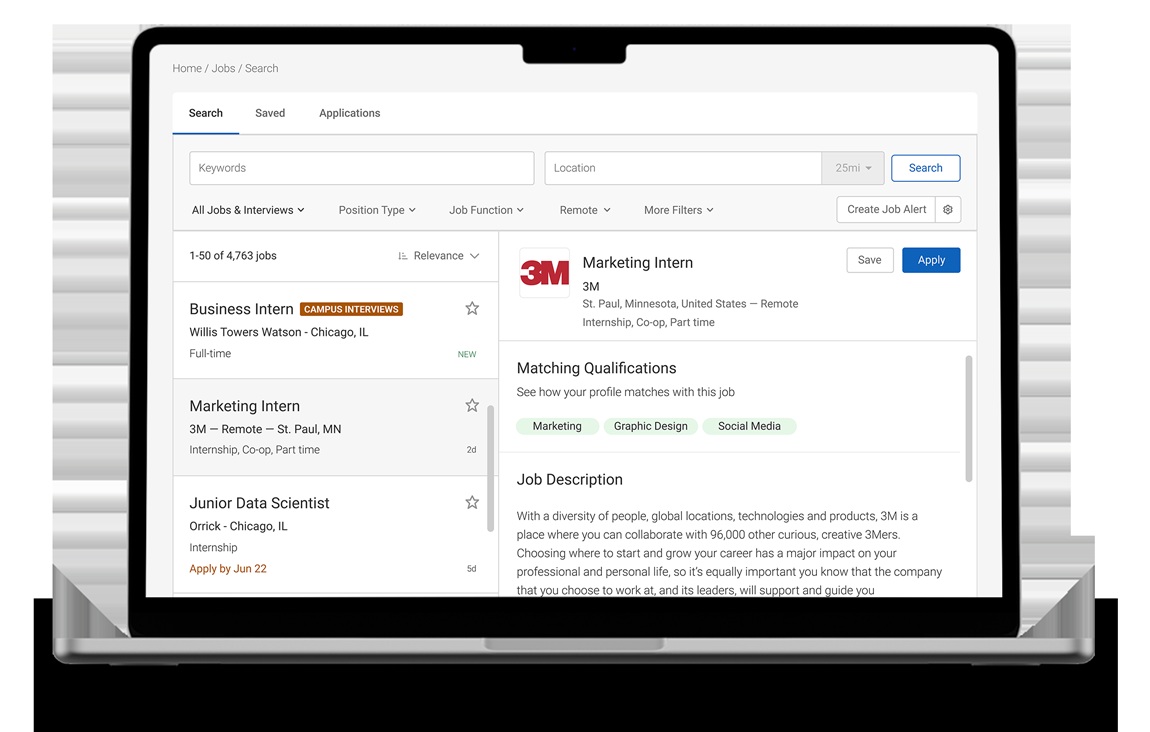
The surrounding products explain the company’s breadth. Accommodate handles disability-services requests, letters, appointments and testing workflows. Advocate manages conduct and wellbeing cases. Residence covers housing applications, placements, roommate networking and room conditions. Different offices, different responsibilities, one supplier with an appetite for campus administration.
Outcome adds another layer: experiential learning. An internship or service project can require logged hours, a supervisor’s approval, a reflection and an assessment of skills. A job board can advertise the opportunity. Outcome helps record what the student did and learned. That distinction matters when an institution needs evidence for an accreditor or a student needs a credible account of experience.
A conceptual map of the portfolio, not an automatic sequence or a promise of shared access to every record.
In career services, Handshake is a direct alternative with its own campus and employer network. Symplicity’s broader portfolio gives buyers a different comparison to make: how well does each tool serve its office, and what happens at the boundaries? Buying several products from one supplier still requires institutions to settle permissions, responsibilities and integrations. A common invoice cannot do that work.
First, retire one piece of paper
Riverside City College offers a useful example. Its previous disability-services system lacked a student-facing component and a connection to its student information system. The pandemic exposed the limits. In the college’s published account of adopting Accommodate, director Dr. Pamela Starr describes introducing accommodation letters first, appointments next, and test booking roughly a semester or two later.
The team piloted with faculty it already knew, prepared a captioned student tutorial and refined reporting over about two years. During busy exam periods, staff had previously handled 30 to 50 paper test packets a day. The lesson is less cinematic than a campus-wide launch: make one process usable, teach people, then add the next. Software adoption has a calendar, and the academic calendar has opinions.
That sequence is worth copying. Choose a task whose completion matters to students. Give it an owner. Test the process with people willing to explain where it catches. Record the instructions so help is available outside office hours. Then expand. This is an interpretation of Riverside’s experience, rather than a universal implementation recipe, but it is a practical starting point for a campus buyer.
Two buyers, two kinds of value
The business has two paying constituencies. Institutions purchase software for running services. Employers purchase job distribution and recruiting capabilities. Symplicity Recruit lets hiring teams post across selected schools, search an opt-in resume database, approach candidates and examine recruiting activity. A college wants less administrative chasing; an employer wants a promising conversation with someone it might hire.
The employer side has a visible price ladder. Published US job-post rates list $55 per school when targeting one to four schools, $275 total for five to ten, and $495 for 76 to 100. These are distribution prices for a posting, not prices for hiring a person. The broadest listed tier costs about $4.95 per school at 100 schools, though a school’s presence tells you little about how many suitable applicants will reply.
Recruit Pro starts at $329 a month, adding limited resume downloads and direct messaging; Premium is customized. The same pricing page says employer and school checks can take up to five days, usually less. That is a meaningful constraint for a recruiter with an urgent vacancy. A campaign should begin with the schools and candidates that fit the role, rather than an assumption that more distribution automatically means better results.
A history that deserves its own paragraph
There is an uncomfortable chapter behind the present business. A federal court opinion identifies Ariel Manuel Friedler as Symplicity’s founder. In May 2014, the then-president and CEO pleaded guilty to conspiring to access competitors’ computer systems without authorization. The Justice Department described access intended to inform product development and sales strategy. This was misconduct by the executive and involved other employees; it should not disappear beneath an agreeable product tour.
An H.I.G. Capital affiliate acquired 100% of Symplicity in August 2016. Matt Small joined as CEO that year. In a 2021 interview with ARLnow, he described professionalizing the company and making product improvements. The same report states that Symplicity itself was not charged in the founder’s case. These distinctions matter: the historical event, the individual and the current company are related, but they are not interchangeable.
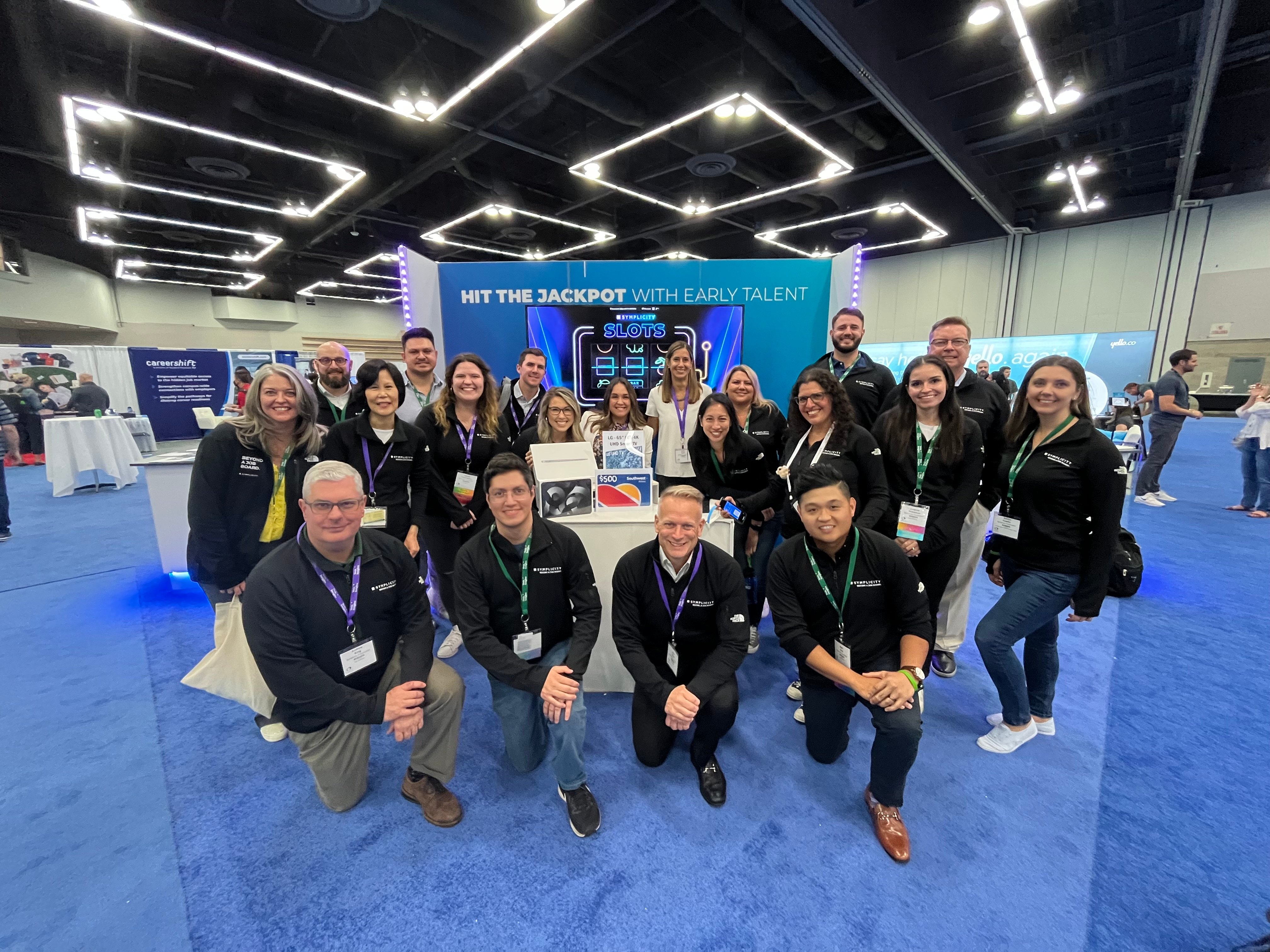
The company’s employee accounts emphasize autonomy, client relationships and balance between work and personal time. They are descriptions from inside the business, not an independent verdict on its culture. The trade-show photograph is more modest evidence: people showing up together to sell software for work that rarely makes the university prospectus.
The next sale is a connection
Symplicity acquired Canada’s Orbis Communications in December 2021, expanding its experiential-learning capabilities and institutional network. In February 2026 it joined Volaris, an operating group of Constellation Software, as a wholly owned subsidiary retaining its brand and Arlington headquarters. The ownership shift places it within a group specializing in vertical-market software: products built around the habits and obligations of a particular industry.
Two June announcements sharpen that direction. The Ellucian partnership sets out connections for CSM, Accommodate, Advocate and Outcome to student information systems. At announcement, CSM integration was available; the broader four-product plan should be read as a plan. The Yello partnership gives its Campus Recruiting Agent access to match against Symplicity’s pool of more than 600,000 early-talent candidates.
These moves address opposite ends of the business. Ellucian concerns institutional records and integration work. Yello concerns employer access. Symplicity also offers its Radius API program for connecting products to other systems. The company’s opportunity is to make those connections useful without making the institution’s rules about sensitive information disappear.
For a college considering the tools, the useful demonstration begins with a real request. Follow it from student submission to staff decision, notification and reporting. For an employer, start with a vacancy and the particular students who could fill it. Ask how approval, outreach and response will work. Where records are unreliable, ownership is unclear or staff cannot make time to adopt a process, another platform can add another place to get lost. Symplicity’s most persuasive customer examples begin by removing such a place.
See the work for yourself
Explore Symplicity’s website, its newsroom and blog. Follow LinkedIn, X or Facebook. Watch the CSM video linked from its product page and browse the company’s Vimeo channel.