The question arrives on a campus tour with the blunt force of family economics: What will my student earn two years after graduating? Ashley Safranski heard versions of it throughout her years in new-student recruitment at Washington State University. At the time, the honest answer was awkward. An admissions office could describe programs, traditions and possibilities, but a parent asking for a number had wandered beyond the tidy borders of the brochure.
Safranski did not dismiss the question. She carried it. It followed her from campus visits to enrollment management, from Washington State to the labor-market analytics company Emsi, and eventually to uConnect, the education technology company where she is now chief marketing officer. The employers and titles changed; the underlying problem stayed put. Students and families wanted to understand the future attached to an education. Colleges possessed pieces of the answer, though those pieces often lived in separate offices, separate databases and separate vocabularies.
Her career has become an exercise in connecting them. Admissions knows the questions. Career services knows the opportunities, the student stories and the outcome data. Marketing knows how to frame and distribute a message. Safranski's work argues that these functions should behave less like neighboring republics and more like a working government.
The tour guide learns the campus
Safranski's route into higher education began in the most literal form of institutional storytelling: walking backward while talking. She worked as a campus tour guide for roughly three years as a Washington State student. After graduating in 2011 with a communication degree, she became a campus visit coordinator. Assistant director and senior associate director roles followed. She managed on-campus recruitment initiatives, supervised the Cougar Connectors student ambassador team and took part in enrollment marketing.
A tour guide learns which buildings require a fact and which require a story. A recruiter also learns that prospective students are rarely asking only the question they say aloud. “What can I do with this major?” may contain worries about debt, belonging, status, work and an entire adult life that has not started yet. Safranski's later insistence on audience segmentation has roots here. Different people arrive carrying different stakes. One generic message cannot do justice to all of them.
Washington State also furnished a durable professional connection. Safranski collaborated on enrollment campaigns with Meredith Metsker, then working in the university's central marketing and communications operation. Years later, after Safranski joined uConnect, she knew whom she wanted on her team. Metsker came aboard and became the voice of the Career Everywhere Podcast. The old campus relationship acquired a second act.
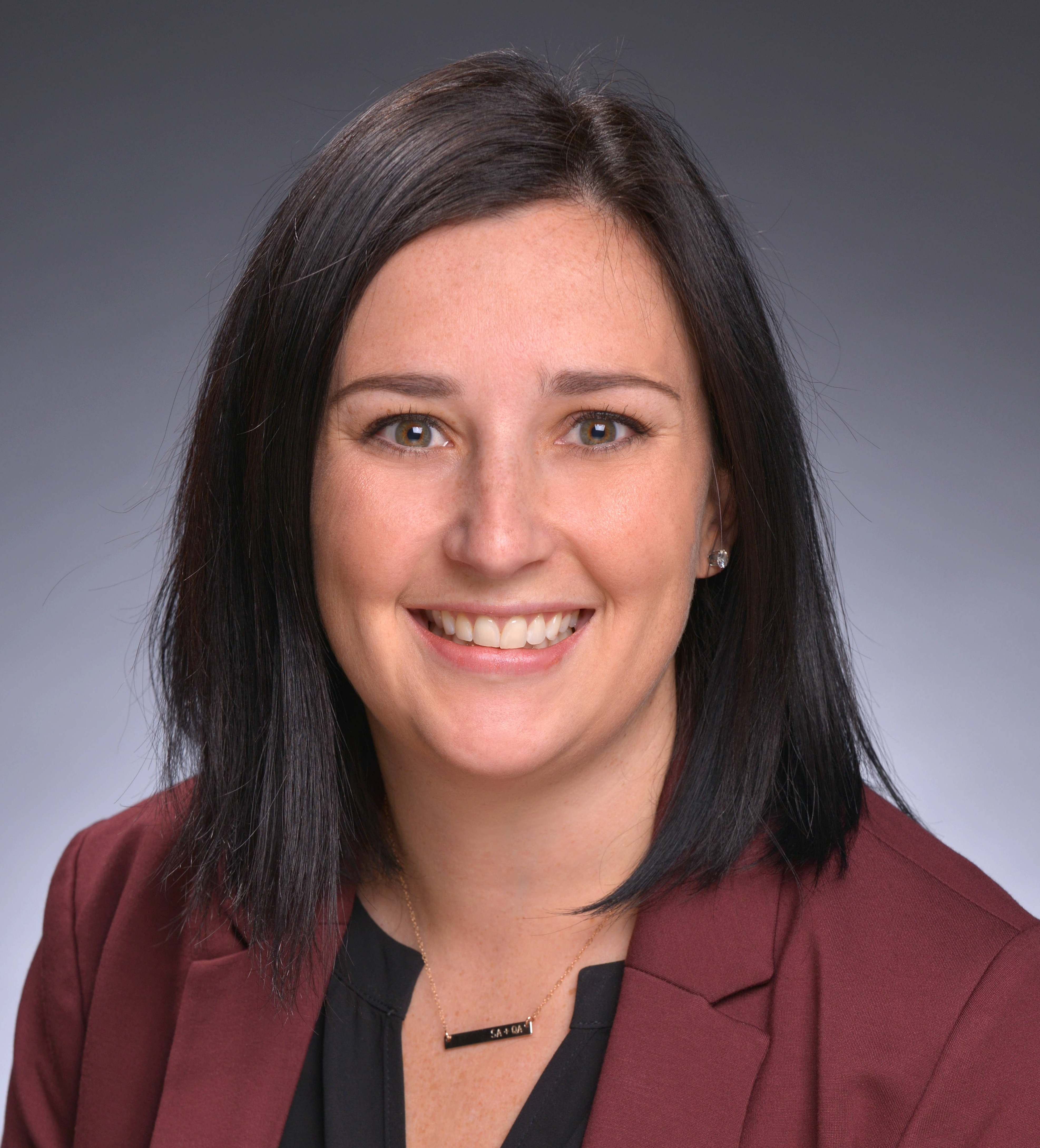
“Where was this when I was on campus?”
In August 2018, Safranski joined Emsi to help develop software for enrollment and marketing teams. GoRecruit, released that December, used alumni outcomes information to help colleges show where graduates worked, which employers hired them and how academic programs connected to the labor market. The old parent question finally had something more useful than a hopeful anecdote.
Safranski's reaction to seeing this kind of data was telling: “Where was this when I was on campus?” It was the complaint of a former practitioner discovering that an avoidable difficulty had, at last, become avoidable. She served as GoRecruit's product lead while moving through director and vice president roles in higher-education marketing. Her job sat at an unusually productive intersection: she knew the enrollment buyer because she had been one, and she knew the family question because she had answered it.
“Career teams are the keepers of these amazing student outcomes, student stories, the data, and in many ways career leaders should be the best storytellers at an institution.”Ashley Safranski, Career Everywhere Podcast
This is the center of Safranski's professional argument. Data does not replace a story; it gives the story bones. A student success anecdote can be moving, but outcomes information lets an institution show patterns rather than miracles. Conversely, a dashboard without interpretation is only a very expensive arrangement of rectangles. The work is to connect evidence, human experience and a decision someone is trying to make.
A movement escapes the career center
Safranski joined uConnect in 2021. The company builds virtual career centers, but the more revealing phrase in its vocabulary is “Career Everywhere.” Formally launched in January 2023, the movement starts with a mildly embarrassing observation: career services is often described as a campus's best-kept secret. Secrets are delightful in detective novels and rather less useful when students are paying tuition.
Career Everywhere proposes that preparation for life after college should not depend on a student locating one office at the right moment. Faculty, advisers, admissions teams, alumni offices and employers can all become career champions. Digital resources can surface within the broader student experience. The career center remains expert, but expertise travels farther when other people know how to carry it.
The idea became a small media system: a podcast, weekly newsletter, article and webinar hub, Boston event and digital community. Safranski and Metsker helped turn a strategic phrase into places where practitioners could compare notes. In 2024, the National Association of Colleges and Employers gave uConnect's Career Everywhere work its Business Affiliate Innovation Award, crediting both women.
There is an affectionate comedy to their collaboration. When Metsker finally hosted her boss as a podcast guest, Safranski teased that it had taken her more than two years to get the nod. Metsker described the recording as talking to a friend. Beneath the banter is a management clue: the polished company story depends on colleagues who have accumulated trust across jobs, cities and years.
The flywheel has a human center
In 2025, Safranski described career services as a flywheel. Career-focused enrollment messages help a prospective student picture a path. Early exposure to career support gives that student a reason to explore. Purpose can strengthen persistence. Engagement can improve readiness and outcomes. Those outcomes then give the next admissions cycle better evidence. The result is less a funnel than a loop.
The framework also maps neatly onto Safranski's own career. Recruitment exposed the information gap. Outcomes data supplied evidence. Marketing translated the evidence. Career Everywhere built distribution. Each job returned something useful to the next version of the original problem.
Her promotion to chief marketing officer in 2025 widened the remit. Her LinkedIn description says she leads uConnect's full commercial organization and go-to-market strategy. Yet her public work remains strikingly close to campus practice. In conversations with career leaders, she asks about their constraints, measures and internal partners. She advises them to learn what colleagues are held accountable for, then show how career work can help. It is marketing as connective tissue, not decoration.
“If I were a marketing leader at a college campus right now, I would 100% be making the career services leader my best friend.”Ashley Safranski
Visibility is part of the service
Safranski's recent writing has grown more pointed as colleges face sharper questions about value. Employment and earnings outcomes arrive late; by the time they appear in a report, the student experience that produced them is already over. Her concern therefore moves upstream. Institutions need the digital and organizational infrastructure that lets students discover help early enough to use it.
This explains her fondness for making career leaders think like CMOs. Both functions sit in the middle of an institutional spider web. Both can be mistaken for cost centers. Both must serve multiple audiences without dissolving into mush. And both improve when they stop merely announcing activities and begin offering useful content, shared language and evidence tied to the organization's priorities.
Even her comments on uConnect's visual rebrand reveal the preference. She praised the result as “chef's kiss,” then immediately praised the agency for learning the company, audience, past and destination. The attractive surface mattered because the inquiry beneath it had been serious. A fresh coat of paint was never the assignment.
Safranski remains based in Pullman, close to the university where the story began. She has written that she enjoys the Pacific Northwest outdoors with her family, a quieter kind of everywhere. Her alma mater has also pulled her back into its orbit as a Murrow First mentor, giving current students access to someone whose career did not abandon higher education when it moved into technology. It carried higher education's unfinished questions into a new set of rooms.
The best profile of her work may be the student who never learns her name. That student sees a career resource inside a course, receives useful guidance from a faculty member, finds an outcome page while considering a major and walks into a career conversation before panic supplies the appointment. The system feels ordinary because someone worked hard to make the connections obvious. Good infrastructure has the manners to disappear.
The parent asking about life after graduation was never asking too much. The institution simply needed its scattered answers to meet. Safranski has spent a career arranging the introduction.