At Energy Transfer, arranging an interview used to take an average of sixty minutes. Think about that peculiar allocation of time: an hour spent assembling a conversation that had not yet happened. Recruiters exchanged emails and phone calls, while candidates waited. Some candidates dropped out. The company’s published Yello case study describes what happened when scheduling became a workflow rather than a correspondence habit: the average fell to three minutes.
- Yello connects campus planning, sourcing, events and candidate follow-up.
- Its buyers are recruiting teams with complicated, repeatable hiring programs.
- WayUp brings candidate access; Symba extends engagement beyond the offer.
The hour that became three minutes
Energy Transfer’s recruiters needed templates adaptable to different jobs and locations, along with shared visibility into interview status. The problem was already costing them candidates before they could assess those candidates. That is a useful starting point for understanding Yello. In recruiting, administrative delay can quietly become a selection mechanism: the people who remain are the people willing to wait.
“Without automation our interview scheduling was holding us back.”
Chris Andersen · Head of Talent, Energy Transfer
A career fair needs a memory
Jason Weingarten and Dan Bartfield founded the business in 2008 as Recsolu. They had already built and sold an online college-jobs company; former clients asked them to address recruiting problems. The original focus was campus hiring for large employers. In 2015, Recsolu became Yello, with a broader professional-recruiting brief. Its present positioning has a distinctly campus-shaped center of gravity.
The awkwardness of campus recruiting is that promising people often appear before a formal application. A student registers for an event, meets a recruiter, receives an invitation, and perhaps applies later. Someone must remember all of that. Yello gives the recruiting team a shared candidate record, event registration, QR-code check-in, evaluations and scheduling. Physical and virtual events feed the same pipeline. The booth acquires a memory.
Candidate engagement tools then turn the record into action. Recruiters can segment their talent pools, schedule branded email and SMS campaigns, and examine opens and clicks. A useful conversation at a fair need not disappear into a spreadsheet. The expertise here is the sequence: how school calendars, event logistics and candidate communications fit together under a deadline.
Its buyers include enterprise campus teams and recruiting outsourcers. Yello’s About page reports more than 300 enterprise clients and use across over 70 countries. Cielo, in a historical customer story, used a centralized platform while allowing regional teams to tailor engagement. Yello’s appeal is coordination across recruiters, locations and systems. Handshake competes for university recruiting budgets with its own candidate network and employer tools; Yello emphasizes the connected campus workflow.
Buy the missing handoffs
Recruiting software can organize the candidates an employer already knows. It cannot conjure the ones the employer has never met. In July 2021, WayUp announced its merger with Yello, joining an early-career candidate network to recruiting operations. Yello now markets those capabilities as Yello Sourcing, including concierge sourcing, employer branding and analytics showing how candidates progress through the funnel.
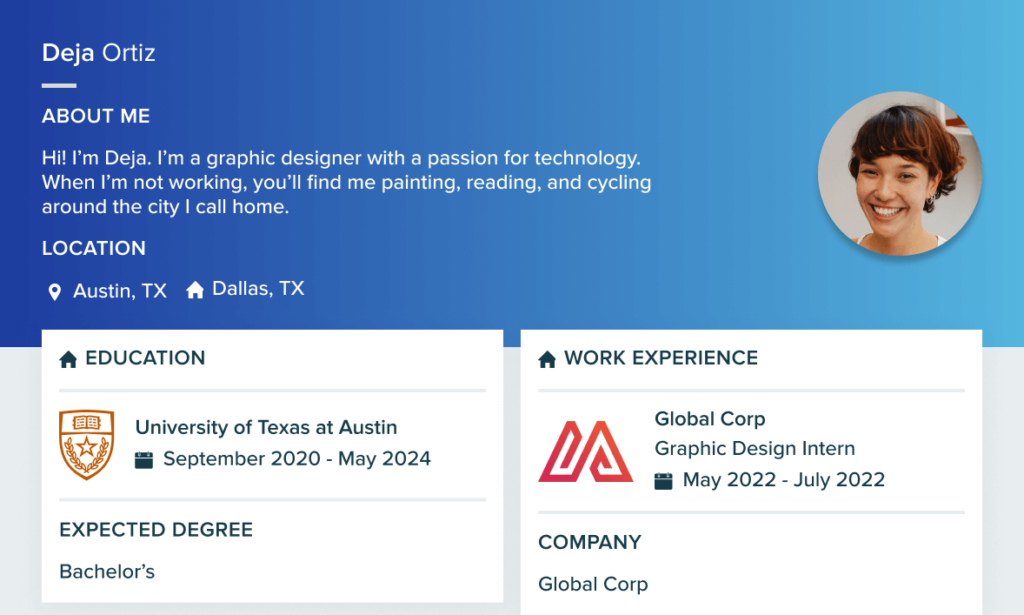
The distinction matters. Increasing applications does not tell a hiring team where people disappear. Stage-by-stage analytics can help a recruiter investigate that question. Yello Sourcing also lists connections to systems including Workday, Greenhouse and Oracle Recruiting Cloud, with application information pre-filled from candidate profiles. Each connection addresses another point where an interested person might abandon the process.
Then came the other end of the funnel. Yello partnered with Symba in April 2025 and acquired it that November. Symba’s territory begins around offer acceptance and extends through onboarding, internship management and alumni engagement. Yello said customer adoption during the partnership supported the acquisition. The purchase expands the company’s brief to the nervous interval between accepting a job and actually starting it.
There is a tidy business logic to these moves. WayUp supplies people at the entrance; Symba helps maintain their connection after the offer. Yello’s original operational machinery sits between them. A hiring process has several opportunities to lose a person, and the company has been assembling products around those opportunities.
Before the booth opens
In May 2026, Yello launched its Campus Recruiting Agent. The proposition changes the preparation for a career fair: source candidates and arrange interviews before recruiters arrive. The agent assists with event setup, works from job descriptions, groups candidates by apparent fit, and helps send approved outreach. Candidates can self-schedule. Recruiters review the groupings, refine criteria and approve communications.
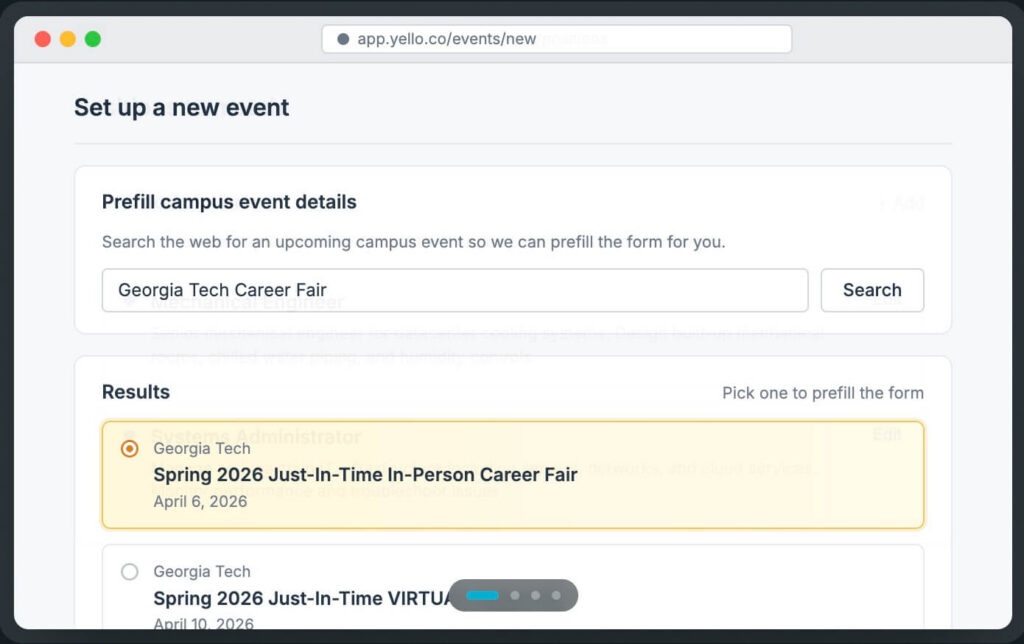
Two 2026 connections reinforce that approach. February’s LinkedIn CRM Connect integration brought candidate profiles and interaction history closer to the recruiting workflow. In June, Yello announced a Symplicity partnership adding access to more than 600,000 early-talent candidates through the agent. The practical ambition is fewer disconnected searches and less copying information between screens.
The price of a smoother process
Yello sells enterprise software through a demo-led process, with implementation and integration services alongside it. Its public pledge promises contractually specified annual pricing changes. A meaningful buying decision therefore includes the selected products, the systems they must connect to, and the work required to configure them. The $31 million Series C announced in 2017 financed expansion; it says little about what a particular customer should spend.
Yello’s implementation offering includes project management, architecture, configuration, training and integration support. That is a clue to the conditions for success. A team needs usable candidate records, agreed workflows and people who will maintain them. An employer making occasional hires may find a simpler tool sufficient. Automating inconsistent criteria or neglected follow-up merely repeats those habits faster.
The copyable lesson requires no purchase: time the handoffs. Track the interval from event attendance to outreach, from invitation to booked interview, and from offer to first day. Then give someone responsibility for the slowest step. Yello’s most persuasive idea is that a recruiting relationship depends partly on what happens while nobody is talking. A well-run calendar can be an unexpectedly effective introduction.