Keeping a truck sounds economical. You have already bought it. It still starts. Replacing it produces an invoice large enough to attract a committee. Keeping it produces smaller bills, scattered across fuel, parts, labor, and lost working time. The committee may never see those bills together. AssetWorks operates in that gap between the price everyone notices and the cost everyone inherits.
- What it sells: connected records for fleets, fuel, facilities, and infrastructure, plus hardware and services.
- Who buys: public agencies, universities, utilities, transit operators, and commercial fleets.
- Why it matters: a replacement decision gets better when repair history and operating costs share a home.
- The catch: inventory, training, and the rules people follow need attention too.
01 The truck that outstayed its welcome
Sacramento’s fleet manager, Mark Stevens, started examining replacement practices in 2015. The city used a ten-year, 100,000-mile rule shaped by the aftermath of the 2008 downturn. Departments sometimes delayed replacements anyway. More than 350 approved vehicles accumulated in a four-year backlog.
“I started looking at the data and asking questions.”Mark Stevens · Sacramento fleet manager
Stevens used historical FleetFocus data to test a different replacement model. The arithmetic gave him an argument for changing policy. Approved replacements would happen within the budget year; vehicle specifications would become more consistent. Sacramento added AssetWorks Capital Asset Management, or CAM, in 2018 to automate planning. The company’s case study projected approximately $11 million in savings over four years from the combined changes. That figure is a forecast, and the policy decisions belong in the explanation alongside the software.
Potential savings over four years after replacement and standardization changes, supported by FleetFocus and CAM.
02 A pump, a part, a work order
AssetWorks supplies integrated software, hardware, and consulting for organizations with physical things to maintain. Its website reports more than 1,000 customers across public and private industries. The customer list reaches from municipal garages to university campuses. What joins them is the awkward relationship between owning equipment and knowing enough about it to make a decision.
FleetFocus handles vehicle histories, preventive maintenance, work orders, parts, and reporting. A technician can record labor against a job; a manager can follow an asset through acquisition and disposal. EDGE provides mobile access to shop work. CAM addresses replacement models and capital planning. These are separate jobs in real life, and frequently separate conversations.
FuelFocus adds a physical connection: fueling hardware and software capture transactions and meter readings. Fuel information can feed fleet records instead of waiting for someone to enter a ticket. AssetWorks also offers EV charge management, so a mixed fleet can bring electricity into its energy accounting. Its partner roster includes ChargePoint, Blink, Geotab, and predictive-maintenance provider Pitstop. EAM separately integrates with Esri for geographic information.
Conceptual workflow, not a measured performance chart.
03 The bus has no interest in your spreadsheet
At Pennsylvania’s rabbittransit, the difficulty was coordination. A merger left the organization managing two systems. Its case study describes more than 427 active vehicles, 14 facilities, and service across 11 counties. FleetFocus brought the records together. At two fueling locations, FuelFocus removed manual ticket entry, reportedly saving about an hour per site each day.

The rollout also shows why enterprise software arrives in stages. Storekeepers were using EDGE while technician training was still planned. A driver-inspection pilot involved four drivers. Facilities EAM was being considered. Those distinctions matter: a purchased capability, a pilot, and a working process are three different accomplishments.
Coach USA supplies another useful detail. Its 2025 case study describes FleetFocus use dating to 1999 and a fleet of more than 1,000 vehicles across 18 locations. Staff grouped multiple manufacturer part numbers under internal identifiers. As many as 25 numbers could describe the same part. Connecting databases helps; agreeing what an item is called makes the connection useful.
04 The little tool with the large lesson
Michels adopted FleetFocus in 2013, then found that its tool system remained disconnected. EquipmentFocus brought tool inventory, repair records, and analysis into the picture. The company’s tools included chainsaws, generators, and jackhammers. A small item can cause a surprisingly large administrative nuisance when nobody knows what is available.
The existing electronic inventory eased migration. Staff still needed training. Jason Pucker, a business systems analyst at Michels, put the transition plainly: “From then, it was basically training.” His advice was to understand and classify the inventory first. Without that groundwork, maintenance analysis becomes harder. The practical question is almost impolite: how much attention should an inexpensive tool receive before replacing it would be cheaper?
05 Buildings have maintenance histories too
The same logic extends beyond vehicles. AssetWorks EAM manages public works, facilities, parks, and utility infrastructure. GIS integration links an asset record to its location; mobile tools let crews work with records in the field, including offline. A road, a pump, and a park require different maintenance routines. The system’s job is to organize the work and the information around each.
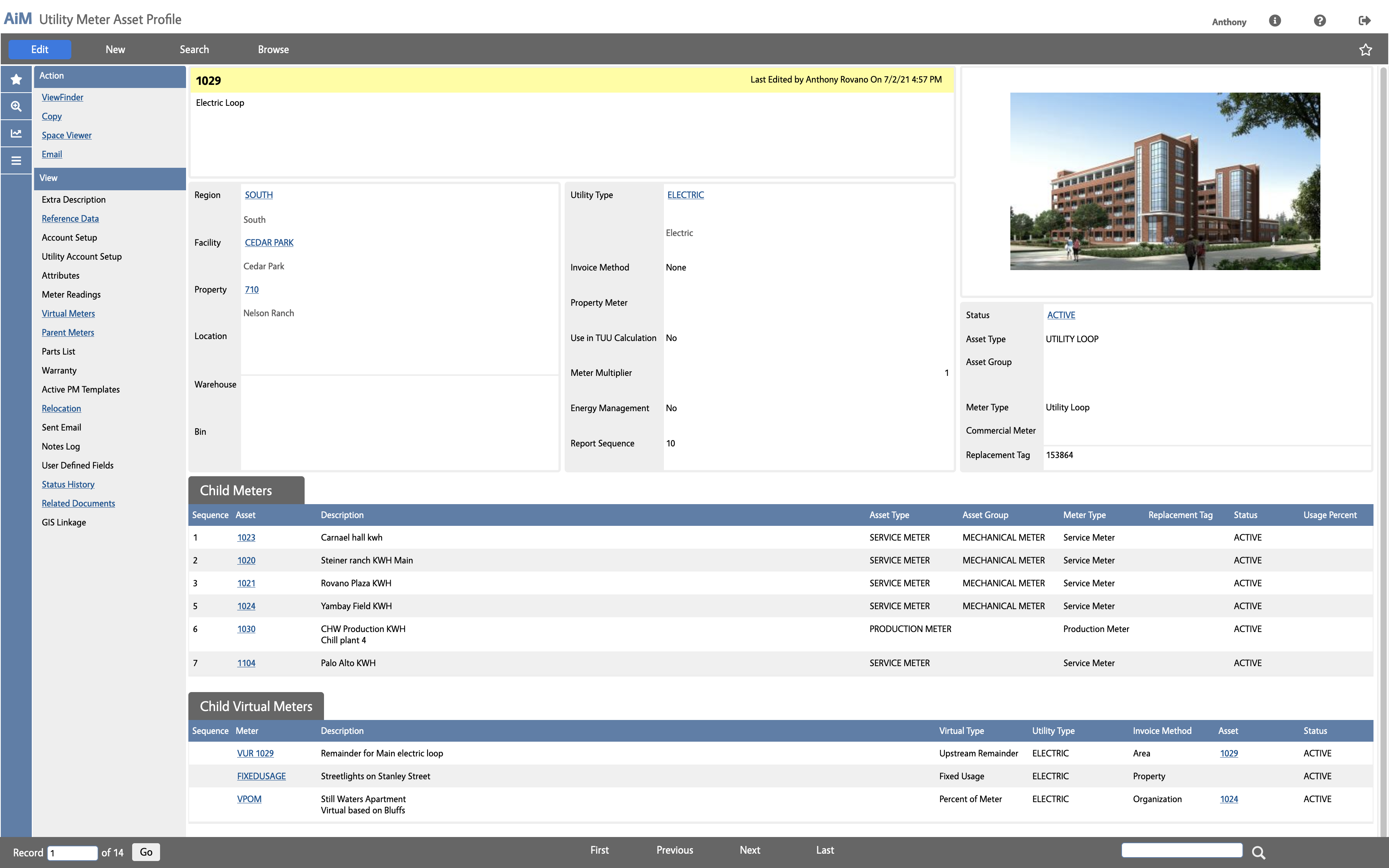
For higher education, the facilities business offers AiM, ReADY, and Go. AiM is the core facilities system; ReADY connects campus users with services; Go supports field staff. Utility records are part of this broader facilities operation. A meter reading becomes more useful when it belongs to a known asset and can be examined alongside its history.

A CUSTOMER CROSSES THE DESKGlenn Adams used AssetWorks while working in IT at Auburn University. He joined the company as a product manager in 2013 and now leads its facilities business. Experience using a system is a useful qualification for deciding what it ought to do.
06 The invoice is only the opening number
AssetWorks’ business includes subscriptions and licenses, maintenance and support, services, and hardware. An Illinois purchase order records $352,809.06 for annual FleetFocus licensing and maintenance from July 2025 through June 2026. That is one enterprise customer’s contracted scope, rather than a price every fleet should expect.
A 2022 Miami-Dade procurement memorandum offers a second perspective. It described a $1,354,872 software contract covering nine years and five months, including implementation and maintenance, plus approximately 35,825 staff training hours costed at $2.7 million. Those historical figures concern a particular deployment. Their lesson travels: staff time belongs in the buying decision. A renewal can preserve accumulated knowledge, while that same investment can make switching expensive.
Fleetio, a maintenance-focused alternative, markets straightforward implementation against AssetWorks’ modular scope. Its comparison is a competitor’s sales argument. Still, it frames a sensible buyer’s question: which workflows need to connect? An organization seeking basic vehicle service records should assess that requirement directly. A transit agency coordinating parts, fuel, grants, and replacement planning has a wider problem to solve.
07 Send the alert to someone who can act
Scott County, Minnesota, found that preventive-maintenance notifications needed changes to timing and responsibility. Drivers with consistent assignments could receive their own alerts; vehicles shared by operators needed a supervisor to coordinate. The county piloted changes, adjusted them, and wrote training guidance. Its case study reports overall compliance moving from about 40% to 87%.
Customer case-study results following scheduling and notification changes.
There is a method readers can copy: catalog the assets, establish a baseline, assign each task to someone who can act, then pilot a change before expanding it. These stories suggest the limits too. Poor classifications weaken analysis. Notifications lose value without ownership. Replacement forecasts require departments willing and able to change purchases. Software can expose the decision; people retain the budget and the authority.
08 A long relationship with ordinary problems
AssetWorks joined what is now Volaris Group in 2008 after MAXIMUS divested the businesses. Volaris, part of Constellation Software, developed the brand into specialist operations rather than treating every product as the same business. InCircuit joined in 2010; E-ISG, maker of eQuip, followed in 2018. Acquisitions added capabilities in public-sector assets and property tracking.
The company’s expertise also lives in former practitioners and customers. Its fleet division runs an annual Academy with classroom and hands-on training. Its careers page emphasizes mentoring and continuing education. Recent publishing keeps that emphasis visible: a fleet modernization guide in April 2026, and deferred-maintenance guidance in June. The subject remains pleasingly concrete. Somebody must decide whether to repair the pump, replace the truck, or stop paying to maintain the thing nobody uses.