A spare part can acquire a surprisingly busy social life aboard a fleet. One vessel calls it one thing, another uses a different description, and the purchasing department receives both. In research behind its newest product, SpecTec says the same component can appear under 12 to 20 names. The metal has not changed. The paperwork has multiplied.
That is an unusually concrete opening for a software pitch. SpecTec makes AMOS, the Asset Management Operating System used to organize ship maintenance, inventory, purchasing and related operations. Its current website reports deployment across more than 3,000 vessels. The business lives in the practical space between a job that needs doing and the people, parts and records required to do it.
In June 2026, it launched AMOS Procure Smart to tackle the purchasing consequences of disconnected information. The platform links maintenance plans, stock records, supplier information and financial controls. For a company founded in Oslo in 1985, this is a revealing new direction: decades of maintenance records become useful evidence about what a fleet should buy next.
The repair begins before the wrench
Consider a planned overhaul. The technical team needs an equipment history and a schedule. Someone must check the spares. Purchasing needs an approved order, a supplier and a budget. Shore management needs to know whether the job happened. AMOS provides software for those connected tasks, giving each team a place in the same operational record.
The maintenance module schedules work by time, running hours or condition. It records defects, corrective work and completed jobs. Inventory handles spare-parts availability; procurement handles the purchasing process. Other capabilities cover quality and safety, crewing, project planning and analytics. An overdue maintenance task can therefore be considered alongside the stock and purchasing information that may explain it.
Its audience is specific. The publicly named customer roster includes MSC, Columbia Group, Stena Line, Grimaldi and Fjord1. Container ships, ferries, tankers and offshore operations bring different demands, but each needs technical work and purchasing to survive the journey between ship and office. SpecTec’s expertise is in those maritime workflows and the software configuration needed to support them.
- 01PlanMaintenance due
- 02CheckSpares available?
- 03BuyBudget + approval
- 04RecordWork + history
One repair. Four connected records.
Histria Shipmanagement’s IT systems engineer, Alexandru-Gabriel Avram, describes the appeal plainly in a company-published testimonial: “AMOS is the backbone of our business”. The praise is about dependable daily use. That is a useful measure for software whose users have actual machinery to look after.
Ship software has a long memory
SpecTec’s anniversary history identifies Atle Valland as its founder and AMOS’s creator. The company’s name comes from Specific Technology, with a link back to a telex answerback. It is a small reminder of how many communications technologies this business has outlived.
Ownership has changed too. Volaris Group announced its acquisition of SpecTec Group Holdings Limited in August 2012. The deal brought the company into a specialist software owner within Constellation Software. Volaris’s later account describes a business with revenue growth but insufficient financial stability to give customers confidence about long-term support.
That tension mattered because a vessel can remain in service for decades. According to Volaris, its backing gave SpecTec a stronger basis for promising support over a ship’s lifetime. Its benchmarking also helped management understand profitability by customer and product, informing where to invest. The acquisition story is consequently about both investor liquidity and the duration of a customer commitment.
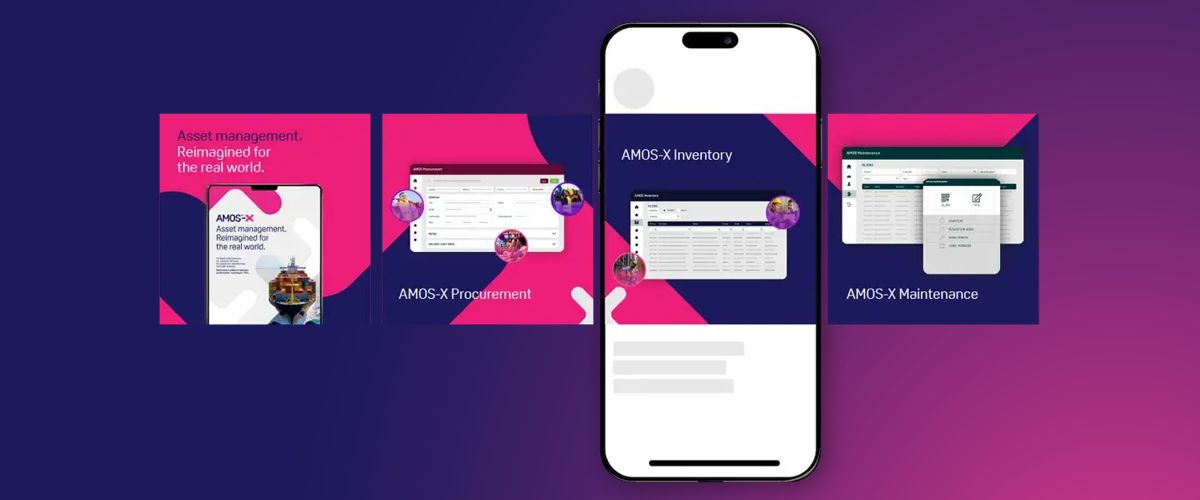
Adam Dennett became CEO in 2024, and SpecTec announced a brand refresh that September. The more consequential public product announcement followed in September 2025: AMOS-X, bringing maintenance, inventory and procurement into a modernized platform. The proposition included interfaces organized around users’ roles and a path for existing customers to adopt newer capabilities gradually.
The machinery behind the machinery
Stödig Ship Management offers a more grounded view than a launch announcement. In an August 2026 customer story, SpecTec describes an operator with 25 years of AMOS experience, using it across 10 chemical tankers. The work included maintenance, procurement, inventory, compliance and synchronization between vessels and shore.
The trouble appeared in the supporting infrastructure: synchronization, database connectivity, complex master data and a steady flow of user requests. SpecTec’s response included troubleshooting connections, maintaining components and spare-parts records, administering access, and training users. The reported results were restored synchronization, stronger data integrity and more stable operation.
This case supplies a useful corrective to the idea that installing an integrated system finishes the integration work. Ships keep operating. People change roles. Records need upkeep. A maintenance platform remains a working system only when someone takes responsibility for its daily condition.
“Their technical expertise and proactive approach have helped us maintain stable AMOS operations”
Harald Haugan, Head of Technical, Stödig
In SpecTec’s August 2026 customer story
SpecTec has built a commercial offer around that continuing work. Support comes in Silver, Gold and Platinum tiers. Gold adds a named customer success manager and quarterly reviews; Platinum includes more strategic oversight. Separately, its project services offer improvement programmes running 12 to 36 months, beginning with a Health Check and continuing against agreed milestones.
The service description is candid about accumulated problems: underused modules, deferred upgrades and customizations that make future changes harder. Buyers are paying for software expertise, but also for attention over time. The distinction matters when a product has been aboard longer than some of its current users.
A purchasing desk with a longer view
Procure Smart extends that operational argument into purchasing. SpecTec says research with 20 fleet operators representing more than 3,150 vessels informed the platform. It targets manual invoice reconciliation, duplicate orders and limited visibility into future demand. Those are the commercial consequences of information arriving late, in different formats or under different names.
Its functions include matching purchase orders, delivery notes and invoices; identifying equivalent parts using form, fit and function; automating routine low-value orders; and showing budgets when requisitions are approved. Maintenance schedules feed a demand forecast three to six months ahead. AI recommendations carry confidence scores and human approval controls.
SpecTec says an eight-vessel prototype surfaced $37,000 in annual recoverable savings from interchangeable parts.
The product page describes five interchangeable parts identified in the prototype’s first run. That is a modestly sized, intelligible example of the mechanism. A buyer can ask to repeat the exercise on troublesome records from its own fleet and see whether suggested equivalents make operational sense.
Procure Smart is also designed to work alongside an existing maintenance system, including one supplied by a competitor. This widens SpecTec’s addressable market beyond operators willing to replace their core software. A September 2024 partnership with Source2Sea points in a related direction, linking AMOS with a purchasing marketplace to improve the information available to vessel crews and buyers.
The bill includes the work around the software
AMOS is sold through a consultative demonstration and quotation process. Its commercial offering combines the platform with support, training, integration and improvement services. For procurement teams evaluating it, a useful budget therefore covers deployment and data work alongside the software agreement.
SpecTec markets AMOS-X with potential savings of up to $30,000 per vessel per year and a return on investment within 12 months. These are vendor claims, rather than a forecast for every buyer. The relevant calculation is fleet-specific: achievable reductions in spending and administrative effort, measured against implementation and ongoing costs.
The current AMOS range distinguishes Gateway for smaller operators establishing control, Horizon for fleets standardizing operations, and Enterprise for complex organizations needing more governance and integration. Horizon emphasizes replicating processes across vessels; Enterprise addresses the additional management burden of multiple fleets and entities. The choice should follow operational complexity as well as vessel count.
There are established alternatives. DNV’s ShipManager covers technical management, procurement, dry docking, quality and safety, and crewing. BASSnet also combines maintenance, purchasing and wider maritime management. Broad module coverage alone does not make SpecTec distinctive. Its case rests on accumulated AMOS experience, maritime services, continuity for existing users and the option to add procurement capabilities alongside another system.
Start with the part nobody can name
The practical lesson is to test a connected workflow with real awkward data. Choose a scheduled maintenance job, trace its parts requirement, check the stock record and follow the purchasing approval. Record where the chain stalls. That exercise makes the desired improvement visible before an operator commits to a wider programme.
Fit still matters. SpecTec positions Procure Smart for operators with at least 15 vessels and annual procurement spending of €10 million or more. A small fleet with simple purchasing may have less to gain from that offering. Existing AMOS users must also consider customization, integration work and staff capacity when planning an upgrade.
The Stödig experience suggests another condition: software needs people assigned to keep its data and connections healthy. A fleet that cannot make time for that work should question the speed of any promised improvement. SpecTec’s own service business exists partly because those responsibilities persist after installation.
For operators, the most persuasive demonstration may be wonderfully ordinary: find the part, establish that it fits, show that it is available, and avoid buying it twice. After four decades of organizing maritime maintenance, SpecTec is asking purchasing teams to follow that same trail.