September was the wrong month. At the University of Wisconsin-Stout, peer mentor matching had historically happened after students arrived, sometimes leaving introductions until well into fall. By then, newcomers had already begun deciding what kind of place they had entered. Kelly Wenig, director of the Blue Devil Achievement Center, wanted the relationships ready earlier. Recruitment moved into April; matching moved into May. A student could arrive at orientation already knowing somebody.
- Colleges buy software and support to run mentorship across entire cohorts.
- Matching is the beginning; prompts, training and follow-up keep people talking.
- Participant reports give staff clues about needs that grades alone can miss.
This is a useful way into Mentor Collective, because the company’s subject sounds softer than its business actually is. Mentorship conjures a wise person dispensing wisdom over coffee. Running mentorship for a whole campus involves recruitment, training, matching, reminders, reporting and somebody checking whether the coffee ever happened. Mentor Collective sells that back office, along with help making the relationship worth having.
A company born from an introduction
Jackson Boyar and James Lu Morrissey founded the business in 2014. It began as pro bono work, helping institutions support students entering unfamiliar environments. An investor’s account describes its original focus on international students navigating American boarding schools, followed by a turn toward higher education in 2016. Augusta University’s history adds an instructive detail: early partners encouraged the founders to serve a wider range of students. Customers helped enlarge the question.
The original corporate name was Shearwater International. Boyar later joked publicly that it required explaining the name at the beginning of sales calls. The legal entity still carries it. Mentor Collective is a more economical introduction. The underlying problem remained recognizable. A student can be surrounded by people and still lack anyone they feel comfortable asking for help.
The hidden curriculum gets a contact
The paying customer is usually an institution; the person receiving the help is a learner. First-year, transfer and first-generation students are natural audiences, alongside online learners and students seeking career guidance. A mentor can explain where to find resources, share experience of an unfamiliar process or help rehearse a question. Some of college’s hardest lessons arrive without a course number.
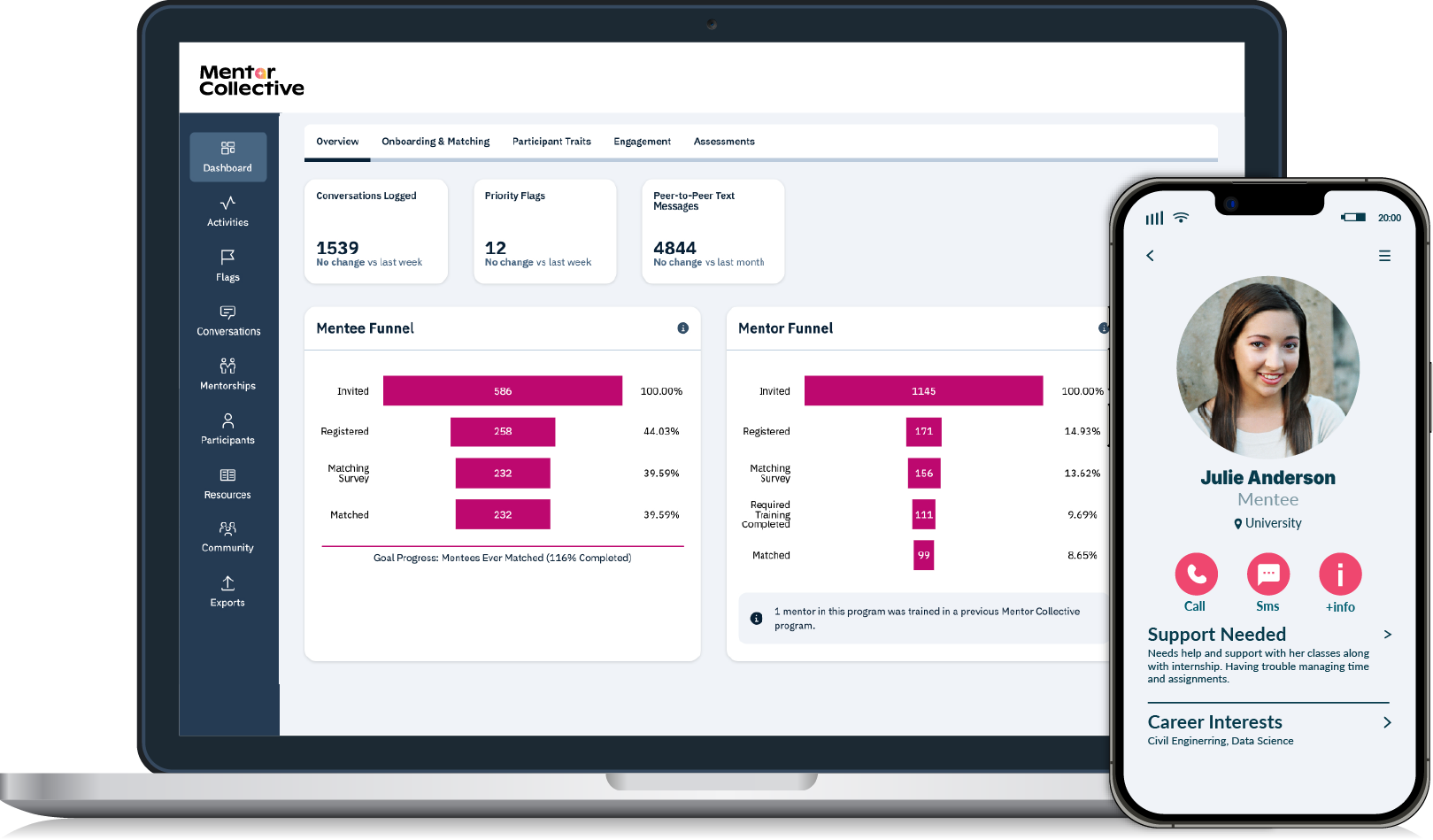
Mentor Collective combines hosted software with implementation and ongoing program support. Administrators configure programs; participants are matched; the system handles communication nudges and collects feedback. Staff can examine needs across cohorts and receive reported concerns. The company’s expertise sits at the intersection of program design, student support and software administration. Its current website reports a decade-plus of data covering 500,000 learners, 200,000 mentors and 200 partners. Those are cumulative company figures.
The awkward silence after the match
A list of paired names looks reassuringly complete. But pairing two strangers creates a fresh task: somebody has to speak. Mentor Collective’s Conversation Sparks supplies AI-guided prompts tailored to a match. Its published 2026 roadmap describes conversation prompts, participant privacy controls and career resources among the previous year’s investments.
The platform supports sustained one-to-one relationships and shorter flash mentoring. Its matching algorithm, the company says, considers more than 80 variables. That detail is less useful to a buyer than a practical question: will the resulting pair actually connect? The answer requires engagement as well as matching. Reminders can make a conversation easier to begin. A human mentor still has to listen, respond and earn trust.
Two bars, several moving parts
At the University of West Florida, the College of Education and Professional Studies built a model called Surround & Support. It combined faculty mentors, professional advising and near-peer mentorship. Mentor Collective’s case study reports that, by the second year, mentored students were retained at 83%, compared with 69% for students without mentorship. The difference is 14 percentage points.
It is an encouraging comparison, with a narrower meaning than an advertising slogan. Participation may distinguish the groups in other ways; the surrounding support matters too. Mentor Collective’s surveys and cohort reporting make that inquiry possible. They do not relieve an institution of the work of interpreting it.
“Good mentors mostly listen to questions.”William Crawley, founding dean, West Florida
What the machinery costs
The business model is institutional software licensing with services. Public sales pages lead to a demo request. The concrete cost in UW-Stout’s account belongs to staffing: a $1,500 allocation funded two student “Super Mentors” supporting the wider network. It is separate from the software bill. The lesson is wonderfully unglamorous: give peer leadership time and responsibility, rather than expecting enthusiasm to perform administrative miracles.
Outside capital bought room to expand. In September 2019, IU Ventures announced its $500,000 participation in a $3 million round led by Lumina Foundation. In January 2022, Mentor Collective announced a $21 million Series A led by Resolve Growth Partners, with Lumina reinvesting. The announcement described funds going toward infrastructure, products, training and services.
Beyond the campus gate
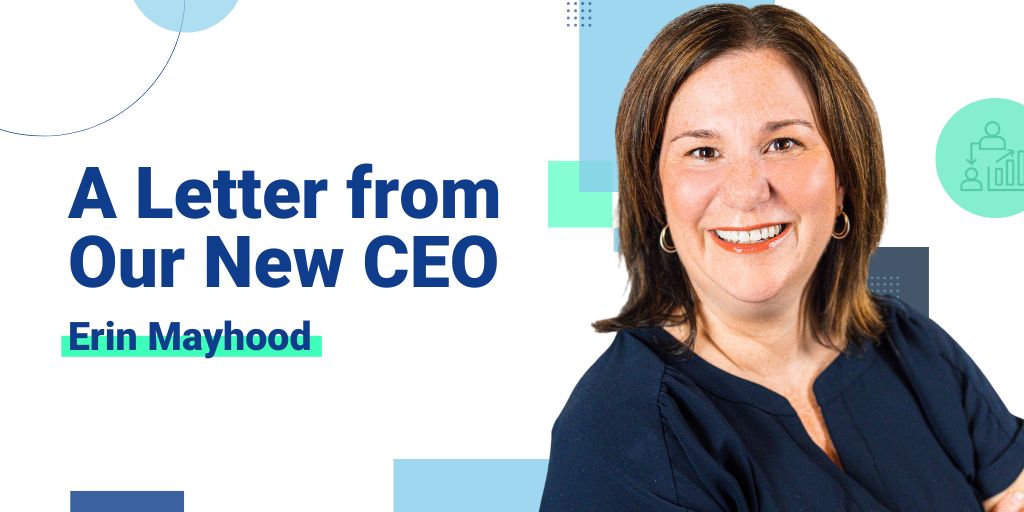
Erin Mayhood became CEO in February 2024, succeeding Boyar, who became executive chairman. Her introductory letter described a first-generation student whose early world was music. The company also describes itself as remote-first. In 2025, its Roadtrip Nation partnership added career courses and stories to participant dashboards, while its broader positioning extended toward employers and workforce organizations.
Another expansion has a defined test bed. APLU selected Mentor Collective for MAPSS, a three-year, six-university mentorship initiative supported by a $1.3 million ECMC Foundation grant. That is initiative funding, not a disclosed payment to the vendor. Northern Illinois, Stony Brook, Temple, UT San Antonio, Penn State Altoona and Prairie View A&M are participating.
The part a reader can borrow
Mentor Collective occupies a competitive market. PeopleGrove connects student and alumni mentorship with broader engagement; Chronus also sells academic mentoring software. Matching alone offers little distinction. Mentor Collective’s case rests on combining peer support, operating help and participant insights. For a buyer, the useful comparison is how much work the campus must still perform and how well each system serves its actual students.
The copyable idea is to design the moments around the relationship: recruit early, help people begin, and assign someone to respond when trouble appears. It depends on willing mentors, engaged participants and an institution capable of acting on what it learns. An unanswered alert is merely a better-documented problem. The calendar can change; the obligation to show up remains.