fulfillment
(38)
Averitt’s best shortcut is a better map
The red trucks are easy to spot. The more interesting business is rearranging the journey: fewer detours, closer warehouses, and one partner responsible for the handoffs.
Logistics Plus turned a $120,000 order into a business built for the awkward jobs
A freight company from Erie grew by taking responsibility for the complications between pickup and delivery. Its most useful lesson: sometimes the shipping request is the first thing that needs fixing.
CEVA Logistics: Why Ferrari’s fast world needs slow boats
The company behind Ferrari’s travelling equipment has a useful trick: give slow transport a head start. Now CEVA is buying more of the places where that trick becomes possible.
MD Logistics found 25% more capacity in the space between boxes
A pharmaceutical warehouse had a conveyor problem. The fix reveals how MD Logistics earns its keep: by making the small, awkward details of moving medicine work.

Kenco finds the money hiding between the shelves
A warehouse can be full of goods and still be wasting a fortune. Kenco has built a logistics business around finding the expensive little habits that everyone else walks past.

Nextuple and the art of keeping a retail promise
The buy button makes a promise. Nextuple works on the inventory, order routing, and store operations that decide whether a retailer can keep it.

The Marketing Agency With a Loading Dock
Integrated Marketing Services built an agency around the least glamorous part of branding: making sure the idea survives contact with ink, vinyl, deadlines and the loading dock.

G2 Graphic Service knows what happens after the ink dries
A makeup guide that sticks to a mirror. A custom box filled with homemade fudge. This family printer makes its case in the things people actually touch.

Social Graces and the art of giving a ship
A Los Angeles design agency turns corporate intentions into things people can hold. The interesting part is everything that has to happen before the box opens.
USA Marketing knows the joke has to arrive fresh
Avocado toast for new homeowners. Noisemakers delivered before the inning ends. Inside the Oakland company that makes promotional ideas work in the physical world.
IMAGEN and the business inside the box
A branded gift is easy to order. IMAGEN’s more interesting work is making the design, the delivery, and the reason for sending it fit together.

Electronic Printing Solutions takes on the work after the ink dries
The San Diego printer combines short-run production with mailing, merchandise and warehousing. Its useful proposition: a marketing project should arrive somewhere, not become another box in the office.

San Diego Printers Takes the Job Beyond the Press
A brochure is only the beginning. This San Diego print shop connects design, production, packing, and mailing - with a business built around the work customers would rather hand over.

Blibli Is Building an Online Mall You Can Walk Into
Phones, groceries, holidays, a new sofa. Blibli is stitching together the places Indonesians spend their money - and betting that the next online purchase may begin in a physical store.
SPS Commerce Fired 225 People, Bet on the Cloud, and Built Retail's $650 Billion Back Room
In 2001, a nearly insolvent software company chose a brutal third option: shrink to 75 people and build the cloud network nobody in retail wanted to maintain. Twenty-five years later, that network moves more than 750 million transactions a year - and its next test is whether all that memory can make AI useful.
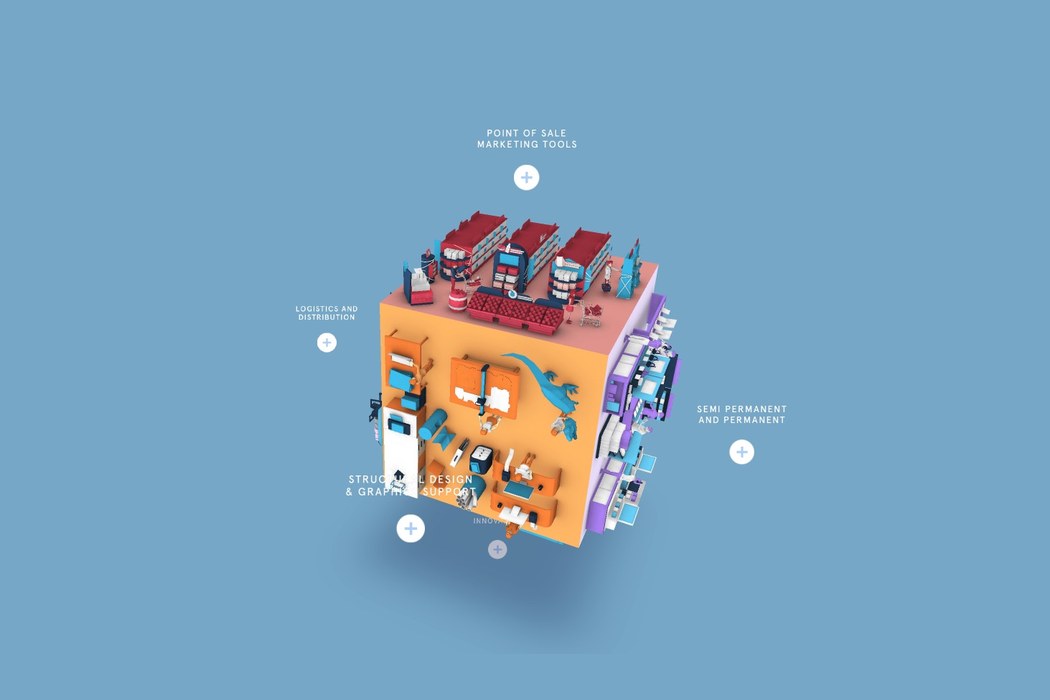
Godin Productions Bet the Shop on Making the Stuff It Used to Broker
For three decades, Godin Productions coordinated the messy work behind retail displays. Then a pandemic-era decision to manufacture in-house changed its margins, its machinery and the size of the problems it could take on.
He Wanted Inventory to Work Like Online Banking. Now It Runs 12 Million Square Feet.
Carl Wasinger started Smart Warehousing with one computer under his desk in 2001. Two decades on, its proprietary software SWIMS quietly moves other companies' products through 30-plus warehouses - and nearly 5,000 customers depend on it.
Cart.com Wants To Be The Operating System Behind Everything You Buy Online
Founded in 2020, the Houston company stitched together software and a warehouse network to sell brands one thing they rarely get: their orders, inventory and shipping in a single place.

The Call Center Disappeared. Alta Resources Kept the Conversation
Alta Resources built an 8,000-person outsourcing business by treating customer service as part of the product. Now it is threading conversational AI through a model designed around dedicated human teams.

DME Delivers
For forty years, most of the marketing world has been racing away from paper. A family-run shop in Daytona Beach built a business by running toward it - and teaching universities how to make a donor feel like more than a line in a database.
Anchanto
Anchanto is a Singapore-based B2B SaaS company that helps brands, retailers, and third-party logistics providers run their entire e-commerce operation from one platform. Its cloud products handle order management, warehouse operations, inventory, marketplace integrations, and parcel tracking across marketplaces, webstores, and D2C channels. Founded in 2011, it serves 360+ enterprise customers across more than a dozen countries and processes hundreds of millions of orders a year.
Fresh Factory
Fresh Factory is an Indonesian smart cold chain fulfillment platform that operates a network of hyperlocal micro cold-storage hubs, transportation, and fulfillment software so food, beverage, and other temperature-sensitive brands can store, pick, pack, and deliver perishable goods to consumers and retailers faster and cheaper. Founded in Jakarta in 2020 and part of Y Combinator's Winter 2022 batch, it functions as an outsourced cold-chain backbone for e-commerce sellers and MSMEs across Indonesia.

Handled
Handled is an AI operations platform that automates the manual, reactive work that piles up after an online order is placed - order processing, shipment tracking, exception handling, returns, and invoice reconciliation - for omnichannel consumer-brand teams and the third-party logistics providers (3PLs) that fulfill for them. Founded in 2024 out of Y Combinator's S24 batch by Audrey Djiya and Peter Nsaka (legally Zimi, Inc.), the company connects to the ERPs, 3PLs, sales channels, and carriers a brand already uses and does the busywork around the clock.

InLoop Robotics
InLoop Robotics deploys intelligent bimanual robotic arms into warehouses as a service - handling packing, kitting, and order fulfillment for a flat monthly fee with no upfront hardware cost. Instead of waiting for a perfect model, InLoop ships imperfect policies into real warehouses, detects failures in real time, recovers automatically when it can, and hands off to a remote human operator when it can't. Every intervention becomes training data, so the system keeps getting faster and cheaper with each order.

Jet Commerce
Jet Commerce is a Southeast Asia-focused e-commerce enabler founded in Indonesia in 2017 that provides brands with end-to-end online growth services - strategic consulting, marketplace store operations, integrated digital marketing, customer service, live commerce, and warehousing and fulfillment. Operating across Indonesia, Malaysia, Thailand, Vietnam, the Philippines, Singapore, China, and Brazil, it helps global and local brands such as OPPO, DJI, L'Oreal, and Panasonic sell on platforms including Shopee, Lazada, Tokopedia, and TikTok Shop. The company raised over $60 million in Series B financing in August 2022.
Walmart
Walmart is the world's largest retailer by revenue, operating a global network of supercenters, discount stores, neighborhood markets, Sam's Club warehouse clubs and a fast-growing e-commerce business. Founded in 1962 by Sam Walton in Rogers, Arkansas, the company built its scale on an 'everyday low prices' model powered by a highly efficient supply chain. Today it blends roughly 10,500 stores worldwide with digital commerce, retail advertising, a growing marketplace and AI-driven shopping tools, serving hundreds of millions of customers each week while employing about 2.1 million people.

Return Helper
Return Helper is a Singapore-based, AI-driven cross-border ecommerce returns and reverse-logistics platform. It pairs branded return-portal software with a network of 20+ overseas warehouses that receive, inspect and process returned goods locally, then recover value through recommerce - refurbishing, grading, reselling and recycling. Founded by Roy Wan and Paco Wong, the company helps online sellers on Amazon, Shopify, eBay and TikTok turn returns from a cost center into a source of recovered revenue.

Torod | طرود
Torod (طرود) is a Riyadh-based e-commerce logistics platform that acts as a shipping aggregator, letting online merchants connect to a wide network of local and international couriers through a single dashboard. Founded in 2022 by Faisal Almaklas and Ammar Almaatouq, it handles carrier selection, order tracking, cash-on-collection settlement, and returns, and plugs into store builders like Salla, Zid, Shopify and WooCommerce. The company has raised roughly $12.7M to date, including a ~$11.2M (42M SAR) pre-Series A round in February 2025 led by Wa'ed Ventures and Elm.

Outerspace
Outerspace is a brand-first third-party logistics (3PL) and fulfillment company that handles warehousing, picking, packing, kitting, shipping and returns for high-growth omnichannel consumer brands. Founded in late 2019 and headquartered in Carlstadt, New Jersey, it pairs dedicated on-site operations teams with its proprietary Mission Control order-management and shipping technology to turn fulfillment from a cost center into a growth lever. The company serves DTC and retail brands across apparel, home goods, beauty and CPG, and has raised more than $34 million, including a $30M Series B led by Prysm Capital in 2022.

Beeline Connect, Inc.
Beeline Connect is a Los Gatos, California SaaS company that links bicycle riders, independent bike shops, and bicycle brands through a single platform for service scheduling, warranty management, dealer locators, and last-mile fulfillment, helping direct-to-consumer bike brands route deliveries and services through local retailers instead of building their own logistics networks.