A cruise ship is an awkward thank-you present. There is the size, for a start. Then the berth. Social Graces helped solve that problem by going smaller: handmade wooden models of Mitsui Ocean Fuji, built in Vietnam for Mitsui Ocean Cruises. The initial commission comprised 94 models. Fourteen measured 60 inches; another 80 measured 20 inches. The workshop produced the batch in six weeks.
Brad Sherman, Social Graces’ president, visited the factory repeatedly to check progress and quality. Technical drawings became miniature vessels, complete with the fiddly parts that make a ship look like a ship. Large versions were intended for official and corporate display; smaller ones for agencies and partners. The client praised the value.
“Everyone loves ships and ship models.”
Tony Kaufman, Mitsui Ocean Cruises · 2025
That is a pleasingly straightforward explanation for a very particular gift. It also offers a way into this company. Social Graces works where a corporate message becomes a physical object, and where the person responsible for the message must suddenly think about manufacturing, names, packaging and delivery.
The useful bit after the artwork
The agency describes itself as a graphic design and marketing support business for corporate meeting and event planners. Its services stretch from invitations to recognition programs, with production and fulfillment included. Consider what that combination means for the buyer. An event has an opening time. The invitation, registration page and welcome materials all have to agree about what is happening. The designer’s job and the organizer’s job touch at almost every step.
On its invitation page, Social Graces lists themed and corporate designs, save-the-dates and thank-you notes. It also offers addressing, stuffing, stamping and mailing. The list is wonderfully literal. These are tasks that someone has to do, however glamorous the occasion. A beautifully printed invitation inside an unaddressed envelope is still in the office.
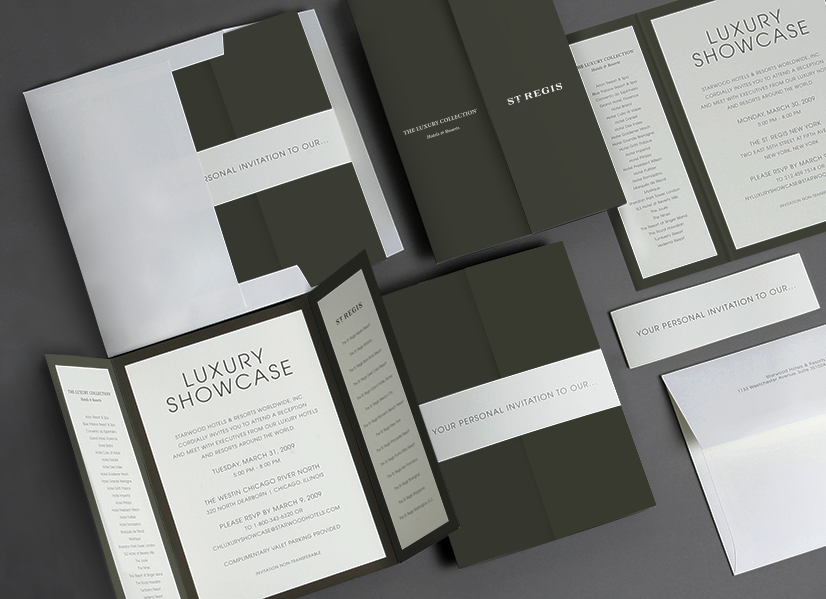
Response handling belongs in the same conversation. The company’s invitation service explicitly includes phone, fax and email RSVPs; its marketing offering adds online registration and e-vites. The fax reference is an amusing detail, but the larger idea remains useful: an invitation creates a return journey for information. Someone needs to receive the answer.
The phrase an event planner wants to hear
“Distribution ready” is how Social Graces describes its on-site collateral. Its list includes welcome packages, sales kits, name tags, place cards, menus, agendas, posters, banners and signage. Materials can be personalized with recipients’ names. A visitor sees an orderly meeting. The planner has been dealing with a collection of separate objects that must arrive as one coherent experience.
This helps explain the agency’s position in the market. A buyer could assemble a design studio, printer, gift supplier and fulfillment provider separately. Social Graces offers overlapping responsibilities within one service relationship. The practical attraction is fewer handoffs for the client to organize. That is an interpretation of the offering, rather than a measured claim about time saved.
The client list spans organizations such as Boeing, Microsoft, Coca-Cola, Marriott, Princess Cruises and the United States Department of State. These are company-listed relationships, not a claim that each is an active account today. What the list suggests is variety in the brief: a meeting, a recognition occasion and a partner gift may require different objects while asking the same basic question. Will this feel appropriate to the recipient?
Three thousand choices, one recipient
The gifts page says the agency’s database contains more than 3,000 items. Its sourcing covers limited editions and traditional branded giftware for appreciation, commemoration, recognition and new alliances. Wrapping and drop shipping are part of the offer. The photograph below comes from that gift portfolio: restrained, tactile objects with no need for a speech.

For a buyer, a large catalogue is a starting point. The useful brief would specify the occasion, recipient, quantity, destination and arrival date before discussing finishes. This is a lesson to copy from the breadth of the service: write the delivery requirements beside the creative requirements. Otherwise, the charming object and the usable object may become two different proposals.
It also changes how a quotation should be read. Ask which parts cover design, personalization, production, packing and delivery. Ask what happens when the recipient list changes. These are purchasing questions suggested by the work Social Graces offers, not a description of its contract terms. Comparing a finished, delivered program with the price of an undecorated item will tell a buyer very little.
When the orders changed
A January 2010 account by event-production collaborator EventWorks captures a less photogenic moment. The recession had weakened corporate gifting. Sherman said orders were then concentrated in awards and recognition; printing was less affected. He continued sourcing and the company made art objects available online, with the stated aim of helping the craftspeople keep working.
The same account described handmade orders with capacities of roughly 50 to 1,000 pieces and lead times that could stretch to six months. Those were conditions reported in 2010, not a current service promise. They explain a real tension in buying handmade objects: the production limits are part of what the purchaser is choosing.
A useful inference follows. A highly particular gift deserves an early conversation about quantity and timing. A buyer who needs an enormous identical batch immediately may be better served by an available standardized product. Distinctiveness is only useful when it fits the occasion’s constraints. The deadline belongs in the first brief.
The award has a memory
Social Graces’ awards offering contains an easily overlooked service: maintaining the award-program database. The agency describes experience with annual and multi-level programs alongside original award concepts. That pairing brings the business into focus. A recognition object has a shape and a finish, but a recognition program has names, levels and repeated occasions.
Its wider marketing work follows the same practical pattern. The company lists publicity mailings, business announcements for executives, outdoor poster design and merchandise concepts. These are specific assignments for specific departments. The commercial model is best understood as custom business services and supplied goods, with continuing programs where the assignment calls for them.
There is a modest, useful idea here for anyone commissioning creative work. Define the moment when the job is actually complete. For an invitation, that might include receiving the answer. For an award, it includes getting the recipient’s name right. For a gift, it includes the parcel arriving. Social Graces has built its published offering around those endings. The box opening is simply the part everyone gets to see.