The unglamorous truth about an eye-catching supermarket display is that somebody has to make the thing stand up. It must survive a truck, fit through a stockroom door, assemble before the store manager loses patience and still look expensive beneath fluorescent lights. Godin Productions lives in that awkward territory between a marketer's sketch and a shopper reaching for a jar of sauce.
The Toronto company designs and produces point-of-sale materials, temporary and permanent displays, print and packaging. It also handles the work that arrives after the glamour has left the room: finishing, kitting, co-packing, warehousing, distribution and installation. Its customers are consumer brands, retailers and agencies. The public client list reads like several pantry shelves and a hardware aisle - Conagra, Campbell's, Colgate, Clorox, Labatt, Diageo, Black & Decker and Dyson - with Staples, TD and marketing shops mixed in.
This sounds like a broad menu because the product is partly accountability. A brand can hire one company to take a brief from structural design through national delivery instead of refereeing a designer, printer, fabricator, packer and carrier. Godin calls itself a production powerhouse. The more precise description is a handoff remover.
The first thing that cracked was control
Godin was founded in 1989 and spent more than three decades largely brokering work: securing the right design, printing or logistics supplier and managing the result for a client. That asset-light arrangement kept overhead low and let the team shop around. It also meant that the crucial act of making belonged to somebody else.
COVID restrictions exposed the weak joint. Former CEO Todd Godin later described the response as a deliberate move into manufacturing - not because owning machinery looked impressive, but because the company wanted more capability, more value for clients and more control over the process. It brought structural design inside first. That new department needed a cutting table, so Godin bought an automated Kongsberg C64.
That first machine changed the team's mind. Better job economics and a new offer were visible, not theoretical. A new high-speed printer followed, then a second automated C64 and a smaller Kongsberg X dedicated to structural design. Godin says one operator can manage two production lines, a revealing number in a business where labor around finishing equipment is a major expense.
Six months before pressing “buy”
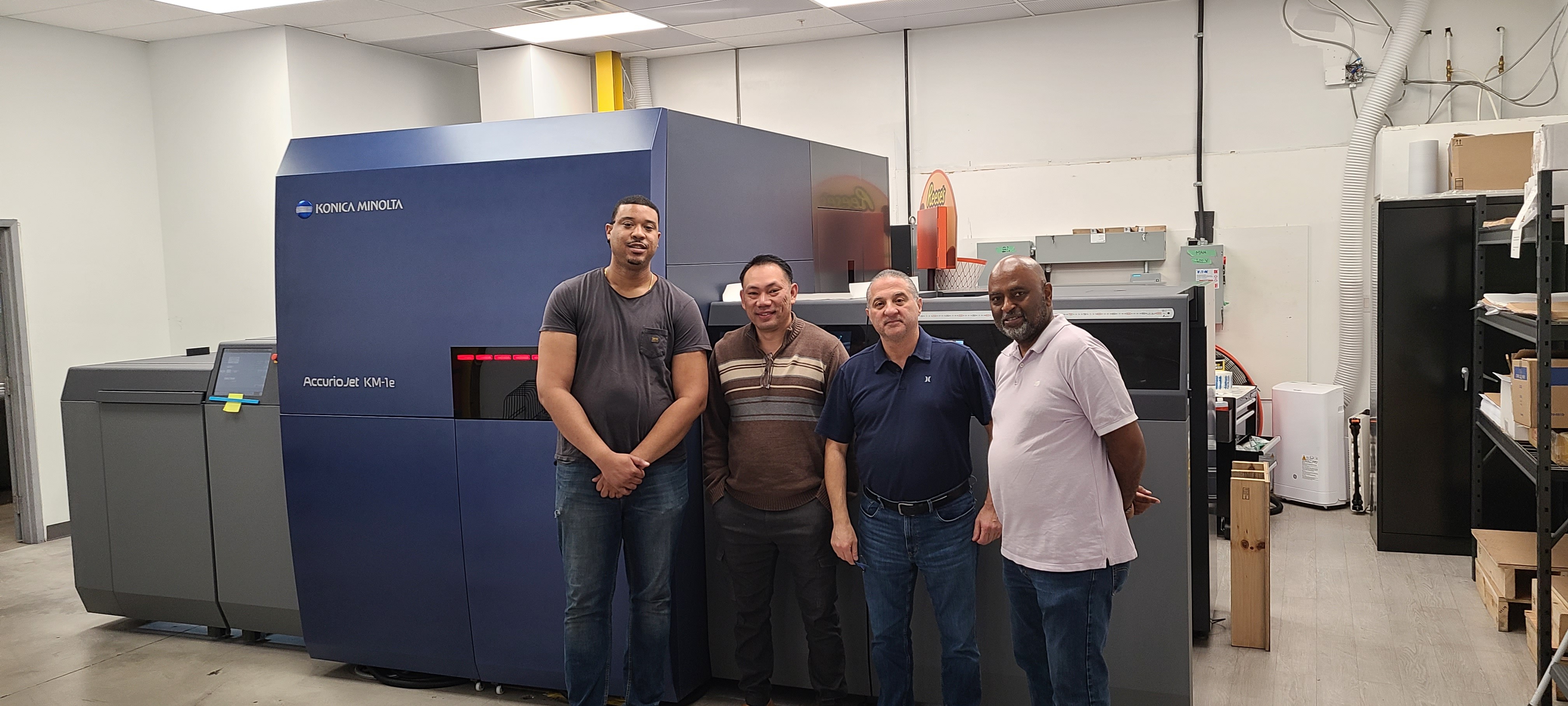
The next investment was less improvisation than audition. Godin evaluated competing printing technologies for six months before choosing Konica Minolta's AccurioJet KM-1e HD, a digital B2 press that became operational in May 2025. The stated goals were refreshingly managerial: improve manufacturing control, cut cost of goods sold, work across more substrates and create a production setup that could scale.
The press also opened a route into short-run packaging, where brands need smaller quantities without surrendering image quality or material flexibility. Godin reported faster turnarounds and immediate cost savings after installation. The purchase price was not the public lesson. The test was whether owned capacity could remove enough delay and outsourced margin to pay its way.
By 2026, the physical bet had outgrown the old floor. The company announced an approximately 50,000-square-foot standalone facility at 35 Mobile Drive in Toronto, combining its head office with more manufacturing space. Its own explanation included boxes where aisles used to be. Few capacity plans have offered a better image of product-market fit: the first warning light was no longer being able to walk across the factory.
The spectacle must fit in the car
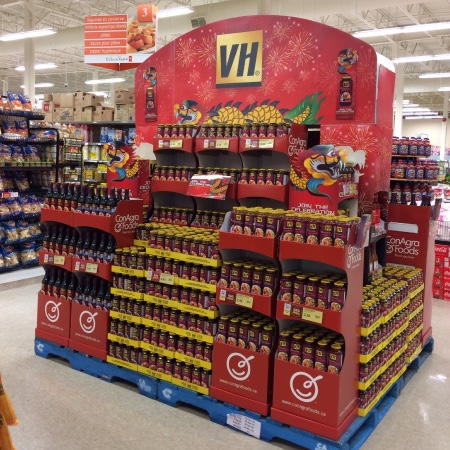
The machinery matters because the briefs are weird. Conagra and Match Marketing wanted an illuminated Chinese New Year arch to merchandise VH sauces. It also had to fit into a Honda Fit. Godin reused the structural skeleton of an older display, designed foldable pillars and a header that lit up when shoppers approached. The client reported easier execution and a substantial sales increase. The delightful part is not merely that it glowed. It glowed after traveling in a subcompact.
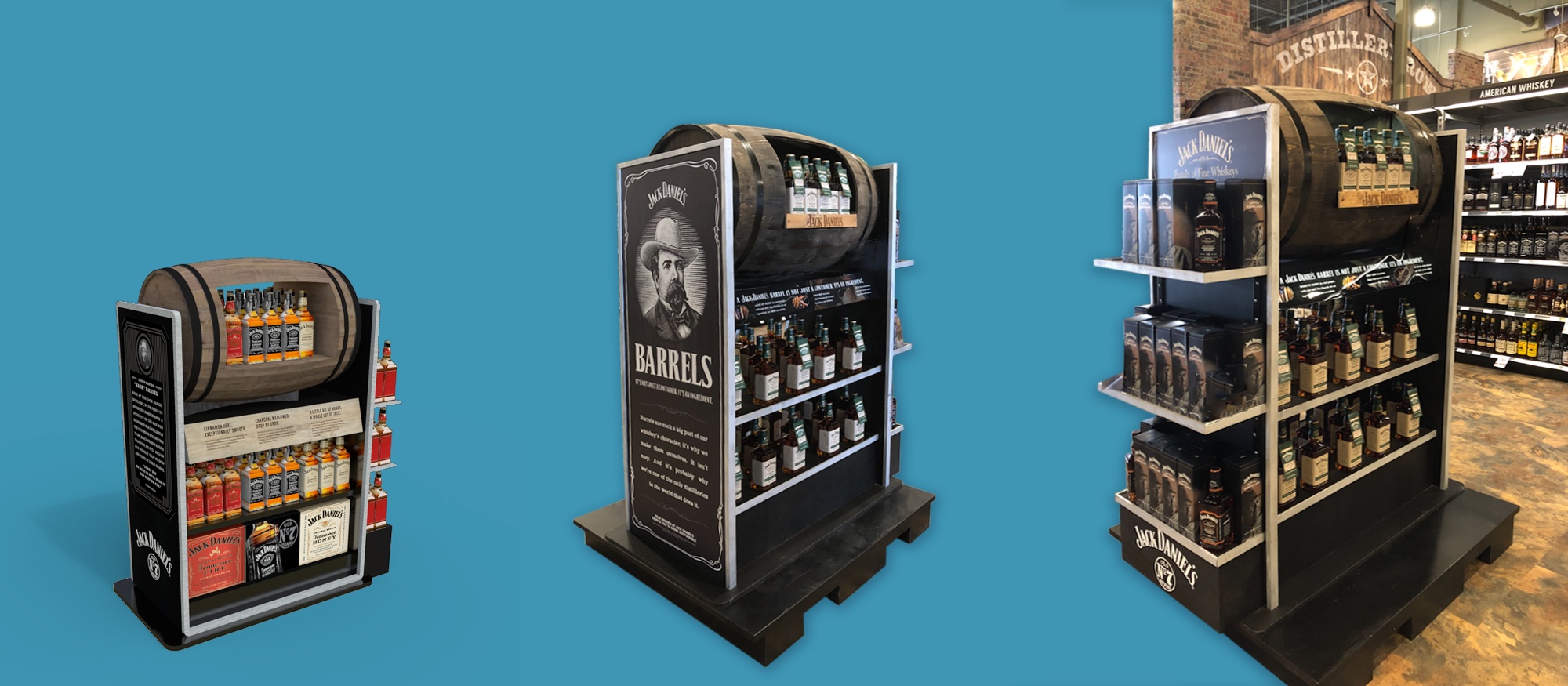
For Jack Daniel's, Godin turned a custom whiskey-barrel shape into an education station with LEDs, recipes and shelves. A more recent Perrier brief required proportional oversized cans that could ship flat, assemble without tools and work either as a half-shell against a wall or a full cylinder. These objects compete for attention, but their engineering competes against freight charges, setup time and a clerk's willingness to read instructions.
This is where Godin differs from a conventional commercial printer. A printer is an essential station. Godin wants to own the route: creative, structural engineering, printing, cutting, metalwork, powder coating, finishing, packing and distribution. It also holds Canadian distribution rights for Display Flash's patented pop-up systems and lists Tokinomo, Proteus Smart Display and DRU coolers as innovation partners. Those licenses expand what can be offered without requiring every technology to be invented in Toronto.
The invoice is as custom as the object
Godin sells projects, not subscriptions. A job can begin with a finished agency design that needs production, or with a blank brief that needs concept work, structural engineering and a prototype before anybody orders material. The bill then moves with substrate, run size, print method, finishing, assembly, storage, freight and installation. A cardboard counter unit and a powder-coated metal fixture may both be called displays, but they do not share much of a cost structure.
That menu creates two commercial paths. A client can buy one specialist service, such as structural design or co-packing, and leave the rest of the chain elsewhere. Or it can hand Godin the whole program. The second path is strategically valuable because revenue travels through more stages while the customer has fewer vendors to coordinate. Owned production can improve the margin inside that larger engagement, provided the machines stay busy.
The alternatives are equally varied. Harding Display, Protagon, Somerville Merchandising, The Central Group, Array Marketing and large printers such as TC Transcontinental occupy pieces of the same Canadian market. A brand can also assemble its own relay team of agency, printer, fabricator and fulfillment warehouse. Godin's pitch is not that each component is unavailable elsewhere. It is that a tightly coupled job is less fragile when the components share schedules, files, quality checks and project management.
What a service business can steal
Do not copy the shopping list. Copy the sequence. Godin internalized a capability tied to a visible bottleneck, proved that the first machine improved profitability and expanded the offer, then added capacity as demand grew. The move resembles a staircase, not a cannonball into capital expenditure.
Bring inside the part of delivery that customers already hold you accountable for, even when a supplier performs it.
Godin's in-house structural team needed cutting capacity. The equipment answered a specific workflow problem.
Margin, throughput, new jobs and operator time made the case for the second table more credible than enthusiasm.
The client buys fewer handoffs, faster decisions and one accountable project manager - not a tour of the machine room.
The conditions matter. Vertical integration is a poor fit when demand is sporadic, equipment utilization will stay low, substrates change faster than machines depreciate or the company lacks operators who can turn capacity into consistent output. An agency with ten bespoke jobs a year may gain more from excellent supplier relationships than from a cutter gathering dust. The tactic also weakens if customers value independent vendor selection more than speed and control.
Godin's version works because retail programs repeat, deadlines are unforgiving and the expensive mistakes happen between disciplines. A structurally pretty display that cannot ship is a failure. A flawless print that arrives after the promotion is a failure. Integration earns its keep when each handoff carries real schedule, quality or margin risk.
A family company, after the handoff
The operational transformation arrived alongside succession. Todd Godin retired as CEO in 2025 while remaining a partner and adviser. Public updates describe leadership shared by Kevin Godin in operations, Arron Brailsford in commercial work, Troy Yung in marketing and Vasily Dernis in technology. Dawn Campbell-Wong joined as chief financial officer in 2026, and Patrick Weir arrived as creative director as the company prepared its larger home.
The culture is presented as family-run, practical and community-minded. Its Pirate Golf Tournament, named for founder Butch “Pirate” Godin, ran ten times over 18 years and raised tens of thousands of dollars for playgrounds in disadvantaged communities in Mexico. The final event took place in 2026. It is an unusually human footnote for a company whose daily vocabulary includes substrates and feeder-stackers.
Godin now sits between agency, printer, fabricator and logistics operator. That can look unfocused on a slide. In a store, it looks like one display that arrived on time, unfolded without profanity and made the sauce impossible to miss. The bet is that owning more of the awkward middle creates better margins for Godin and fewer surprises for its clients. So far, the next factory is being built around it.