A leather catalog with steel brackets and an embroidered patch is a wonderfully specific answer to the question: what does a marketing company make? Butler Enterprises includes one in its specialty portfolio. Nearby are wooden binders, a folding box with magnets and a brushed-aluminum piece with a rubber spine. Somebody, somewhere, wanted a presentation that could not be adequately described as “a PDF.” Butler’s business has room for that person.
The California company works on marketing’s physical inventory: the brochure someone opens, the carton someone carries, the display that holds a product and the label attached to it. Its service list runs from conventional commercial printing to custom assembly and mailing. The common thread is production coordination. A campaign can require several objects, materials and suppliers; Butler offers to help put those requirements together.
That makes its slogan, “The Butler Did It!”, more useful than the usual corporate wordplay. The joke gives a sprawling service list a memorable signature. The serious proposition underneath is responsibility for getting a tangible job made. In a business where a good-looking design still has to fold, stand, bind or fit, the details are the work.
The job begins where the screen ends
Butler describes its remit as taking a project from concept through completion. Its website identifies the business as a division of MC Butler, Inc., and emphasizes relationships with vendors across the country. That last detail helps explain the breadth of its menu. This is a company presenting itself as a resource for coordinating production across specialties, with a supplier network behind the customer-facing brief.
Its six service groups are print, packaging, displays, labels, specialty work, and mailing or fulfillment. Read together, they describe the components of a physical marketing program. A publication needs printing and binding. A retail promotion might call for a carton, a display and a label. A mailing needs an addressable piece, usable data and preparation for delivery. Butler puts those conversations within the same commercial offering.
The distinction matters for buyers evaluating an advertising-services company. Butler’s published examples make its position clear: physical marketing production and merchandising support. The evidence is in the objects. Catalogs, floor displays, bags, tags and custom binders give a prospective customer a much more precise picture than the broad word “marketing” can provide.
A map of Butler’s published services, not a prescribed production sequence.
Chocolate milk meets the production brief
The packaging gallery supplies a useful example of how concrete this business gets. It shows chocolate-milk cartons under the description “Food Packaging and Mock ups.” Elsewhere are apparel boxes, Euro-style tote bags and a paperboard box with spot-gloss finishing. These are examples of different production problems gathered into one portfolio, rather than variations on a single standard box.
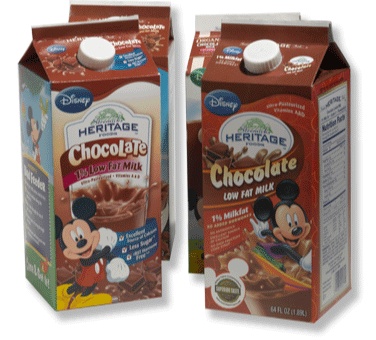
A buyer looking at these objects should notice the structure as much as the graphics. The package must suit its contents, its intended handling and its presentation. Butler’s listed options include folding cartons, corrugated boxes, printed corrugated construction and litho-laminated corrugated packaging. The range gives a customer several starting points for discussing what an object needs to do.
The useful lesson is to brief the complete item. Supply dimensions, quantity, the intended use and the delivery requirement before getting attached to a finish. If several pieces belong to the same campaign, describe them together. This is a practical way to use Butler’s service range: let the production conversation include the package, its companion materials and the work needed to assemble them.
A display has to occupy real space
Butler’s display portfolio extends the story beyond paper. One example pairs acrylic with powder-coated metal to hold magazines. Another is an acrylic sunglass display. The service menu also lists wooden fixtures, counter displays, floor displays, end caps, power wings, pallet packs and trade-show work. Each format puts printed branding into a setting where the object must have a useful shape.
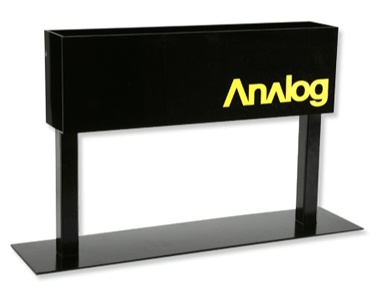
For a retailer or a brand preparing a promotion, that makes the available footprint part of the creative brief. A countertop unit and a floor fixture create different demands. Questions about dimensions, product arrangement, assembly and placement belong early in the conversation. Butler’s portfolio provides a vocabulary of possible constructions with which to begin it.
Its offer also overlaps with other production suppliers. Tustin’s Graphic Productions lists packaging, print, point-of-purchase displays and fulfillment, while Progressive Label provides specialist label and packaging work. Butler’s breadth is therefore a positioning choice within an established market. A customer should compare relevant samples, the proposed materials and the scope of coordination, rather than assume that a long service menu proves a better result.
The quiet credit in a nursing magazine
For a named example of publication work, turn to the production credits of Humanitas, the literary magazine published by UC Irvine’s Sue & Bill Gross School of Nursing. Its Fall/Winter 2025 issue names Butler Enterprises under printing. The Spring/Summer 2026 issue does so again. Those credits place the company behind a finished publication with an identifiable institutional publisher.
It is an appropriately modest piece of evidence. A printing credit records a contribution to making the publication; the editorial and design roles have their own names. For Butler, it gives substance to a service list that includes magazines, catalogs and annual reports. The company’s work can sit behind the pages readers remember without being the subject of those pages.
Butler says its customer experience spans startups through Fortune 100 companies. The practical audience for its offer is broader than one sector: marketing departments, publication teams and businesses that need branded materials produced. The shared requirement is a physical deliverable. A small organization might need help specifying it; an established team might arrive with finished artwork and a detailed production brief.
“Yeah, We Can Do That”
Butler Enterprises’ service-page promise
The unusual object is part of the offer
The specialty gallery is where Butler’s personality becomes easiest to see. Alongside the leather catalog are custom full-color binders and wooden binders. Its broader list includes wine lists, custom menus, hand binding and handmade boxes. These are presentation tools whose materials can be as noticeable as their printed content. They invite a buyer to think about the experience of holding and opening something.
Labels bring the scale back down. Butler lists woven labels, hang tags, pressure-sensitive formats, metal name plates and static clings. The gallery includes custom-cut vinyl stickers and reflective-vinyl work. Small pieces can carry very different practical requirements; a tag tied to an item and a sticker intended to remain attached should prompt different specifications.
That is the expertise Butler’s portfolio asks a customer to assess: familiarity with varied forms of print and fabrication, plus the ability to translate a brief into an appropriate production route. Its nationwide vendor relationships are part of that proposition. The customer is buying an object and the work of arranging how that object gets made.
Paper choices, with an outdoor backstory
Butler’s environmental page has a more personal explanation than most materials menus. The team describes itself as a collection of surfers, beachgoers, snowboarders, fishermen and other outdoor enthusiasts. It connects those interests to offering customers recycled paper, FSC-certified paper stocks and soy- or vegetable-based inks. The stated aim is to keep looking for renewable technologies and greener printing options.
The packaging portfolio makes that discussion more tangible. It includes a recycled plastic bag described as using water-based inks and a recycled kraft-paper bag. The service list also includes reusable bags. These examples turn a broad environmental preference into specific questions a customer can ask about the material proposed for a job.
The sensible approach is to put the desired paper or bag specification into the brief and confirm it for the actual order. Butler’s offering provides choices; the particular construction still matters. An environmental claim about a stock or ink should remain attached to that stock or ink, rather than become an assumption about every component of the finished campaign.
Buying the whole job
Butler’s contact page invites a conversation about the next project and directs customers toward a quote. Its commercial model is therefore best understood as custom business-to-business production work. To make a price useful, a buyer needs a defined quantity, materials, dimensions, finishing requirements and destination. A quote becomes much easier to judge when the deliverable is specific enough to compare.
Mailing and fulfillment widen that brief. Butler lists data maintenance, data conversions, barcoding, postal presorting, variable-data printing, inserting, hand work and custom assembly. Those services address what happens around and after printing. For a campaign with several components, the buyer should establish which assembly and distribution tasks belong in the order and who approves the finished piece.
A practical starting document can be short: what is being made, who will use it, how many are required, what it must fit, when it must arrive and who signs off. Add a reference sample if the desired construction is difficult to describe. That gives a production partner something concrete to respond to and gives the customer a basis for evaluating the response.
The coordinated model makes most sense when a job crosses several production needs or calls for an unusual item. A straightforward repeat order may be adequately served by a specialist already set up for it. Butler’s appeal lies in the wider brief: the publication and its mailing, the carton and its display, or the presentation piece with the improbable binding. The creative idea gets its chance to become a useful object.
Take a closer look
Company website · Print portfolio · Packaging · Specialty work · LinkedIn · Facebook · YouTube channel · Humanitas magazine