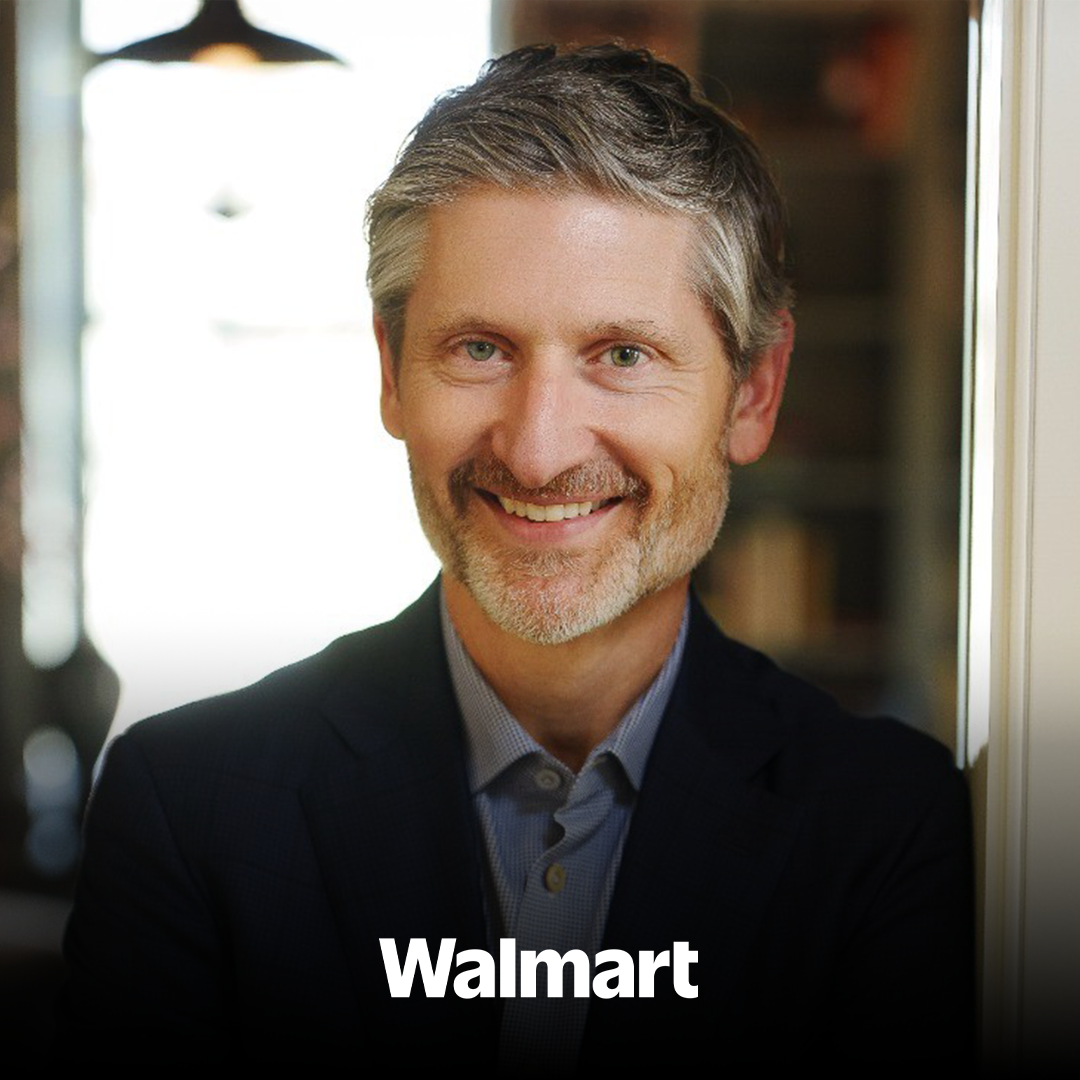
William White started his career deciding where advertising should run. As a media planner at Starcom, part of Publicis Groupe, his job was the plumbing of marketing - the channels, the timing, the reach. It is a useful place to begin, because it teaches you that a great idea placed in the wrong spot reaches no one. Two decades later, White sits at the top of the marketing organization at Walmart, a company with roughly 2.1 million employees and more than $700 billion in annual revenue, and the lesson still holds: meet people where they already are.
He took the Walmart job on May 1, 2020. It is hard to imagine a stranger week to start a marketing role at a retailer. Stores were rationing supplies, supply chains were buckling, and the usual playbook of promotions and price ads suddenly felt tone-deaf. White had to make quick calls - pull ads that pointed shoppers toward products that were out of stock - while also keeping an eye on the longer game. That longer game included a new membership program, Walmart+, and the holiday season that was only months away.
A career built at three American giants
The path to Bentonville ran through two other iconic brands. At The Coca-Cola Company, where White spent close to nine years, he helped scale Coke Zero from a launch into a billion-dollar brand in the United States and led global marketing for Diet Coke and Coca-Cola Light. That is a rare thing on a resume: not managing a big brand, but building one from the ground up.
In 2013 he moved to Target, joining as a marketing leader and rising to Senior Vice President of Marketing over seven years. He arrived at a difficult moment - the retailer was reeling from a major data breach that had shaken customer trust - and he was part of the work to rebuild that relationship. He also helped launch owned brands that became household names, including the kids' apparel line Cat & Jack and the grocery brand Good & Gather, each of which grew into a multi-billion-dollar business. Owned brands are a marketer's proving ground. There is no legacy equity to lean on, so the brand has to earn its place on the shelf and in the cart.
Value and values
At Walmart, White talks about the brand in two registers at once. There is value, the price competitiveness that has defined the company for decades. And there are values - the socioeconomic, environmental, and community commitments that he argues a modern brand has to stand for. His stated aim is to move Walmart from a purely transactional relationship with customers toward what he calls a culturally and emotionally connected brand. For a company often described in terms of scale and logistics, that is a deliberately human ambition.
The pandemic gave him an early test of the idea. Rather than flooding customers with more advertising, White's team read the moment differently. Organic web traffic was surging as people searched on their own for gardening tools and cleaning supplies, so the team pulled back on digital spend instead of pushing more. "We recognized there was a vital need we could play for our customers, because they were looking for togetherness," he said. That read led to some unusual marketing: drive-in movie nights and college football tailgates staged in Walmart parking lots, giving people a safe sense of community when there was little to be had.
Omnichannel, in practice
Much of White's work has been about stitching together a shopping experience that jumps between a phone, a website, a livestream, and a physical store without feeling like four different companies. He has leaned into shoppable livestreams and digital video to shorten the distance between seeing something and buying it, and has experimented with newer platforms like TikTok. The through-line is full-funnel thinking - from the first spark of awareness all the way to loyalty - rather than treating each channel as its own silo.
The numbers have followed. In his first year, Walmart's ecommerce sales grew 79%, helped along by the launch of Walmart+, positioned squarely as the company's response to Amazon Prime. The recognition followed too. Forbes ranked White #4 on its 2024 list of the World's Most Influential CMOs, and he has become a regular voice at industry gatherings, including Adweek House at Cannes Lions in 2025.
The Duke thread
White is a two-time graduate of Duke University - a bachelor's degree in public policy in the late 1990s, followed by an MBA in marketing from the Fuqua School of Business. Public policy is an interesting foundation for a marketer. It is a discipline about how institutions and people interact, about incentives and trade-offs at scale. For someone whose day job is now speaking to hundreds of millions of shoppers, it is not the worst place to have started.
What comes across in his work is a marketer who trusts the customer to tell him what they need, and who is willing to change the plan when the signal changes. That is harder than it sounds inside a company the size of Walmart, where inertia is a real force. White's bet is that a brand this big can still feel close - that value and values do not have to be a trade-off, and that the retailer people go to for low prices can also be one they feel something about.