The first thing to notice about Logistics Plus is the size of the promise it made in 1996. Three employees. One customer. A one-year purchase order worth $120,000. Jim Berlin had been let go by USF Red Star, where he had spent much of his transportation career. GE Transportation needed help managing inbound freight. Berlin needed a next act. Neither circumstance required a grand theory of global commerce.
- A GE assignment became an education in international logistics.
- The company now combines freight, warehouses, customs and software.
- Its project work rewards questioning the requested route.
- Its fulfillment service has a specific customer-fit checklist.
A customer large enough to teach a small company
By 1997, GE was asking the five-person team to help with Mexican supplier shipments. In 1998, Logistics Plus employees were working inside sourcing offices in the Czech Republic, Poland and Russia. A domestic transportation assignment had become an international apprenticeship, with an unusually demanding teacher.
The sequence matters. Logistics Plus gained capabilities through work a customer already needed. It expanded into India, China and Indonesia in 1999 and began serving other industries. Freight management led into forwarding, storage and trade compliance. Each additional responsibility made the next one easier to win.
By 2017, U.S. revenue alone reached $127.3 million. Today, the privately held company reports annual global revenue approaching $1 billion and operations in more than 55 countries. Those figures describe different reporting scopes, so they should not be plotted as a tidy growth curve. They do establish that the original assignment became a substantial business.
“I was shocked that we made it to 1997.”
Jim Berlin, recalling the company’s beginnings
The request was negotiable. The destination wasn’t.
Consider a recent job moving critical power equipment from Vaasa, Finland, to Burlington, Iowa. A request for quotation is supposed to simplify buying: specify a job, solicit prices, choose a supplier. Logistics Plus treated the requested method as something to reconsider.
Its Scandinavian and Kansas teams worked with Ceres Barge and Vic’s Crane & Heavy Haul on a multimodal solution involving specialized barge and heavy-haul crane work. Nearly twelve months went into planning, coordination and engineering before execution. The equipment arrived safely in Iowa, according to the company’s case study.
Planning and engineering for the Finland-to-Iowa power-equipment move.
That is an instructive cost measured in time. Heavy equipment requires people to settle the awkward details before anyone starts congratulating themselves about delivery. A crane cannot improvise the way a meeting can. Here, LP’s contribution included designing the move and bringing the right specialists together.
When the port disappears
In Ukraine, the obstacle was more severe. Black Sea ports had been cut off. Working with Erie-based supplier Vorex, Logistics Plus had 22,000 tons of gas pipes to deliver for infrastructure rebuilding. The intended access had failed; the need for the material remained.
The detour ran through Romania’s Constanta port, then dozens of barges, then more than 1,000 truck shipments to destinations across Ukraine. Teams in China, Poland, Ukraine, Turkey and the United States participated. In 2024, the final shipment went directly through Ukraine’s Chornomorsk port.
- 01ConstantaRomanian port entry
- 02BargesDozens of river moves
- 03Trucks1,000+ shipments
- 04UkraineInland destinations
LP described the pipes as worth $100 million. That is the cargo’s value, not the price of transporting it. Confusing the two would make for a splendid headline and a dreadful purchasing decision. The operational lesson is concrete: a backup plan needs capacity and coordination at every handoff.
The paperwork is part of the product
For ordinary customers, the same business appears in less dramatic forms. Manufacturers need components delivered. Retailers need inventory stored and orders dispatched. Hotels need furniture delivered and installed. Technology operators need equipment moved into facilities. Logistics Plus sells services across those assignments, from individual shipments to dedicated supply chain management.
Its menu includes less-than-truckload and full-truckload transportation, international air and ocean forwarding, customs brokerage, warehousing, fulfillment and oversized project cargo. Its 4PL work can put dedicated staff into a customer’s operation. The company’s branded 3.5PL offering combines execution with broader coordination.
Technology supports that work. eShipPlus handles freight quotes, bills of lading, scheduling, tracking and reports. MyLogisticsPlus supplies customized portals and analytics. Control towers connect shipment milestones so customers can investigate where delays occur. Useful software makes the next decision easier; a handsome dashboard alone cannot unload a truck.
Buyers could compare C.H. Robinson for brokerage and managed transportation, DHL Global Forwarding for international freight, or CEVA for contract logistics. LP’s case is its willingness to assemble a customized assignment across disciplines. The right comparison is the complete scope, including documentation and exception handling. Contracts and shipment quotes pay for the work; annual revenue does not reveal its profit margin.
A warehouse job, then the top job
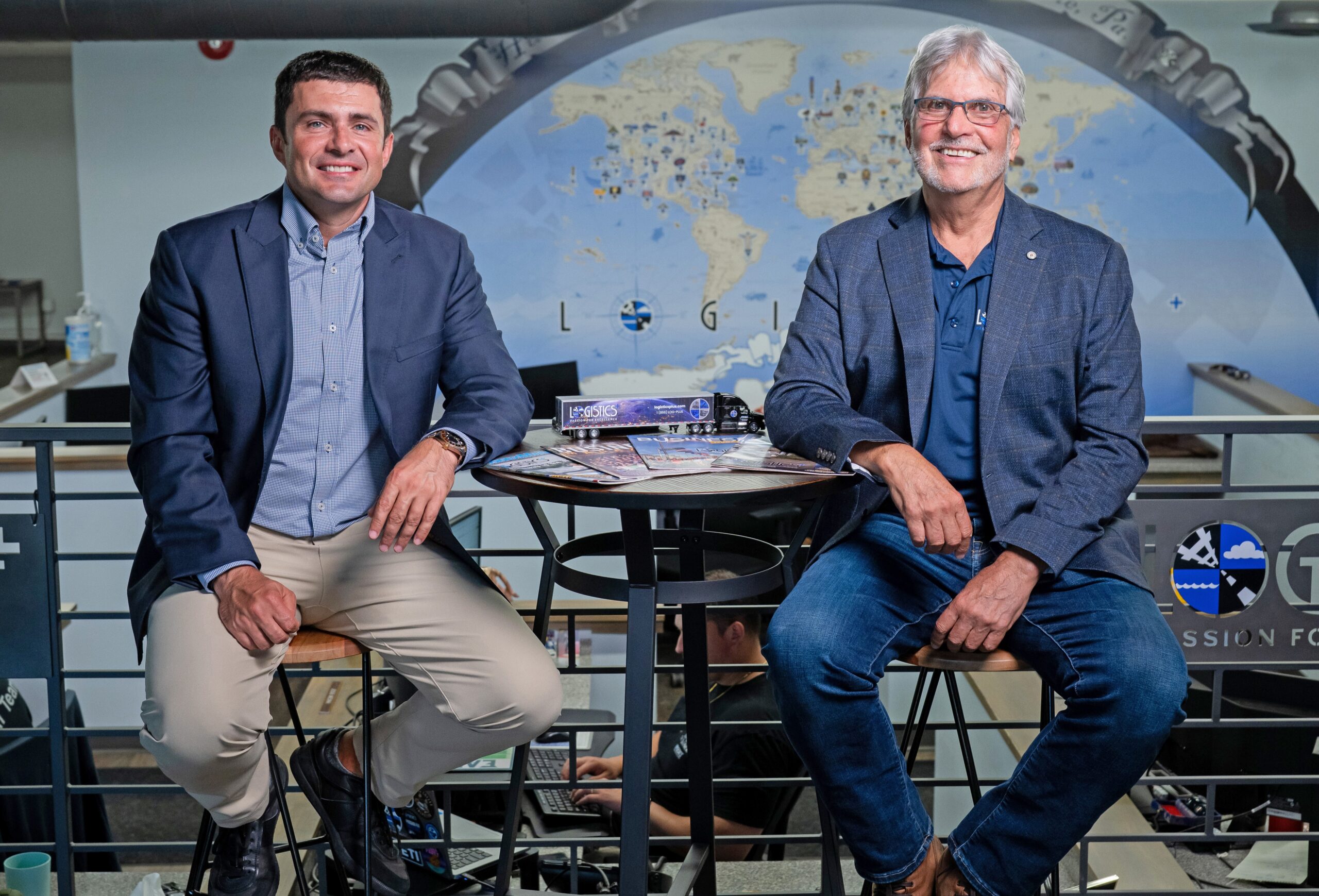
In May 2026, Berlin became chairman and Yuriy Ostapyak became CEO. Ostapyak’s early work included counting shoes in the Union Station warehouse. His promotion gives the company’s talk about employee opportunity a visible example.
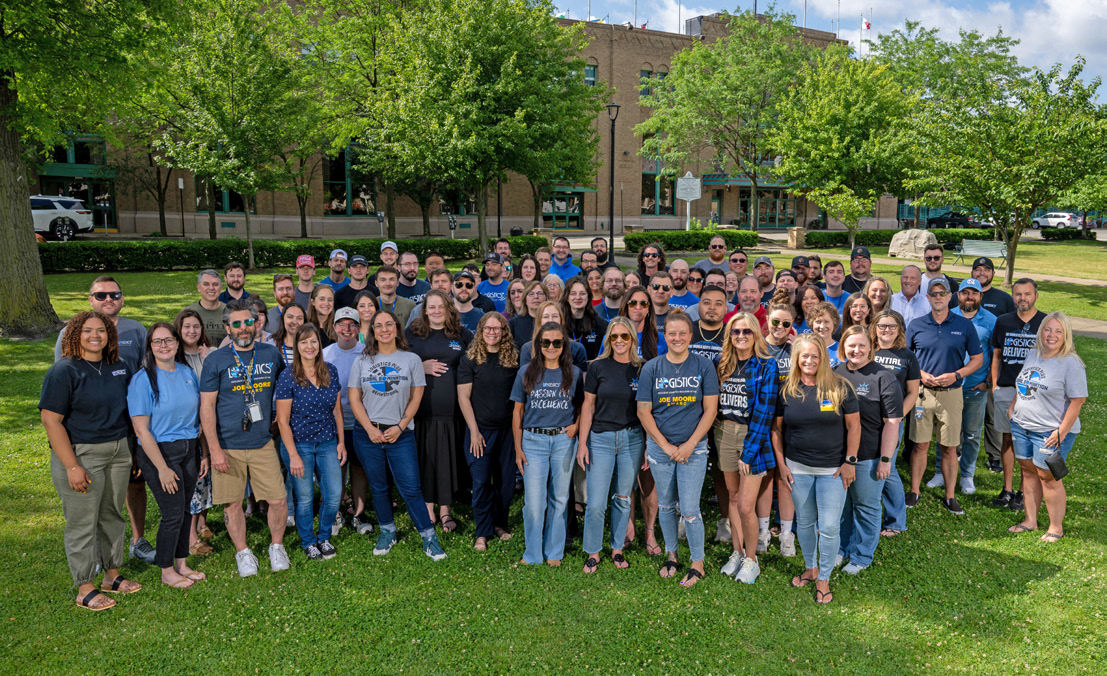
The wider workplace evidence is encouraging: in its 2026 Great Place to Work survey, 91% of employees called LP a great workplace, earning its ninth consecutive certification. Culture also has a physical address here. The company bought and renovated Erie’s historic Union Station in 2003. A business devoted to movement chose to put down roots in a railway station.
Even a company that says yes has a checklist
LP’s September 2026 e-commerce guidance favors established multichannel brands, manageable product ranges and higher-value goods. Orders averaging roughly $150-$200 or more tend to fit best. Pre-launch sellers with a pallet or two are usually better served elsewhere. Buyers should treat that threshold as guidance for B2C fulfillment, not a restriction on every LP service.
The copyable habit is to separate the required outcome from the proposed method. Give a provider the destination, deadline, dimensions, handling requirements and order profile. Ask who owns each transfer, each invoice and each exception. Then let the route be questioned. A purchase order can start a relationship; a well-framed problem gives it somewhere to go.