The wind-turbine blade was 105 metres long. The trailer carrying it was 113 metres long. Somewhere along the route, the grand project of generating electricity came down to a rather less grand question: could this enormous object get through a toll station?
- The work: connect ocean freight, inland transport, warehouses and industrial operations.
- The customers: manufacturers and cargo owners, with Bosch, HP and ASUS among named projects.
- The useful lesson: inspect the bottleneck before dispatching the expensive object.
COSCO Shipping Logistics’ Inner Mongolia subsidiary had surveyed the roads, studying curves, tunnels and bridges. It coordinated with traffic police, road authorities and municipal departments. At the toll station, 37.6 metres of guardrail and columns had to be removed. The blade got through. Global trade, occasionally, requires a spanner.
A toll station takes the measure of a giant
The episode is a useful introduction to a company whose name encourages the wrong picture. Say COSCO and people imagine container ships. Yet a ship cannot deliver a turbine blade to an inland yard. Between factory and destination lie surfaces, dimensions, permissions and people. A network becomes useful when somebody has worked out how those particulars fit together.
The current operator is COSCO SHIPPING Logistics & Supply Chain Management. Its official history describes a 2021-2022 transition that placed third-party logistics operations in the supply-chain company, which also managed the original logistics company. Earlier, in 2016, COSCO and China Shipping logistics and agency businesses had been consolidated. This is a business assembled from working parts.
One of those parts, the PENAVICO ship-agency lineage, goes back to 1953. That inheritance matters because logistics includes knowing how a port works, whom to coordinate with and which documents must arrive before the cargo. Institutional memory can be a practical asset when the object awaiting clearance is considerably longer than the queue behind it.
Seven businesses hiding behind a shipping name
The company organizes its work into container logistics, contract logistics, engineering logistics, ship agency, air logistics, chemical logistics, and tallying and inspection. Together, they span booking freight, looking after inventory, supplying production, moving unusually demanding cargo and checking what has actually been delivered. Its place in the market is industrial coordination across sea, road, rail and air.
Contract logistics reaches inside the manufacturing cycle: raw materials, production support, finished goods and returns. Chemical logistics adds tank-container maintenance, cleaning and hazardous-cargo handling. Air services cover time-sensitive industrial shipments, ecommerce and exhibitions. Tallying and inspection bring measurement and testing into the same wider organization. Different cargo asks different questions; a box of clothes and a chemical tank deserve different answers.
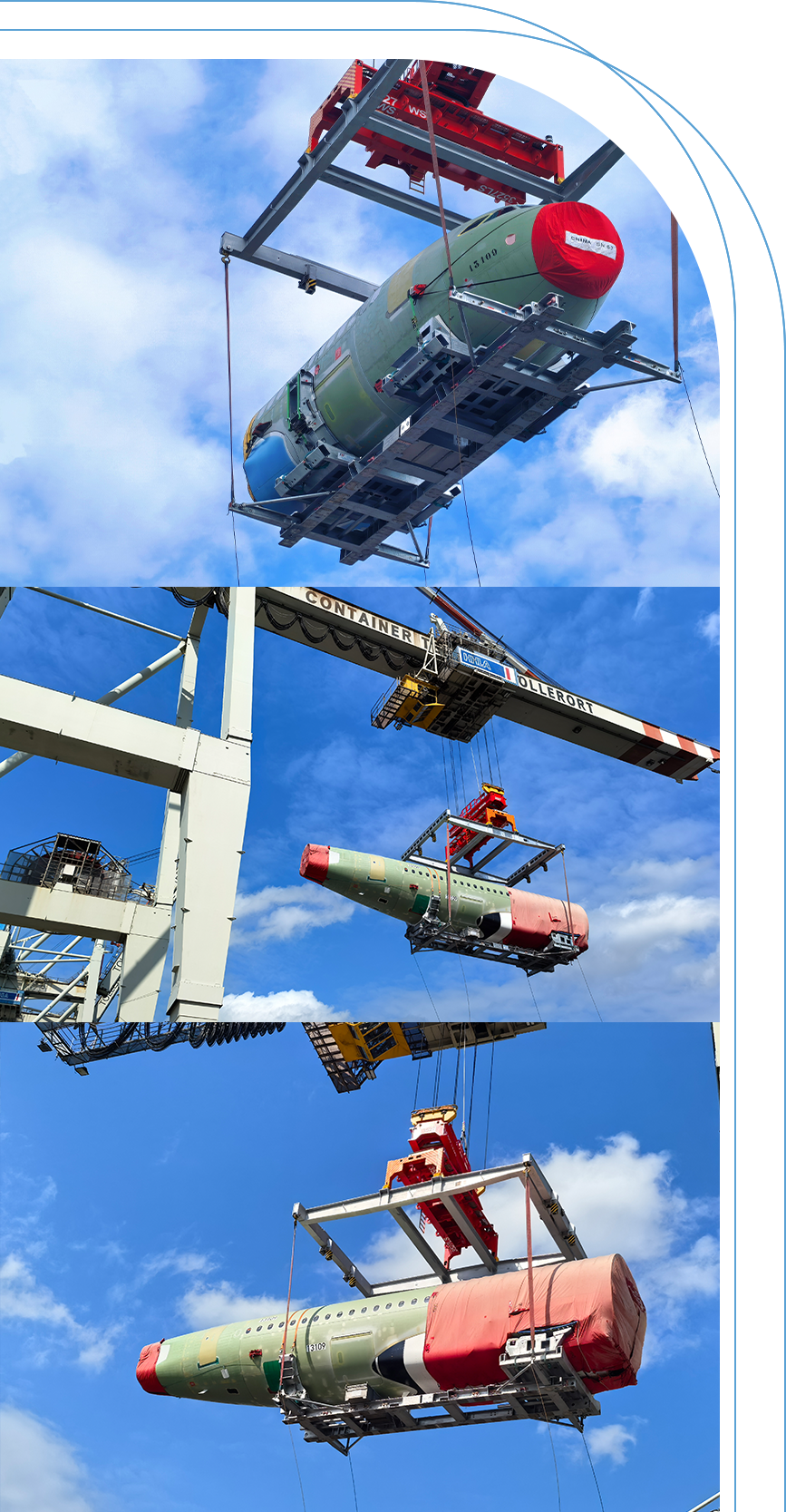
The engineering service describes feasibility studies, transport planning, lashing and structural-strength checks. Its customers include energy projects, industrial production lines and infrastructure construction. The expertise is physical as well as administrative: arrange the transport, then establish whether the load and equipment can survive the operation. A booking confirmation does very little for an inadequately supported piece of machinery.
Why the carrier wants the warehouse
The wider COSCO group supplies a substantial maritime context. The logistics company combines that access with inland resources and outside partners. Its container-service page names MSC and ONE alongside group carriers COSCO SHIPPING Lines and OOCL. The appeal is the ability to assemble a journey around the cargo, using more than one carrier or transport mode where appropriate.
That does not make integrated logistics unique. DHL Global Forwarding and Kuehne+Nagel also sell international freight and industrial-project services. COSCO’s distinguishing proposition is its position within a shipping, ports and logistics group, coupled with its Chinese regional network. For buyers, the meaningful comparison is the proposed route and responsibility at each handoff, rather than the grandeur of the corporate family tree.
“Within, With you.”The company’s published slogan
The business earns its place through paid logistics work: forwarding, transport arrangements, contracted operations, storage, agency and specialist services. A manufacturer is buying a specified scope, not subscribing to an abstract network. Cargo characteristics, destinations, handling requirements and inventory needs determine what that scope should contain.
Agreed consideration for an additional 12% stake in the supply-chain operator, December 2024.
There is a revealing price attached to the corporate connection. In December 2024, COSCO SHIPPING Lines agreed to buy another 12% of the logistics supply-chain company from COSCO SHIPPING Group for RMB2,142,606,006. This was an equity transfer. The disclosed sum belongs to ownership, while customers negotiate the cost of moving their particular goods. Bringing shipping and inland logistics closer together has value to the carrier too.
A canal gives the theory a workout
In September 2026, the company described its work on China’s Pinglu Canal. Its Hubei team transported oversized lock and steel components across Hubei, Hunan, Guangdong and Guangxi. It arranged permits, checked routes and bridges, tailored plans to individual batches and escorted the loads. After six months, it reported delivery ahead of schedule without accidents or damage.
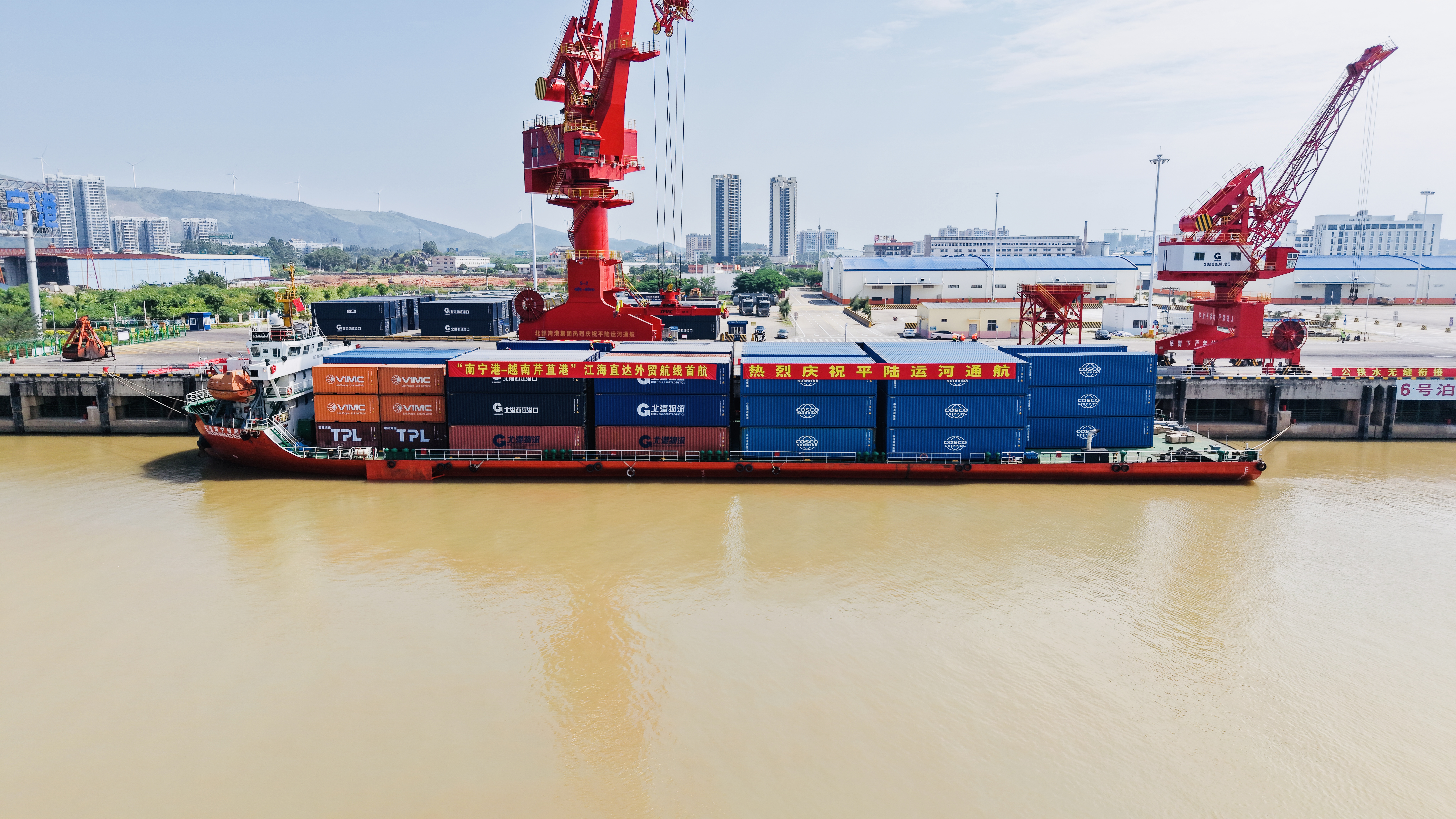
Then the assignment changed. Guangxi teams helped organize inaugural cargo and vessel-agency work. An inland-to-seaport service kept containers intact between Liujing and Yangpu. The same report describes new international vessel-agency procedures at Nanning. Construction logistics and operating logistics met at the canal’s opening, with another set of permissions and handoffs to resolve.
Copy the survey before copying the scale
The practical lesson is an inference from these jobs: examine the whole journey before optimizing one leg. Assign the border procedure, warehouse transfer and final delivery to identifiable owners. Check restrictive interfaces early. A faster crossing is of limited comfort if the cargo cannot pass the final gate.
For an industrial buyer, that means giving the logistics provider dimensions, weights, handling constraints, origin and destination, delivery windows and storage needs. The resulting proposal can then be compared with alternatives on actual scope. An integrated network cannot supply missing permissions or make an unsuitable bridge stronger. Its promise still depends on the route being feasible and the commercial terms making sense.
The wind blade is memorable because its obstacle was so ordinary. A toll station was built for vehicles of a certain size. Industrial ambition supplied something larger. COSCO’s logistics business lives in the work between those two facts, where an elegant plan must eventually turn a corner.