A coil of metal is an uncooperative passenger. It is heavy, easily damaged and indifferent to the elegance of your shipping software. Moving it by rail might make financial sense. Getting it into a container, keeping its weight properly distributed and transferring it safely are separate problems. The economics depend on solving the unglamorous bits.
Its business lives between transport modes, regulations and other people’s operations. It arranges freight, operates specialized facilities, manages transportation networks and provides the technology behind those movements. Chemicals, metals, food and beverages are central markets.
- Combines truck, rail, ocean transport and warehousing for complex freight.
- Serves more than 6,000 customers, according to its company history.
- Sells specialist execution and network management, with technology connecting both.
- Its useful lesson: price the whole journey, including the handoffs.
Five employees, one customer, difficult freight
Odyssey began in 2003 with five employees and one client. Founder Robert “Bob” Shellman came from the chemical logistics world: the founding management team had worked at UniGlobal Logistics, Union Carbide’s logistics subsidiary. Shipping mistakes here could mean more than lateness.
The company subsequently bought capabilities in international freight, chemical sampling, bulk liquids and metals. Its present footprint reaches North America, Europe and Asia-Pacific. A manufacturer should be able to buy a connected journey rather than assemble it, supplier by supplier, while also running a factory.
The pallet is part of the proposition
Odyssey’s patented Load-and-Roll Pallet process makes the strategy tangible. It is designed to move metals between railcars, flatbed trucks, warehouses and ocean containers with less handling and reduced damage risk. Securement and weight distribution make containerized metals practical.
Pair that physical process with direct contracts with major North American Class I railroads, and rail becomes an option a shipper can actually use. Odyssey says 85% of its warehousing facilities are rail-fed. The advantage rests in the combination of facilities, equipment, relationships and handling knowledge. A booking screen alone cannot supply those things.
For a buyer, the competitive question is therefore more specific than “Who has a truck?” It is “Who can make this commodity work on this lane?” General freight brokers, intermodal providers and specialist forwarders remain alternatives. Odyssey’s case is strongest when the shipment needs several of their capabilities together.
A solar panel needs more than a boat
Sunrun offers another version of the problem. Its island supply chains involve fragile solar equipment, hazardous-material batteries and shipments too small to justify an entire container. Ocean transport is followed by inter-island or final-mile delivery. Each transfer adds another appointment.
Odyssey provides less-than-container-load service with door-to-door handling. In Odyssey’s published customer account, Sunrun logistics manager Chaitanya Tambi says: “For anything LCL, we go to Odyssey.” He also describes electronic delivery and invoicing information flowing into Sunrun’s system.
The appeal is operational: one partner handles collection through final delivery, while the customer receives shipment information. That leaves Sunrun more time for installing energy systems.
“For anything LCL, we go to Odyssey.”
Chaitanya Tambi, Sunrun logistics manager
The first sale can fit in a small package
At chemical manufacturer Stepan, the strain appeared in samples. By 2016, its review of internal fulfillment found compliance complications, packaging difficulties, storage constraints and delays. More than 11,000 samples went out annually, and internal capacity could not keep pace with the demands.
Here, what failed first was the supporting process. A sample lets a prospect evaluate a chemical before ordering it; getting that sample wrong can spoil the introduction. Stepan’s team examined performance metrics and customer expectations, then sought a specialist partner. Odyssey already had a relationship with a business Stepan acquired in 2013.
Odyssey’s sample service covers packaging, inventory, regulatory requirements and reporting through MySampleCenter. It says its program has processed more than 14 million sample shipments. The lesson for another manufacturer is quite practical: watch the small requests. They can expose an operational bottleneck long before a large order does.
Buying the pieces, then joining them
Building this portfolio required money. In 2017, an affiliate of The Jordan Company became Odyssey’s majority shareholder. In October 2018, Odyssey agreed to acquire AFF Global Logistics for $465 million in cash and equity. The deal added offshore-market and consolidation expertise, a warehouse network and Asia-Pacific import capabilities.
Acquisitions also create seams inside the company. In 2023, Odyssey announced that acquired brands would unite under one name. CEO Hans Stig Moller explained the motivation plainly: “Many of our customers have yet to experience the full value of the solutions we offer.”
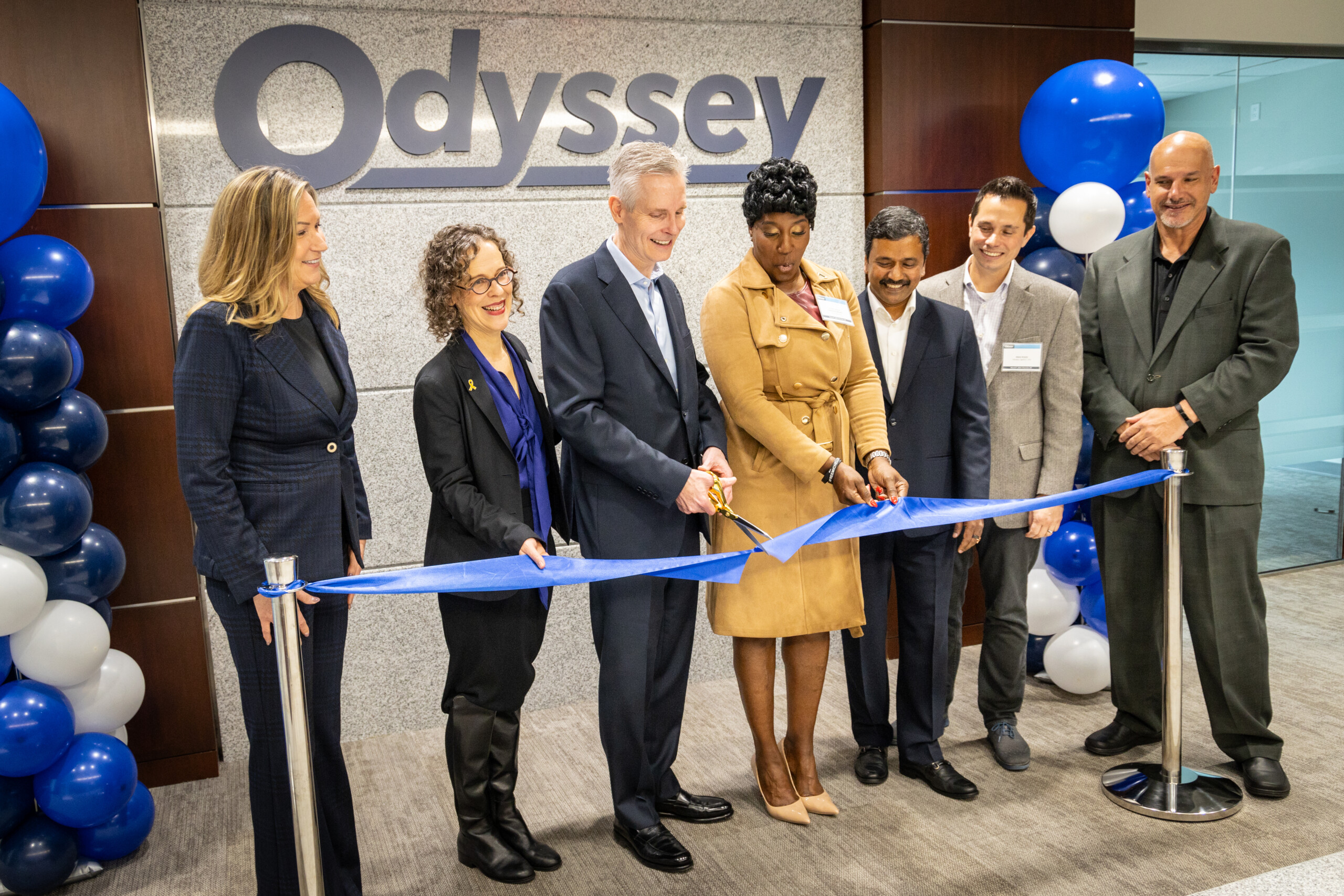
His 2025 reflection acknowledged the need for the acquired businesses to work more cohesively. The new Charlotte headquarters opened that March; OctoChem’s 2024 acquisition expanded chemical sample fulfillment. In January 2026, former XPO CFO Ravi Tulsyan joined Odyssey. Integration continues alongside expansion.
A greener route still has to pay its way
CloverLeaf, launched in 2021, brings emissions into the same conversation as cost and service. Customers had asked for better information for Scope 3 reporting, according to Odyssey’s 2025 ESG report. The program measures shipping emissions and tracks reductions when freight shifts to less carbon-intensive options.
That report describes a European network study which modeled centralized distribution centers and local warehouses against a customer’s existing inbound and outbound flows. Odyssey identified a configuration offering over $1 million in savings and 400 metric tons of avoided emissions. These are modeled opportunities, not realized savings.
Company-reported modeled opportunities. No timeframe for the savings is specified.
The discipline is worth copying: establish today’s cost and emissions, model alternatives, then examine whether they preserve service. Odyssey’s technology connects quoting, tracking, analytics and billing; its SpotBot automates requests for spot freight bids.
Read the route before buying the promise
The offer suits shippers with difficult commodities, several modes or burdensome coordination. Customers can outsource execution through third-party logistics, or use fourth-party logistics to manage a wider network. Transportation, warehousing, fulfillment and management services form the commercial business; the published offering is organized around customer requirements and quote requests.
Any proposed rail shift still needs suitable terminal access, handling capacity and a delivery schedule that tolerates the journey. Consolidation needs compatible freight and timing. An urgent shipment may justify a different mode. These are tradeoffs to test lane by lane.
Start with actual shipment data, total handling costs and the consequences of lateness. Ask where responsibility changes hands. Odyssey’s story suggests that the neglected space between vehicles can be a business in its own right. Even a splendid train is little consolation if your metal coil cannot get aboard.