A phone, a bag of groceries and a holiday booking have little in common until somebody wants to sell you all three. Add a sofa and the shopping list starts to resemble Blibli’s corporate strategy. The Indonesian retailer has spent years bringing different purchases into the same family. Now it is trying to make the family behave like one business.
The blue shopping bag on Blibli’s app is the entrance to a company with considerable floor space. Its portfolio includes tiket.com, the travel booking platform; Ranch Market’s supermarket business; and Dekoruma, which sells furniture and home services. Alongside them sit electronics stores, warehouses and an institutional procurement operation. Calling it an ecommerce marketplace is accurate, but leaves much of the building out of the picture.
That distinction matters in a market where an online seller must compete for both attention and confidence. Blibli’s proposition is that a recognizable shop, a reliable delivery and a rewards balance useful somewhere else can give customers reasons to return. It is a plausible retail argument. It is also an expensive one.
Before the stores, there was a trust problem
Blibli launched in 2011. Co-founder and CEO Kusumo Martanto’s recollections are refreshingly practical: people were accustomed to inspecting goods and dealing with a seller face to face. In a 2016 interview with SWA, he described the difficulty of winning trust online and finding experienced ecommerce talent in Indonesia. An attractive website could not make either problem disappear.
A tenth-anniversary interview with kumparan recalled a soft launch with just ten stores. Martanto’s team had to find merchants and seek out distributors. The first friction was participation: somebody had to put products in this new mall before shoppers had much reason to visit. That is a useful corrective to the idea that a marketplace springs into existence when its software is ready.
The subsequent expansion looks like a series of responses to that original confidence problem. Blibli opened a warehouse in 2014, added travel through tiket.com in 2017 and acquired control of supermarket operator Supra Boga Lestari in 2021. Each step increased the range of transactions it could influence, along with the work required to complete them.

Your next purchase is the connection
The group’s components serve different moments. Electronics might bring a customer in for a carefully considered purchase. Groceries offer a reason to return next week. Travel captures spending that does not arrive in a parcel. Dekoruma reaches customers furnishing a room or planning a larger home project. The strategic attraction is the possibility of keeping more of those occasions within the group.
Blibli Tiket Rewards supplies a practical connection. Introduced in 2023, it lets customers accumulate and use points across participating businesses. Dekoruma joined in September 2025. Shared membership adds a common login, reducing another small annoyance that otherwise makes a corporate family feel like a collection of unrelated websites.
Consider a customer buying furniture and later booking a trip. Points earned on the first purchase can make the second transaction more attractive, subject to the program’s terms. The company gains another opportunity to serve that customer. Neither benefit requires the customer to care which legal entity owns which subsidiary.
That is the attraction of the design, rather than evidence that every customer behaves this way. Common ownership makes integration possible; it does not prove that people will stop comparing prices. The rewards need to be useful enough to survive the next competing offer.
The shop counter is part of the product
For a shopper, Blibli can function as a conventional online store: find merchandise, choose a payment method and arrange delivery. Its mix of direct retail and third-party merchants includes electronics, clothing, groceries and household goods. Official brand relationships matter here. Blibli has publicized its Apple authorized-reseller status and operates stores associated with major electronics brands, including Samsung.
Click & Collect makes the connection to physical retail concrete. An eligible product can be purchased online and collected at a participating shop. The buyer selects the location, pays and uses a pickup code at handover. It is useful for someone who wants the certainty of a selected store and control over collection, without waiting at home for a courier.
The handover deserves attention. Blibli’s help pages advise checking specifications and function before accepting a Click & Collect order; they place restrictions on returns for mismatch or malfunction after handover. The service’s convenience depends on the customer understanding where the online transaction ends and the shop’s responsibilities begin.
“The physical network remains central to the end-to-end value proposition”
Kusumo Martanto · FY2025 results statement
For brands, the attraction runs in the other direction. A partner can gain access to digital shoppers, physical displays and fulfillment support. Blibli’s prospectus describes seller services spanning official stores, in-store online transactions and warehouse handling. The expertise is in coordinating those activities: a stock record must correspond to a real item, and an order must reach the person who paid for it.
A bigger family comes with a bill
Blibli’s expansion has identifiable price tags. The September 2021 purchase of a controlling 51% stake in Supra Boga Lestari cost about Rp2.03 trillion. In June 2024, it bought 99.83% of Dekoruma’s Indonesian operating company for roughly Rp1.16 trillion. Those transactions purchased businesses, people and physical capabilities as well as additional categories for an app.
The money behind the company also distinguishes its story from a shoestring startup narrative. Blibli grew with the backing of the Djarum group. Its November 2022 stock-market listing raised Rp7.99 trillion in gross proceeds. The listing documents described debt repayment and working capital among the intended uses. Capital was needed to support the machinery of retail.
The business collects money in several ways. Direct sales generate merchandise revenue and margin; third-party commerce and travel contribute platform revenue; physical shops sell products; and institutional commerce serves organizational buyers. Fulfillment adds services for merchants and brands. These streams carry different economics, so total transaction value should never be casually substituted for revenue.
The accounts provide a sobering companion to the storefront photographs. Blibli recorded Rp22.361 trillion in consolidated net revenue in 2025, but its audited loss attributable to the parent’s owners was about Rp2.279 trillion. Operating activities used Rp3.520 trillion in cash. A growing retail business can absorb cash through stock and other working-capital needs even as its sales improve.
Controlling supermarket stake
September 2021 · 51%
Dekoruma operating company
June 2024 · 99.83%
The unglamorous advantage: getting the box there
The company’s Marunda warehouse began operating in October 2024. Blibli describes a 100,000-square-meter facility supporting inventory management, order processing and distribution. Its December 2025 account emphasizes automation and stock handling that considers arrival dates and expiry dates. That last detail matters when part of the wider business sells groceries. A parcel moving quickly is useful; the right parcel matters more.
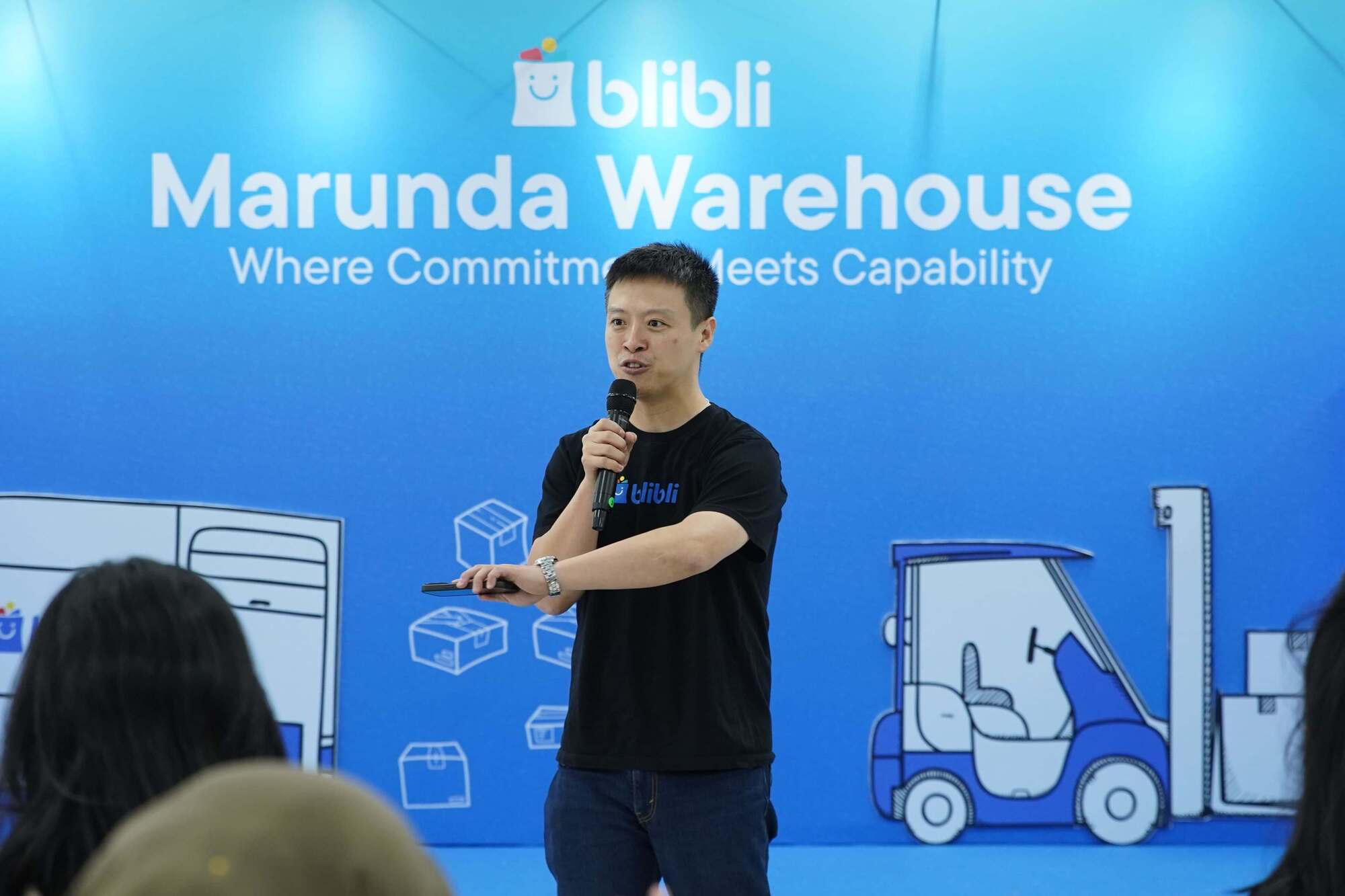
Fulfillment at Speed and Fulfillment by Blibli make that infrastructure available to business partners. The stated services extend from inventory and order handling to distribution across channels, with broader operational support under FAS. A brand that cannot justify building the same network itself can buy access to parts of it.
There is a geographic reason this work matters. In an Oxford Business Group interview published in 2018, Martanto identified fragmented transport as an obstacle to ecommerce across Indonesia. Connecting a website to actual delivery capacity requires local operations. Adding another promise to a product page is much easier than adding dependable coverage.
Inside the company, the language of improvement is part of the culture it advertises. Employees are known as Bliblioneers. Its published values have included customer focus, teamwork and learning. These are employer statements, rather than an independent verdict on working life. Still, a business coordinating stores, sellers and delivery teams has plenty of opportunities to test them.
More sales, with profitability still to prove
The July 2026 results give the strategy a more encouraging recent chapter. First-half net revenue reached Rp14.830 trillion, up 55% from Rp9.596 trillion a year earlier. Consolidated EBITDA as a percentage of transaction value improved from minus 2.5% to minus 0.8%. That measure remained negative; improvement should not be mistaken for arrival at profitability.
Like-for-like six-month periods. Revenue measures sales recognized by the group, not all spending flowing through its platforms.
By June’s end the group reported 326 consumer electronics stores, alongside appliance outlets, supermarkets and home-living centers. It was enlarging the physical network while trying to improve its economics. That combination makes execution the central question: can more locations produce enough useful sales to justify their inventory, staffing and occupancy costs?
Against Shopee, Tokopedia/TikTok Shop and Lazada, Blibli offers a particular combination of owned retail, brand relationships and connected services. In travel, customers can choose alternatives such as Traveloka. In furniture and groceries, specialist retailers remain relevant. Blibli competes with different businesses at different moments, which makes blanket claims about being better than the competition unhelpful.
Copy the handoff before buying the supermarket
A smaller retailer can borrow something practical here. Let customers move between the website and the shop without restarting the purchase. Make pickup instructions clear. Keep stock information credible. Give a loyalty benefit a use beyond the transaction that earned it. Each step addresses a specific irritation rather than asking shoppers to admire the technology.
The larger model needs conditions a small business may lack: capital to hold stock, sufficient local demand, reliable operations and customers who value service enough to return. Sparse delivery routes, weak store traffic or buyers who switch solely for the lowest price can undermine the economics. These are operating implications of the model, not a prediction that Blibli will fail.
Blibli’s next test is to make all those connections pay. The store, the app, the warehouse and the points balance each have a job. For the customer, success can be much simpler: the right product, a convenient handover and a reason to come back.