The most revealing object in a Kohl’s store may be something Kohl’s never sold. An Amazon purchase, unwanted and unboxed, arrives with a customer who needs a refund. An associate scans a QR code. Kohl’s handles the packing and shipping. The shopper has completed an errand. For the department store, the interesting question is what happens before that shopper reaches the parking lot.
- Earn the visit: useful services can bring in people who had no shopping list for Kohl’s.
- Earn the basket: Sephora became a nearly $2 billion business by fiscal 2025.
- Earn the return: coupons and merchandise still have to deliver. Company-wide net sales fell 4% that year.
The errand that opens the door
Kohl’s took Amazon Returns nationwide in July 2019 after testing it in three metropolitan markets. It accepted the inconvenience of handling another retailer’s merchandise in exchange for an opportunity to meet that retailer’s customers. A chain selling shirts and towels had made itself useful before asking anyone to buy a shirt or towel.
“Our top strategic priority is driving traffic,” then-CEO Michelle Gass said at the rollout. The mechanism was straightforward. Give someone a practical reason to enter. Put merchandise within reach. See whether the visit becomes a purchase.
The early evidence was encouraging, with a qualification attached. In 2021, Kohl’s attributed at least two million new customers in the previous year to the Amazon program. Retail analysts still questioned how much additional buying those visits produced. Counting arrivals is easier than establishing what each arrival is worth.
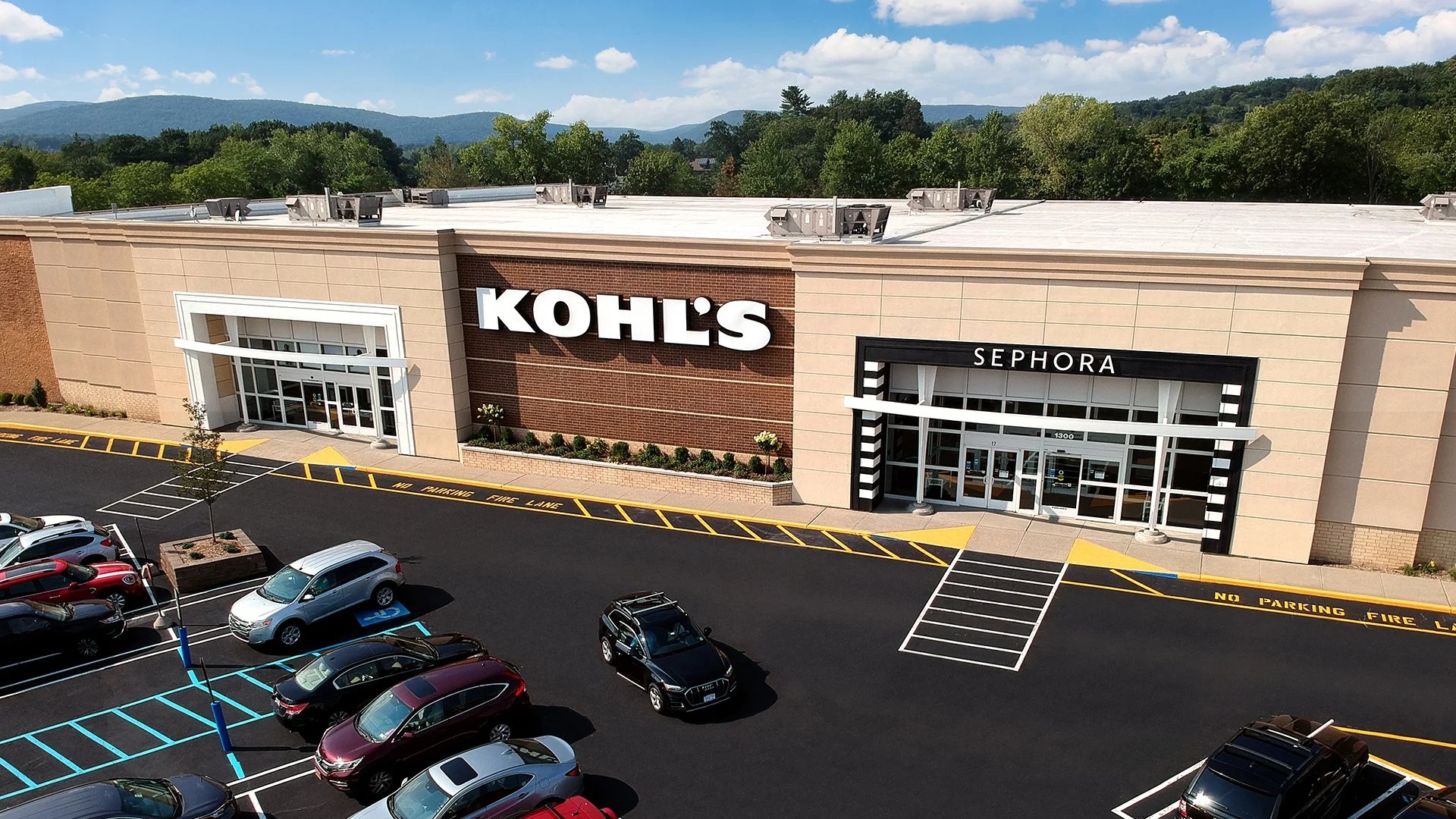
The customer gets a concrete benefit: eligible Amazon returns without finding a box or printing a label. Begin the return with Amazon and choose Kohl’s when offered. Kohl’s packs and ships it free. The store earns a chance to be considered, which is valuable only if the rest of the visit deserves consideration.
A beauty shop with its own gravity
Sephora, which arrived in Kohl’s stores in 2021, answers a different question. A return counter solves a chore. A beauty shop offers something people might deliberately seek out: makeup, skincare, fragrance, and advice in a recognizable setting.
The full-size format occupies roughly 2,500 square feet. It makes a distinct destination inside a larger store, rather than asking a general merchandise department to acquire a specialist’s credibility overnight. Kohl’s brings accessible locations and an existing customer base. Sephora brings its name and assortment.
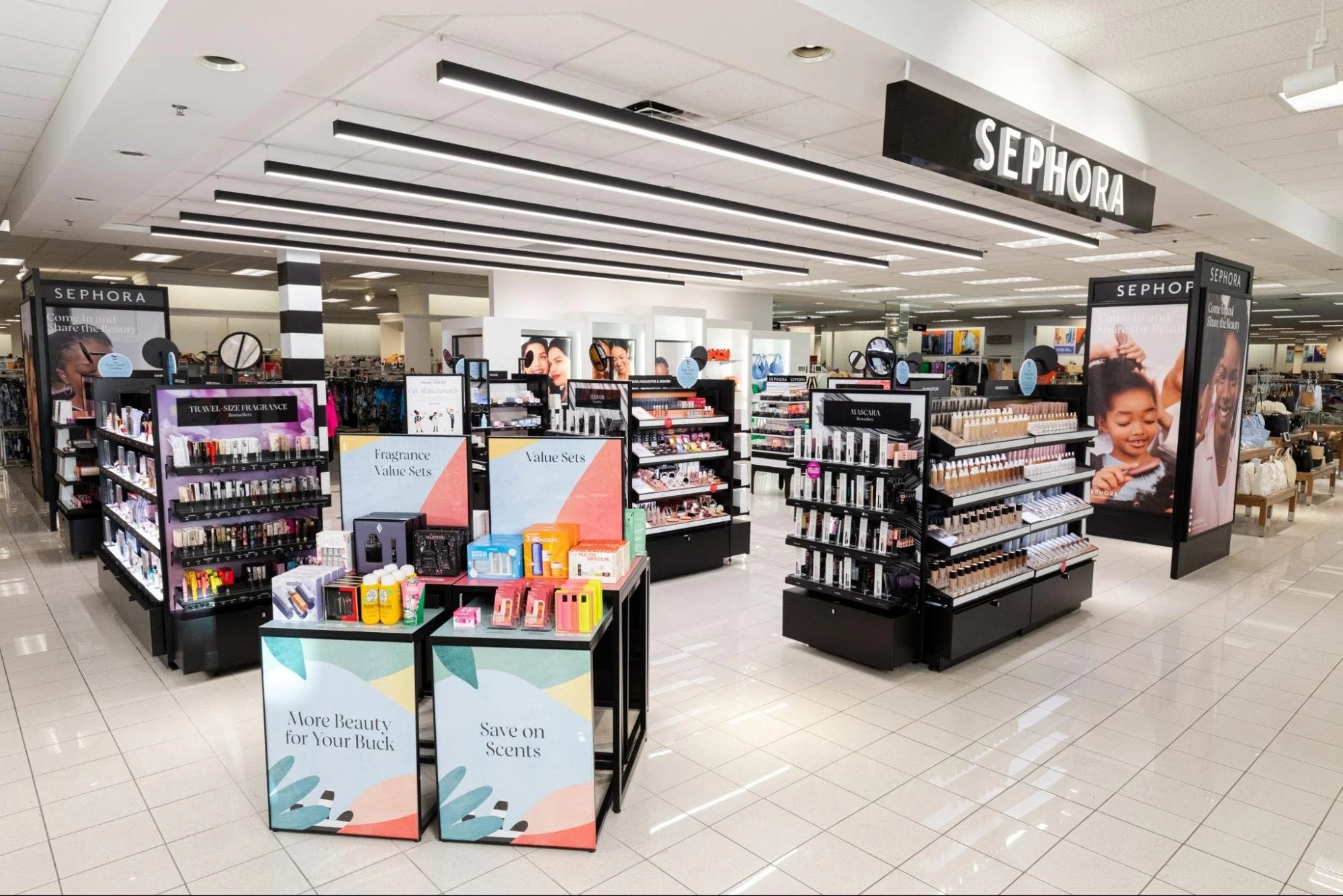
By fiscal 2025, management described the partnership as a nearly $2 billion business. That is substantial. It also sits beside an awkward company-wide result: net sales of $14.8 billion, down 4%. A successful department can coexist with a shrinking store. Its success does not tell us how many shoppers bought something elsewhere in the building.
The coupon promise
Kohl’s has spent decades teaching customers to think about the next visit. Introduced in 2004, Kohl’s Cash commonly offers a $10 coupon for every qualifying $50 spent during advertised earning periods. It has a later redemption window. Today’s purchase contains a small appointment for tomorrow.
That bargain requires attention. Kohl’s Cash is not cash in a bank account. Dates matter. Exclusions matter. Sephora purchases are excluded from the promotional program. For shoppers, comparing the final price and checking eligibility before checkout is more useful than admiring a large percentage on a sign.
In August 2025, Kohl’s announced more coupon-eligible brands across apparel, home, kitchen, jewelry, and luggage. It also added store signage and an online filter to identify them. The company’s subsequent proxy described expanded eligibility as a way to reengage cardholders and loyalty customers. Clearer rules had become part of the repair work.
The return counter wins a visit. The merchandise has to win the purchase.
An expensive lesson in ordinary shopping
Kohl’s occupies a busy stretch of American retail. Macy’s and JCPenney offer department-store alternatives. Target, Walmart, and off-price chains compete for household budgets; Amazon competes for convenience. Kohl’s proposition combines moderately priced national brands, proprietary labels, beauty, and online shopping connected to physical stores.
Its expertise lies in making that combination work repeatedly: buying the right assortment, keeping useful sizes available, managing promotions, and fulfilling orders. In its 2025 reset, management described reducing choices while deepening inventory in important items. Fine jewelry returned to more than 200 stores. Familiar categories mattered alongside new attractions.

Maintaining this machinery costs money. Kohl’s spent $372 million acquiring property and equipment in fiscal 2025, across the company. That figure cannot be treated as the price of one partnership. Store changes, supply-chain capacity, and technology all compete for investment.
By the second quarter of 2026, comparable sales were down 0.9%. Gross margin improved, although approximately $100 million of tariff refunds flowed through it. The figures offer evidence of progress alongside reasons to inspect the details. An improved margin and renewed demand answer different questions.
The next trip has to be easier
The new experiments continue. Kohl’s added an AI shopping assistant in July 2026 for discovery, comparisons, image search, and support. September brought an announcement of 56 additional Babies“R”Us shops. Its October holiday plans combined gift discovery, Klarna payments, and additional delivery options.
Other businesses can copy the underlying discipline: solve a real customer problem, then measure what happens afterward. The economics depend on local demand, available merchandise, service costs, and repeat purchases. A useful errand will not rescue an unwanted assortment. At Kohl’s, the decisive moment still comes after the QR code: does the customer turn toward the clothes, or toward the door?
Take the next trip
Shop, follow, watch