By 23, Jay Schottenstein was managing his first store. There is something usefully unglamorous about that detail. Before the public companies, the international apparel business and the photographs at the New York Stock Exchange, there was the ordinary business of getting a store to work. A customer could walk in, look around and walk straight out. The family name did not settle the sale.
He had grown up around retail, with his father, Jerome, as his principal teacher. The inheritance included a business and an education in its daily demands. In Schottenstein’s later descriptions of leadership, the same concerns keep returning: listen to people, understand the merchandise, share information, and keep learning. Fashion supplies the changing scenery. The questions at the counter stay surprisingly familiar.
An education with a stockroom
Schottenstein was born and raised in Columbus, Ohio. He graduated from Indiana University’s Kelley School of Business in 1976, then joined the family furniture business. The path matters because his career began with the practical problems of selling things people have to live with. A sofa is a fairly stern examiner. It takes up space, costs real money and cannot be rescued by an especially persuasive caption.
A furniture apprenticeship also put him inside a business with a history longer than his own career. His grandfather Ephraim opened the family’s first department store in Columbus in 1917. That continuity gave him an existing institution to work within, with customers and colleagues already attached to it. The task of the next generation was to make decisions for a business whose story had begun before them.
The university would later recognize him with its Academy of Alumni Fellows honor in 2007. By then, his responsibilities extended across furniture, apparel and footwear. What connected those businesses was a merchant’s interest in how an assortment, a price and a customer meet. The products differed. Each company still had to give someone a reason to choose it.
At 21, his father had advised him to work hard early and establish habits that would last. Years later, Schottenstein recalled direct involvement with associates in warehouses and on sales floors. As his responsibilities expanded, he described learning to give capable executives room to operate. “I trust our key people very much,” he said. A large organization makes that trust consequential: the person closest to a problem may be several reporting lines away from the chairman.
“I trust our key people very much.”
Jay Schottenstein · 2007
A long bet on a familiar fabric
In 1992, Schottenstein became American Eagle Outfitters’ chairman and CEO. He held the chief executive role until 2002, remained chairman and returned as CEO in 2014. That is an unusual vantage point on a youth business: enough time to see several generations arrive, shop and grow older, while the brand keeps addressing the next group coming through the door.
American Eagle had opened its first store in 1977 at Twelve Oaks Mall in Novi, Michigan. It went public in 1994. Signature denim followed in 1997, and ae.com launched the next year. Those milestones sit close together, but they represent different jobs: raising capital, developing a recognizable product and learning another way to sell it. None could substitute for the others.
Denim gave the company a product around which to organize a continuing relationship. Jeans are familiar enough to buy repeatedly and personal enough to make fit matter. In 2018, American Eagle passed $1 billion in annual jeans sales. The business had built scale around an item that customers still judge one pair at a time. A spreadsheet can count those pairs; it cannot try them on.
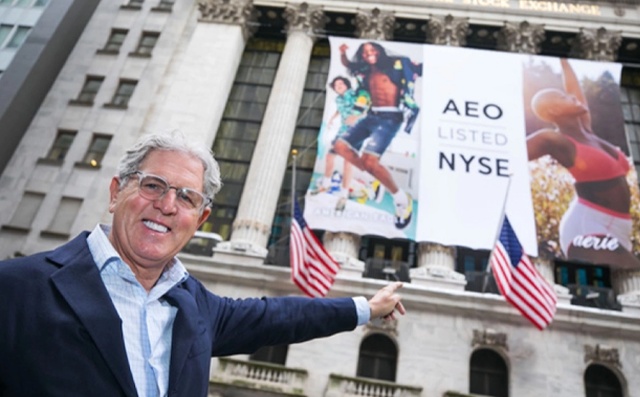
The chairman cannot try on every shoe
His footwear career provides a useful companion to the denim story. He has chaired the business now called Designer Brands since March 2005 and served as its CEO from 2005 to April 2009. DSW’s first store opened in Dublin, Ohio, in 1991. After Debbie Ferree joined as head merchant in 1996, she worked with Schottenstein on its transition from a closeout retailer to a retailer of current designer and name-brand shoes.
That collaboration makes the career less tidy, and more interesting, than a lone-dealmaker portrait. A chairman can see an opportunity and commit resources. A merchant has to make the offer work across actual products. Shoes are particularly insistent about the details. The right brand in the wrong size is a small demonstration of the limits of strategy.
Schottenstein has argued that retail training needs breadth: buying, marketing, operations and time with customers. “You cannot do it by being in an office,” he said. His concern was that specialization can make it harder to develop people who understand the whole business. The demand he places on a future merchant is therefore fairly expansive. Know the numbers, certainly. Also know what happened in the store.
- 1976Joins the family furniture business
- 1992Becomes AEO chairman and CEO
- 2005Becomes DSW chairman and CEO
- 2014Returns as AEO chief executive
Aerie changes the picture
Aerie launched nationwide in 2006, during Schottenstein’s continuing chairmanship. Its later growth gave AEO another substantial business alongside American Eagle. The distinction is worth keeping: Aerie developed through teams and across leadership periods. Schottenstein’s role belongs in that longer corporate history, rather than in an origin story that assigns every decision to a single executive.
In 2014, the brand stopped retouching people and bodies in its imagery. In 2025, it extended that commitment to avoiding AI-generated people and bodies. These are concrete promises about what customers see. They also create a continuing obligation. Once a brand asks to be judged on a particular standard, each new campaign becomes another occasion to check whether it has kept its word.
The commercial milestones followed over years. Aerie reached $500 million in sales in 2017 and $1 billion in 2020. Its growth widened the company’s possibilities, while giving management another identity to preserve. There is no reason a customer’s affection for one label should automatically transfer to another. A portfolio earns its usefulness by giving different customers different reasons to return.
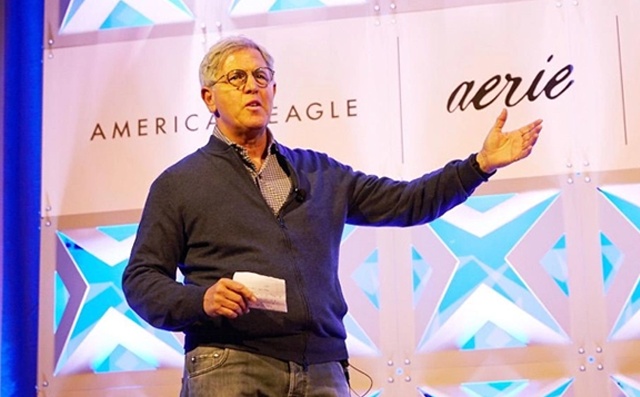
Two brands, two different speeds
By September 2026, that portfolio was producing visibly different results. For the second quarter ended August 1, AEO reported $1.38 billion in revenue, up 8% from a year earlier. Aerie’s comparable sales rose 19%; American Eagle’s fell 1%. Those figures put a useful wrinkle in any smooth account of decades of growth. Even within one company, the customer’s verdict can arrive in sharply different tones.
The quarter’s profit figures also require care. Reported operating profit was $211 million, including a $161 million net benefit related to tariff refunds. That distinction matters when judging the operating business. A large reported gain and improving demand are separate pieces of information. Schottenstein identified greater consistency in American Eagle’s women’s business as an area still requiring attention.
The numbers give his stated approach a current test. Keeping close to customers requires responding when one part of the business lags, even while another is growing. AEO now operates stores in the United States, Canada and Mexico, with a wider international licensing network and websites shipping to approximately 80 countries. Distance increases the need for people who can turn local observations into decisions someone else can act on.
One company. Different speeds.
The family name on another kind of shelf
A different set of shelves carries the Schottenstein name. His father supported an English edition of the Babylonian Talmud; Jay continued the undertaking after Jerome’s death in 1992. The 73-volume edition, published by ArtScroll, was completed in 2005. In a career measured in seasons and quarters, it is a striking parallel project: years of support for books intended to remain in use.
Jay and Jeanie Schottenstein met through Hillel while studying at Indiana University. They established their foundation in 1985 and have supported educational, cultural and Jewish organizations. Their ties to Columbus include the Columbus Museum of Art and the United Way of Central Ohio. The geography of his business has widened considerably, while the family’s giving has retained connections to the place where he grew up.
He has described charitable giving as a responsibility, and he applies familiar questions about leadership and accountability to it. “Philanthropy is an obligation,” he said in 2014. That view helps explain why the family story runs through both commerce and giving. The father’s example carried expectations about earning money and expectations about using it. Taking over the business meant continuing to decide what those expectations required.
Another season is already on its way
He has also spoken about the difficulty of protecting an entrepreneurial culture as a company grows. Disciplines become necessary, but a formula can crowd out initiative. That concern fits the working arrangement he describes: communicate a direction clearly enough that people throughout the business can take ownership of it. A vision delivered once at the top still has a considerable journey ahead of it.
In April 2024, Schottenstein entered the World Retail Hall of Fame alongside L’Oréal chairman Jean-Paul Agon and The Mall Group chairwoman Supaluck Umpujh. In his remarks for the occasion, he called retail “my life’s passion.” It was a characteristically personal way to describe an industry that had supplied his teachers, his responsibilities and much of his working life.
In August 2026, the National Retail Federation named him its Visionary 2027, with the presentation scheduled for January 10, 2027. A fireside conversation with NRF president and CEO Matthew Shay was scheduled for the following day. The recognition arrives as American Eagle approaches its fiftieth anniversary. It also arrives with an unfinished agenda: sustain Aerie’s momentum, improve American Eagle’s consistency and keep developing the people responsible for both.
That is the peculiar bargain of selling to young customers for decades. Experience accumulates at headquarters; the audience continually renews itself. The new shopper owes nothing to an old award or a successful quarter. Schottenstein’s career suggests a practical response: keep the habits that help you pay attention, and keep testing the offer in front of you. Somewhere, a customer is considering a pair of jeans. The sale is still hers to decide.
Beyond the selling floor
- Official biography at AEO
- Jay Schottenstein on LinkedIn
- YouTube channel linked by his official biography
- Watch: podcast conversation with Jay Schottenstein
- Interview: customers, merchants and giving
- Interview: listening and trusting managers
- Interview: leadership and family commitments
- Indiana University: education and alumni recognition
- Designer Brands: his footwear career
- American Eagle and Aerie: the company timeline
- Aerie’s public imagery commitment
- AEO’s international business
- A closer look at his Jewish philanthropy
- World Retail Hall of Fame announcement
- September 2026 quarterly results
- NRF’s Visionary 2027 announcement