For years, Fran Horowitz received a peculiar compliment from employees: she was normal. A useful quality in a neighbour, perhaps, but an odd thing to put in a performance review. She eventually understood what they meant. They could approach her. They could tell her about their lives. She remembered. In an industry devoted to making people look different, she had become recognisable by behaving like herself.
There is a pleasing awkwardness to this being the story of Abercrombie & Fitch’s chief executive. The company had spent years cultivating an intimidating idea of who belonged in its clothes. Horowitz’s account of leadership begins with making people comfortable enough to speak. “Feedback is a gift,” became an expression inside the company. She has said that attitude was absent when she arrived.
The contrast helps explain her career, though it would be unfair to turn it into a fairy tale about manners. She is a merchant with decades of experience, responsible for products, stores, people and the arithmetic connecting them. Being approachable matters because those jobs require information. A boss who makes herself difficult to talk to is running an expensive experiment in finding things out late.
Before the corner office, the buying office
Horowitz graduated from Lafayette College in 1985, having studied international relations, and earned her MBA at Fordham in 1990. Her early working life ran through the department-store world: Bergdorf Goodman, Bonwit Teller, Saks Fifth Avenue and Bloomingdale’s. At Bloomingdale’s alone, she spent 13 years in merchandising roles. This was a long education in the distance between liking a garment and persuading somebody else to pay for it.
Buying is an unusually public form of judgment. You choose, arrange and commit money; strangers deliver their verdict. Experience accumulates in sizes that sell, colours that linger and assumptions that need revising. Horowitz’s later career would give her authority over far more of that process. The department-store years supplied the merchant’s starting question: what does the customer actually want?
Around 40, a recruiter’s call about Limited Brands opened another route. Moving into specialty retail meant working in a business with control over the product’s journey from design through production to the shop floor. It also meant a family move to Columbus, Ohio. The transition was substantial enough that she was still discussing it with Fordham students in 2015.
She described the change as rewarding, and rejected the idea that a career has to become fixed at 40. At Express, where she worked for nearly eight years, she rose to executive vice president of women’s merchandising and design. She later became brand president at Ann Taylor LOFT. By the time Abercrombie called, she had learned the business from several different chairs.
- 1985Lafayette graduate
- 1990Fordham MBA
- 2014Hollister president
- 2015Company president & chief merchant
- 2017Chief executive
The risk came with a Hollister label
In October 2014, Horowitz joined Abercrombie & Fitch Co. to run Hollister. Remembering that sequence matters. The name on her eventual chief executive’s door can obscure the brand that brought her into the company. She first took responsibility for Hollister, then became president and chief merchandising officer across the business in December 2015. The CEO appointment followed in February 2017.
Years later, speaking to Fordham’s graduating business students, she pointed to the Hollister move as her largest professional risk. People had doubted that she could revive the brand. She described the chance to reinvent a global name as an opportunity worth taking. That recollection gives the promotion story some texture: the next job looked promising to her before its outcome looked reassuring to everyone else.
The scale was already international. In her 2015 Fordham appearance, she discussed a recent trip to Hong Kong, Shanghai and Beijing, and the pleasure she took in travel. She liked that retail had carried her to places she might otherwise never have seen. International relations had become a degree with an unexpectedly practical wardrobe.
She also discussed making stores more pleasant and letting shoppers research, respond and buy across physical stores, phones and the web. Those concerns were present before she became CEO. The later turnaround grew out of work already under way, with Horowitz taking on progressively broader responsibility for deciding what happened next.
A different invitation to get dressed
Under Horowitz, the company sharpened the distinction between Abercrombie and Hollister. The portfolio needed clearer identities and less duplication. Stores changed too: fewer costly flagships, more emphasis on smaller, productive locations that could support shopping across channels. These are less photogenic decisions than a new campaign. They determine whether the campaign has a viable business behind it.
The marketing became more inclusive, while social platforms gained importance. For a company whose earlier identity had made exclusion part of its appeal, broadening the invitation carried particular weight. Clothes are personal purchases. A store can stock the right item and still give someone ample reason to leave. Rebuilding the offer meant considering both the garment and the experience around it.
The A&F Wedding Shop, launched in March 2024, made the change in occasions tangible. Its more than 100 pieces served brides, bachelorettes and guests, covering events around the wedding as well as the ceremony itself. The range was developed by the product team, with chief product officer Corey Robinson explaining the thinking behind it. Horowitz’s company was following customers into a different set of plans.
A wedding weekend is a useful test of whether a retailer understands a life beyond its own advertising. There are several events, different dress expectations and a budget being pulled in several directions. Making a collection around those needs gives a brand a specific job. The customer arrives with an invitation in hand; the retailer has to earn its own.
The discipline behind the agreeable manner
Horowitz has acknowledged that an earlier transformation effort moved too aggressively and lost people along the way. At Abercrombie, she adjusted the pace and rebuilt function by function, beginning with product, then marketing. That admission is revealing. A manager asking others to change their minds has more credibility when she can name a time she changed her own.
Her rule for bad news is brisk: “Number one, do not ever surprise me.” Problems need to surface early enough for the team to respond. She also describes hiring for humility, openness and a willingness to hear feedback. Approachability, in this version, comes with expectations. Colleagues have to cooperate across reporting lines and be willing to reconsider established habits.
One example she later gave involved the fly on a pair of jeans. Customers wanted zippers; the company had persisted with buttons. Horowitz described getting the team to make the change. It is an almost comically small detail to sit beside a corporate turnaround. It also identifies exactly where listening becomes useful: somebody has to alter the product.
There is little romance in a zipper. That is part of its appeal as evidence. A customer’s request survived the trip through an organisation and emerged in something she could buy. The practical challenge for a large retailer is to repeat that journey without requiring every complaint to reach the chief executive. The agreeable manner has to become a working habit throughout the company.
“Feedback is a gift.”
A company expression described by Fran Horowitz
Five billion dollars, with a few wrinkles
The results gave the rebuilding a measurable scale. In fiscal 2024, Abercrombie & Fitch Co. recorded $4.95 billion in net sales, up 16% from the previous year, with an operating margin of 15%. Both Abercrombie and Hollister brands grew sales at double-digit rates. These were company results across the portfolio, rather than sales of the Abercrombie label alone.
Fiscal 2025 took annual sales past $5 billion for the first time, to approximately $5.3 billion. Yet the detail resists a tidy victory lap. Hollister brands grew 15%; Abercrombie brands declined 1%. The operating margin was 13.3%, below the preceding year’s 15%. A larger business still had work to do on profitability, and the two main brand groups were moving at different speeds.
That unevenness makes the story more useful. A turnaround does not relieve a merchant of the obligation to get the next season right. Nor does a successful brand portfolio guarantee that every part will improve together. Horowitz’s first assignment at the company, Hollister, had become an important source of growth again. The career and the financial table had come back into conversation.
On August 26, 2026, the company reported second-quarter sales of about $1.3 billion, up 5%, marking 15 consecutive quarters of net sales growth. Abercrombie brands grew 8% and Hollister 2%. Those figures offer a later snapshot, rather than a promise about the remaining year. In fashion, even an encouraging report comes with another collection waiting for judgment.
Company net sales, fiscal 2025
Rounded; year ended January 31, 2026
Year-over-year net sales growth. Bars share a scale; the vertical rule marks zero.
An award, and another day at work
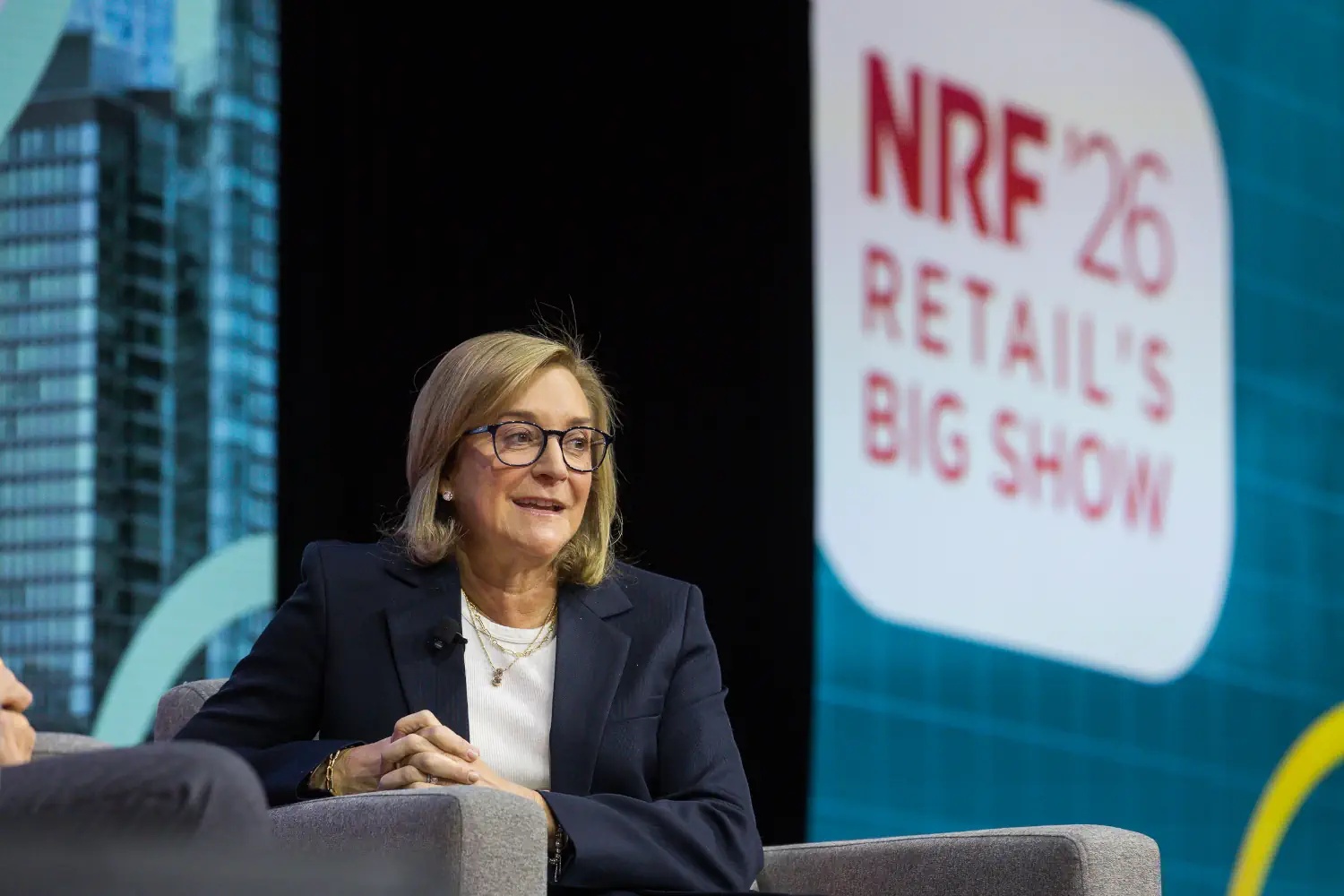
In January 2026, Horowitz received the National Retail Federation’s Visionary award. Her children, Abbey and Matt Bonadies, presented it to her in New York. The introduction put a family relationship on a stage usually reserved for professional credentials. For someone whose public account of leadership includes knowing colleagues as people, it was an apt way to mark the occasion.
In May, she appeared on Fortune’s Most Powerful Women list for the third consecutive year. The recognition followed years of rebuilding the company’s brands and business. Awards give that work a date and a photograph. The work itself is harder to frame: repeated decisions about products, colleagues, stores and customers, many of them too ordinary to make a speech.
Her stated ambition has been to put the customer at the centre of the business and make the company a place of belonging. Those aims have a practical consequence. Customers change. A retailer organised around paying attention to them must remain willing to change too, including when a familiar product or an established assumption has supporters inside the building.
Horowitz’s story leaves room for the unglamorous pleasures of competence: learning a trade, taking a risk after 40, accepting an unwelcome observation, making a better choice next time. Normal was the compliment she needed time to understand. After decades in retail, she has given it a commercial meaning. People can tell her something. Then the company has to decide what to do about it.
Keep the conversation going
Explore the company: Website · LinkedIn · Instagram · X · Facebook