Tony Spring wanted to hear the cash register ring. Instead, his first week at Burger King involved cleaning the parking lot. For a high school student excited about serving customers, this was an unpromising introduction to hospitality. Eventually, his manager explained the assignment: the parking lot was the customer’s first impression. A dirty arrival could sour everything that followed. Years later, running Macy’s, Spring was still telling that story. The lesson had survived a considerable change in job title.
It is an unusually modest origin story for the chairman and chief executive of a company associated with a Thanksgiving parade. It begins with a teenager, a restaurant, and a patch of ground that needed attention. It also offers a useful way into his present assignment: persuading people that an old department store deserves another visit.
Spring became Macy’s, Inc.’s chief executive in February 2024 and chairman that April. His responsibilities cover Macy’s, Bloomingdale’s and Bluemercury. But the question hanging over his tenure is more intimate than the organization chart. Once someone walks through the door, what makes them glad they came?
A hotel career takes a turn
Spring grew up in the New York area. His father practiced law; his mother worked as a secretary at CBS. He delivered newspapers and worked in his father’s office as well as in fast food. At Cornell, he studied hotel and restaurant management, graduating in 1987. Hospitality offered him a way to turn his interest in customers into a profession.
Hotel chains, including Marriott, offered possibilities. Then Bloomingdale’s recruited on campus. Spring liked the people he met: competitive, but personally attentive. He joined its executive training program at the White Plains store. A career that might have involved hotel guests began among department store shoppers instead.
There is a practical connection between the two worlds. Both depend on the ordinary details of an encounter: whether anyone notices you, whether a question gets answered, whether the surroundings suggest care. Spring’s education helps explain why he keeps returning to those details. They are things a customer can judge without reading a single corporate presentation.
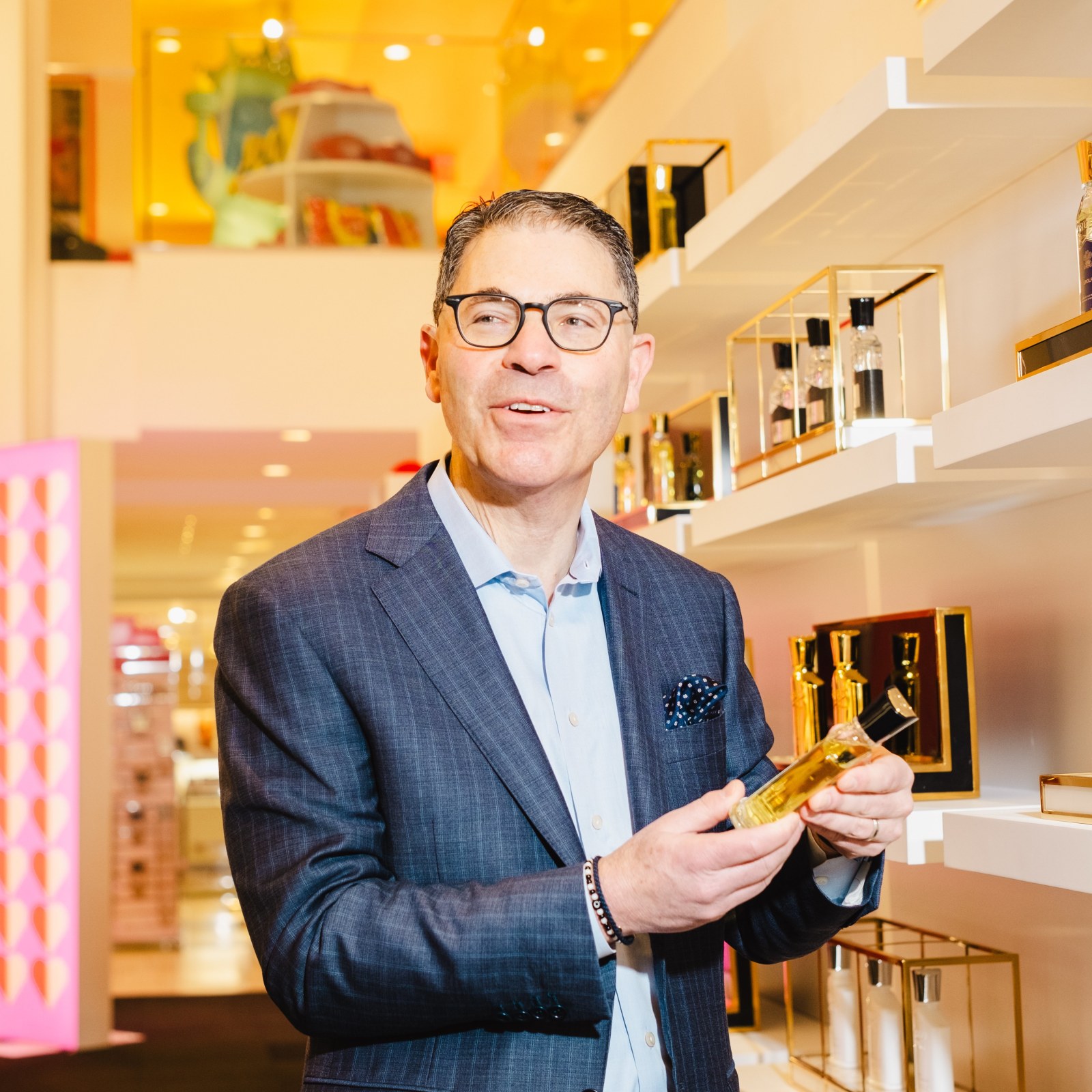
Cookware, cutlery and a bankruptcy
Bloomingdale’s did not provide a sheltered apprenticeship. Spring became a buyer of cookware and cutlery early in his career. He remembered being at a housewares show in Chicago when the company declared bankruptcy. A few years out of college, he was learning that selecting merchandise and surviving financial upheaval could belong to the same job.
He moved through decorative housewares and responsibility for the home business, then marketing, stores and operations. His explanation of his own preparation emphasizes that breadth. He had spent years learning several parts of the organization before taking charge of the whole. The merchandise might attract someone’s attention; marketing had to bring them in; stores had to make the promise believable.
Michael Gould succeeded Marvin Traub at Bloomingdale’s during Spring’s rise. Spring admired Gould’s determination to respect the store’s history while developing his own approach. That is a useful apprenticeship for someone who would eventually inherit Macy’s: a famous name supplies expectations in abundance. It does rather less of the daily work.
White Plains
Bloomingdale’s
Bloomingdale’s
Macy’s, Inc.
The pleasure of finding something
By 2011, Spring was already arguing that stores needed to give people an engaging experience. Asked about a career highlight, he pointed to Bloomingdale’s California openings in 1996, a moment when the retailer extended its national presence. His view of the business included both expansion and the very local business of what happened on a selling floor.
At Bloomingdale’s, he became president and chief operating officer in 2008 and chairman and chief executive in 2014. His remit crossed merchandise, marketing, operations and online shopping. The combination matters: he had worked through the connections between a retailer’s public personality and the machinery required to deliver it.
His Bloomingdale’s years ended with a strong credential. The business reported record sales volume and customer engagement in 2022. Spring also took oversight of Bluemercury in 2021. When he became Macy’s president and chief executive officer-elect in 2023, the succession put an executive with experience across the group’s luxury businesses in line to run the parent.
For him, the appeal of a department store includes the chance to discover something you had not set out to buy. That leaves room for presentation, events and human contact alongside the efficiency of online ordering. The commercial proposition is simple enough: make browsing pleasant, and a customer may have a reason to linger.
Sixty thousand customers have a point
Spring arrived at Macy’s top job with plenty of affection for department stores. The turnaround required hearing from people whose affection had limits. In developing the strategy, the company listened to 60,000 active and inactive customers. Their requests included better merchandise, service and visual presentation, more modern marketing and a faster supply chain. The shopping list was largely a list of retail fundamentals.
At a January 2025 industry discussion, Spring appeared with Bloomingdale’s chief executive Olivier Bron and Bluemercury chief executive Maly Bernstein. He defended keeping the three businesses together, citing shared capabilities behind their distinct identities. Warehousing, finance and other operations could benefit from scale while the shops retained their individual characters.
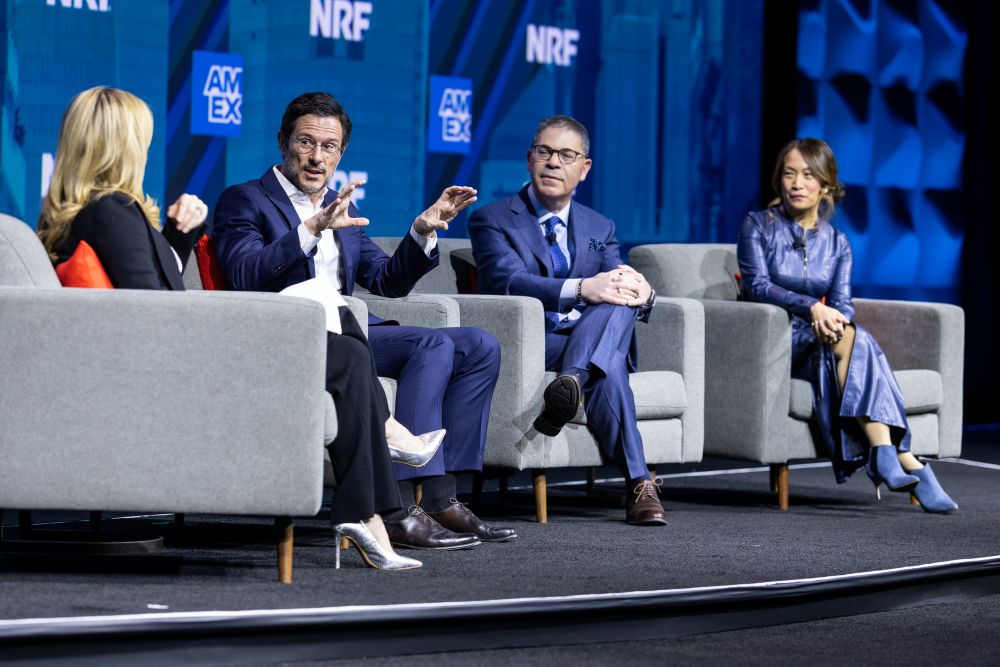
The customer research gives his hospitality language a less sentimental edge. Shoppers were asking the company to perform recognizable tasks better. An attractive brand and a famous parade could bring goodwill to the door. Employees, products and reliable execution would have to carry it through the building.
A smaller footprint, a demanding promise
The strategy announced in February 2024, A Bold New Chapter, paired investment with retreat. Macy’s planned to close approximately 150 underproductive stores and concentrate resources on roughly 350 continuing locations. It also proposed expanding Bloomingdale’s and Bluemercury and simplifying operations. These were plans, with the uncertainty that accompanies any attempt to change a large retailer.
The closures make the story uncomfortable. A promise of more attentive service exists alongside decisions that remove stores from communities and disrupt employees’ working lives. In January 2026, Spring addressed colleagues directly about closures and streamlining, describing transfer opportunities where available and severance and outplacement support where applicable. His message acknowledged the people affected.
The original closure timetable ran through 2026; by March 2026, it had been extended through 2028. That distinction matters when assessing his progress. A turnaround has an announcement date, but its consequences arrive unevenly. Renovated stores, departing colleagues, improved systems and altered routines move at different speeds.
Spring began the store improvements with a group of 50 locations. Weekly calls and a buddy system helped teams share experience. As the company expanded the work, he emphasized adjustment rather than assuming the first attempt had settled everything. In his January 2026 account, credibility depended on repeated delivery.
“Credibility is built over time.”Tony Spring, January 2026
The numbers begin to answer
By September 10, 2026, there was measurable progress to examine. For the second quarter, Macy’s, Inc. reported comparable sales growth of 2.7%. The Macy’s nameplate grew 1.1%, Bloomingdale’s 11.3% and Bluemercury 6.2%. The Reimagine 200 Macy’s stores recorded a 1.9% increase. Comparable sales measure a different thing from total net sales, which rose 1.1% to approximately $4.9 billion.
Year-over-year comparisons, quarter ended August 1, 2026. Company-reported comparable sales; Macy’s and Bloomingdale’s include owned, licensed and marketplace sales.
The company raised its annual outlook. Spring’s argument had gained support from improving sales across the portfolio, although the different growth rates also show how much the businesses vary. Bloomingdale’s strength does not settle every question about Macy’s. The work ahead includes sustaining customer response as the changes reach more locations.
Reading, restaurants and the outside world
There is a life beyond the selling floor. Cornell describes Spring as an avid reader, a food enthusiast, a movie buff and a follower of current events. His wife, Grace, is also a Cornell graduate. In 2025, he joined Lincoln Center Theater’s board. His current company biography also lists an Aramark directorship and an executive committee role at the National Retail Federation.
These interests fit an executive whose public conversations move easily between merchandise and experiences. His internal podcast has featured restaurateur Danny Meyer and Ralph Lauren chief executive Patrice Louvet. Spring has described trying to bring outside perspectives into the company, treating communication as part of the job of helping employees understand its direction.
In May 2026, No Kid Hungry honored him with its Corporate Leader award for supporting its work and bringing Macy’s industry partners into the effort. He connected that commitment to his New York upbringing and early restaurant work. It is another place where the restaurant chapter remains part of how he explains himself.
The invitation has to earn its answer
Spring can be funny about a business that invites solemn predictions. Discussing the parade balloons in November 2025, he called their preparation an Inflation Event that’s actually positive.
The joke works because he runs a retailer: there are rather less entertaining kinds of inflation to discuss.
His ambition is to keep the company meaningful to future generations of shoppers. He still enjoys merchandise, marketing and customer interaction, even as his role puts decisions in other people’s hands. The question is whether those interests can become a dependable experience across a large business.
The teenager cleaning the parking lot could see exactly where his assignment began and ended. The chief executive has a less cooperative task. Every store, every delivery and every conversation offers another first impression. Spring’s wager is that enough of those small encounters, done well, can give people a reason to come back.