Steve Klebanow helped build a business that has mailed a forgotten phone charger back to its owner. This is a modest achievement in an industry fond of grand announcements. Nobody rings a bell at a stock exchange for returning a cable. Yet the detail belongs near the beginning of his story, because it makes his idea of customer service unusually easy to picture. Someone leaves something behind. Someone else notices. The relationship continues after the appointment ends.
Klebanow is the co-founder and co-CEO of Great Many, which he runs with Michael Pollak. Before that, he worked in management consulting, became a global omnichannel executive at The Estée Lauder Companies, and co-founded Haar & Co. Barbershop in New York. Across those jobs, the scale changes considerably. The recurring question is what happens to a customer between the first encounter and the next visit.
His career offers a useful detour through the less photogenic parts of entrepreneurship: appointments, software, staff, the practical consequences of opening another location. There are products and investment rounds along the way. There is also a chair in the West Village, where the distance between a business and its customer is about the length of a pair of scissors.
A global job, a neighborhood chair
In 2014, Klebanow joined Estée Lauder, where he led global omnichannel strategy as vice president. The word is cumbersome; the task is recognizable. A customer might encounter a brand on a website, in its own store, or through another retailer. Making those encounters work together was his professional territory. The organization chart could divide them into departments. The person shopping had the pleasure of experiencing all of them.
Alongside his corporate career, he co-founded Haar & Co. with his longtime friend and barber. That is a particularly concrete form of customer research: know the person who has been cutting your hair, then build a shop together. A professional relationship became a business partnership. The neighborhood business gave him another place to consider the experience he had been working on at a much larger scale.
The appeal of this move is its change in distance. Global strategy requires coordination across people who may never share a room. A barbershop puts the customer in the room by design. Preferences can be spoken aloud. A misunderstanding has a witness. And a regular visit offers another chance to get the details right, with fewer opportunities to hide behind a presentation.
What the hot towel adds
Haar & Co. dates its beginning to 2017. Its home is Christopher Street, in the West Village. The shop was designed by architects Moschella and Roberts, with custom details from branding agency Redscout reflecting Michael W. Haar’s aesthetic. Proraso joined the business as a shaving and beard-care partner. Klebanow’s barbershop venture was a collaboration with people who knew their own parts of the experience.
The service menu is satisfyingly tangible. There are haircuts, beard trims, straight-razor shaves, and a package called The Works. A haircut includes a hot-towel finish; the shave has a hot-and-cold-towel ritual. The website also makes room for playlists. A shop can explain a great deal about itself through what it chooses to include around the thing people came to buy.
These details give some texture to the phrase “customer experience.” A towel has a temperature. Music has a volume. An appointment occupies part of someone’s day. Those decisions reach the customer without requiring the customer to admire the business plan. They also make hospitality observable: a visitor can judge it while sitting down, long before anyone asks for a review.
Two founders, with previous addresses
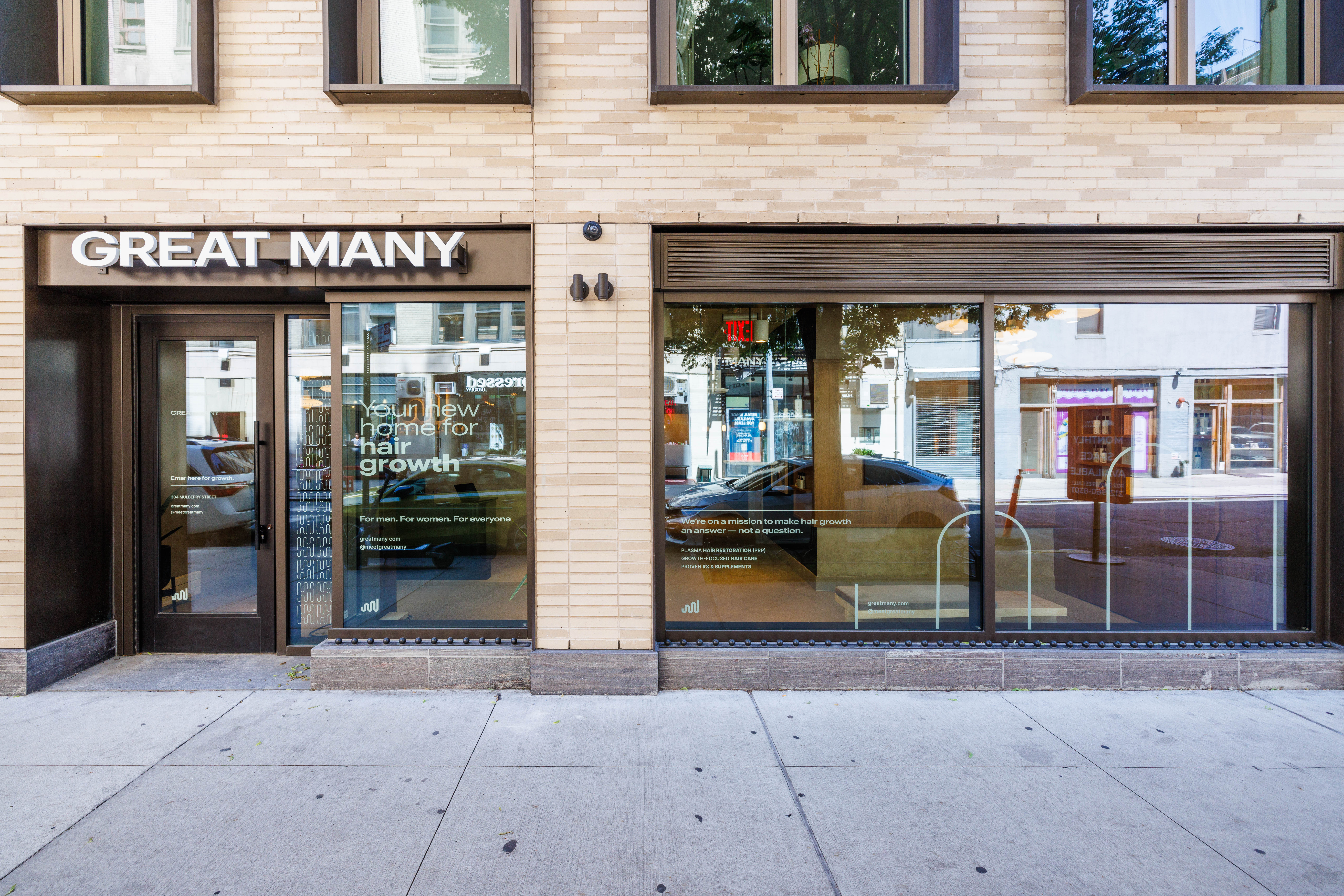
Great Many brought Klebanow together with Michael Pollak, a co-founder of Heyday. Both arrived with experience of businesses that receive customers in person. Their shared project opened its first studio in NoHo on June 4, 2024. The opening was a new company’s public beginning, with two founders whose earlier work had already taught them something about running a place people return to.
That background helps explain the attention they gave the physical business. A storefront has obligations that a launch announcement can politely skip: making the arrival pleasant, keeping a schedule intelligible, helping employees do their jobs. When a business sells an experience, its staff have to deliver that experience to the next person who walks through the door. The words on the website get their examination there.

The pair also share the CEO title. Their story is consequently full of decisions expressed in the plural. The company is a meeting point between Klebanow’s beauty-retail and barbershop experience and Pollak’s work building Heyday. Neither founder was approaching the idea of an appointment-based business as an abstract exercise. They had previous addresses, previous software choices, and previous customers behind them.
The appointment behind the ambition
Klebanow’s interest in software is refreshingly practical. He has singled out Boulevard’s stability, ongoing feature development, and reporting. He wants to understand customer segments and reconnect with people who have not visited recently. The subject has fewer opportunities for glamorous photography than a new studio. It also explains how a business keeps track of the relationships it says it values.
Pollak has described the usefulness of text messaging and the importance of reaching knowledgeable support when something goes wrong. At an appointment business, a delay has consequences for the schedule and revenue. Together, their comments provide a view behind the front door: the customer experience depends on tools that employees can use, and on those tools continuing to work.
There is a small pleasure in finding an executive interested in the unromantic machinery. A booking system will never receive the compliments that good lighting does. It can, however, determine whether the customer arrives at the right time and whether the team knows what happens next. Hospitality has administrative requirements. Even a warmly worded message needs to reach the right phone.
“We’re maniacal about great customer experience and great outcomes.”
Steve Klebanow
Growth, with the experience still attached
In August 2024, Great Many announced a pre-seed round led by BrandProject, with participation from Midnight Venture Partners and Tonic Ventures. Its angel investors included founders from other consumer businesses: Elizabeth Cutler of SoulCycle, Lukas Keindl of BondVet, Andy Grover of Tend, and Meghan Maupin of Atolla. The network around Klebanow and Pollak included people acquainted with building brands and bringing customers through doors.
Capital provides room to make decisions. It also makes the question of expansion more immediate. Klebanow has described himself and Pollak as strategic and tactical, and expressed concern about losing the experience’s character through overly fast expansion or franchising. Great Many’s stated preference at launch was organic growth in key cities. That choice makes the quality of each location part of the growth discussion.
A new address is easy to put on a map. Reproducing the useful parts of the first address requires more explanation. Which habits belong to the company? Which rely on a particular person remembering a particular customer? A founder interested in personal service has to confront those questions as soon as the business grows beyond the room where the founders can see everything.
A customer does not fit in a slogan
Klebanow has also described changing Great Many’s understanding of its audience. Working with Hive Science, the company reconsidered an initial assumption about whom it would serve. In a January 2026 account, he reported a customer base of 55 percent men and 45 percent women. The figures are his company’s reported mix at that point in time, rather than a forecast or a claim about the entire market.
That willingness to reopen an assumption connects with his consulting background. Customer research can become a ceremony for confirming a decision already made. His account describes using it to widen the company’s view. For a founder, this is an uncomfortable but useful possibility: the customer who makes sense in the original plan may represent only part of the business that actually emerges.
A broader audience / January 2026
Great Many’s customer mix, as reported by Klebanow.
His public updates describe Great Many reaching Atlanta’s Buckhead and Washington’s Dupont Circle. The company now also lists a second New York address at Grand Central. The geographical ambition is becoming visible. Each city brings another version of the original operating problem: how to make a customer feel recognized when the founders cannot personally welcome everyone who arrives.
The cable at the end of the story
Klebanow names Will Guidara’s Unreasonable Hospitality as an influence. His examples of putting that thinking into practice include returning forgotten chargers and staying late for last-minute reschedules. They are actions with an owner, a recipient, and a little inconvenience attached. They give his enthusiasm for service something firmer than a slogan to stand on.
The forgotten charger is a fitting final object because it is so ordinary. The customer already owns it. The business gets no new product to sell by sending it back. Someone simply follows through. After global retail strategy, a neighborhood barbershop, a shared CEO role, and new studio addresses, the gesture brings Klebanow’s story back to a manageable human scale.
Growth makes such gestures harder to arrange consistently. It gives them more people to reach, too. The next chapter of his work will unfold in schedules, staff decisions, customer messages, and the habits that survive another opening. The package with the charger offers a useful standard: a business remembering someone when there is no appointment left on the calendar.