A customer who abandons a loan application has left a small mystery behind. Was the rate wrong? Was the form exhausting? Did one unanswered question spoil the whole transaction? A dashboard can count the departure. The useful information may be sitting elsewhere, in the conversation that preceded it. Encore AI has built its business around retrieving that information and giving it another chance to earn its keep.
- Study an organization’s own customer conversations and successful employee tactics.
- Turn the resulting playbooks into autonomous agents or live assistance.
- Judge the workflow by completed applications, retention and revenue outcomes.
There is a pleasingly unglamorous premise here. Before commissioning a new sales script, examine the people already doing the job well. Their expertise belongs to the organization, but it is scattered through calls, messages and habits. Encore proposes to make some of it executable. The pitch will appeal to anyone who has watched a good employee rescue a transaction that the official process had politely strangled.
The conversation is the raw material
Encore calls its method Interaction Mining. It analyzes calls, chats, emails and CRM information to find successful behaviors and points of friction. In its September announcement, the company describes turning that expertise into an executable flow graph, with a recommendation engine selecting the next action. This is the central distinction in its proposition: an agent’s playbook comes from the institution’s operating history.
That distinction matters for complex products. A mortgage inquiry, an insurance renewal and a late payment require different sequences, permissions and explanations. Encore’s market includes banks, insurers and lenders, where a plausible answer is only part of the job. The conversation must also move through a process. The company places itself between interaction analytics and customer-facing execution, carrying lessons from one into the other.
It shares territory with CRM-native agents such as Salesforce’s Agentforce, which supports customer service and sales workflows. Encore’s argument rests on how it derives the playbook: mining the organization’s own interactions. Buyers should compare that method with the systems and data they already have, rather than assuming a revenue-focused agent is an uncontested invention.
- 01ReadCalls + chats + CRM
- 02DecodePatterns + outcomes
- 03DeployApproved playbooks
- 04ReviewResults + new interactions
Three ways to sit beside the customer
Wingman keeps the employee in the conversation. It supplies knowledge, recommendations and next actions while the interaction is happening. Autopilot conducts the journey itself. These are two distinct operational choices: improving a person’s execution, or delegating the process. A company can choose the level of human involvement that suits a particular workflow instead of making one sweeping decision about its entire customer operation.
Journeys brings the same idea to a familiar scene: the visitor alone with a form. Encore embeds chat or voice guidance inside existing pages and portals. The agent can answer questions, handle objections and help complete fields. Anonymous visitors can receive general assistance; authenticated customers can receive help informed by their account data. The website becomes somewhere a task can be discussed while it is being done.
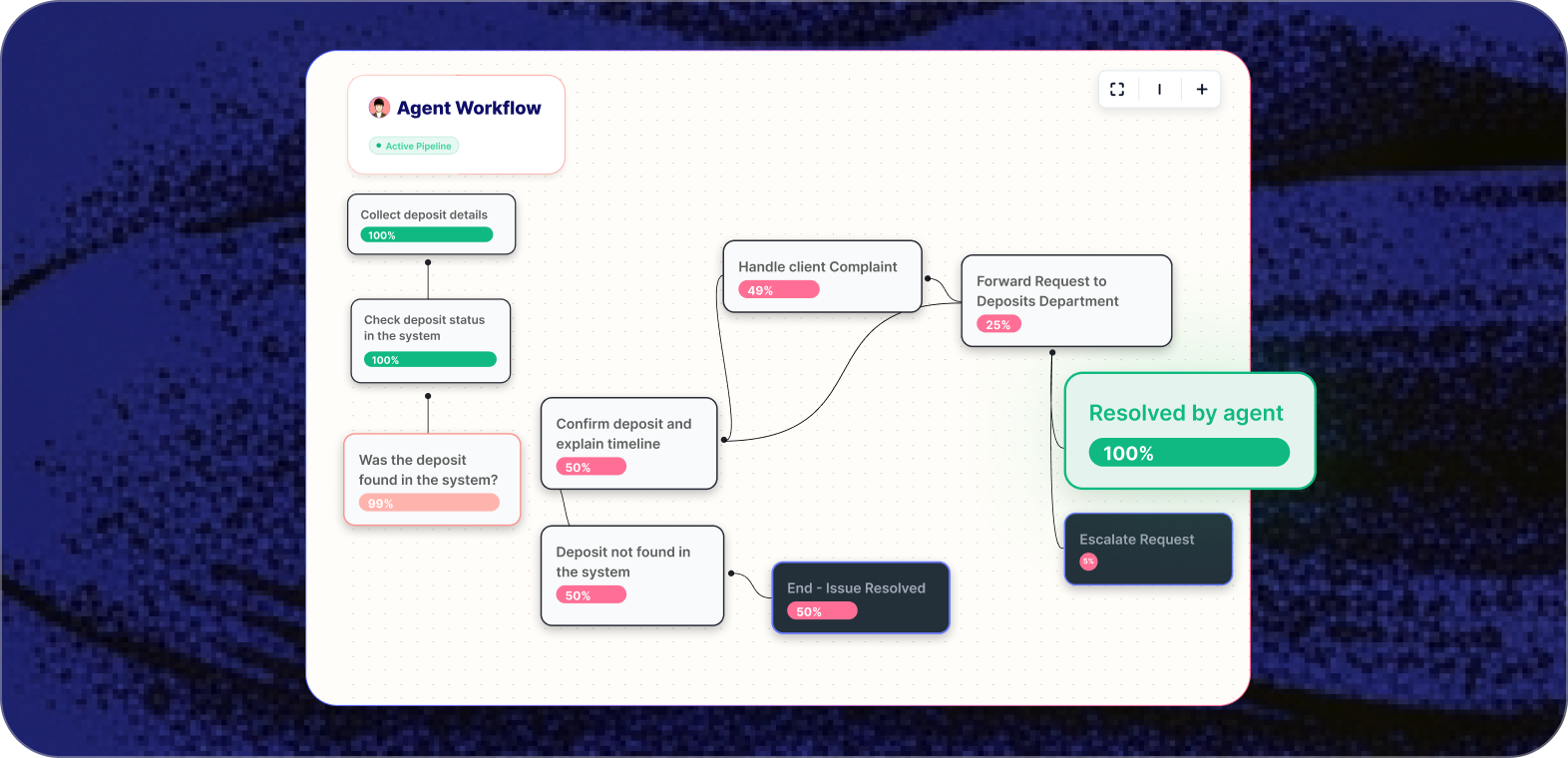
The form was the first thing to go
One website testimonial makes the intervention concrete. Qualified prospects were dropping out before completing an application. Encore says a live conversational agent replaced the static form, producing a 30% increase in lead conversion. The narrowness of that example is useful. It describes a particular obstruction and a particular change. It does not require believing that every customer journey needs to be rebuilt at once.
Encore’s website case: a static application form replaced by a conversational agent. A selected customer result, not a general benchmark.
The commercial question is whether the completed business justifies the cost of getting there. Encore’s July announcement cites a large lending client reporting tenfold return on investment within months. A buyer should treat that as a reason to investigate a scoped pilot. The relevant calculation includes implementation, operation and the value of additional completed business. Capital raised by the vendor belongs in an entirely different column.
The people behind the playbook
Dvir Ginzburg founded the company in 2022 as Insait. His background includes geometric deep learning and recommendation research at Microsoft. By July 2026, Insait had become Encore AI. Ginzburg’s explanation for the new direction emphasized personalization: he told CTech that AI experiences had become too impersonal. The company’s ambition was to make customers willing to return to the conversation.
“We’re bringing personalization back.”
Dvir Ginzburg, speaking to CTech

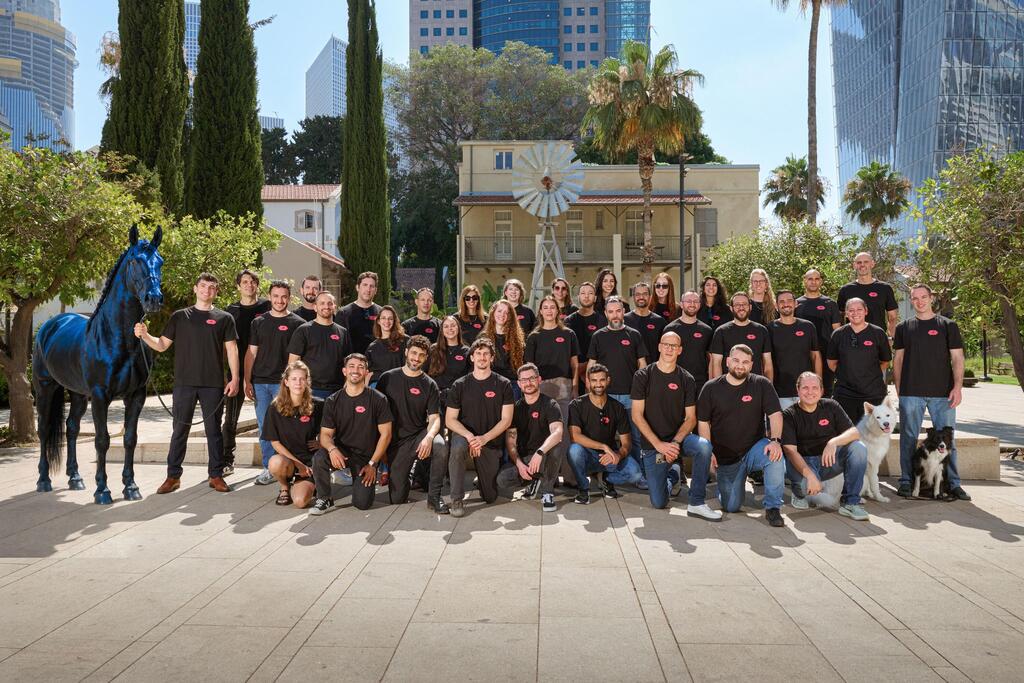
The $30 million Series A announced on July 29 brought backing from Team8, Planven, The Garage and Lukatz, alongside financial institutions. Some had first been customers. That gives the financing a useful detail: investors included organizations with experience of the product. It remains a vote of confidence. It is not a substitute for examining the economics of another institution’s deployment.
CTech identifies Harel and Bank Leumi among customers that also invested. Encore’s own July coverage summary reports more than 40 enterprise customers, mostly financial institutions. Its prospective users are the people responsible for sales, service and customer journeys: teams with an existing operation to study and an outcome they can measure.
A pilot needs more than a persuasive voice
Encore sells through an enterprise demo process and pairs its platform with strategy and implementation work. Its forward-deployed engineers integrate systems, co-build workflows and train customer teams before handing over more ownership. The delivery model acknowledges an ordinary enterprise truth: a demonstration can be charming while the integration work remains thoroughly uncharmed.
The platform advertises decision logs, workflow guardrails and approval gates. Those controls matter when successful selling meets regulated products. A tactic that increased conversion still needs authorization. On September 10, Finovate named Encore its Best ID Management/KYC Solution winner and a Best Generative AI Solution finalist. The specific recognition places it firmly in the machinery of financial customer journeys.
The lesson readers can copy is the order of operations: choose one leaking workflow, connect conversations to outcomes, examine the differences, approve the playbook and measure a pilot. This is an inference from Encore’s approach, not a guaranteed recipe. Poor records, inaccessible systems or misleading success correlations weaken it. The question worth borrowing is wonderfully practical: what does the person who finishes the job know that the process has forgotten?