Jenny von Podewils once wanted to become a diplomat. Years later, when she was named Female Founder of the Year at the German Startup Awards, she accepted from New York by video. The ceremony was in Berlin. She was working on Leapsome’s American expansion. The old ambition had acquired a different itinerary: fewer diplomatic postings, more conversations about how companies help people do their jobs.
There is a pleasing complication in her story. An impatience to make an impact led her toward entrepreneurship; building the company required years of patience. Before Leapsome announced its first outside investment, she and her co-founder, Kajetan von Armansperg, spent five years financing growth through customers. Their subject was learning at work. Their own company supplied a fairly demanding classroom.
A different route to impact
Podewils grew up in Berlin, the daughter of two academics, with international visitors and discussions around the dinner table. A politics teacher helped turn an interest in the wider world into an intended profession. At St. Gallen, she studied economics and international relations. Oxford followed, with environmental change and management. There were also periods of study in Lund and Geneva.
“I ultimately wanted to become a diplomat,” she recalled. Internships with the United Nations and the diplomatic service gave her a closer look at institutional work. She wanted a way to make change happen faster. A placement connected to carbon projects introduced an alternative: business could finance projects with environmental and development aims. Entrepreneurship began to look like a route she could take.
That change of direction helps explain the choices that followed. Her career would move between industries, but the attraction of work with a purpose remained. The questions became more practical. Who buys the thing? How does the organization function? What lets the people inside it improve? A plan for international affairs was giving way to an education in how businesses actually operate.
Two workplaces, one recurring question
At Younicos, a clean-tech company, she worked in business development and sales, eventually serving as Sales Director Europe. Selling had not been the original career plan. The role developed from a less defined starting point, and she discovered she enjoyed it. “So I never planned my career in sales,” she said. It became useful preparation for founding a company.
Sales asks an awkwardly direct question of a worthy idea: will anybody buy it? It introduces a deadline to conviction. A product can carry an admirable purpose and still need someone to explain its value, listen to objections, and earn a customer’s confidence. Those are skills a founder can use long after the first presentation has been retired.
She then worked supporting the CEO at ZEIT, the German publishing company, with exposure to transformation projects. The move put her inside an established media business after a technology startup. The pace, history, and products differed. Her interest in what helped people succeed inside an organization continued.
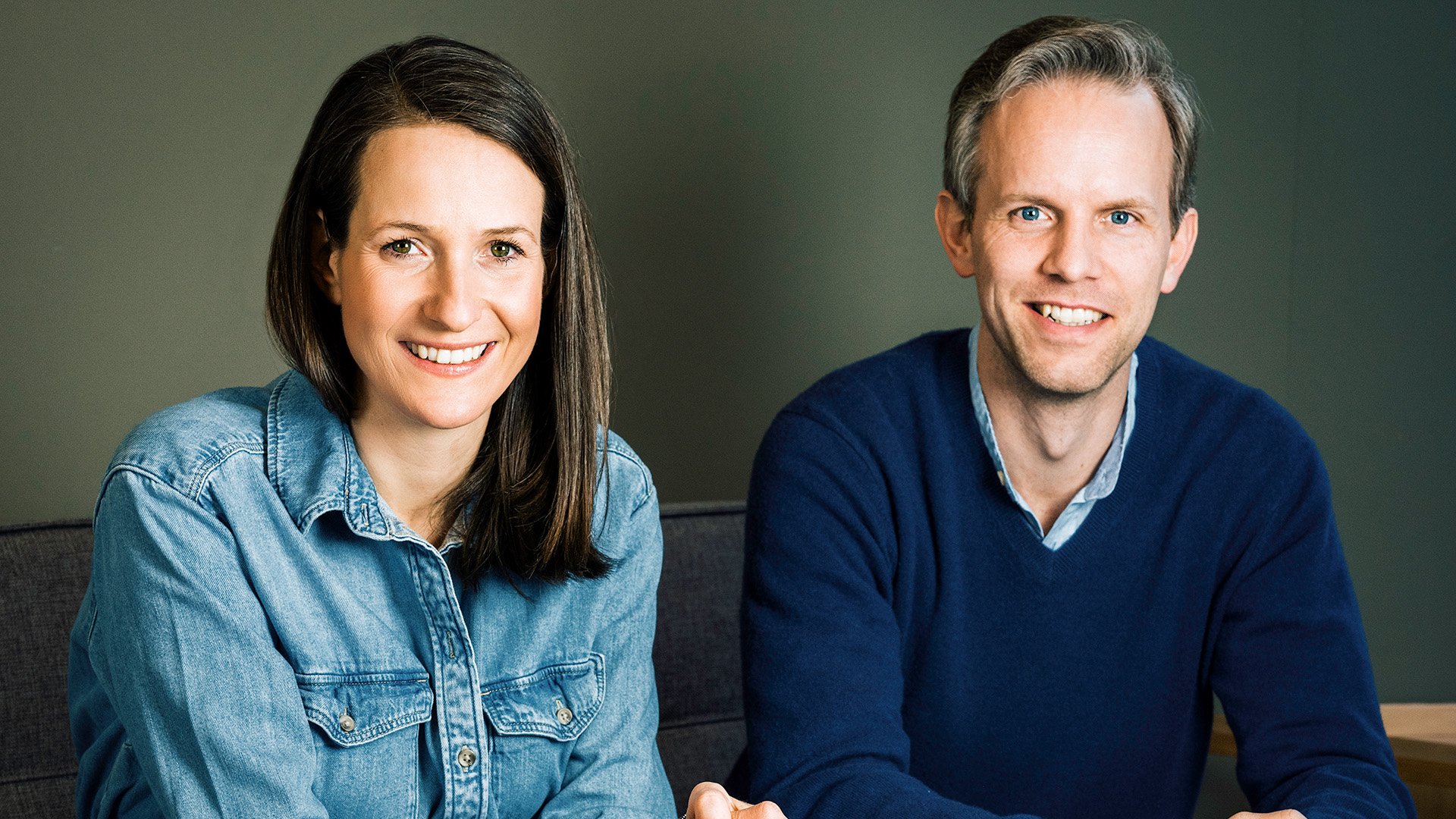
Podewils and Armansperg had both encountered gaps around employee development and alignment. Companies could be successful and well run while lacking useful tools for these everyday questions. The pair founded Leapsome in Berlin in 2016. An early prototype grew out of brainstorming in Armansperg’s kitchen. Some businesses begin with an extravagant launch. This one had a more domestic starting point.
The customer pays for the next chapter
The partnership had a practical advantage. Podewils knew sales; Armansperg knew coding and product development. They could make a product and find people willing to pay for it without assembling a large initial team. In the early years, revenue funded what came next.
Podewils has described the discipline that followed. The product had to answer customers’ needs closely enough that they would use it and pay for it. Internal processes also had to be efficient enough for sales to finance growth. Money passing through the business carried instructions: keep the offering useful, and keep the organization capable of delivering it.
Bootstrapping is sometimes presented as a founder’s philosophy, almost a dietary preference. Their account is more pragmatic. They had expected they might raise money earlier. Customer-funded growth worked, so they continued. When the ambitions for expansion and product development made additional capital useful, they changed the financing.
A Series A led by Insight Partners, with Creandum and Visionaries Club, after five years of customer-funded growth.
By the time investors arrived, the business already had a trading history. Customers included Spotify, Unity, and Mercedes-Benz. The fundraising announcement came with plans for international expansion and a New York office. The money was attached to a next step that could be described in concrete terms.
An acceptance speech across the Atlantic
Leapsome’s New York chapter put Podewils’s international interests back on the map. The company opened an office there in 2022, and she moved to support its US business. At the time, roughly a fifth of revenue already came from the United States, before the local office was established.
That sequence matters. The move followed evidence of demand. An office would bring the company closer to an existing market while it tried to expand its presence. It also put one half of the founding leadership across an ocean from the company’s original base.
In May 2023, the German Startup Awards named her Female Founder of the Year. She was working in New York and accepted remotely. In her public response, she described the recognition as a team win, giving credit to Armansperg and their colleagues.
Award ceremonies compress a business into a name and a photograph. Her response widened the frame again. The company was a shared undertaking, built through the work of people whose names would not all fit on the trophy. For a founder selling tools that help teams develop, that was a fitting way to receive an individual honor.
- 2016Leapsome founded in Berlin
- 2022First outside investment; New York office
- 2023Female Founder of the Year
- 2024Expansion into core HR software
The feedback habit
Long before AI became a central part of Leapsome’s public positioning, Podewils was asking why continuous learning was so difficult to establish inside companies. In a 2018 conversation, she credited a schoolteacher and a professor in St. Gallen’s coaching and mentoring program with helping her see that entrepreneurship and social engagement could coexist.
She also spoke warmly about her co-founder and the value of small expressions of gratitude. That detail gives some texture to the language of employee development. Appreciation has to be expressed by someone, to someone. A culture is made partly through these exchanges, which can seem too modest to deserve a strategy document.
Leapsome’s early tools made feedback something colleagues could request or offer directly. Goals, reviews, surveys, and learning became parts of the platform. In a later interview, she argued that employee development deserved attention comparable to product development. The comparison is persuasive because companies already understand the need to keep improving what they sell.
“if you can use Instagram, you can also use our software.”
Jenny von Podewils, on making the tools accessible
Her emphasis on usability brings the argument down to earth. A workplace tool competes for attention with the work itself. If using it becomes an elaborate additional assignment, its promise has to survive its inconvenience. The attractive idea is to make useful habits easier to practice during an ordinary working week.
More context, fewer blank pages
The product has broadened. In October 2024, Leapsome announced an early-access HR information system, bringing core employee records and operational workflows alongside its development tools. A company that began with feedback was taking responsibility for more of the information around the employee journey.
In June 2026, Podewils explained that starting point: “We started much more from the talent and people enablement side.” Her account of international product design also recognized that expectations around feedback and hierarchy vary across regions. A global platform has to work with those differences. Translating the buttons only gets it part of the way.
The broader system gives AI more context for tasks such as preparing a review or summarizing feedback. In May 2026, she described how Leapsome used AI to help managers begin with information from goals, meetings, and earlier feedback. Managers could then edit and add their own judgment, rather than face an empty document and an uncertain memory.
Her stated approach keeps a person involved in consequential decisions. That is a useful distinction to preserve when discussing a product full of automation: a draft can make a conversation easier to prepare, but a manager still has to understand the person across the table.
Conceptual illustration of the process she described in May 2026.
The interview she still keeps
There is an especially revealing detail in Podewils’s more recent account of leadership. At a team size of 150, she or Armansperg still interviews every person Leapsome hires. She describes this as a deliberate choice and acknowledges that understanding the right fit took time and mistakes.
“Hiring is the thing I’ve found hardest to get right,” she wrote. She looks beyond skills to ownership, honest feedback, speed, and willingness to question how work gets done. Those qualities are difficult to establish from a CV. She wants a conversation.
It is a small piece of unfinished business in an otherwise polished founder biography. The person building software for organizations is still learning how to build her own. The early sales calls, the customer-funded years, the move to New York, and the interview she keeps on her calendar all involve finding out what works through contact with other people.
The aspiring diplomat changed professions. Her attention to organizations and the people inside them stayed with her. Today the conversation may begin with a candidate, a manager, or a customer. It still asks something she has been pursuing for years: how can people do useful work together, and keep learning as they go?
Continue the conversation
- Leapsome - the company and platform
- Jenny Podewils on LinkedIn
- Writing by Leapsome’s co-founders
- Watch: performance management and employee engagement
- Watch: new approaches to employee development
- Read: her May 2026 conversation about AI at work
- Read: the global and talent-first approach to HR software
- Read: Leapsome’s first funding round