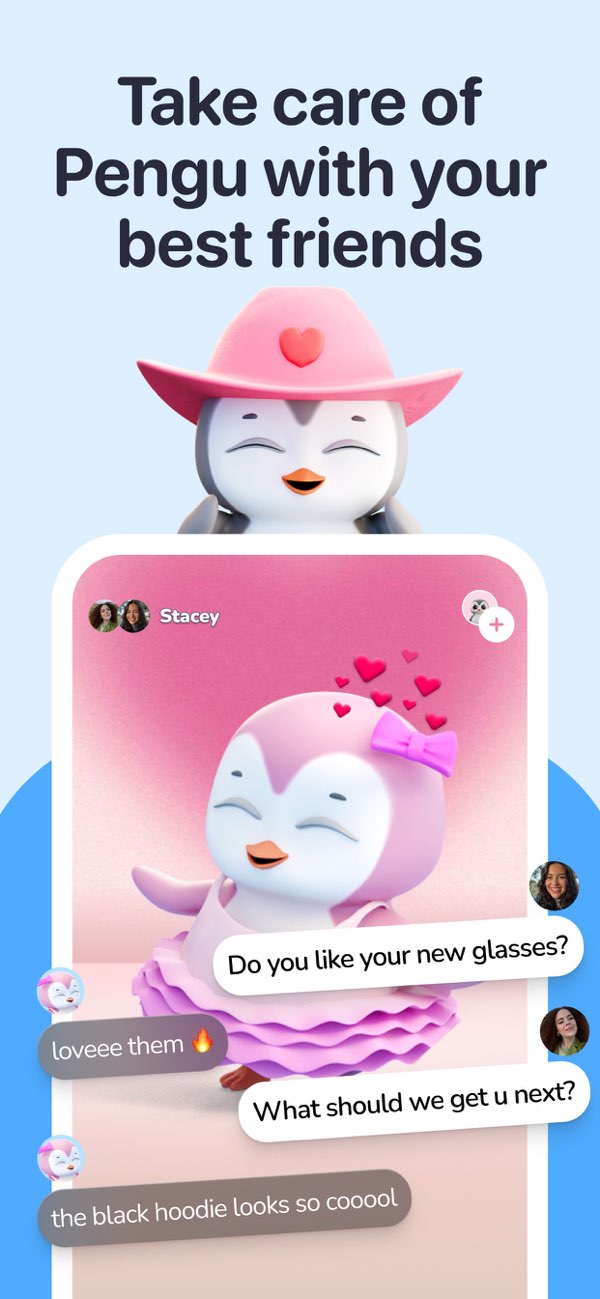
A penguin is an unlikely answer to a problem of conversation. Yet Pengu, the virtual pet built by Born, gives two people something to discuss besides themselves. They can raise it together, dress it and watch its personality develop. The small animal supplies a shared subject. For a couple, a sibling pair or two friends, that can turn opening an app into attending to something they have in common.
That is the interesting proposition inside Born, a consumer software company working in New York and Berlin. AI provides the character’s responses. A human relationship gives the activity its context. The company’s wager is that a companion can occupy the space between people and give them another reason to meet there.
- The hook: an AI pet people can raise together.
- The expansion: Friends adds characters for studying and self-care.
- The useful idea: build a shared activity people want to return to.
01 / A Sunday, then the server bill
In Fabian Kamberi’s account, the beginning was wonderfully unceremonious. On a Sunday in 2022, he and co-founders Jannis Ringwald and Stefan Quernhorst decided to copy the idea behind tbh, an app for exchanging compliments. Their version caught on in Europe. Success promptly acquired a less flattering accessory: AWS bills. Kamberi says the founders maxed out personal credit cards to pay them before raising their first round a week later.
The company was then called SLAY. Its early appeal lay in making social interaction pleasant and easy to initiate. Accel later described the founding app reaching number one on Germany’s iOS App Store. The team kept experimenting, including frfr, an AI voice messaging app for Instagram stories, and Pengu, introduced in late 2023.
By June 2024, Accel reported 2.5 million monthly active users across four apps. Those figures describe the studio’s portfolio at that moment, rather than today’s audience for any single character. They also explain why its experience extends beyond making a bot answer a question: the founders had been practising distribution, invitations and consumer habits.

02 / The users moved the penguin
One consequential change concerned where Pengu sat in the App Store. In an October 2024 interview, Kamberi explained its move from games to social networking. Users were treating the penguin as a friend they could chat with and raise together. The new category also helped address distribution difficulties in games.
“The social aspect of raising a Pengu with friends became central to the product.”
Fabian Kamberi / PocketGamer.biz, October 2024
Notice the order. People supplied the behaviour; the company adjusted the label. For anyone building a consumer product, that is a useful discipline. A download category describes the shelf. Actual use tells you what somebody thinks they have bought.
Pengu competes for attention alongside virtual pets and AI character chat. Its distinctive invitation is shared care: another person can participate in the same little life. Our reading is that this offers a concrete alternative to the blank conversational prompt. You can arrive with a task, a gift or a small decision to make together.
PENGUYOUR
FRIEND
Two people. One ongoing project.
03 / Cute requires engineering
Behind the character sits a less photogenic problem: making a game world behave inside a mobile app. Born’s answer includes React Native Godot, an open-source project created by Born and developed in collaboration with Migeran. It embeds the Godot game engine inside React Native applications on iOS and Android.
The repository describes running the engine on a separate thread and exposing its interface to JavaScript and TypeScript. In ordinary language, the animated world and the app’s controls can coexist without asking developers to squeeze everything into one system. This is a tangible part of Born’s expertise that another team can inspect and use.
Its hiring materials describe an organisation that prizes individual ownership, a flat structure and demanding performance expectations. Combined with Accel’s account of data-driven iteration, they suggest a studio comfortable changing both the software underneath a product and the experience on top.
04 / A pass, a round, a larger cast
Friends is free to use, with optional subscriptions and purchases. At the time of this profile, its US iPhone listing included a $9.99 individual monthly Pengu Pass. Offers and prices vary. The commercial bet is straightforward: some people will pay for more of an experience they already enjoy.
The company announced a $15 million Series A in September 2025, with Accel, Tencent and Laton Ventures participating. Born said the money would support hiring, additional characters and its New York expansion. Financing buys the opportunity to test those ambitions; subscription behaviour determines their commercial durability.
Capital for more characters, consumer AI talent and New York expansion.
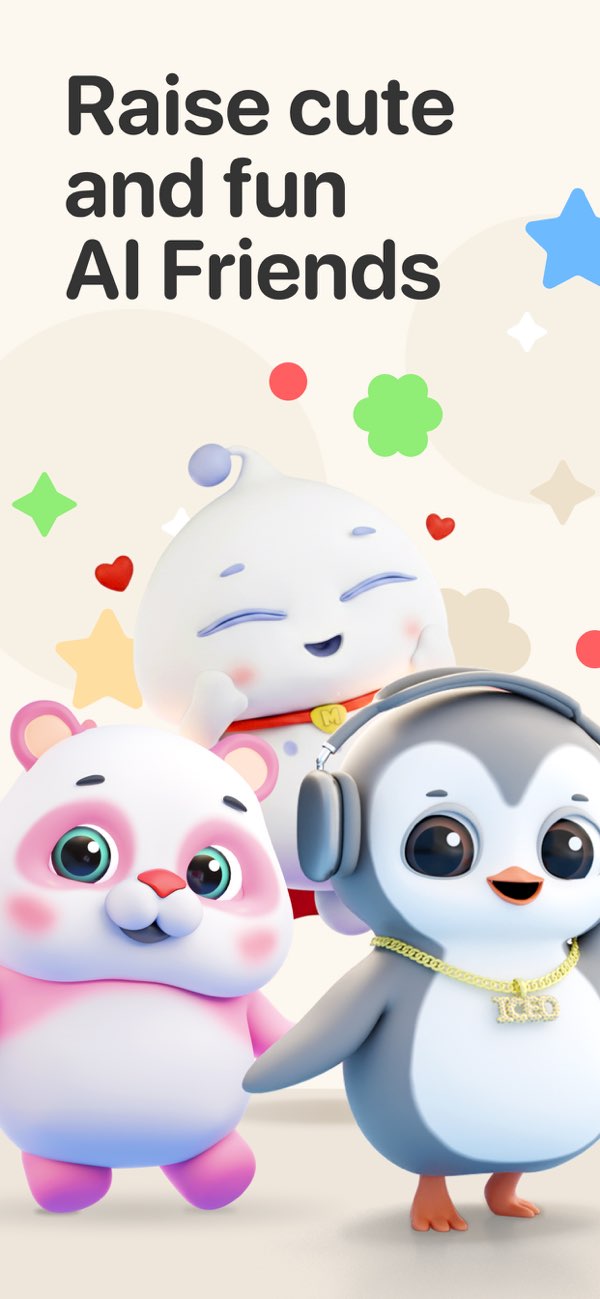
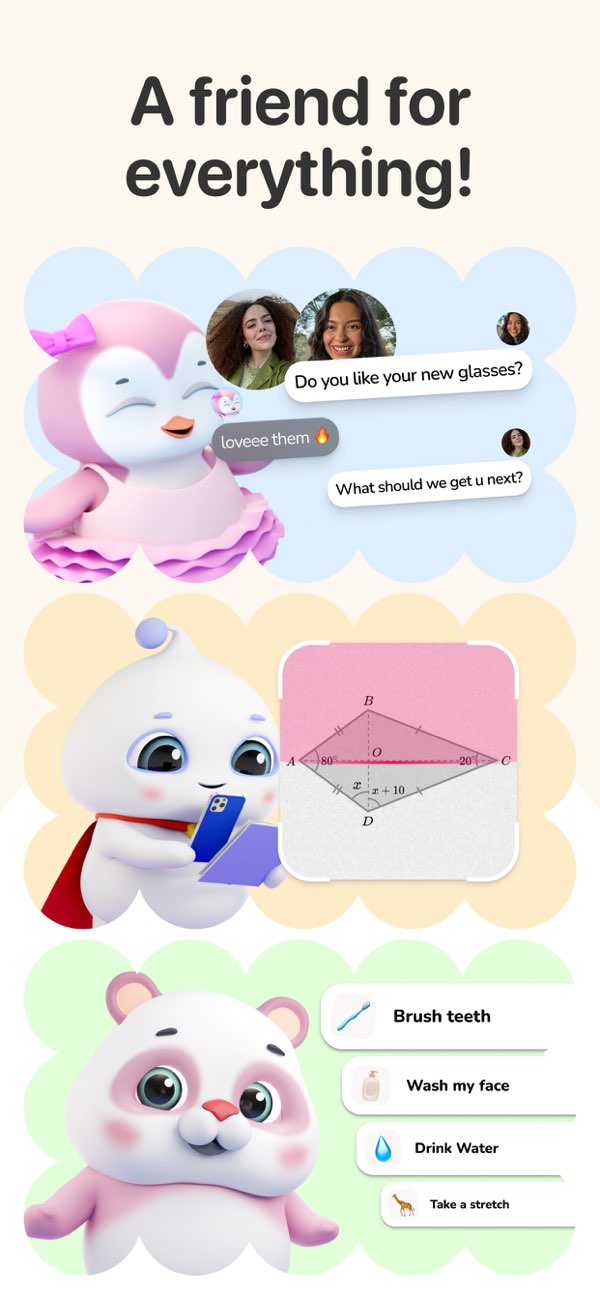
On January 13, 2026, Pengu expanded into Friends. The cast now included Mellow for learning and Bao for wellbeing. The current product description gives them practical duties: study structure and encouragement for Mellow, self-care and habit routines for Bao. Attachment becomes a possible reason to do something useful each day.
05 / How much friendship fits in a phone?
Born also introduced Life publicly in its January announcement. The iPhone app presents human-looking friends who send messages, post stories, share photos and join video calls. That changes the test. A stylised pet makes its fiction obvious; a human-looking companion invites closer scrutiny of what feeling present actually means.
Shared care has its own friction. A March 2025 Pengu reviewer described struggling when their co-parent could not get online. Treat that as one historical user’s experience, but the underlying design question travels: what happens when a shared routine meets different schedules? A product intended to bring people together should give them room to be unavailable.
The copyable lesson is modest. Give people something specific to do together. Watch what they make of it. Build the next version around that behaviour. Born’s penguin makes this visible because its attraction is easy to understand: somebody you know can care about the same absurd little creature. The creature may be artificial. The arrangement asks something real of both people.