The moment that tells you whether a benefits package works rarely occurs during open enrollment. It comes later, when somebody opens a bill and cannot tell whether to pay it. By then, the presentation is over. The spreadsheet has been approved. The employee has a policy, and a problem.
Bennie has made that gap its business. The New York company combines employee benefits brokerage and consulting with software and a healthcare concierge. It helps employers choose coverage, then gives employees a place to find information and people to help when information alone will not do. Insurance acquires something it often lacks: a usable front door.
- For employers: plan advice, carrier negotiations, renewal strategy and benefits reporting.
- For employees: ID cards, provider search, deductible tracking and help with claims.
- The bet: connect the people who buy benefits with the people who must use them.
First, make the benefits usable
In its July 2019 introduction, Bennie diagnosed an industry crowded with carriers, administrators, vendors and data companies. The employee lived downstream of decisions made by everyone else. When coverage became necessary, navigating those decisions became the employee’s job.
The sequence Bennie proposed was telling. First came a nationally licensed brokerage. Next came an employee platform. Then came analytics for employers. The starting point was knowledge of the insurance system; the software would make that knowledge easier to reach.
Founder Matt Straz led the early company. Bennie’s product launched in 2020, according to its later seed announcement. Its approach puts it between familiar categories: a broker that negotiates coverage, a consultant that advises the employer, and a technology company that organizes the daily experience. Each job addresses a different point at which benefits can become difficult.
Inside the Bennie App, employees can retrieve insurance cards, find in-network providers and track deductible spending. Ask Bennie adds assistance with coverage, claims and bill mistakes. A benefits page can tell you what a deductible means. A specialist can help work out why a particular bill does not seem to match it.
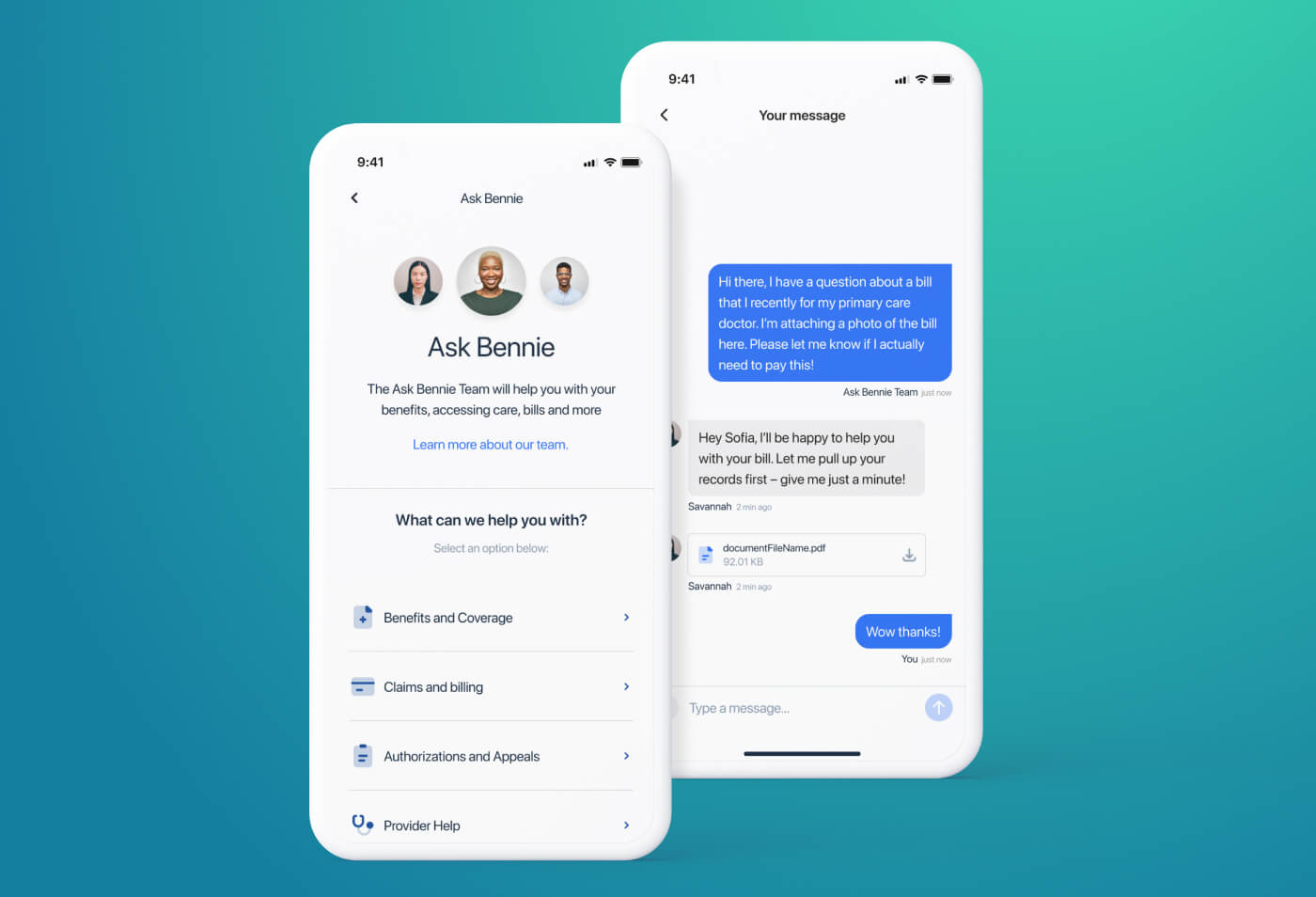
The bill that lands on HR’s desk
Consider Nylas. In Bennie’s account of the engagement, People Operations Manager Rachel Ibarra was handling benefits information manually. New employees meant more calculations and more data entry. Bennie helped the company choose and implement Rippling, while supplying benefits expertise and employee support.
“Streamlining the process saved us time.”
Rachel Ibarra / People Operations Manager, Nylas
Ibarra also reported fewer requests to the People team after promoting the Bennie App during enrollment. That detail matters. A tool sitting unused in an app store cannot remove a question from HR’s inbox. Someone has to show employees where help lives, and encourage them to try it.
At Bonusly, the constraint was different. The company’s People team could not simply hire a dedicated benefits manager. It needed help interpreting plans, improving enrollment and answering questions that otherwise demanded research. Bennie became an outside source of expertise, with a concierge available to employees.
There is a sensible division of labor here. Straightforward information belongs somewhere people can retrieve it. Ambiguous questions belong with someone equipped to resolve them. Otherwise a generalist in HR becomes the unofficial interpreter of every insurance document, a promotion nobody remembers offering.
A renewal quote is an opening position
Software is one part of the proposition. Negotiation is another. In Bennie’s Drata case study, an initial medical renewal increase of 21.5% threatened the company’s commitment to paying employees’ medical premiums in full. Bennie returned to the carrier repeatedly, using demographic data to argue for a lower rate.
The reported result was an 11.2% increase and $558,505 saved against the proposal. Drata retained its employer contribution and day-one eligibility. Costs still rose; the negotiation reduced how much they rose. For a finance team, that distinction belongs in large type.
A smaller increase. Still an increase.
off the proposed increase
A different decision appears in Bartlett Roofing’s case study. A proposed 35% increase for the 2026 benefit year helped prompt a move from fully insured coverage to self-funding. Bennie supported scenario modeling, plan design and claims analysis. The company reports early pharmacy savings after the change.
The trigger was a price shock, but the response concerned visibility as well as price. Bartlett wanted to understand the spending behind the renewal. Drata kept its contribution strategy and negotiated. Bartlett reconsidered the funding structure. The useful lesson is to define what must be preserved before deciding what should change.
The plumbing matters
A provider search is only useful if it searches the right network. In a Ribbon Health partner case study, Bennie describes using external provider data rather than building that entire capability itself. Its app can populate an employee’s medical network so results are relevant to that person’s plan.
The account includes a small, revealing complication: a customer used a local plan whose network had not yet been mapped. Ribbon sourced the network and supplied the data through its API. The interface might look simple; the work beneath it is specific and sometimes stubbornly local.
Bennie’s consulting schedule is similarly concrete. It sets out quarterly work: an annual service plan and market update, pre-renewal strategy, renewal planning, then open enrollment. The employer gets a recurring process rather than a meeting summoned by a looming deadline.
At Pliancy, that work included surveying employees and reviewing utilization before recommending benefits. Its published case study reports 183 questions resolved and 128 hours of Ask Bennie support. These are company-published outcomes, but they give the service a tangible unit: a question answered, an hour someone else did not have to spend investigating.
The price of a free app
Bennie markets its platform as free and says employers can switch at no additional cost. That is a claim about the brokerage and included technology, not free healthcare. Premiums, deductibles and optional benefits purchases still exist. The commercial offer is to get more service from the benefits relationship the employer already buys.
For a prospective customer, the practical comparison should include the proposed brokerage agreement, the service scope and the systems that need to connect. A separate software subscription and a broker-plus-platform arrangement can solve overlapping problems while distributing responsibility differently. Ask who owns the difficult handoffs.
The value also depends on use. Employees must know about the app; provider information must fit their networks; HR must be willing to route questions to the concierge. A company seeking only a standalone enrollment tool may want a different arrangement. Better navigation cannot make every treatment covered or every renewal cheaper.
More brokers, one front door
In July 2025, Brett Davis became CEO and Straz moved to chairman. Davis brought a decade at Cigna and several years leading Bennie’s revenue operations. In December, Bennie announced a $50 million investment from LNC Partners, following the $33 million seed round announced in 2022.
The newer capital came with explicit plans: expand sales and consulting, improve technology, and acquire owner-operated brokerages whose owners are approaching retirement. That adds an integration challenge to the product challenge. A shared app can organize information; preserving client trust requires people and service to travel with it.
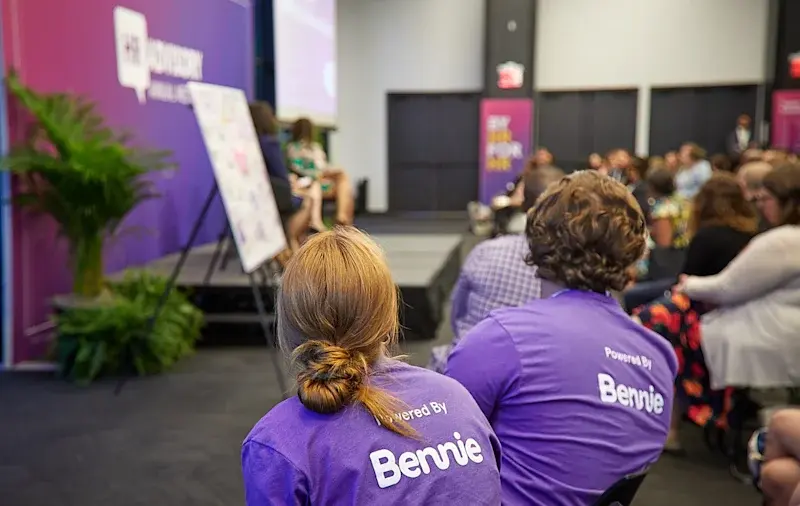
Bennie now reports nearly 1,000 employer customers and 150,000 supported members on its website. Its own workplace commitments include remote-first work and flexible time off. It has also pledged 1% of company equity to community and health causes.
The idea an employer can copy is modest and useful: review benefits from the employee’s next question backward. Put routine information within reach. Give complicated cases a named destination. Review usage before buying more offerings. Bennie’s proposition becomes clearest at the point where a package on paper becomes a person trying to get care.
Open a few useful doors
Explore the product, the company and the conversations behind it.