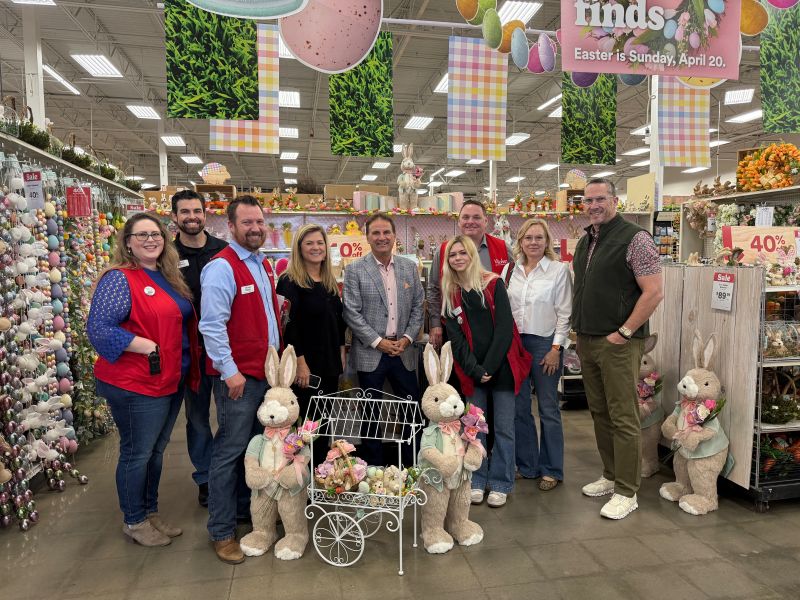
David Boone’s first day at Michaels came with rabbits. In a photograph from his store visits, the new chief executive stands among employees, spring decorations and a small procession of ornamental bunnies. He wears a checked jacket; several colleagues wear the company’s red vests. The scene is cheerful, crowded and a useful distance from the abstract language of a corporate appointment. Retail strategy eventually has to find room on a shelf.
Boone took over on February 28, 2025. His first-day itinerary included Dallas-area stores, followed by plans for Toronto-area visits that Sunday. He described meeting teams and learning what made the business work. There was plenty to learn, and very little reason to assume the market would wait politely while he did it.
Party City and Joann were closing their stores. Their customers still had birthdays to arrange, quilts to finish and yarn preferences acquired over years. For a retailer with more than 1,300 locations across the United States and Canada, that disruption presented an unusually practical question: how quickly could Michaels become useful to people whose usual store had disappeared?
A career spent learning other people’s aisles
Boone arrived with experience in groceries, banking, office supplies and distribution. It is an eclectic preparation for selling crochet hooks. It also means that the basic problems of retail had followed him through several different uniforms: understanding customers, choosing merchandise, connecting services and making a large organization carry out a decision.
He spent 16 years at Loblaw Companies, including leadership of its National Wholesale Club Division and work on merchandising strategy and category management. Those responsibilities involve decisions that shoppers experience without necessarily noticing: which products belong together, what deserves space and what a business promises through its selection. A store’s assortment is a remarkably public expression of management’s judgment.
At TD Bank USA, his leadership work included financial services for major American retailers. He later became chief executive of Staples Canada, serving six years, and then interim chief executive of Essendant, whose business spans wholesale distribution, e-commerce and third-party logistics. The customer-facing store and the machinery behind it both appear in his résumé.
His education includes a Bachelor of Commerce from McMaster University and an MBA from the Kellogg School of Management at Northwestern University and the Schulich School of Business at York University. Yet his account of what prepared him for leadership gives considerable weight to moving between organizations. Different markets and different ways of reaching customers, he has explained, helped him understand how another business might change.
Before the balloon bar, a place to work
At Staples Canada, Boone had already dealt with a familiar retailer whose name could suggest a narrower business than its leadership wanted to run. The company adopted the identity of a working and learning company. That ambition had to survive a fairly obvious test: would customers find anything different when they walked through the door?
A new concept opened in Kirkland, Quebec, in December 2018. A Toronto location followed in January 2019, with a coworking offer called Staples Studio. The changes included places to try products, a different approach to displaying them and services designed around the activities of students, teachers and entrepreneurs. Before making those changes, Staples had spoken with thousands of customers about what they needed.
In Toronto, the proposition went beyond buying the equipment for an office. Customers could work there. The University Avenue store included meeting rooms and technology for working together. The idea had a pleasing retail logic: people who needed a desk might also need printing, supplies and help with a business. There was a relationship to develop after the receipt had been issued.
Another part of the effort involved Joe Mimran, the retail entrepreneur associated with Club Monaco. His collaboration brought a more deliberate sense of design to office and technology products. An item could do its job and still be something its owner enjoyed looking at. Anyone who has spent a working day beside an ugly desk accessory can appreciate the distinction.
Boone also described a method for changing stores: make substantial improvements in a small number, see what customers respond to, then carry successful elements into the wider network. That makes his later interest in new Michaels formats easier to understand. His career contains a recurring question about what else a familiar shop can help its customers do.
“Resilience. Every business leader needs it.”
David Boone, asked about his biggest strength in a 2022 interview
The customers were still there
At Michaels, the opening was more immediate. In June 2025, the company completed its purchase of Joann’s intellectual property and private label brands, including Big Twist. The transaction involved names and products, rather than taking over Joann’s physical stores. Customers would encounter pieces of a familiar shopping life inside a different retailer.
That distinction matters. A brand of yarn can carry practical knowledge: how it handles, what it costs, how it works in a pattern already underway. Welcoming a displaced customer involves understanding those habits. A newly printed welcome sign has limited powers if the materials behind it are wrong.
Michaels announced more than 600 additions across fabric, sewing and yarn, covering categories such as quilting supplies, specialty threads and sewing machines. Boone’s stated commitment was to give Joann customers the selection, value and inspiration they were seeking. The promise was broad; its fulfillment would be counted in individual products that people could actually buy.
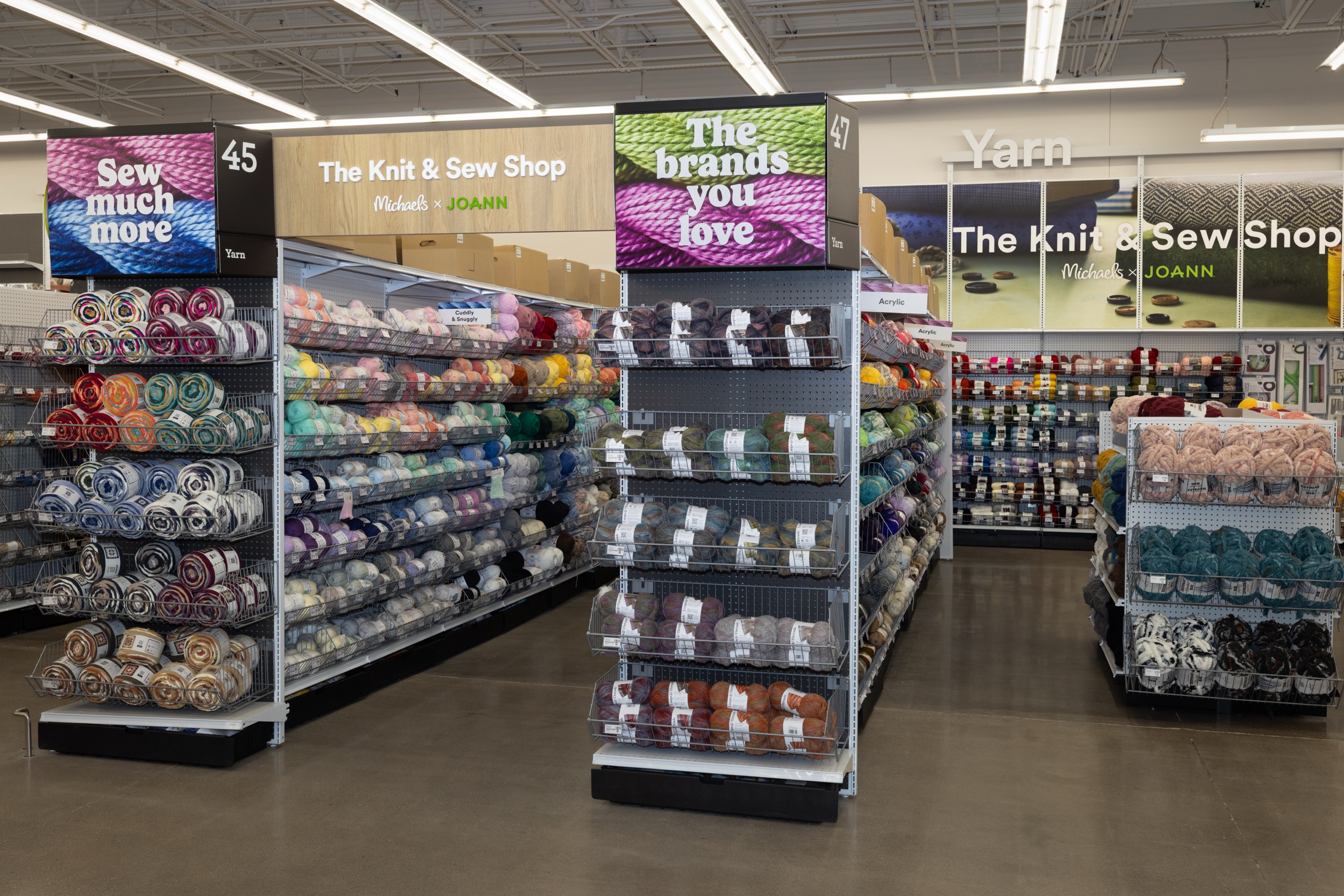
By September, the company had introduced The Knit & Sew Shop and The Party Shop throughout its store network. Fabric was available in more than 840 stores, with further expansion planned. Fabric cutting tables were another part of the rollout. These details are the substance of a change that could otherwise be mistaken for a new sign above an old aisle.
A year measured in store changes
- 28 FEB 2025Boone takes the jobCEO and board member
- 05 JUN 2025Joann brands join MichaelsIntellectual property and private labels acquired
- 24 SEP 2025Two shops across the fleetKnit & Sew and Party Shop announced chainwide
Helium requires an operating plan
The party business supplied a different kind of test. A packaged balloon is straightforward merchandise. An inflated balloon adds service, equipment, staff knowledge and a customer who may need the order at a particular time. Celebrations are unforgiving about scheduling. The birthday rarely agrees to move because the retailer is still organizing itself.
Michaels introduced dedicated Balloon Bars alongside its expanded party assortment. President and chief operating officer Nicholas Bertram, who joined in April 2025, described the opportunity to meet needs left by Party City’s departure. Many stores had previously sold packaged balloons; inflation service gave the customer another reason to visit.
Boone worked with chief financial officer Perry Pericleous on the response to the market disruption. At the ICR Conference in January 2026, he described pursuing the openings in party and fabric as the first priority. By then, the projects had moved beyond a statement of intent. Customers could encounter both concepts in stores.
The broader logic is that supplies and services can support one another. Someone planning a party may need materials, personalization and a place to hold it. Someone beginning a craft may benefit from instruction as much as another choice of thread. Each additional service asks more of the organization, while giving the customer another reason to remember the store.
Try the idea where people can touch it
By July 2026, Michaels was testing a new format in Irving, Texas, and Easton, Ohio. The Irving store included a window looking into a party room used for gatherings and creative activities. It made participation visible to arriving shoppers. A room where something happens is an advertisement with unusually good proof.
Boone described an “artful entertainer” among the customers the format sought to serve: a host interested in details such as table runners, favors and individual place cards. It is a specific picture of a customer. It also connects several categories that can look unrelated when viewed only as departments in a store.
His language about leadership is similarly grounded in the relationship between employees and shoppers. In an interview originally published during his Staples tenure, he described enjoying collaboration with associates and creating something worthwhile for customers. Asked about his own strength, he chose resilience. The answer is short enough to leave room for the work.
There is a temptation to explain a chief executive’s career as a sequence of personal revelations. Boone’s public record suggests a more workaday and interesting pattern: spend time with customers, change what the store offers, give employees the means to deliver it, and learn from what happens. The bunnies in the first-day photograph are seasonal. The people standing around them are the enduring part of the assignment.
The next occasion on the calendar
Boone’s responsibilities expanded outside Michaels in August 2026, when he joined QVC Group’s newly appointed board. His experience now reaches from physical aisles to a business organized around demonstrating products and selling through screens. The settings differ, but both ask whether a customer can imagine a useful place for a purchase in everyday life.
At Michaels, the October calendar offers a more tangible view of what comes next. A Hallmark partnership announced on October 20 links the holiday film Holiday Unplugged with store activities, on-demand projects and an exclusive seasonal assortment. The movie is scheduled to premiere in November. The company’s holiday research, released the following day, also examines consumers’ interest in handmade gifts and activities away from screens.
For Boone, these initiatives extend the question he inherited in February 2025. The next customer may arrive for a familiar yarn, a birthday balloon or an ornament to make with someone else. His task is to make the visit work well enough that the customer returns for another occasion. In a business full of unfinished projects, that is a perfectly concrete ambition.