A travel app earns its place on a phone twice: when somebody wants to go somewhere, and when something goes wrong. tiket.com has lived through both tests. The Indonesian booking company began by persuading travelers and suppliers to try an unfamiliar way of doing business. Years later, it found itself explaining why an avalanche of canceled journeys could not be refunded at the speed of a purchase.
Today its ambition extends beyond either transaction. A customer can book a flight, find a villa, arrange a train journey and buy an attraction ticket. Through Blibli Tiket Rewards, that relationship also reaches into shopping. The holiday ends; the account stays useful. In a market where competing apps can offer the same seat or room, that is a more interesting proposition than another discount code.
First, persuade someone to book
tiket.com was established in August 2011 by Wenas Agusetiawan, Gaery Undarsa, Dimas Surya Yaputra and Natali Ardianto. Their stated objective was practical: make the laborious business of arranging travel accessible online. The early offering included hotels and entertainment tickets; flights followed in 2012. The company built outward from things people already wanted to buy.
Having an obvious use did not guarantee customers. Recalling the early years at a 2018 entrepreneurship event, Undarsa said approaching airlines had been difficult and that the business had come close to shutting during its first two years because transactions were lacking. That recollection punctures the tidy startup story in which a good website simply meets a waiting market. Suppliers had to take the newcomer seriously. Travelers had to trust it with their money.
The useful expansion was local. Its railway relationship brought Indonesian train journeys into the booking mix, while car rentals and a mobile app widened access in 2014. By the time Blibli announced its acquisition in 2017, tiket.com had a recognizably rounded travel catalog. It could help arrange a journey across several categories, giving customers reasons to return beyond their next flight.
A holiday has more than one checkout
The current website makes the breadth visible. Flights and hotels sit beside villas and apartments, conventional trains, Whoosh, buses, car rentals, events and the activities category called To Do. Its natural customer is the person assembling a trip from separate decisions. A family may need transport, more space than a hotel room offers, and something to entertain the children once they arrive.
That catalog puts tiket.com in the same consideration set as Traveloka, with Agoda and Booking.com among the alternatives for accommodation. Airline and railway websites remain alternatives for individual bookings. tiket.com’s particular combination is an Indonesian travel storefront attached to a broader retail group. The convenience comes from bringing choices together; the eventual value still depends on availability, terms and the final price.
There is another customer behind the screen: the business selling the room, excursion or experience. tiket.com gives suppliers a route to demand. Its affiliate offering also lets eligible companies connect their websites or apps to travel inventory through an API, earning commission on successful transactions. A business can distribute travel without negotiating every supplier relationship itself. It still needs to run its own customer-facing operation.
The room rate has a business behind it
tiket.com’s supplier documentation makes the money mechanics unusually tangible. Ignis, its activities management system, supports negotiated markup or commission arrangements. The operator’s agreement determines which method applies. The marketplace earns from arranging a sale, while the supplier gains access to potential buyers. The full amount passing through a booking is therefore a different thing from the platform’s own revenue.
Accommodation brings another lever. Under the Preferred Partner program, selected properties can pay additional commission for better visibility. The advertised placements include search results, recommendation badges and accommodation-page slots. For a hotel, this is a distribution expense. For a traveler, it is a reminder that prominent placement can reflect a commercial relationship as well as a match to the search.
These arrangements offer a concrete answer to what participation costs: a share of a sale or an agreed margin, with an additional commission for certain promotional placements. They also expose the tradeoff. An operator must judge whether the extra bookings justify what it gives up. Selling more rooms is useful only if the resulting economics work for that property.
Preferred Partner accommodation placements add another paid visibility option.
Blibli supplied a second act
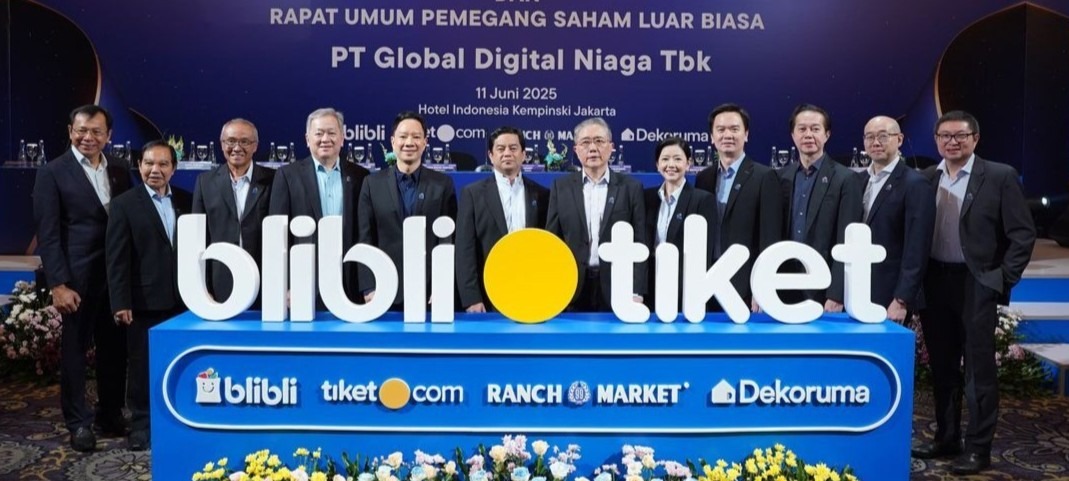
Blibli announced the purchase of 100 percent of tiket.com in June 2017, with the agreement signed on June 12. George Hendrata was appointed CEO. The buyer had already introduced a travel category and wanted a broader offering for online consumers. Buying an operating travel company brought an existing catalog and supplier relationships to that ambition.
For tiket.com, the deal opened a route to greater reach inside a larger commercial group. The ownership story has two dates worth keeping straight: the 2017 transaction and its becoming a consolidated subsidiary of Blibli in 2021. Blibli subsequently listed on Indonesia’s stock exchange in 2022. tiket.com belongs within that listed group; treating the parent’s financial results as the travel company’s own would muddle the story.
Rebuild the engine while it is running
Expansion also tested the machinery. A Google Cloud account of tiket.com’s engineering work describes legacy infrastructure, hardware failures and growing demands on data analysis. The original plan was to move existing workloads. It became a full rebuild, undertaken with Google Cloud and specialist partner Aliz.
The opening exercise was refreshingly concrete: three days, seven tiket.com engineers, two from Google and one from Aliz. They examined the existing environment before designing the replacement. The company reported completing the rebuild without downtime. Its cost logic was to match computing capacity to demand, instead of paying continuously for capacity needed during peaks.
The transferable lesson is to begin with the actual workload and the team’s capabilities. A migration can change scope once the system is properly examined. That does not make a full rebuild the answer for every smaller booking business; the demands that justify one have to exist first.
Then everybody wanted their money back
The pandemic reversed the direction of travel commerce. In April 2020, tiket.com publicly described flight-refund demand running at ten times normal levels and warned that responses would take longer. The product people urgently needed was no longer a booking. It was an answer about a booking they could not use.
Undarsa told The Jakarta Post that revenue had fallen 75 percent and that the company had shifted its focus from sales to customer care. This was a change in priorities driven by customers’ circumstances, with cancellations and rescheduling overwhelming the usual rhythm of the business. A polished checkout could not make an airline’s refund rules disappear.
The service problem remains relevant. In September 2025, tiket.com announced its halo tiket transformation, promising connection to the team within 30 seconds and resolution within an hour, alongside round-the-clock AI assistance. Those are company commitments, rather than independently measured outcomes. They nevertheless identify a clear competitive target: the uncertainty after a customer asks for help.
“In travel, every minute matters.”
Gaery Undarsa · halo tiket announcement · September 2025
The limit is built into the intermediary’s role. Handling a report promptly and returning supplier-controlled money are different operations. The customer still needs to understand the ticket or room’s terms. An agency can organize the conversation and pursue the request; its relationship with the supplier remains part of the experience.
Your holiday points can go shopping
Blibli Tiket Rewards supplies a reason to maintain the relationship between journeys. Introduced in 2023, it connects earning and redemption across the group, with Silver, Gold, Platinum and Diamond membership tiers. Participating accommodation providers can offer member-specific discounts or benefits. A trip becomes one contribution to a relationship that includes other purchases.
The appeal is easy to picture. A customer who rarely flies may shop more often. Shared points let those habits support one another, while the group gains more opportunities to be useful. By June 2026, Blibli was still emphasizing integration across tiket.com, Blibli, Ranch Market and Dekoruma. The strategic wager is that customers who already spend across these businesses will find the combined membership worth keeping.
That logic depends on overlap. Someone who uses none of the other businesses has less reason to value cross-group benefits. Rewards have to fit real spending habits and usable redemption choices. For other companies studying tiket.com, the copyable idea is to connect purchases their customers already make, then make the benefit understandable.
The next trip may only take a weekend
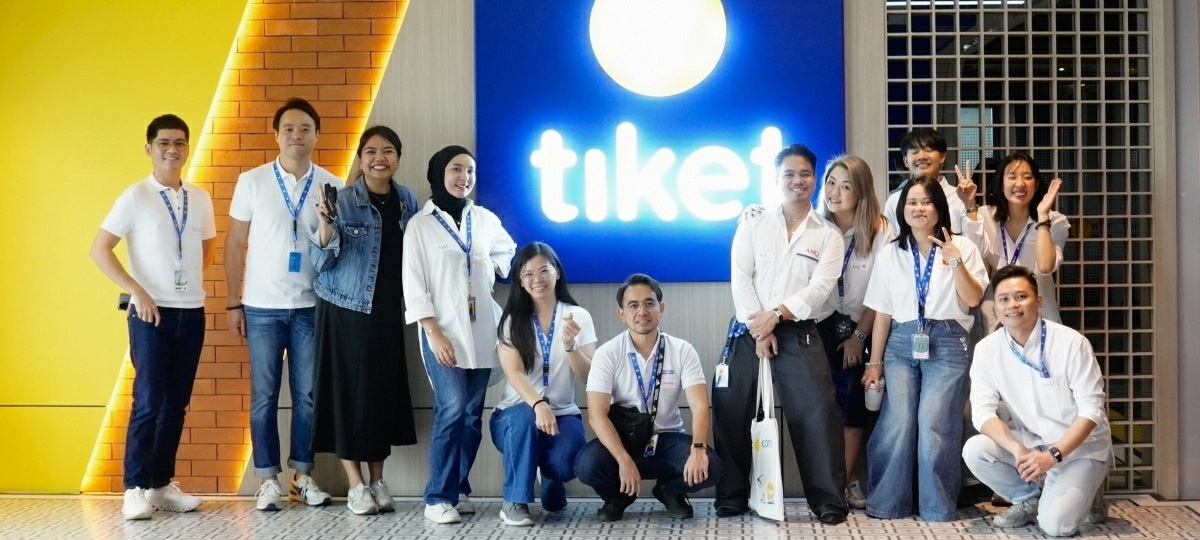
The company’s work culture uses HAPPY to mean Hunger, Agile, People-oriented, Performance driven and Yourself. Its careers materials promote learning and wellbeing, and advertise more than 50 million users. That is a company-reported audience figure, not a monthly active-user count. The cheerful language sits alongside a business whose harder jobs involve integration, supplier management and service.
Its sustainability effort adds work beyond the app. tiket.com joined the Global Sustainable Tourism Council in September 2024 and has supported tourism-village skills initiatives with Indonesia’s tourism ministry. Membership is a commitment to participate in that field, rather than certification of every trip or property sold on the platform.
The most revealing direction comes from its travel research. In the outlook released with Lokadata in December 2025, almost 70 percent of trips lasted one to three days. The same release reported accommodation bookings up 20 percent and attraction bookings up 38 percent in its 2025 comparison. Those are company-reported figures, not a market-wide growth estimate.
Reported booking growth · 2025 comparison presented in December 2025 · scale 0–40%
A short family break gives the catalog a clear purpose: get there, find enough space, plan something enjoyable, and get home. tiket.com’s opportunity is to make those pieces easier to arrange and the interruptions easier to handle. The next booking will depend on whether the last journey gave the customer a reason to come back.