A ski lesson is an awkward thing to sell. It needs an instructor, a place, a time and a guest who has managed to arrive with the appropriate number of gloves. The mountain supplies the scenery. Somebody else must arrange the afternoon. Michael Stocker’s career has kept returning to that somebody.
Today, the Austin-based co-founder and CEO of Way works with hotels and other consumer brands on the machinery behind experiences. The vocabulary has grown to include loyalty programs, brand partnerships and artificial intelligence. But follow his earlier work and a more familiar problem comes into view: people want to do something enjoyable, and the business offering it needs a workable way to say yes.
It is a useful place to begin a founder’s story. Before the funding rounds and enterprise partnerships, there was a person who understood a ski lesson from the instructor’s side.
There is an obvious attraction to writing about the destination. Mountains and hotels come with ready-made pictures. The more useful detail in Stocker’s story is the repeated attention to the transaction before the picture: the moment a guest decides to go, and the work a business must do to receive them.
The customer was already on the mountain
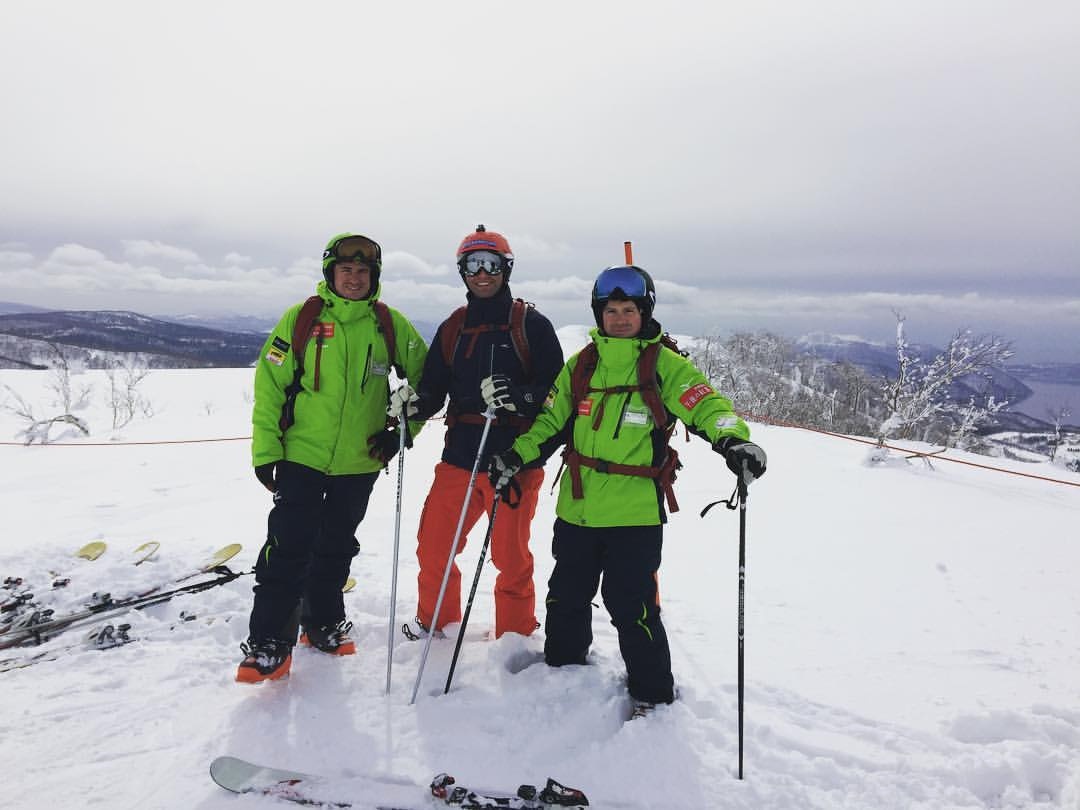
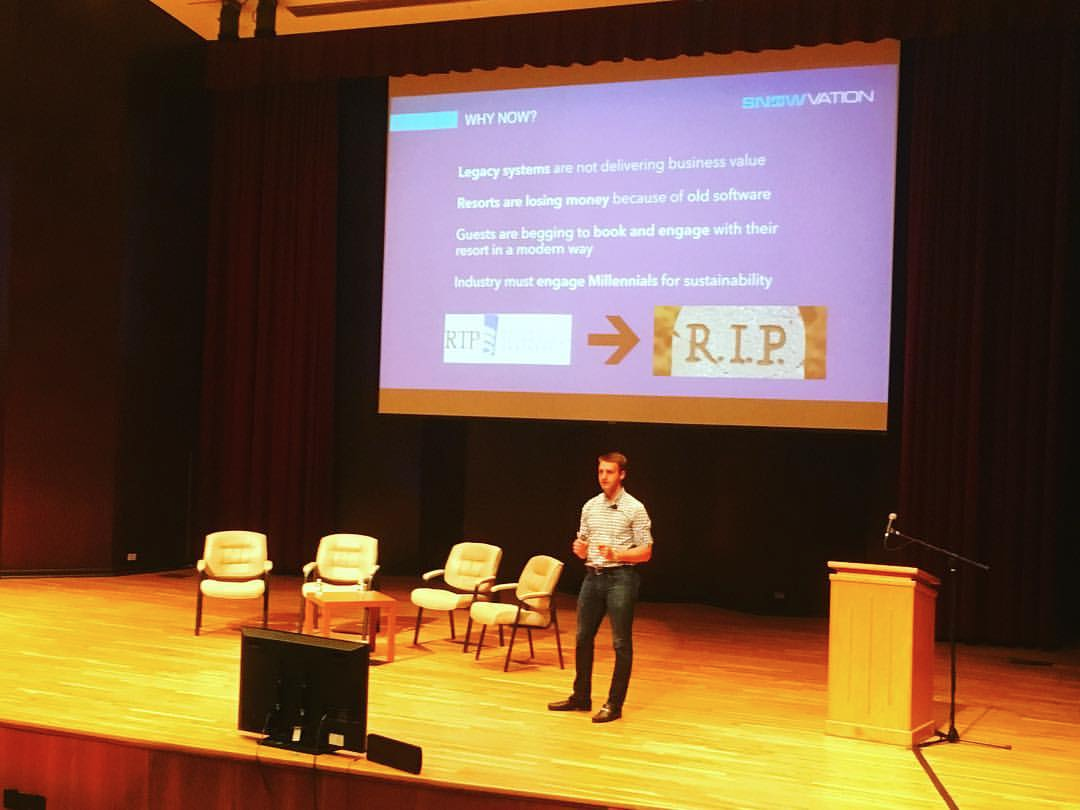
Stocker grew up skiing in Pennsylvania and worked as a certified ski instructor. He noticed the industry’s operational and technology problems and founded Snowvation, whose software launched in May 2016. Its brief included online sales and the work behind the booking.
Early American customers proved difficult to win. An opportunity in China arrived, and Stocker pursued it despite advisers urging him to concentrate on the United States. Genting Resort Secret Garden became a partner. It was an unusual route to credibility: go farther away to help make the case closer to home.
“Startups are inherently all about risk.”
Michael Stocker
Snow became too small a word
By October 2018, the name was struggling to keep up. Stocker announced that Snowvation and ShredBetter.com were coming together under Only Sky. The first winter had involved six ski schools. Two years later, he described nearly 50 businesses using the platform, spread across countries including Japan, Switzerland, France, Chile and New Zealand.
The customers had also changed shape. Rafting businesses, boat operators and other activity providers had joined the ski schools. Their work involved guides, equipment, staff schedules and inventory. The scenery differed; the scheduling problems had a family resemblance.
The rebrand offers an early glimpse of a pattern in Stocker’s work. A product begins around a particular activity. Customers bring adjacent problems. Eventually, the company has to explain itself in language broad enough to include the people already using it. A name with snow in it had become a slightly overdressed way to sell a boat trip.
- 2016Snowvation
Ski-school operations - 2018Only Sky
Activity businesses - 2020Way
Branded experiences - 2025Airline loyalty
Experiences for points
A founder takes the chair away
In March 2020, Stocker published a short note saying he had stepped down as Only Sky’s CEO. He described reflecting on his strengths and weaknesses and reaching the view that the company could continue without him running it. He thanked the people who had supported the business and expressed pride in the team.
The note matters because it gives a career transition the scale of an actual human decision. There is no need to decorate it with a private drama. The departure itself, and his willingness to describe his own limitations, are revealing enough.
A year earlier, his Boulder Startup Week appearances had included sessions on hiring, firing and building a team, and on the day after a raise. Those are practical subjects for someone whose first venture had already moved beyond a narrow product brief. They also provide a useful counterweight to the tidy version of entrepreneurship in which every milestone points in the same direction. Sometimes the next decision is to leave.
Another company, a familiar piece of work
Stocker co-founded Way with Jake Luster in 2020. Its first product, Host, helped hospitality brands offer experiences delivered by local partners and staff. A hotel could become the place where a guest discovered something to do, with the booking handled through the brand’s own digital channels.
By November 2022, Way had announced a $20 million Series A led by Tiger Global, with participation from MSD Capital and others. The company reported hundreds of customers globally. The financing announcement put its valuation at $100 million at the time.
Money made the expansion visible. The more interesting continuity was the work itself. Stocker had moved from activity businesses to hospitality brands, but there was still an offer to organize, a customer to serve and a reservation to complete. The polished language of a hotel website eventually has to meet the rather firm limits of a calendar.
November 2022 · led by Tiger Global
The cabana joins the conversation
In March 2024, Stocker explained that Way’s original understanding of experiences had broadened through its customers. Different brands used the same word for quite different offerings. A locally hosted outing, a large ticketed event and a cabana reservation could all sit under the heading. They did not require identical tools.
Way expanded its product family with Activate and Reserve. Events needed ticketing. Resources needed availability and reservation management. Host continued to address experiences delivered by people such as local partners and hotel staff.
This is a revealing sort of product development. The customer’s definition turns out to be more untidy than the founder’s opening idea. A cabana has no interest in a company’s original theory of the experience economy. It needs to be available when the guest wants it, and unavailable when somebody else has booked it.
ONE WORD, DIFFERENT JOBS
There is a practical distinction here for the person building the company. Listening to customers can change the categories on the product page. It can also change what the product has to do each day. Way’s expansion made those differences visible through separate tools for separate operational demands.
The guest is booking one trip
The next connection came in June 2024. Way and AZDS announced an integration combining Way’s experience platform with the RevRaise room-booking system. Guests could reserve rooms and experiences in a single transaction, directly through a hotel’s website.
The premise is pleasingly ordinary. A person planning a stay may think about the room, the dinner and the outing together. Separate systems can ask that person to plan the same trip several times. Bringing the pieces into one flow lets the booking process follow the guest’s intentions more closely.
Stocker had already explored the relationship between luxury and digital service in a 2023 conference conversation with Hyatt’s Lesley Standridge. The question was how the first online interaction could carry the care associated with the property itself. An elegant arrival begins to look less convincing if getting there required a small administrative expedition.
For Stocker, the scope of the work now included connections between companies as well as the functions of a single product. A room-booking system and an experience platform had to cooperate around one customer. The integration made that cooperation a concrete part of the offer. It also put a straightforward question in front of hotel operators: which parts of a trip belong together when a guest is deciding what to buy?
Points acquire somewhere to go
August 2025 brought an extension into airlines. Way announced that it would power Atmos Rewards Unlocked for Alaska Air Group, allowing Alaska and Hawaiian customers to redeem points for experiences. More than 100 offerings were available at launch, with bookings and points-based auctions handled inside the airline’s branded digital environment.
Stocker’s own announcement distilled his view into a sentence: “The future of loyalty will be defined by experiences.” It is an ambition with an operational test. A points balance has to become something a member can discover, reserve and attend.
Five days after the Alaska announcement, Way described a Hyatt collaboration spanning hundreds of hotels and resorts. Its infrastructure connected property websites, the hotel app and World of Hyatt FIND. Alongside the earlier Auberge Resorts Collection announcement, it showed the reach of Stocker’s hospitality brief. The scale had changed considerably since the first winter of ski schools.
The airline work gives his argument a different setting. A hotel can introduce an activity in the context of a stay. A loyalty program can introduce one through an existing membership. In either case, the offer has to become specific enough for somebody to choose it. A broad promise about memorable travel eventually needs a date and a booking.
The idea still needs a host
In January 2026, Way introduced Curation Lab, Loyalty Sync and Partner Exchange. Together, they added AI-assisted experience development, connections to loyalty programs and a network for brands to find collaborators. The questions had expanded again: what should a brand offer, who might help create it, and how could it give customers a reason to return?
Those tools bring Stocker closer to the conception of an experience as well as its reservation. An idea can be suggested before anyone has set the date or welcomed the guest. The practical work still waits on the other side of the description.
That is the thread running through his career: a succession of businesses concerned with the distance between an appealing possibility and an afternoon that actually happens. Somewhere along the way, the ski instructor became a software executive. The appointment book kept its place in the story. For all the changes in customer and setting, an available time, a confirmed reservation and a prepared host remain concrete things for a software business to help arrange.
Follow the next reservation
WEBSITE · WRITING · FURTHER READING