The voicemail system had been built for 250 people. After Cvent’s early collapse, the company could not afford to have it reconfigured. There were far fewer employees, but the machinery still belonged to the boom. For Reggie Aggarwal, who had raised $17 million and then watched almost all of it disappear, even the telephone system had become an awkward reminder of how confidently he had expected the future to arrive.
That detail does more work than a valuation. It catches a company between the ambitions it had financed and the business it could actually sustain. Aggarwal had started Cvent in 1999 to simplify organizing events. Within a few years, keeping the organizer itself in business had become the immediate assignment.
Today, the transaction history is easier to put on a slide: an IPO, a sale, another public listing, another sale. But the quieter years explain something those milestones leave out. Aggarwal learned to give his attention to the people doing the work, the customers paying for it, and the unglamorous business of being around long enough for an idea to become useful.
The invitation before the company
Before the software, there were invitations. Aggarwal was a corporate lawyer who also organized gatherings for a network of Indian business leaders around Washington. By his account, he was working long legal hours while handling the responsibilities of a meeting planner, secretary, and organizer. Excel, Outlook, and yellow sticky notes were his supporting cast.
There is a particular indignity in spending your professional life around accomplished executives and your spare time working out whether they have replied. The work was repetitive, necessary, and sufficiently irritating to suggest a business. Aggarwal had firsthand knowledge of the administrative problem. He had been administering it.
His education had prepared him for a rather different career: finance at the University of Virginia, then a law degree at Washington and Lee and a further law degree at Georgetown. Yet the habit of bringing people together ran alongside those credentials. In student government, he learned to approach people, shake hands, and become more comfortable asking for their support.
When he talks about UVA now, he gives those experiences room beside the coursework. Confidence was something he practiced. Teamwork was something he learned by doing. Years before Cvent needed employees and customers, he was getting used to the small social risks involved in asking another person to join something.
A very expensive education
Cvent arrived during a period when an internet business could raise money faster than it could discover how much business it really had. Aggarwal’s network helped him attract investors. The company raised $17 million and expanded rapidly, reaching roughly 125 employees.
Then the dot-com economy unraveled. By late 2001, Cvent had burned through $16.6 million of that financing. The workforce contracted by about 80 percent. Aggarwal and fellow founder Chuck Ghoorah had to dismiss people they had only recently persuaded to believe in the company.
“It was my fault,” Aggarwal later said of the expansion. The admission matters because the surrounding circumstances would have supplied plenty of excuses. Money had been available. Market share had seemed urgent. Other companies were behaving similarly. He still had to account for the decisions made inside his own office.
“It was my fault.”
Reggie Aggarwal, reflecting on Cvent’s early overexpansion
The consequences followed him home. He lived with his parents into his thirties while building Cvent. His parents had helped fund the venture, and he had taken on personal debt. The version of entrepreneurship that fits inside a graduation speech can move briskly from sacrifice to reward. Living through the middle requires rather more patience.
The recovery involved work whose importance was inversely related to its glamour. Aggarwal concentrated on selling. Senior colleagues took on practical jobs outside their titles. Hiring resumed cautiously. A company that had once expanded at speed had to learn how to add people without repeating the arithmetic that nearly finished it.
Left from $17 million raised.
Financing and remaining cash at the early crisis, not revenue or company valuation.
The founder in the interview chair
One habit from the rebuilding years became especially conspicuous: Aggarwal interviewed people himself. By the time he appeared at Startup Grind in 2013, he had personally interviewed roughly 90 percent of Cvent’s first 800 to 900 employees. That is a considerable number of introductions, questions, and decisions about who should get the next chair.
Recruitment can disappear into the language of culture, where nearly every company sounds agreeable. A founder spending that much time on interviews makes the claim more concrete. Each appointment takes time away from another possible use of the chief executive. Aggarwal kept choosing the prospective employee.
India became another place where that attention showed up. After Cvent opened its office there in 2002, he made extended annual visits. He has described spending two consecutive months there each year for the first 13 years, concentrating heavily on hiring. His wife and parents sometimes came too, turning a long business stay into a family arrangement.
The geographical distance required more than a budget. Employees traveled between the Indian and American operations, learning how colleagues worked and how customers used the products. An office abroad could become part of the same company through repeated contact. Aggarwal treated that contact as something worth putting on the calendar.
“The DNA of your company is your people,” he says. The sentence is familiar management language. The interviews and the long stays give it some weight.
A wedding with product implications
In 2005, another organizing problem arrived with a guest list of about 400. Aggarwal was planning his wedding and struggling to find a venue. After so many business functions in hotels, he wanted the wedding to feel different. Finding suitable alternatives online proved difficult.
The frustration helped inspire the venue-sourcing side of Cvent. Its Supplier Network, launched in 2008, allowed planners to describe their requirements and venues to compete for the business. A personal search pointed toward a problem shared by other people with budgets, guests, and somewhere to put them.
There is something pleasingly consistent about this second origin story. Aggarwal’s professional network had produced a registration problem. His wedding produced a venue problem. Both required somebody to stop treating administration as an unavoidable nuisance and consider what better tools might change.
The bridegroom’s difficulty also widened the company’s view. An event begins well before anyone collects a badge. Choosing the place, comparing possibilities, and getting a response are part of the same undertaking. Cvent’s product ambitions expanded into those adjacent tasks.
Same founder, different shareholders
Cvent went public on the New York Stock Exchange in 2013. In 2016, Vista Equity Partners acquired it for approximately $1.65 billion. The company returned to public trading on Nasdaq in December 2021 through a SPAC transaction. In June 2023, Blackstone completed another acquisition, at an enterprise value of approximately $4.6 billion.
Each event offers the satisfying punctuation of a business headline. Aggarwal continued running the company through them. A founder’s relationship to a business can last beyond the ownership structure that once seemed to define it. Here, the capital changed repeatedly while the chief executive remained.
- 2013NYSE debut
- 2016Vista acquisition
- 2021Nasdaq return
- 2023Blackstone acquisition
Four changes in market status. Aggarwal continued as CEO.
He also found that becoming public changed the daily job. Forecasts demanded discipline. Speaking freely with employees became more complicated. The transaction might occupy a single date on a timeline, but its consequences entered the working week. Running Cvent meant learning those consequences as well as celebrating the milestone.
His awards accumulated along the way, including induction into the Washington Business Hall of Fame in 2022 and Penn State’s Hospitality Executive of the Year recognition for 2025. They place a software founder among people whose working lives depend on hotels, venues, and guests actually arriving.
The room is still the point
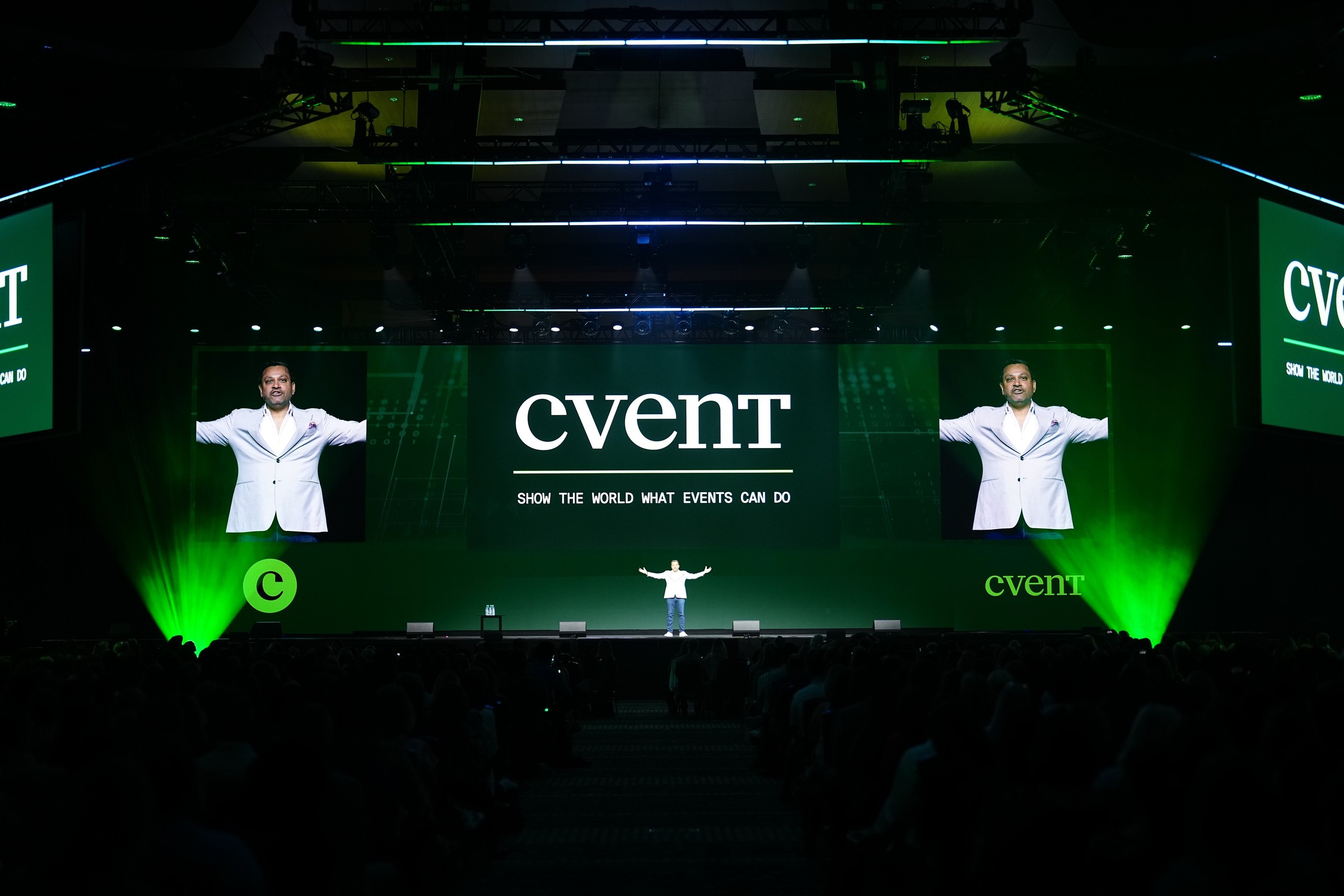
At Cvent CONNECT in Nashville in July 2026, Aggarwal announced a planned $1 billion investment in product development, innovation, and artificial intelligence over three years. The amount belongs to a different scale from the cash left during the early crisis. It is also a commitment to future work, with products and capabilities still to deliver.
The underlying wager remains recognizable. Technology can remove administrative effort and help organizers understand what their events accomplish. Aggarwal continues to argue for the value of being physically present with other people. In October 2026, Cvent launched a Center for Event Insights, adding research about AI and human connection to that argument.
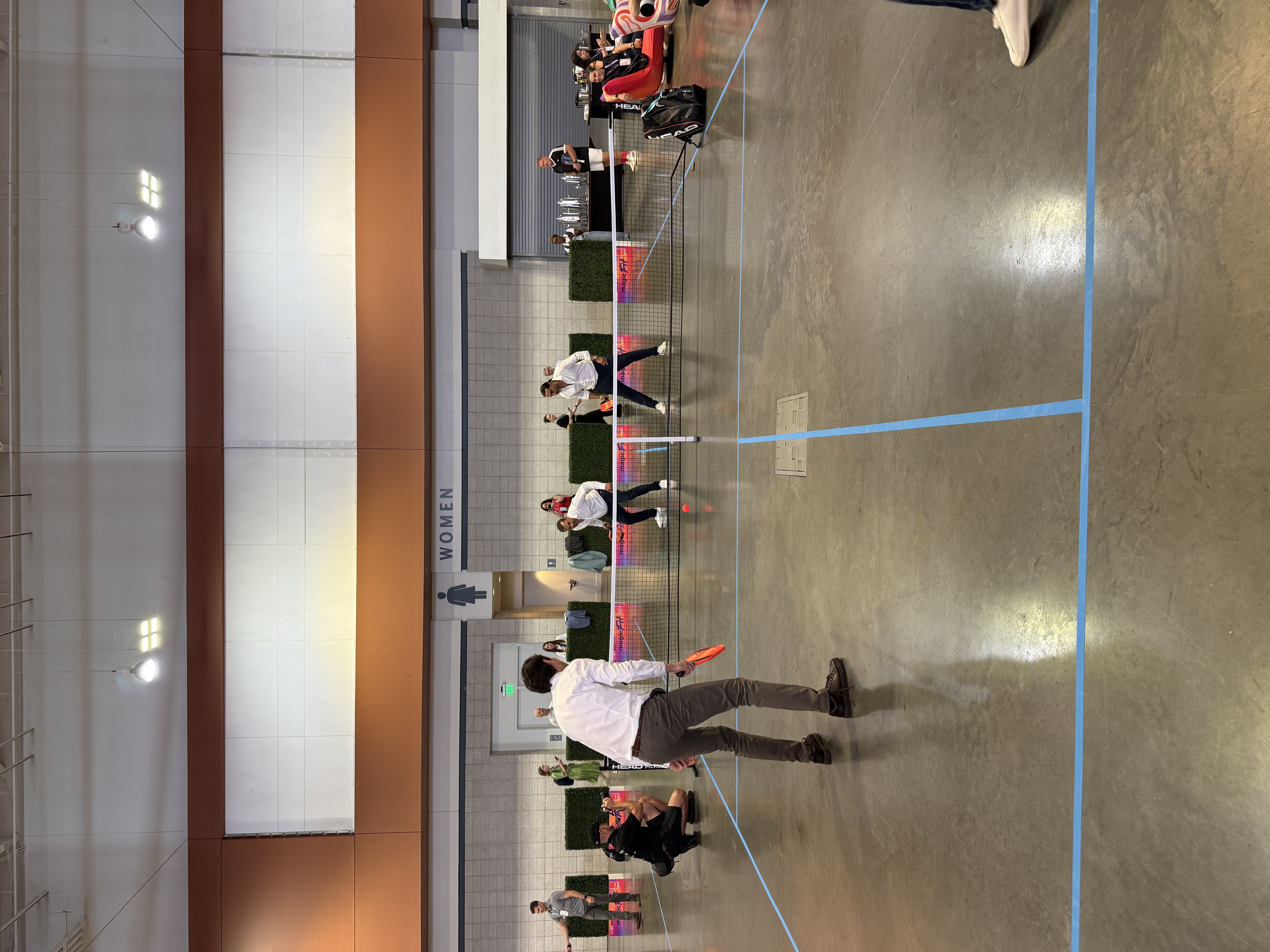
He can still appear in less formal conference settings. A photograph from Nashville catches him on the pickleball court inside Music City Center. The keynote has a stage, lighting, and an audience. The court supplies a different way to spend time with the people who came.
There is a more permanent gathering place in his plans, too. In September 2025, UVA’s Alumni Association announced his family’s naming gift for its reimagined Alumni Hall. The new building is to reopen as Aggarwal Hall, with event spaces and places for alumni to spend time together.
For someone whose business began with organizing people, the choice has a certain continuity. Software can help send the invitation and count the responses. Architecture can provide the room. The relationships still depend on people deciding to come.
Aggarwal’s advice to would-be founders has become patient about time: businesses often take far longer to build than the stories about them suggest. His own career gives that warning substance. Between the first invitations and the large transactions came years of interviews, sales calls, and decisions made with less money than he had expected.
The telephone system once belonged to a company that had grown too quickly. The work afterward was learning how to make a company worth staying with. That is the part of Aggarwal’s story that still has something to say when the room empties and somebody has to plan the next meeting.