The awkward thing about a shift schedule is that it can organize your life before you have been consulted. Ryan Fyfe encountered the problem while working hourly jobs and competing in track and field. A race might be approaching. A shift had already claimed the day. Somewhere between earning money and getting to the starting line, there was an administrative negotiation to conduct.
He would eventually build a company around that inconvenience. First called ShiftPlanning and later Humanity, it put employee scheduling online. The premise was easy to understand: a manager should be able to arrange work without turning every change into a small communications campaign. An employee should be able to discover the plan without a pilgrimage to a piece of paper.
There is a pleasing complication in what happened next. Fyfe built software to make other people’s calendars easier to manage while his own became an arrangement of international flights, family commitments and a growing company. He understood the problem from both ends of the roster.
A weekend already spoken for
Fyfe grew up with movement as a familiar condition. His mother taught primary school; his father was a mechanical engineering professor. Childhood included Canada, Belgium and New Zealand. Later, he connected that international background with his willingness to assemble teams across borders. An office in another country was a less exotic proposition to someone whose idea of home had already involved several.
Running supplied another kind of discipline. He described competing for Canada and winning a national half-mile title. Part-time work supplied the less elegant timetable. A sports competition and an employer’s needs could each be reasonable; they could also occupy precisely the same Saturday.
His route into software ran through internet marketing in the early 2000s. Search engines were becoming a way for a small business to find an audience without buying its way into every conversation. He moved toward application development, trying products before one became an enduring business. The schedule was a problem he already knew well enough to recognize when the tools to address it became available.
Humanity began with the everyday coordination between an employer’s roster and an employee’s life.
Twenty customers do not make much noise
Fyfe dated Humanity’s beginnings to 2009. The early business carried the literal name ShiftPlanning. It promised relief from paper rosters, spreadsheets and the repeated business of telling everyone that something had changed. A cloud product could put the current version somewhere people could actually reach it.
Having a recognizable problem did not produce an immediate queue of paying customers. He recalled roughly 20 to 30 customers during the first nine months, followed by a couple of hundred the next year. Those numbers have the useful untidiness of a business still finding its way. There was no grand opening at which the market agreed to become a market.
Money from his earlier internet work and property investments helped fund the beginning. He could support himself and the product for a time, buying room to work closely with customers before raising outside capital. His description of that period was modest: “I was just focused on the product and customers.”
Later accounts of the early struggle dwell on an especially frustrating distinction. People could like the idea and still find a reason to postpone paying for it. For a small employer, replacing a familiar routine creates work before it removes any. The spreadsheet already exists. The employees already know where to look. A new application has to earn its place in that arrangement.
That problem helped define the business. Simplicity had to reach beyond the screen into the first experience of using it. By the time Fyfe appeared on the SaaStr podcast in 2016, customer adoption, free trials and shortening the route to a useful result were central subjects. The company was being introduced as serving more than half a million users across 87 countries. The early silence had acquired quite an audience.
- 2009ShiftPlanning begins
- 2013San Francisco headquarters
- 2018Fyfe leaves the CEO role
- 2020TCP acquires Humanity
The founder with two calendars
Panama became Fyfe’s base after he began earning money online. He wanted to learn Spanish, saw investment opportunities and liked the quality of life. Meanwhile, the team took shape wherever he found people who could help build the business. Its early geography included marketing in New York, support in the United States and Pakistan, and development in Eastern Europe.
Raising money introduced another map. He described investors’ expectation that a company seeking Silicon Valley backing would establish itself there. Around 2013, Humanity set up its San Francisco headquarters. Fyfe’s daughter remained in Panama. A corporate address could be moved more easily than a father’s commitments.
He later recalled flying to San Francisco on Sunday nights, working there from Monday through Wednesday, and returning overnight to spend the longer stretch of the week with her. Repeat the journey and the calendar begins to resemble a carefully negotiated border agreement. There is nothing abstract about distributed work when the distribution includes your own belongings.
The eventual offices grew out of relationships rather than a plan to place flags on a map. Individuals helped recruit people they knew. Teams accumulated around them. The arrangement has a human logic: hiring often follows trust, and trust rarely organizes itself according to the preferred geography of a pitch deck.
The difficult promotion
Building the organization brought a less familiar challenge. Fyfe felt comfortable adding developers and expanding teams. Recruiting an executive team required experience he did not yet have. Success had changed the job description while leaving the same person in the chair.
“The biggest thing that I struggled to scale is myself.”
Ryan Fyfe
His recollections include a financing decision that complicated the usual account of startup progress. After signing a term sheet, he discovered problems inside the company, walked away from that proposed deal and raised a smaller round with another investor. He also acknowledged that the commute had left him less connected to what was happening inside the office. More distance on the map had consequences inside the business.
Marketing supplied a separate lesson. Customers arriving through search and reviews already understood the problem they wanted solved. Expanding into other channels meant dealing with prospects whose interest and economics were different. Combining acquisition costs into one average could conceal the routes that were not working.
It is an appealingly ordinary mistake to admit. A single number makes a business easier to describe. Separate numbers make it harder to avoid a decision. Fyfe’s retrospective advice was to examine the channels individually, and to understand which kinds of customers justified which kinds of effort.
Seven thousand accounts, many more doors
By September 2018, Fyfe described Humanity as profitable, with revenue above $10 million and about 150 employees. He distinguished more than 7,000 customers from the more than 50,000 business locations they represented. One employer could operate many workplaces. The unit mattered, just as the separate marketing channels mattered.
The product had moved toward larger organizations, where a scheduling tool needed to connect with existing human-resources systems. Fyfe had handed over the CEO role while retaining his ownership at that point. In December 2020, Humanity was acquired by TCP. The business that began with a conflict over a shift had become part of a wider workforce software company.
After the roster, the paycheck
WorkChain.io announced Fyfe as CEO in July 2018. Its proposition moved to another point in the working week: the interval between completing a job and receiving the money. The project proposed using blockchain technology to make earnings accessible in real time.
His argument began with a comparison to ordinary services. People could order transport or groceries when they wanted them, yet wages commonly arrived according to a timetable set elsewhere. WorkChain’s ambition was to give workers greater control over access to earned pay. It was a proposal about financial timing, expressed through a new technical system.
He acknowledged practical obstacles, including volatility, converting between conventional money and cryptocurrency, and giving people confidence in the arrangement. Those qualifications matter to the shape of the story. Identifying a frustrating delay is one thing; persuading workers and employers to use a different payment system brings a considerable collection of other people into the room.
Back inside the working day
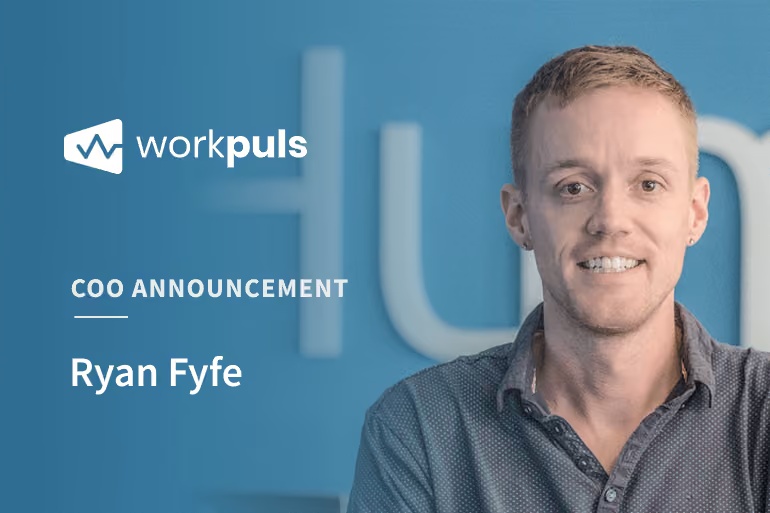
In July 2020, Workpuls announced Fyfe as chief operating officer and lead investor in a new funding round. The business, now known as Insightful, dealt with workforce productivity and analytics. His responsibilities included expansion into enterprise customers, forthcoming products and customer experience.
This move grew from an existing relationship. He had advised the company before joining full time. In discussing the appointment later, he described knowing founder Ivan Petrovic for years, including Petrovic’s earlier connection to Humanity. Friendship and advice became operating responsibility and investment.
Fyfe’s stated ambition at the time was to help organizations adapt to a more digital, distributed workforce. His later published writing considered hybrid work and the connection between remote teams and customer experience. The interest had a familiar setting: people doing their jobs in different places, with managers trying to understand how the pieces fit together.
The sequence gives his career a recognizable rhythm. First, arrange the hours. Then consider when those hours become pay. Then examine how work happens across a dispersed organization. Each venture takes on a different piece of the machinery surrounding a working day.
For an employee trying to get to a track meet, that machinery has immediate consequences. There is a time to show up, a person who expects you, and something else you hoped to do. Fyfe’s story began in that small collision. Even after the offices, the funding and the acquisition, the original question remains pleasantly concrete: whose Saturday is it?