Before Mathieu Allaire had an international software business to help run, he had a conference room that also served as a lunchroom. His colleagues took turns answering customers in the evenings and on weekends. Winning a single new customer in a week could be difficult. People sometimes asked whether Agendrix was a school project. There are more flattering questions to ask someone who has invested his savings.
The joke has aged. Allaire is now CEO and cofounder of the Sherbrooke company, which joined The Citation Group in June 2024. Yet the early arrangement remains a useful place to begin. A scheduling business whose founders were themselves covering support shifts had a fairly direct education in what happens when work spills across a calendar. The problem was close enough to answer the phone.
Allaire’s career follows that movement outward: from the program to the people using it, then to the people building the company. The work became broader. So did the number of things he had to learn.
Before the title, the code
His formal training was technical. Allaire studied at the Université de Sherbrooke from 2011 to 2014, earning a bachelor’s degree in management computer science. He also became a lecturer there. By October 2015, the university was reporting that Allaire, Charles Vallières, and Samuel Roy had merged their business with Agendrix, with fellow graduate Mathieu Blanchette involved in the effort.
The ambition already reached beyond the city. That university account described a service attracting registrations from 55 countries, with more than 1,000 employees active daily. Registrations were an early sign of interest, rather than a map of a mature customer base. The names of participating restaurant businesses made the intended audience easier to picture: people running shops and dining rooms, with an actual week to staff.
Allaire helped develop the platform and initially led development. In 2018, he became CEO. His description of that transition is refreshingly practical: programming had meant long stretches wearing headphones, absorbed in his own work. Running the business required him to step beyond familiar territory. Technical competence had given him a starting point; the new responsibilities demanded an education of their own.
The schedule has two sides
Consider the small drama inside a weekly rota. A manager needs coverage. An employee needs to know when to arrive. Someone’s availability changes, another person requests time off, and the revised document begins circulating. The spreadsheet acquires versions. Everyone acquires messages. By the time the arrangement becomes difficult to follow, the software question has become a question about people coordinating their lives.
Allaire’s stated approach was to serve both groups, even though managers paid the subscription. Employees would spend time inside the product and had to find it useful. Mobile access, availability, and participation in the scheduling process mattered to that choice. A purchasing decision might belong to the employer; the daily experience would be shared.
Coordinate the team
See the next shift
One schedule. Two people with a stake in it.
That makes a useful distinction in Allaire’s story. The people on the receiving end of a management tool were part of his reasoning about how to build it. Scheduling is an administrative task, certainly. It also determines which parts of a person’s week have already been spoken for. A product that forgets the second fact has made the first one look deceptively simple.
A smile in the machinery
In August 2019, Allaire introduced Agendrix’s new identity. The company had reached more than 65,000 employees across 4,500 workplaces. Its old appearance had survived while the team, product, and ambitions changed around it. Now the visual language would catch up.
The details were unusually literal for business software. The new symbol contained a colon, a reference to time, and a smile. Green replaced the earlier red; peach brought warmth into the palette. A scheduling application had discovered that it did not need to look permanently alarmed.
The accompanying argument gave the design substance. Allaire wanted managers to have time to be present for their teams. He described technology as a means of making people’s time count and linked that promise to how Agendrix treated its own employees. The company would keep improving the product while protecting simplicity and attention to detail.
A brand announcement can easily become an exercise in admiring new stationery. This one put a management proposition alongside the colors. If the product promised a better working day, the company making it would have to think about its own working day, too. That relationship would become a recurring feature of Allaire’s public account of the business.
Buying the right to keep building
Ownership brought another kind of design problem. On June 22, 2021, BDC Capital announced that it and Desjardins Capital had invested $4.2 million, in equal shares, to support a transfer of control at Agendrix. The financing combined equity and mezzanine debt.
André Gauthier, the principal shareholder and a cofounder, and smaller passive shareholders exited. Five employee shareholders took the reins: Allaire, Vallières, Roy, Adam Tétreault, and Sébastien Charland. The two investment partners took minority stakes. The arrangement gave the operating group control of the business it was working in.
Allaire tied the transaction to building for the long term and choosing partners who respected the company’s values. By then, the application was used in more than 8,000 workplaces. The capital served a specific ownership transition, with people already inside the company taking greater responsibility for its future.
In February 2022, Agendrix added external directors: Louis Mousseau, David Hervieux, and Catherine Légaré, alongside Allaire and Charland. Allaire said he wanted complementary experience and people who would challenge the group’s ideas. That is a consequential request for a founder. It gives disagreement a chair at the table, rather than hoping it happens to drop by.
“Our greatest pride is our team, without whom none of this would be possible.”
Mathieu Allaire, June 2023
Translated from French.
Recognition, close to home
Recognition arrived through institutions that could place Allaire in a local context. EY named him a Quebec regional finalist in its 2022 Entrepreneur Of The Year program. In 2023, his university recognized him in the leadership category of its Coop inspiration awards.
The university’s account connected that leadership to employee retention and an understanding of workers’ needs. It described a company with approximately 50 employees, more than 175,000 users, and 13,000 workplaces. For an alumnus who had moved from computing into management, the category of the award was itself a small career marker.
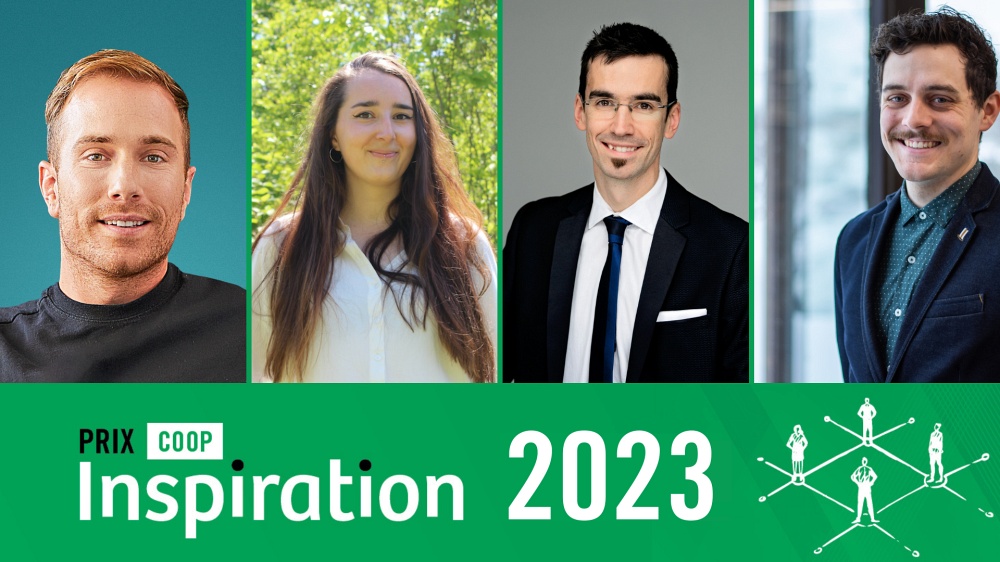
That June, Agendrix also received the digital company award at the Gala Reconnaissance Estrie. Allaire’s response directed attention to the team. The comment was brief enough to resist much polishing. In a business whose earliest colleagues had shared customer support duties, credit had several familiar destinations.
The sale that kept him at his desk
When Agendrix joined Citation in June 2024, Allaire described the acquisition as following an unexpected offer. His announcement quickly turned to the questions employees and customers would reasonably ask. Jobs would remain. The company would keep its name and its Sherbrooke headquarters. He would remain CEO.
The agreement gave an international route to a company that had long wanted one. Citation brought a network beyond Canada, including operations in the United Kingdom and Australia. For Allaire, the transaction was another phase of the work, with his operating role continuing after the ownership changed.
The later numbers give that phase some scale. Agendrix’s 2024 review recorded 200,000 users. Its 2025 review recorded 235,000, nearly 78 million shifts created during that year, and 58 employees with an average tenure of five years. These are dated company figures, useful as milestones rather than a live scoreboard.
The 2025 review also described more than 10,000 active users in the UK within months of launch. In November, Timetastic joined the Agendrix team, which took leadership of Citation’s Workforce Management division. International expansion now involved another team and another market’s requirements. The broad ambition had become a set of concrete operating tasks.
Something left for Saturday
Outside the company, Allaire makes things from wood and plays recreational baseball. His public biography practically invites people to ask him about either. He has also volunteered a more exacting detail: his car is meticulously clean. Some people confine their attention to detail to the product backlog.
The woodworking is an appealing companion to his technical career. Both offer the satisfaction of making something that another person can use. That is a resemblance, rather than a claim that every business decision begins at a workbench. Hobbies deserve a little freedom from becoming management advice.
In a profile intended for students, Allaire set out another priority: family weekends were non-negotiable. He also expressed a wish to help young people finance their projects. The aspirations extend beyond the company’s growth, into what his working life might make possible for other people.
He began exploring programming around 13, making a website for his gaming team. The purpose was to give that group somewhere to belong. Years later, the scale and responsibilities have changed considerably. The people using what he builds still matter. For someone whose business occupies a portion of other people’s calendars, leaving room in his own seems a sensible piece of workmanship.