The modern shift manager has a peculiar job: run a business using tools that look like the contents of a kitchen junk drawer. The schedule is in Excel. Availability arrives by text. Somebody calls in sick through Messenger. Clock-ins live on paper, payroll wants a different file, and the new hire's emergency contact is wherever the manager put that form. Agendrix built a company by putting the drawer into one app.
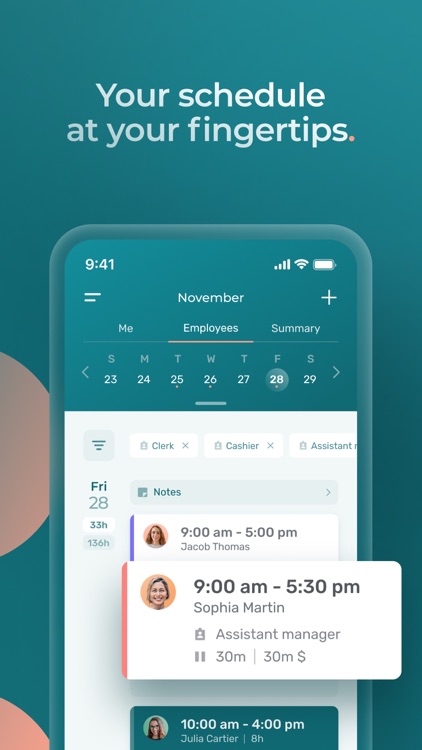
The Sherbrooke, Quebec, software maker serves restaurants, retailers, pharmacies, clinics, retirement homes, manufacturers, hotels, nonprofits, municipalities and other workplaces where people do not all arrive at nine and leave at five. Managers build shifts, employees report availability and request leave, phones announce schedule changes, clocks feed timesheets, and approved hours move toward payroll. The Plus tier adds employee files, documents, onboarding, surveys and recognition. Newer modules cover expenses, mobile job sites, premiums and tip sharing.
None of this sounds cinematic. That is the point. Agendrix found a thick seam of administrative annoyance and kept mining sideways. By 2025, the company said 235,000 people used the platform, about 50,000 on a typical day. Nearly 78 million shifts were created that year. Its staff numbered 58 - roughly one employee for every 4,000 users.
01 / The unglamorous beginning
Thirty months of nobody caring very much
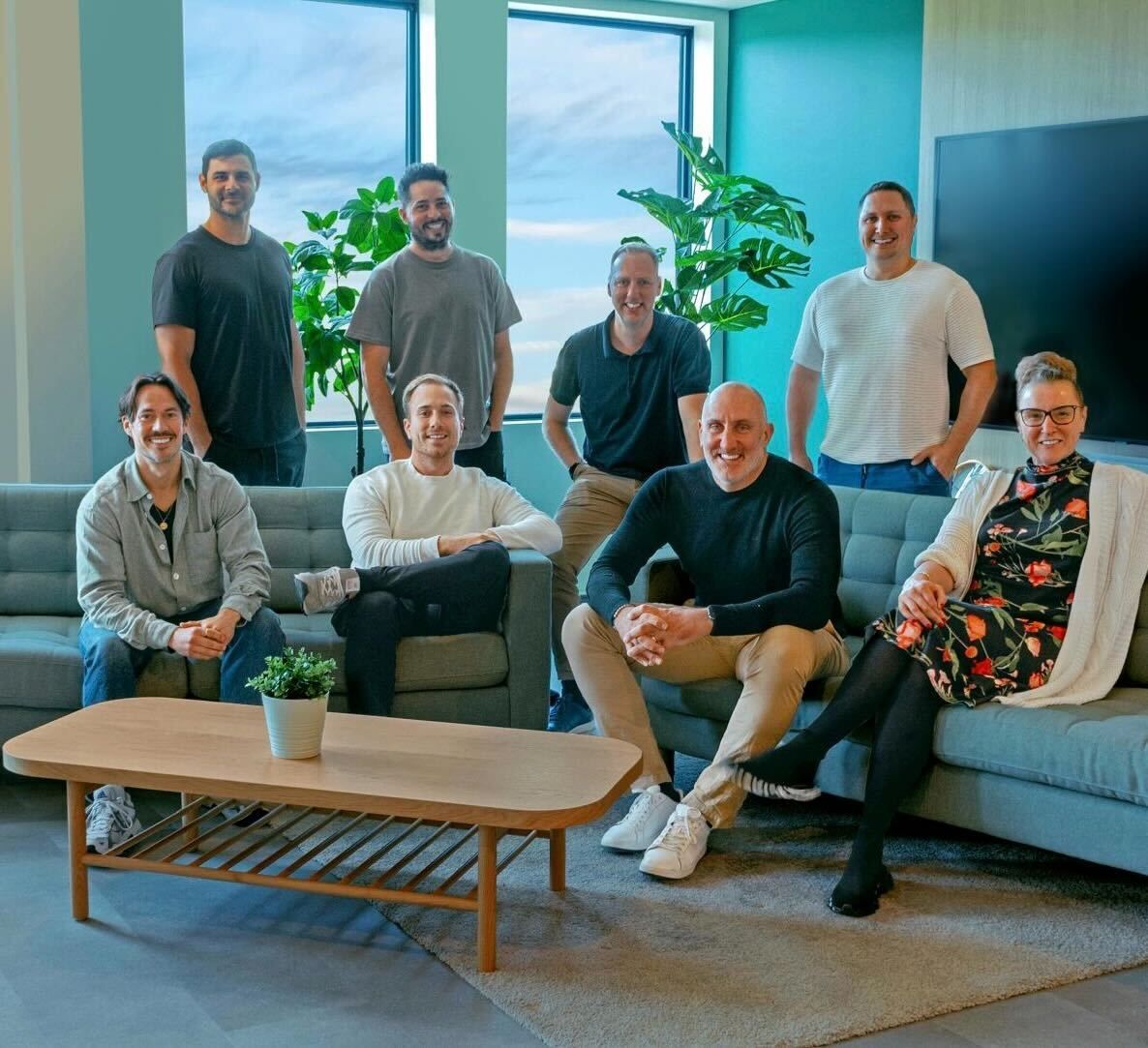
Agendrix began in 2015 when André Gauthier, an entrepreneur and former restaurant owner, brought the scheduling idea to Mathieu Allaire, Charles Vallières and Samuel Roy. The younger founders contributed time and savings. For two years they paid themselves modestly and worked far beyond normal hours. New customers arrived at the distinctly non-viral pace of about one a week.
The first thing to fail was the easy story. An early pitch landed in a room where, in the company's retelling, investors barely looked up. Revenue was too small and SaaS was less familiar in the local market. More important, the original business model did not produce enough momentum. In 2016, the team revised it. Adam Tétreault and Sébastien Charland joined the operating group full time; Charland moved back to his parents' basement to lower his burn. Everyone rotated support, including nights and weekends.
It took two and a half years to reach $10,000 in monthly recurring revenue. Agendrix did not cross one million dollars in annual revenue until 2018. The cost of finding product-market fit is therefore measurable even without a public seed budget: the founders' savings, two years of reduced pay, constant support duty and 30 months of patience. This was not free software made in spare time. It was paid for with personal runway.
Every minute we help you save is a minute you can spend doing things that actually matter.Agendrix product philosophy
02 / The cabin test
Build the next thing your first customer is already buying by hand
What changed minds was not a broader vision deck. It was a second pain sitting beside the first one. A published schedule tells workers when to show up; a time clock proves when they did. Charles Vallières, now CTO, joked that he could build the first attendance module alone at a cabin. He went away for seven days and returned with it.
That compressed sprint matters less as founder folklore than as sequencing. Scheduling had already gathered positions, employees, locations and expected hours. Attendance reused the same data and added a second reason to open the product every day. Timesheets then created a natural bridge to payroll. Today Agendrix supports clock-ins through tablets, browsers, mobile GPS, RFID, barcodes, photo verification and even a dedicated phone line. Approved records export to Canadian systems such as Nethris, EmployerD and Ceridian PowerPay, as well as QuickBooks, ADP and others.
The company kept following the workflow. In 2022 it released onboarding, surveys, employee data and a “high five” recognition feature. Documents and e-signatures followed. In 2025 came vacation planning, shared signing and tip distribution. These were not random attempts to inflate a feature page. Each begins with information the schedule already needs or work the same manager already performs.
From schedules to a daily operating loop
03 / Why customers pay
Cheap enough to try, embedded enough to expand
Agendrix's Canadian list price makes the wedge plain. Essential costs CA$3.25 per active user each month, or CA$2.93 with annual billing. Plus is CA$5.25 monthly, discounted to CA$4.73 annually. Time and Attendance adds CA$2.25 per user. There is no setup fee or fixed contract, training and seven-day support are included, and a trial can last up to 21 days.
A 25-person restaurant can therefore begin with scheduling for CA$81.25 a month before tax, then add attendance when paper timesheets become intolerable. The business model scales with seats and with workflow depth. Flat-price add-ons for expenses or mobile resources add another expansion route, while organizations above 250 employees receive enterprise support.
The pitch is time, but the payoff is error reduction. In a company survey of 669 users, managers reported cutting scheduling time by half and attendance-processing time by 53%. Six in ten found replacements more easily; four in ten saw less absence or lateness. These are self-reported results, not a controlled trial, but they describe the buying logic: a manager only needs to recover a few hours for a modest per-worker fee to make sense.
Its difference is especially sharp in Canada. The product is bilingual, hosts data domestically, accounts for provincial labor rules and statutory holidays, and connects with payroll products Canadian businesses already use. Global rivals including Deputy, When I Work, Homebase, 7shifts, Connecteam, Planday and UKG may offer overlapping features. Agendrix's defense is regional fit plus a narrower idea of the customer: the frontline SMB manager, not the corporate HR transformation committee.
04 / The company copies itself
A people-first product gets tested on its makers
Agendrix has treated its own workplace as an HR lab. During the 2020 shock, it avoided layoffs by temporarily reducing everyone's hours and redirected attention toward sectors still hiring, including pharmacies. Monthly recurring revenue grew by more than 50% during the period. Remote work stayed; the normal week later moved from 40 hours to 35. The company added regular one-on-ones, employee surveys, flexible schedules and a community committee.
The approach earned Great Place to Work certification and a 2024 first-place ranking in Canada for organizations under 100 employees. In 2025, Agendrix reported a five-year average tenure. The result is useful, but easy to copy badly. A shorter week works when output can be measured, recurring revenue absorbs experimentation, priorities can be cut and the team is large enough to cover customers. Remove those conditions and five fewer hours may simply become five hidden hours.
The same caution applies to automation. In 2025, an AI assistant participated in roughly 60% of support conversations and resolved 80% of those, with a reported 90% satisfaction score. That works because a mature help center, escalation path and human support team sit behind it. A chatbot placed in front of undocumented software is only a faster locked door.
Start with a recurring spreadsheet that several people must update. Frequency is distribution.
Use support as research. Agendrix's adjacent modules came from work customers were already describing.
Price the entry product low, then charge for deeper workflow where the saved labor is easiest to see.
Localize the hard plumbing - payroll, language, privacy and labor rules - not merely the landing page.
05 / The ownership turn
First the founders bought control. Then distribution bought them.
In 2021, BDC Capital and Desjardins Capital invested CA$4.2 million. The purpose was unusual and revealing: Mathieu Allaire, Charles Vallières, Samuel Roy, Adam Tétreault and Sébastien Charland used the transaction to buy out Gauthier, who was ready to retire, and other minority holders. The operating team regained majority control and chose patient expansion.
Three years later, The Citation Group acquired Agendrix for an undisclosed amount. Citation brought more than 2,000 employees and 120,000 customers in HR, safety, training and compliance. Agendrix supplied time and attendance; Citation supplied international distribution. Management stayed, Canadian jobs were retained, and the product entered the United Kingdom through Citation's Atlas platform. Agendrix said more than 10,000 UK users were active within months. In November 2025, UK leave-management company Timetastic joined Agendrix, which began leading Citation's Workforce Management division.
That makes Agendrix neither a tiny scheduling app nor a full enterprise HCM. It sits between them: broad enough to become the daily operating layer for a 30-, 100- or 500-person shift workforce, but simple enough that a restaurant manager can publish the first schedule without a systems integrator.
Where it fits
- Variable shifts and several locations
- Hourly attendance and overtime
- Canadian payroll and compliance needs
- A manager who wants one practical system
Where it may not
- A tiny team with fixed weekly hours
- A company needing full global payroll
- Deep union or enterprise optimization rules
- A business unwilling to give every worker app access
06 / The transferable lesson
The spreadsheet is the map
What can a reader copy? Not the cabin. The useful move is to notice which manual process already contains the data for the next product. Agendrix won the schedule, which contained the employee, job, location and expected time. That let it add actual time, then payroll preparation, then HR records. Each layer reduced re-entry and raised switching costs without asking the buyer to adopt an unrelated habit.
It will not work when the neighboring workflow belongs to a different buyer, when integrations are shallow, when support cannot survive a larger surface area, or when an incumbent already owns the authoritative data. It also fails if “all in one” becomes permission to ship mediocre versions of everything. Agendrix's own answer has been steady iteration: in 2025 it made the heavily used planner about 20% faster and completed ISO 27001:2022 recertification while adding features.
The company story ends, for now, with an international parent and a much larger product surface. Its beginning remains more instructive: one ignored pitch, one changed model, one module built in seven concentrated days, and thousands of managers who preferred paying a few dollars per worker to spending another Sunday night coloring cells.