At Red Badge, a New Zealand security business, the roster once lived across whiteboards, spreadsheets and phone trees. That arrangement had an obvious attraction: everybody understood the tools. The trouble was getting those tools to understand one another. As the operation grew, managers had to coordinate people across events and locations through a collection of disconnected conversations.
- WorkForce Software turns complex working rules into schedules, time records and payroll inputs.
- Its sweet spot is employers with many exceptions: unions, multiple countries, rotating shifts and specialized skills.
- The useful buying lesson: bring your awkward cases to the demo, then budget time to test them.
Red Badge adopted EmpLive in 2018. In the customer account published by WorkForce Software, the company reports an 8% reduction in wage costs without reducing headcount. It also says the savings helped it add 20 positions focused on people and culture. That is one customer’s reported experience, rather than a forecast for the next buyer. Still, it suggests a useful question: how much does a business spend simply arranging its work?
The hour is the easy part
WorkForce Software occupies the space between recording an hour and knowing what that hour means. Its ADP WorkForce Suite handles time and attendance, scheduling, leave, labor forecasting and analytics. The interesting work begins when an employer has different pay rules, collective agreements, qualifications and rest requirements to apply to those records.
Consider an illustrative shift vacancy. A replacement might be available but lack a required certification. Another might be qualified but need a rest period. A third could trigger overtime. The scheduling product supports qualification checks, replacement-worker outreach and employee shift swaps with approval rules. The value lies in putting those constraints where the decision happens.
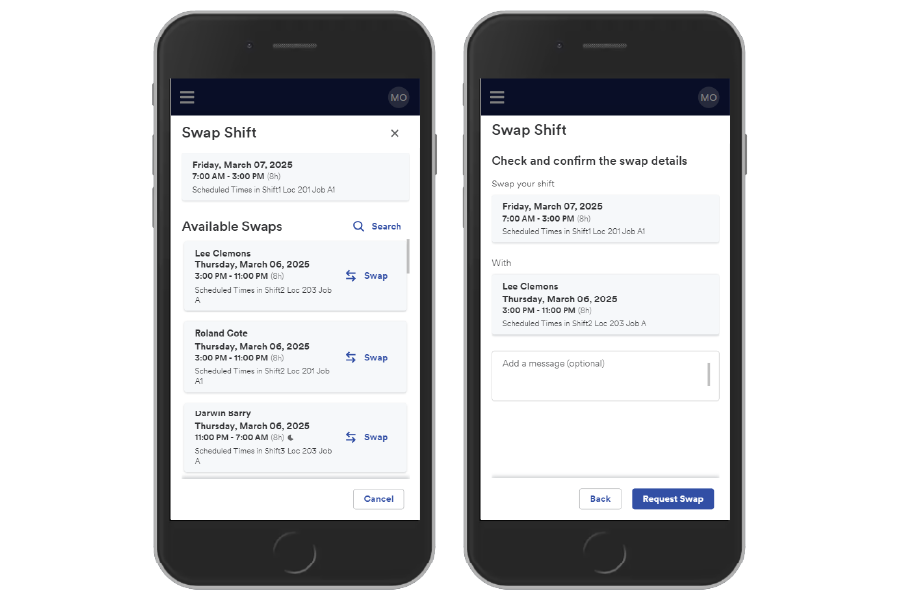
Employees can check schedules and update availability from their phones. Managers can address gaps without rebuilding the roster through individual calls. Absence tools coordinate leave requests and documentation; time capture can use clocks, mobile devices, browsers and other channels. These are practical conveniences whose usefulness depends on the employer’s actual working arrangements.
What broke was the conversation
Ritchies, the Australian supermarket group, describes a related problem. Paper timesheets created confusion and payroll errors, while communication between employees and managers lagged. Its published account explains how mobile access helped a workforce containing many students communicate school and personal commitments. Better scheduling information gave managers more room to plan.
The failure in these accounts came before payroll processing. Availability, attendance and operational needs were being collected in forms that were hard to reconcile. The lesson a reader can copy is straightforward: follow the information before choosing the software. Find where a manager retypes something, chases a signature or phones three people to confirm a single fact.
A specialist joins the payroll giant
Kevin Choksi, Mike Knister and Kathy Cannon founded WorkForce Software in 1999. Insight Venture Partners became its majority investor in 2014. Evergreen Coast Capital, an Elliott affiliate, joined as an equal partner with Insight in 2019. The business developed around employers whose working arrangements required more than a simple clock and calendar.
ADP acquired it in October 2024 for approximately $1.2 billion in cash. The strategic appeal is easy to see: time, scheduling and pay belong to the same operational chain. A payroll provider benefits when the information arriving upstream already reflects an employer’s rules. That is an interpretation of the transaction, rather than a claim about any individual contract.
ADP acquires WorkForce Software.
Suite availability announced across three ADP HCM and payroll platforms.
ADP reports a twelfth consecutive Nucleus Research Leader designation.
In November 2025, ADP announced Suite availability within Workforce Now, Lyric HCM and Global Payroll. WorkForce Software also maintains offerings for SAP, Workday and Oracle environments. It can therefore serve as a specialist layer alongside an existing HR system, as well as part of ADP’s broader platform.
That places it in the enterprise workforce management market, with UKG among the alternatives. Its proposition emphasizes configurable rules and complex operations across manufacturing, retail, healthcare, utilities, education and government. Those capabilities matter most when a buyer actually has that complexity. A straightforward team rota offers a different purchasing problem.
The demo is only the beginning
The commercial model is business software delivered through the cloud, supported by implementation and ongoing services. Buyers should treat the cost as a scoped project: software, integration, configuration, training and the internal people needed to make decisions. A useful comparison asks vendors to price the same requirements and demonstrate the same difficult scenarios.
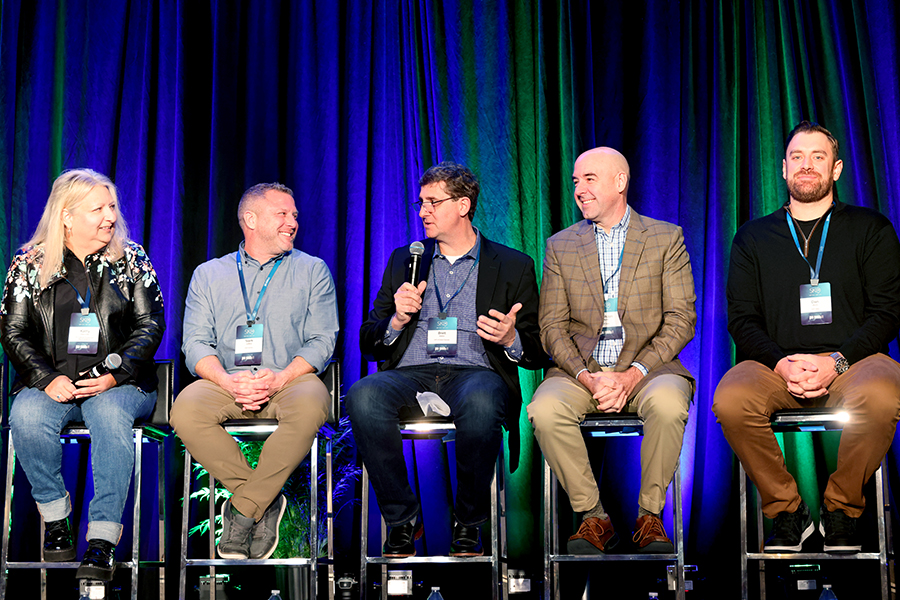
Boehringer Ingelheim supplies the corrective to any fantasy of instant deployment. Its implementation account describes preparing test data, working backward from go-live and testing different user experiences. Sandra Mathew, a senior principal business analyst, describes the scale of that preparation. Deloitte supported the implementation.
“We ended up with almost 700 test scripts.”
Sandra Mathew · Boehringer Ingelheim
The company recommends positive and negative tests, expected numerical results and training suited to different employee groups. Software that calculates correctly in the demonstration still needs to calculate correctly for the people, policies and exceptions in the real organization. Testing is part of the purchase, even when it happens outside the purchase order.
Bring the strangest Tuesday
The practical approach is to inventory pay and scheduling rules, choose a manageable rollout scope and measure the manual work beforehand. Volkswagen Chattanooga’s published implementation lessons likewise stress scope control and change management. These practices are portable; a buyer can use them before signing any software contract.
The same evidence suggests a limit. When requirements are vague, input data is unreliable or training gets squeezed, automation has a weaker foundation. For a small employer with uncomplicated shifts, the configuration effort may be difficult to justify. WorkForce Software makes its clearest case when the exceptions are frequent enough to deserve a system of their own.
Bring the strangest Tuesday to the sales meeting: the qualification that expires, the student who cannot work late, the agreement with an unusual pay rule. Then ask to see the result. An ordinary shift is a surprisingly demanding product test.