A business magazine can put an entrepreneur on its cover. Managers can also put her on a stage, introduce her to mentors and help her prepare for another market. In Tunisia, the publication’s Femmes Entrepreneures de Tunisie programme, known as FET, has made those activities part of the same proposition. The reader is someone to inform, but also someone who might have a business worth bringing into view.
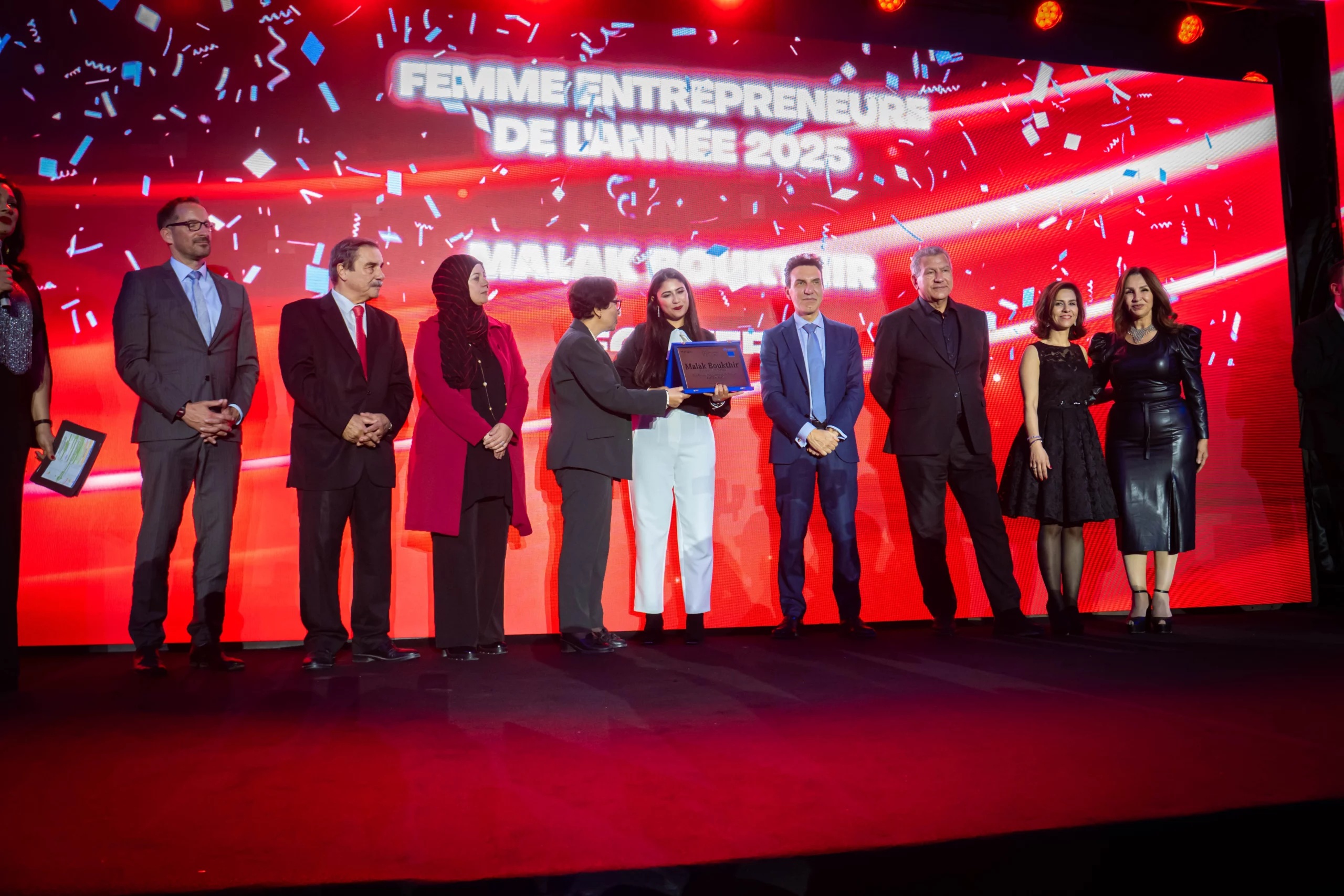
Consider its 2025 overall winner, Malak Boukthir. Her company, Ecofeed, transforms crab waste into animal feed. It is an unusually literal example of finding value in what gets discarded. Managers helped turn that business into a public story through an awards programme that recognised nine women that year. The photograph has the familiar ceremonial ingredients: a certificate, a crowded stage, a very large screen. The more useful question is what follows the photograph.
A magazine built for decisions
Hédi Mechri launched Le Manager on May 1, 1996, through the publishing house Promedia. The magazine’s anniversary account connects the launch to a practical need: Tunisian industrialists had to understand international business practices as the country’s economic relationship with Europe developed. Managers and decision-makers also needed to know more about the people running other companies.
That origin explains the mix that still defines the publication. Business news sits alongside executive portraits, management questions and technology coverage. The intended reader has an enterprise to run or a career to advance. A useful story might explain a financing development, introduce a founder or offer a way to think about a workplace problem.
There is a pleasing detail in the magazine’s 25th-anniversary editorial: the entrepreneur on its May cover was younger than the publication. A business title that starts by explaining the established corporate world eventually has to make sense of people who arrived after it. Managers had reached that moment, and it was prepared to alter its presentation.
Two letters leave the boardroom
In October 2021, an editorial by Sahar Mechri explained why Le Manager had become Managers. Dropping the French masculine article “Le” was a deliberate part of a stronger commitment to women entrepreneurs and leaders. The plural name accompanied a broader editorial ambition: more varied leadership profiles, a younger entrepreneurial audience and greater attention to the human side of running a company.
The explanation also named changes in work itself, including wellbeing, the boundary between professional and private life, and environmental responsibility. Podcasts, webinars, videos and infographics belonged to the planned expansion. It was a statement about whom the magazine wanted to represent and how it wanted to reach them.
Read as a business decision, the change is revealing. A specialist title can keep its subject while revising its picture of the customer. Here, the subject remained enterprise. The imagined person at its centre became less singular.
Different doors into the same business world
Managers describes its core offering as a monthly magazine and a website for entrepreneurs and company leaders, supported by newsletters and events. The division of labour is sensible. A website can respond to a development while it is fresh. A monthly issue can give an interview or a management question more room. Email gives readers a route back into the coverage.
The online categories include banking, enterprise, startups, economics and executives. The video archive adds another kind of access: conversations about legal due diligence, banking and professional roles. Its Sopra@Work series, for example, has covered IT project management, software architecture and customer support. These are recognisable jobs with practical questions attached, an editorial choice that makes the audience more concrete than the word “business” alone.
For a reader, the useful approach is selective. Follow the topics tied to decisions you actually make, then use interviews to identify questions worth asking in your own organisation. The value of a local business publication lies partly in that proximity: the institutions, employers and entrepreneurs in its coverage may be people you can contact.
The commercial reader, and the reader who pays
The subscription form offers a small but telling view of the operation. It asks for an organisation, a tax identifier and the number of subscriptions, alongside the subscriber’s contact details. Payment options include cash, cheque and bank transfer. This is a magazine that makes room for an organisation buying copies, as well as an individual reader.
Subscriptions are one commercial relationship. Advertisers and sponsors are others, explicitly acknowledged in the publication’s privacy policy. Managers has also promoted its ability to connect brands with an appropriate audience in business-event material. Its proposition to a commercial partner is access to people interested in enterprise and management; its proposition to the reader is useful editorial attention.
Those relationships require judgment. A sponsor wants visibility. A reader wants a reason to trust what occupies the page. The practical test for this kind of publication is whether coverage remains useful enough that people return between campaigns and ceremonies. Attention earned only for an event has a short shelf life.
The trophy comes with homework
Created in 2015, FET gives Managers a role beyond publishing. Its stated pillars are recognition through awards, skills development and help accessing markets in Tunisia and internationally. Sahar Mechri, Managers’ executive director, is identified as the programme’s founder. The community has a defined audience and a continuing set of activities.
The application page for the 2025 competition made the offer unusually tangible. It advertised a 7,000-Tunisian-dinar cheque, media exposure, free Club FET membership and mentoring by people in Tunisia and the diaspora. Candidates needed a business registered in the national enterprise register and at least a year of operating history. Evaluation covered innovation, market potential and impact, with finalists pitching to a jury.
The amount belongs to the advertised prize package. For an applicant, the package has several different uses: cash, publicity, access to a network and experienced advice. A founder deciding whether to participate can assess each separately. Public recognition might open a conversation; it still leaves the founder responsible for the conversation that comes next.
Advertised cheque, plus media exposure, Club FET membership and mentoring.
Historical award benefit · 2025 competitionAfter the applause, a calendar
Club FET’s service menu supplies the less photogenic part of the proposition. Leadership workshops cover communication, decisions, conflict and delegation. Organisational coaching addresses the business model and company organisation. Other services focus on branding, sales and export strategy. Its Pinky Weekend format brings members’ products and services into an exhibition and networking setting.
At the February 27, 2026 ceremony, the programme recognised eight entrepreneurs and announced six months of mentoring for each laureate. Ameni Riahi, founder of technology business STEPS, received the overall honour. The announcement also emphasised export preparation and connections with networks in sub-Saharan Africa.
The EU delegation coorganised the event, with the Friedrich Naumann Foundation for Freedom as a partner. Named category partners included UIB, BYD, CDC, PGH, MAE Assurances, Microcred and Wafacash. The range helps explain why convening matters: a publication can introduce an entrepreneur to a readership, while a programme can assemble organisations with different kinds of expertise and reach.
“Une dynamique ne se construit pas seule.”
Sahar Mechri, on FET’s tenth anniversary, 2025“Momentum isn’t built alone.”
There are subsequent milestones to follow. In June 2026, Managers reported that ProVerdy, whose founder Souha Bejaoui had won FET’s sustainability prize that February, was named Startup of the Year at Tunisia Investment Forum. That establishes another recognition in the company’s trajectory. It does not by itself measure what the mentoring contributed.
What the audience can teach the publisher
Managers’ own discussion of media’s digital transition points to the pressure behind this broader activity. At a March 2021 industry panel, Sahar Mechri described changing reader behaviour and the need to enrich written journalism with voice and video. The discussion also addressed competition for advertising and the influence of large digital platforms.
For a monthly publication, the challenge is easy to understand: the reader’s need for information does not wait for the next issue. Different formats can meet different needs, but each takes work. An interview, a newsletter and a mentoring session require different preparation. Adding them makes sense when the audience has a reason to use them.
Managers sits among Tunisian business-news alternatives such as Webmanagercenter and L’Économiste Maghrébin. Its combination of a management-focused magazine and a dedicated women entrepreneurs’ programme offers a particular route through that market. The distinction is in the activities a reader can join as well as the articles she can read.
A useful invitation needs a next step
The part other specialist publishers can copy is the sequence: define a community, make its work visible and give interested people a concrete next activity. Club FET’s workshops and mentoring show what that activity can look like. A founder can use the same logic when building a professional network: arrive with a specific problem and a reason to follow up.
This approach depends on fit. An export introduction helps a company prepared to serve another market. Advice helps an entrepreneur who can spend time applying it. A programme designed for registered, operating businesses will serve a different need from support for someone with only an idea.
Managers’ most interesting offer is therefore an invitation with several possible answers. Read the coverage. Study another founder’s decisions. Attend a programme that fits your business. Come back with a better question. For a magazine born to help people make decisions, that is a recognisable continuation of the original job.