Nine teams, six mentors, twenty minutes at a time. At the Bank the Unbanked ideathon, the conversation had a timetable. Each team worked with every mentor, turning a day of advice into two hours of concentrated attention. The problem was women’s access to finance. The immediate intervention was rather more modest: make sure the people with ideas actually met the people who could challenge them.
- Change Mechanics designs entrepreneurship programs and delivers training and consultancy for institutions.
- WECON connects women founders with skills, mentors and policy conversations.
- Its useful trick is preparation: specific questions, matched expertise and a deliverable after the meeting.
That timetable tells you something about Change Mechanics Pvt Ltd. The Islamabad company works in a field crowded with inspiring verbs: empower, accelerate, transform. Its most interesting work happens in the nouns. A mentor brief. A financial model. A user journey. A table occupied by someone who understands the question being asked.
The seating plan is the strategy
The banking challenge, delivered with Mobilink Microfinance Bank and CARE Pakistan, invited students and young innovators from several disciplines. Writing code was unnecessary. Participants developed proposals about safe banking, women-focused SME products and Islamic microfinance. Business and psychology could have a seat alongside technology because the brief concerned how people use financial services.
The project report records 26 submissions and 12 shortlisted teams; nine teams took part in the mentor rotations. Experts came from the bank, CARE and S&P Global. Teams worked on process diagrams, financial logic and customer journeys before pitching. Three winners received PKR 50,000 each. Those awards describe the prize bill, not the cost of running the program.
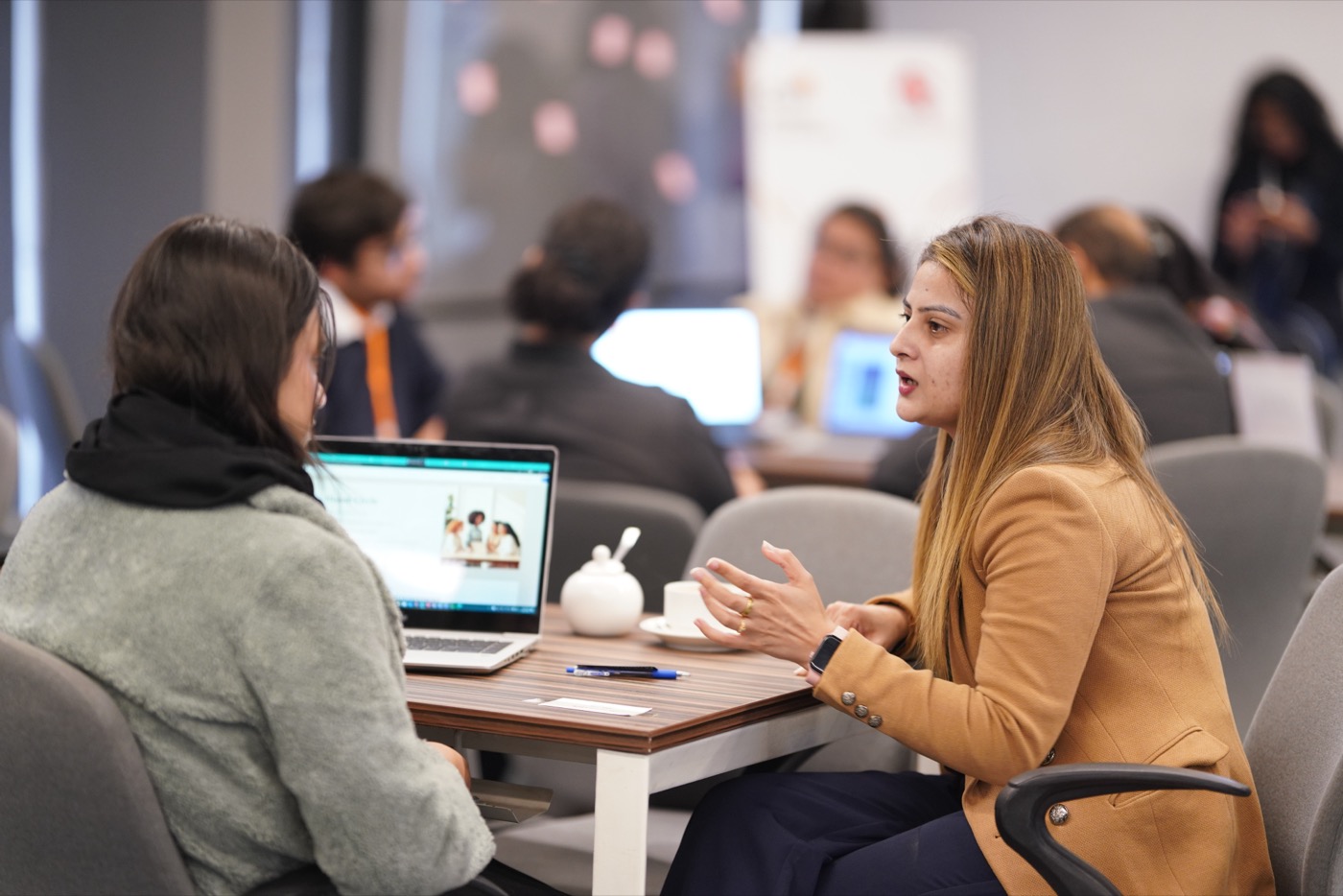
One winning concept, Dost-e-Hunar, proposed financing home-based businesses through invoices and vendor vouchers rather than traditional collateral. Another linked working capital with education savings. Super Bazaar proposed combining a marketplace with financial services. These were proposals. Their value at this stage lay in making an idea concrete enough for a banking institution to examine.
The invitation came before the institution
Founder Sayyed Ahmad Masud was already involved in entrepreneurship support when Change Mechanics appeared. Founder Institute’s October 2016 Islamabad launch announcement named him among its local leaders, identifying him as the company’s CEO. The consultancy’s public record dates its incorporation to June that year. His current title is Founder & Director.
WECON followed in 2017. The following year’s conference report described Masud’s concern: talented women had little representation in mainstream entrepreneurial networks, alongside social and economic obstacles. The response was a gathering meant to widen participation. It was a practical choice of starting point. An invitation cannot solve every barrier, but exclusion makes the next conversation rather difficult.
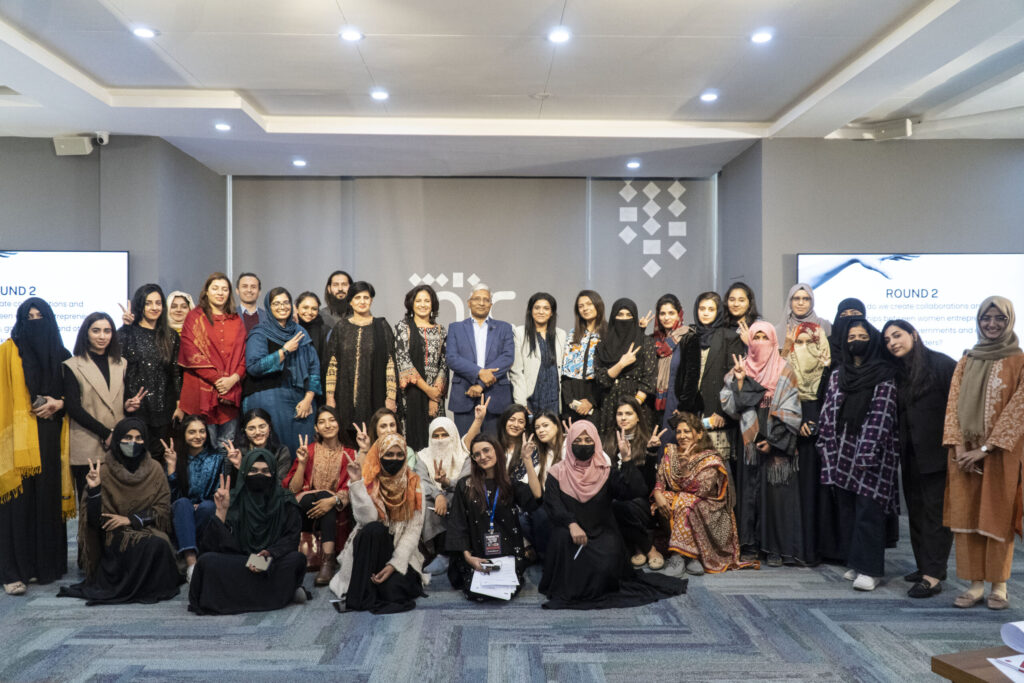
By November 2024, the company describes WECON Tribe as a more deliberately organized encounter: more than 170 women received mentorship in a day. Founders were matched beforehand according to business stage and sector. Mentors arrived briefed. Skill clinics ran alongside rotating conversations. The design moved some of the burden of finding help from the individual entrepreneur to the organizer.
“Empowering women to solve Pakistan’s societal inequalities through entrepreneurship.”
WECON’s published vision
Its later Masawaat program announcement added an appealingly plain device: “I Need/I Offer” cards. The promise of networking becomes easier to understand when someone can say exactly what she needs and someone else can say what she can provide. The card does not make the relationship. It gives it somewhere to begin.
A prototype must survive the applause
The company applies a related idea to younger builders through League of Launchers. Its September 2025 recap describes a hybrid AI competition drawing 141 participants from 17 cities, organized into 57 teams. Workshops, templates, recordings and coaching accompanied the work. An online dashboard kept resources accessible between sessions, while attendance and engagement were monitored.
The reported result was 26 teams with functional minimum viable products. That is approximately 46 percent of the starting teams. It is a more useful number than applause: it distinguishes joining a program from finishing something that works. It does not, by itself, tell us whether those prototypes acquired customers or built sustainable businesses.
About 46% reached a functional prototype. Prototype completion is one milestone in a longer business journey.
Startup.pk supplies another layer: startup information, guidance and resources that remain available outside an event. The platform dates its origins to December 2010, making it older than Change Mechanics itself. The association matters because learning between meetings is part of the work. A founder’s question rarely observes the conference calendar.
Who pays for the room?
Change Mechanics serves two connected audiences. Founders, women entrepreneurs, students and SMEs receive support; corporations, development organizations and public-sector institutions engage the firm’s consulting and delivery capabilities. Its market position sits between business advice and the work of organizing a program: finding participants, arranging expertise and keeping activities moving.
The company’s case studies extend beyond events. USAID PREIA investment-readiness work reportedly trained 100 female-led startups in pitch construction, financial modelling and due-diligence rehearsal. DECODE KP reportedly trained 300 young people in cloud computing, Flutter and Power BI during 2024-25. These examples describe different needs, from preparing for an investor to demonstrating a technical skill.
A historical price offers a small glimpse of the commercial side. A December 2017 artificial-intelligence seminar advertised entry at PKR 1,500, with a PKR 1,000 student rate. Today’s business is better understood as consultancy and program implementation, alongside sponsorship opportunities. Institutional support funds particular activities; it should not be mistaken for venture investment in the company.
Borrow the choreography
For someone running a founder community, the copyable idea is straightforward. Ask participants what they need before the event. Match that need to expertise. Brief both sides. Give the conversation a time limit and an output. Then arrange a way to continue it. WECON’s preparation makes this method more tangible than a general appeal to network harder.
The conditions matter. Mentors need relevant experience and available time. Participants need a sufficiently specific problem. Institutions need the ability to respond after hearing a proposal. Introductions lose their usefulness when these pieces are missing. Change Mechanics’ distinctive proposition is to organize those pieces together, giving the ambitious idea something less glamorous, and often more valuable, than encouragement: a next appointment.
Change Mechanics · WECON · Startup.pk · League of Launchers
LinkedIn · Instagram · Facebook
The 2025 competition recap · Watch the Super Bazaar team discuss its experience