Before there was a shopping ecosystem, there was a shopper who wanted to touch the fabric. Kusumo Martanto understood the difficulty. In Indonesia, buying something meant seeing it, meeting the seller and, ideally, negotiating a little. An online photograph offered a rather austere substitute for all that human reassurance. You could enlarge the picture. You could hardly bargain with it.
When Blibli began operating in 2011, that gap between looking and believing was part of his job. Building the website was only one piece of the work. People had to trust the merchandise, the payment and the journey from a distant warehouse to their door. Each step introduced another opportunity to change their minds.
Martanto had returned to Indonesia in 2009 after years studying and working in the United States. His experience included aerospace, supply-chain software and Intel. The business he helped establish at home would bring him considerably closer to the everyday anxieties of someone buying a shirt.
There is something pleasing about that trajectory. An industrial engineer, trained to think about systems, ends up confronting the stubbornly personal business of confidence. The customer has no obligation to admire the machinery. The customer would quite like the right thing to arrive.
How much has to work before a customer feels safe clicking “buy”?
The pilot takes a different route
Born in Semarang in 1973, Martanto once wanted to be a pilot. His career eventually delivered an adjacent consolation: a job at AlliedSignal, the aerospace business later associated with Honeywell. He has joked about getting that close to his original ambition. Aviation survived in the employment history, if not in the cockpit.
His education had taken him from Indonesia to Iowa State University, where he completed his undergraduate engineering degree in 1995, then to Georgia Institute of Technology for a master's degree in 1997. The qualifications make a tidy pair of lines. Adjusting to life and learning in another language was less tidy.
He recalled recording lectures and playing them repeatedly until he could follow the material. Studying in America also required him to participate and question ideas in class. Speaking up was part of the education. The process demanded practice, as well as technical ability.
After aerospace came i2 Technologies, where he worked in product management, followed by Intel in 2006. He became a program manager there in 2008. Product development, business architecture and the movement of goods all belonged to the professional world he inhabited before the shopping baskets arrived.
At home, the Intel name briefly created an entirely different impression. His mother initially thought he had joined an intelligence agency. He explained that this Intel was a technology company. A career in semiconductors apparently needed its own family briefing.
Two degrees. Three industries. A return home.
- 1995 / IOWAUndergraduate engineering degree
- 1997 / GEORGIAMaster’s degree, then aerospace
- 2006 / INTELBusiness architecture and technology
- 2009 / INDONESIAReturns home; joins Djarum
Coming home to unequal prices
Returning to Indonesia placed Martanto inside a problem that was both commercial and geographic. He noticed that people in smaller cities outside Java could face very different prices for basic goods from those available in larger cities. Distance shaped what was accessible, and what it cost.
That observation gave e-commerce a purpose beyond the convenience of ordering from a sofa. A digital storefront could connect a buyer to a broader selection. Delivering on that promise still required the unglamorous business of moving physical objects across the country.
In 2009 he joined Djarum in business development. The following year brought a role at GDP Venture, the investment organisation associated with the group. Blibli launched in July 2011. His return had become a commitment to building a business within Indonesia's digital economy.
The early offer was deliberately practical. Customer service operated around the clock. BCA and Bank Mandiri supported payments, while delivery partners included RPX, NCS and JNE. These were recognisable institutions surrounding an unfamiliar way to shop. Reassurance had to appear throughout the transaction.
Blibli began its soft launch with just 10 stores, a starting point Martanto later revisited in a conversation with fellow CEO Hugo Diba. Recruiting merchants meant finding partners and approaching distributors. An online mall still needed people willing to open the shops.
A website cannot deliver a parcel by itself
By 2018, Martanto was explaining e-commerce through the difficulties of transport and the decisions of small businesses. Moving a product out of a Jakarta warehouse was a different undertaking from displaying it on a screen. Fragmented logistics could make the transaction expensive before the customer had received anything.
He also described merchants who were already doing well and saw little reason to change. Their hesitation was understandable. Going online asked them to learn another way of working, commit resources and accept unfamiliar demands. The promise of growth needed an explanation useful to the shopkeeper.
Workshops and training were part of the response. The business needed sellers able to use the platform, alongside buyers prepared to use it. His account of the market leaves little room for the idea that putting a business online automatically resolves its problems.
He saw possibilities in automotive sales too, particularly for younger buyers who wanted clear prices without a negotiation. It was a recognisable extension of the original problem. Technology could make a transaction easier to understand, provided the surrounding service worked.
There is a modest discipline in this way of describing commerce. The screen may look simple. The obligations behind it accumulate: availability, price, payment, delivery. A customer experiences them as one purchase, however many companies have helped complete it.
“Always be prudent and expect the unexpected.”
Kusumo Martanto · 2021
The office door stays open
Martanto's description of leadership was similarly concerned with the people inside the system. In 2016 he described sitting with colleagues, despite having a large office available, and allowing new employees to approach him directly. Access to the CEO was meant to be ordinary.
He said he still reviewed customer complaints and sometimes answered them himself. The detail fits the original trust problem rather neatly. A dissatisfied buyer could interrupt the distance between the person running the company and the person waiting for the service to work.
Recognition followed. In 2021 he received an e-commerce marketing award, and Blibli described a leadership culture influenced by his parents. Its RESPECT values included service, taking risks, teamwork and customer focus. On receiving the award, he credited the collective work behind the business.
He was subsequently recognised in the Best CEO 2023 programme organised by SWA and Dunamis, in the category for companies with more than 1,000 employees. The assessment covered trust, vision, strategy and developing people's potential. Those are substantial expectations to place behind a familiar job title.
The online shop acquires a front door
Blibli's next development gave the shopper more ways to complete the journey. Martanto has described customers who want to examine an expensive product in person while remaining comfortable finishing the purchase online. A physical shop can be useful even when the transaction ultimately happens elsewhere.
Blibli introduced online purchasing with in-store collection in 2018. By his 2024 account, the movement between channels had become an important feature of consumer behaviour. Electronics offered a clear example: the desire to see a product did not disappear simply because the buyer owned a smartphone.
The practical answer became a business spanning digital and physical retail. Blibli, travel platform tiket.com, Ranch Market and home-and-living business Dekoruma now sit within the Blibli Tiket ecosystem. Their categories cover different errands, but the intention is to connect more of those errands within one relationship.
A public-market milestone arrived on 8 November 2022. PT Global Digital Niaga, Blibli's operating company, listed on the Indonesia Stock Exchange as BELI. The offering priced shares at Rp450 and raised approximately Rp8 trillion in gross proceeds.
The scale of the transaction marked a considerable distance from persuading the first merchants to participate. Its stated uses included repaying debt and providing working capital. Even an IPO ultimately returns a retail business to the question of how the operation will be funded.
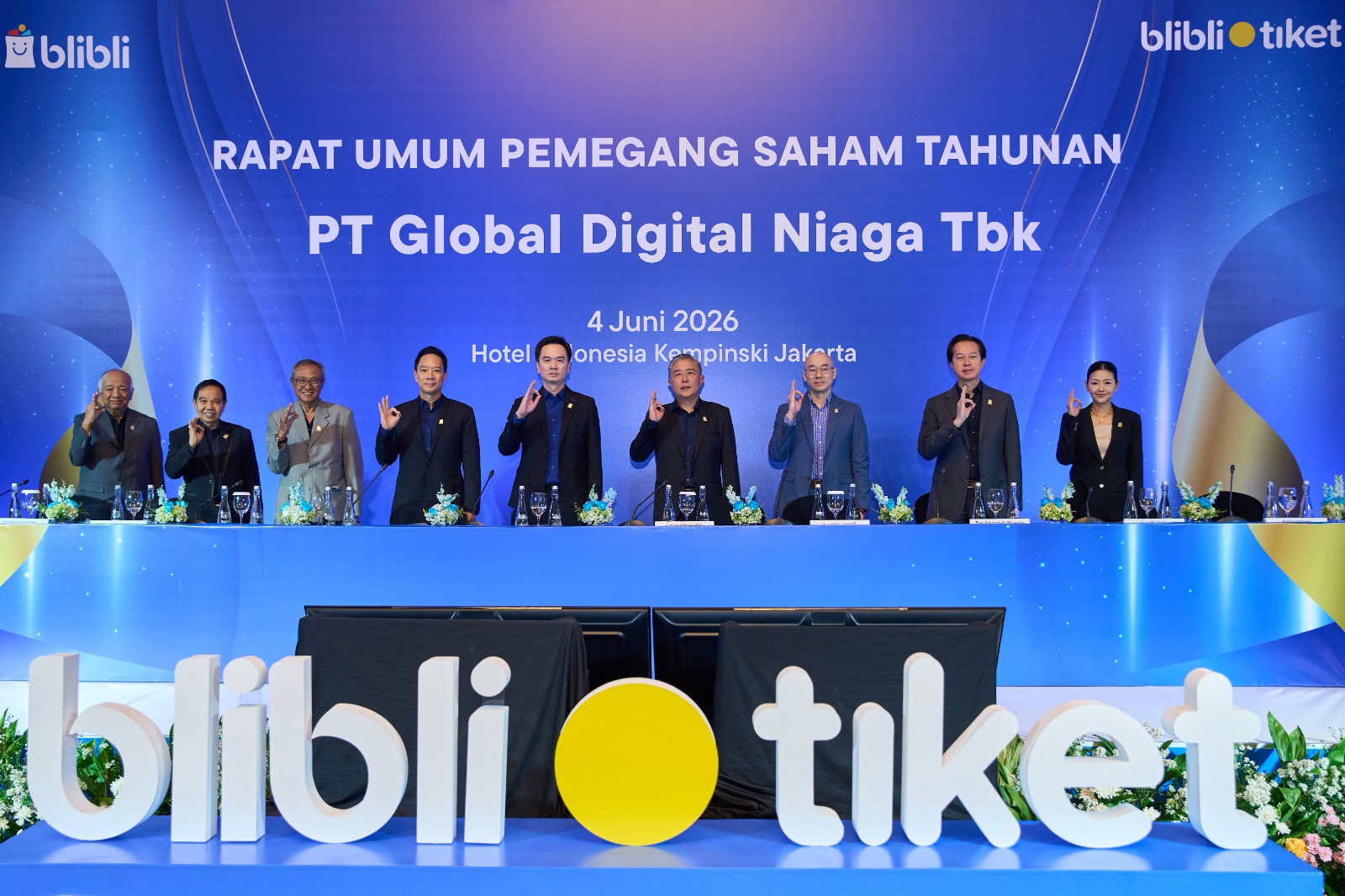
Fifteen years in, the small promises still matter
At the June 2026 shareholder meeting, Martanto's emphasis was on margins, efficiency and customer loyalty. Blibli reported 2025 consolidated net revenue of Rp22.4 trillion, up 34 percent year on year. Growth brought a continuing obligation to improve how the business operated.
The physical footprint made the online-and-offline argument tangible. At the end of 2025, the group operated 265 consumer electronics stores, alongside other retail formats, supermarkets and home-and-living experience centres. A company born on the internet had acquired a substantial collection of actual doors.
Blibli’s consolidated 2025 results
Reported at the June 2026 shareholder meeting.
In September 2026, BCA and the Blibli Tiket ecosystem introduced a co-branded Mastercard credit card. The launch connected rewards with shopping, travel and other purchases across the group's businesses. Martanto described the collaboration in terms of fitting together customers' changing daily activities.
The ambition has expanded since the first online mall. The underlying task remains easy to recognise. Someone wants a product, a clear price and confidence that the transaction will work. The growing organisation has to keep those promises across more places and more kinds of purchase.
Martanto once wanted to fly. His working life has instead taken him through engineering, software and the complicated geography of Indonesian commerce. The destination is less romantic than a cockpit, perhaps, but familiar to anyone who has watched a delivery status: a purchase that reaches the person expecting it.