A website can sell a pushchair. It cannot let a parent try the handle. Halil Erdoğmuş’s career turned on that rather ordinary distinction. He had entered the internet business to help parents find information, then begun selling the things they needed. By 2003, he was opening an actual shop in Istanbul. The future of his online business, it appeared, required a front door.
For a founder whose company carried an electronic “e” in its name, this was a pleasing complication. ebebek grew by following customers across the boundary between screen and street. Erdoğmuş had enough faith in the internet to commit his own assets to it, and enough flexibility to give his customers somewhere to go when the internet alone would not do.
By September 2023, that business was listed on Borsa Istanbul. In March 2026, he stepped down as Group CEO. Then came another physical object: a book. Published that September, Paylaşmak Kazandırır gathers the experiences of a founder whose working life has included banking, textiles, radio, transport and retail. He has had considerable practice at beginning again.
The customer before the company
Erdoğmuş was born in Uşak on 25 July 1969 and completed his school education there. He studied economics at Istanbul University, graduating in 1991, and completed a master’s in international business at the same university in 1993. His first professional job was in operations at Türk Mitsui Bank.
The family textile business followed. At Erteks, he worked in budgeting and finance and participated in ecological cotton production and export projects. In 1992, he was also a founding partner of Uşak Radyo TV. Before selling online became his occupation, he had already worked around the movement of money, goods and information.
His route into the web was wonderfully unceremonious. At a small insurance agency, an email promotion produced a customer in Istanbul’s Gaziosmanpaşa district: a street vendor who filled in an online form and bought insurance. Erdoğmuş recalled the transaction as an early sign that the internet could support a business. An unlikely customer had made a practical argument.
A proposed price-comparison website came next, but the desired domain was refused. Meanwhile, he and his wife were raising their daughter and consulting foreign parenting websites. The need was close enough to inspect at home. In 2000, he began a Turkish parenting-content venture, bebeksitesi.com, and assembled the domain names that would become the foundation of ebebek.
The initial idea was to attract readers and earn advertising revenue. The economic crisis of 2000-2001 made advertising a difficult foundation. In September 2001, the venture added online retail. Readers needed products as well as information, and the business needed a way to earn money from the audience it had gathered.
Three steps, one audience. The format changed as the business learned what parents needed.
A house exchanged for an address
There was an uncomfortable piece of arithmetic behind the domain purchases. Erdoğmuş has described selling the family’s only property to finance the move into the venture. A home was being exchanged for addresses that existed on the internet. Today, a domain name can sound like a minor administrative purchase. In this story, it belongs among the consequential decisions.
Nor did commitment remove the everyday resistance. Suppliers needed persuading that products should be listed online. Customers were being asked to buy in a way that was still unfamiliar. The company had to make its own case to both sides of a transaction before it could enjoy the transaction itself.
Opening the first physical shop in Kızıltoprak in 2003 gave the business another way to make that case. Erdoğmuş later called the move “click to brick”. The phrase has the efficient sound of a consultant’s diagram; the underlying observation was domestic and straightforward. Parents wanted to see and touch the things they were buying.
A larger Çamlıca store followed in 2007. The internet operation continued alongside the shops. A customer could learn about a product online and inspect it in person. The business had acquired more work, more premises and another way of being useful. Sometimes an elegant strategy is simply the decision to stop arguing with a customer’s reasonable preference.
“Önce iyi niyet, biraz da gayret, yeter ki sabret, gerisi kısmet.”
Halil Erdoğmuş, 2018 interviewHis rhyming maxim joins good intention, effort and patience, then leaves room for fortune.
The cheque that arrived early
His account of the 2008 crisis contains a less fashionable growth tactic: paying suppliers ahead of time. When ebebek had already sold the goods and collected the cash, he recalled, the company began writing to suppliers to say their post-dated cheques could be collected early. They contacted ten suppliers a week and continued for several weeks.
The gesture travelled. In Erdoğmuş’s telling, Arçelik later approached ebebek about a substantial baby-products transaction. Asked why it had chosen them, the answer concerned their reputation for reliability and honouring obligations. The founder presents the episode as an example of good intentions producing a commercial result.
It is an unusually concrete expression of his business philosophy. Trust acquired a date, an amount and a letter. The story also explains the usefulness of his bank-and-textiles background: stock, cash and supplier commitments occupied the same field of view. Paying early was a choice made after examining the sales records.
His attitude to investment is similarly plain-spoken. In a 2022 interview, he questioned the startup habit of celebrating how much money a company was burning. His objection was to treating expenditure as an achievement in itself. Someone who had committed personal property to a business could be expected to take the word “burn” rather literally.
His father’s factory, his own shop floor
For a more intimate picture of Erdoğmuş, consider the factory visits he described in a 2020 essay. As a child, he watched his father walk through the textile plant before going to the office. If fabric was running incorrectly through a machine, his father would straighten it himself and watch to see whether the problem had been fixed.
Years later, Erdoğmuş recognised the same impulse in himself when he noticed a wrong label during a store visit. His essay wonders how a leader can intervene usefully without becoming permanently responsible for every detail. The point of stepping in, he argues, is also to teach the manager who should be taking ownership.
There is an appealing lack of certainty in the question. He describes a management problem he is still working through, including the possibility that his own intervention creates another responsibility that sticks to him. A founder can grow a chain of shops and still find a shelf label capable of reopening the leadership syllabus.
In a separate essay about young employees’ CVs, he asks employers to examine their own part in frequent job changes. Did they describe the job honestly? Do people feel valued? Is the working environment one they would choose to stay in? The questions move scrutiny towards the person doing the hiring. They give his interest in company culture a sharper edge than a pleasant slogan.
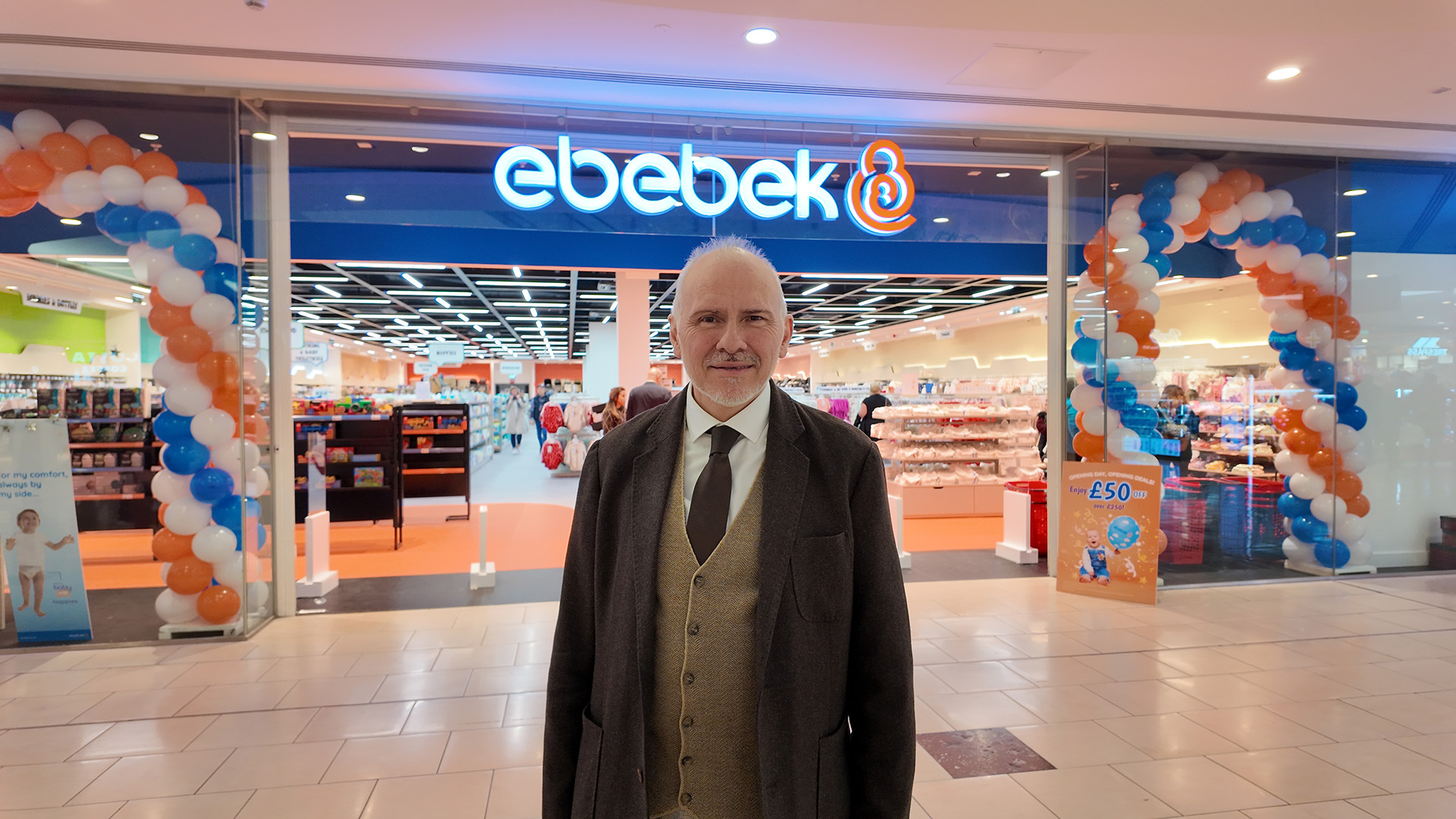
The front door crosses the Channel
In 2011, a partnership with the Topbaş family became part of ebebek’s development. In 2022, Erdoğmuş became Group CEO with a remit that included international operations. That year the company launched its UK website. Once again, the online address arrived before the shop.
The first British physical store opened at Lakeside Shopping Centre in Essex in 2024. Erdoğmuş explained that the company had seen the benefit of combining ecommerce with physical retail in Turkey and was pursuing the same approach in Britain. The photograph has the usual shop-opening balloons, but the sequence behind it was already familiar.
The public listing in September 2023 had meanwhile changed the company’s relationship with its owners. A venture that began with private conviction was now answerable to public shareholders. In a December interview that year, Erdoğmuş described a network of 230 shops across 65 Turkish provinces. That is a different order of responsibility from persuading a supplier to try an internet listing.
A book after the CEO’s chair
Erdoğmuş’s departure as Group CEO took effect on 16 March 2026. The January announcement said the Group CEO position would disappear from the organisation chart. The date marks the end of an executive chapter that had stretched from the company’s formation through its expansion and listing.
September brought Paylaşmak Kazandırır, published by Kronik Kitap: 336 pages covering his life and the ebebek years. Its developmental editor, Fırat Demirel, described a long route to publication. When he first approached Erdoğmuş about telling the company’s story in 2017, the founder was initially reluctant. A later collaboration finally produced a standalone book.
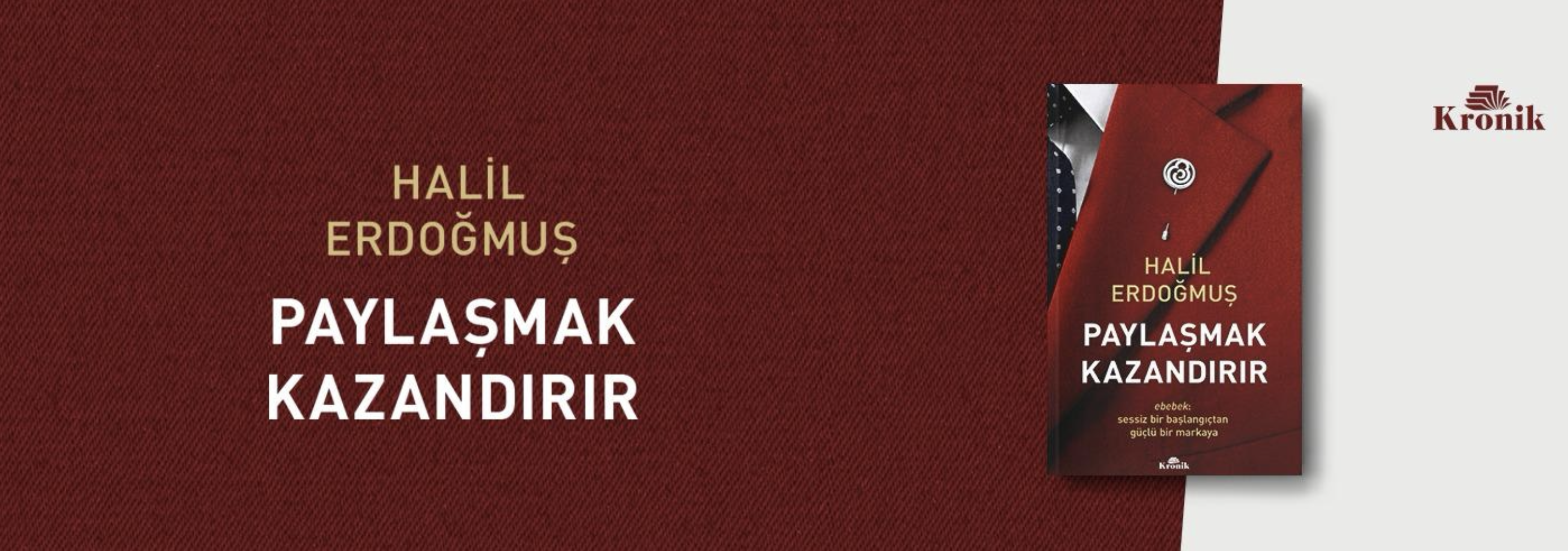
The title puts sharing at the centre of the account. On his personal website, Erdoğmuş describes himself as a lifelong student and says he wants accumulated experience to circulate among younger entrepreneurs. It is a fitting ambition for someone whose internet business began by publishing useful information.
His career offers plenty of large milestones, but its character is easier to find in smaller decisions: an insurance form taken seriously, a supplier paid early, a label that draws the boss back into the details. And, of course, a door. The online founder opened one because customers wanted to walk through it. Much of what followed grew from taking that wish seriously.
- Halil Erdoğmuş’s personal websiteEssays, biography and current projects
- LinkedInHis public professional profile
- The 2018 Yeni Fikirler interviewInsurance forms, supplier letters and his working maxim
- Strategy and implementationHis essay on the factory, store visits and managerial ownership
- Young employees and their CVsHis essay on employers’ responsibility
- ebebek’s listing and growthDecember 2023 interview with Pazarlamasyon
- The first UK shopLakeside opening coverage and photograph
- The Group CEO transition20 January 2026 company disclosure
- Paylaşmak KazandırırBook details from Kronik Kitap
- The book’s route to publicationFırat Demirel’s September 2026 account
- Watch: talks and interviewsYouTube appearances collected on his website
- YouTube conversationAn appearance linked from his video collection