A used car comes with two prices. One is the amount a seller asks. The other is the effort required to believe the seller. Lawrence Merritt built a business around that second expense: the appointments, the inspection, the bargaining, the uncertainty about whether money would arrive. His proposition was to make a transaction that people already understood considerably easier to complete.
At VavaCars’ Turkish launch in 2019, Merritt described the questions occupying a car owner’s mind. Could the buyer be trusted? Would the payment reach the account? How long would the sale take? These were ordinary questions, which made them useful business questions. A seller could have a perfectly serviceable car and still face a thoroughly unserviceable afternoon.
The answer involved a website and a place to take the vehicle. VavaCars bought cars, rather than merely introducing strangers through listings. Its purchase centres at Petrol Ofisi fuel stations gave the digital proposition a physical address. Merritt was asking people to try a new way of selling in a setting already associated with their cars.
That combination tells us something about his working life. He has moved through technology and entrepreneurship, including a startup business development leadership role for Amazon Web Services in EMEA and a stint as co-founder and CEO of Tagsmart. The objects changed. The question of what makes a customer comfortable enough to proceed kept turning up.
Before the cars, the art
Tagsmart worked in a market where doubt could be expensive and difficult to resolve: art. Its CERTIFY platform, launched in April 2016, combined a physical label, a certificate of authenticity and a digital passport. The idea was to connect the object in somebody’s hands with a record that could travel with it.
Merritt appeared with the Tagsmart team alongside Tom Toumazis, Mark Darbyshire and Steve Cooke. Darbyshire’s background was framing and art fabrication; Cooke was a product designer. Here was a venture in which the physical thing mattered as much as the digital record. Online commerce could widen the audience for art, but buyers still wanted confidence in what they were buying.
A painting and a used car make an unlikely pair at dinner. Both, however, invite questions about provenance and condition. The connection between Merritt’s ventures is an observation about the businesses, rather than a claim about a private master plan. In each, technology had to help someone make a consequential decision about an object they could not fully judge from a screen.
His own public biography is unusually economical. “I like to build,” he writes on LinkedIn. Four words leave room for a great deal of work. They also put the emphasis on making something function, which is a useful instinct when the product eventually has to leave the internet and arrive in a customer’s driveway.
A forecourt becomes a front door
VavaCars began trading in Turkey in 2019 with backing from Vitol and a close relationship with Petrol Ofisi. The arrangement supplied more than an investor’s name. Fuel stations offered places where online valuations could become inspected cars and completed purchases. A digital business acquired a network of real-world meeting points.
By March 2021, Merritt was discussing a Turkish operation with 22 purchase centres across Istanbul, Ankara, Bursa and Izmir. He said the business had recorded $110 million in revenue during 2020. Those are historical snapshots of the operation he was building, rather than figures to carry forward indefinitely.
The service was also moving beyond a fixed appointment at a fixed location. Mobile purchasing let the inspection come to the customer. In Pakistan, where VavaCars launched in January 2020, Merritt put the principle succinctly: “It is our job to invent and simplify on behalf of our customers.” Convenience had to survive contact with the pavement.
An online valuation can start a conversation; it cannot inspect a tyre. Merritt’s description of the Turkish model acknowledged that mixture of digital and physical work. His 2021 plans included machine learning to make valuations faster and more objective. The aim was practical: shorten the appraisal process and improve the customer’s experience. The technology was a proposed means to that end.
There was room for less solemn invention, too. VavaCars had a purchase centre at Fenerbahçe’s stadium, and Merritt described shutters designed for their football setting. A November 2020 collaboration with n11’s garaj11 brought the service into another online shopping environment. Customers could encounter the company where they already spent time, whether browsing or thinking about football.
The promise acquires a delivery van
The next step was to sell directly to consumers online. Until then, the Turkish business had sold to galleries and dealers; in March 2021 Merritt said direct consumer sales would begin in June. Expanding from buying cars to delivering them meant taking responsibility for more of the journey.
In October 2021, VavaCars announced a $50 million Series B. Participants included Vitol, Duquesne Family Office, founded by Stanley Druckenmiller, and another new investor. At that point the company reported more than 10,000 cars traded since launch and 300 employees. The funding was intended for its technology, physical infrastructure and brand.
The consumer offer described then included inspection, reconditioning and home delivery, with a 14-day money-back guarantee and a three-month warranty. Each promise addressed a different hesitation. What condition was the car in? How would it arrive? What happened if the choice felt wrong? A checkout button was only one small part of the answer.
For Merritt, this meant that trust had a cost structure. Someone had to inspect the vehicle, prepare it and move it. Someone had to answer the customer afterwards. The pleasing simplicity of the proposition depended on a less simple operation behind it. Used cars stubbornly retain their dimensions, however elegant the website becomes.
That offer included a 14-day return guarantee and a three-month warranty. Historical terms, dated 2021.
The country that closed
Then came June 2022. VavaCars closed its Pakistan operation, a little over two years after entering the market. The expansion story had reached a decision that could not be dressed up as another launch. Merritt announced that 82 employees were directly affected.
He explained that the company had failed to grow in Pakistan at the desired rate and that capital had become expensive relative to its possible use elsewhere. He explicitly absolved the team. His phrase for the result was “a failure of leadership.” The choice of subject mattered: leadership took the responsibility in his account.
Merritt also addressed prospective employers, vouching for the people losing their jobs and asking others to consider hiring them. His announcement reassured Turkish partners that their operations were unaffected and said the company would refocus its international plans. Geography, which had once supplied the growth narrative, now required limits.
The response was mixed. Some readers welcomed the directness; others wanted practical help and questioned the value of sympathetic words. Both responses belong beside the statement. A candid announcement cannot restore a job by being candid. The public record shows an executive accepting responsibility, and people reminding him that responsibility has consequences beyond language.
It is the most revealing interruption in his builder’s biography. Founding a business invites people to join a future that does not yet exist. Closing part of it ends that invitation for them. Merritt’s explanation made the people visible, including when their presence complicated the account of his company’s progress.
“a failure of leadership”Lawrence Merritt, on the Pakistan closure, June 2022
Thirty thousand cars, and the people behind them
The Turkish business continued. In September 2022, co-founder Alizay Saeed announced a $37 million Series C from new and existing investors. Her statement said the venture had raised more than $100 million since it began. She also expressed an expectation of reaching profitability at the end of the year. An expectation is part of the story of ambition, rather than proof of the outcome.
At year-end, Merritt reported sales of almost 30,000 cars. He paired that milestone with an admission that 2022 had been the most challenging year of his career. The message thanked former colleagues as well as those still working at VavaCars. He said their contributions belonged in whatever the company had become.
A January 2023 account likewise put annual vehicle sales at 30,000 and discussed inspection and refurbishment facilities in Pendik, Istanbul, and Ergazi, Ankara. The business had become a substantial physical undertaking. The cars passing through those centres gave the online service its material substance.
Merritt’s comments about colleagues recur in happier settings. In an October 2023 post he described the monthly all-hands meeting as a chance to speak, listen, laugh and celebrate with the team. A 2020 London post had already made his preference plain: being in the room beat spending the day on Zoom. The attraction was human proximity, expressed without much management vocabulary.
Football shirts and unfinished work
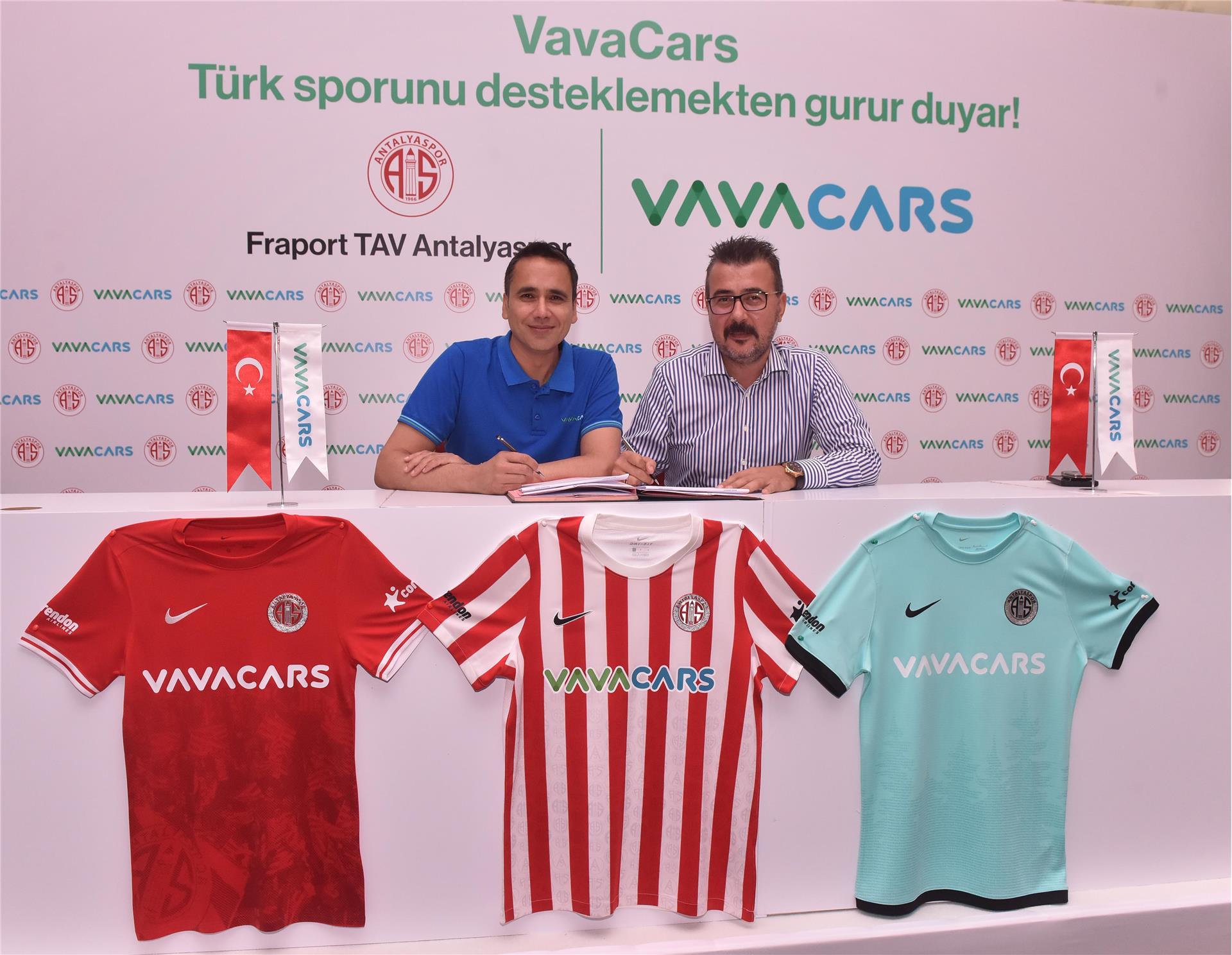
The public appearances supply a lighter view of the same operator. In July 2022, Merritt joined Antalyaspor president Aziz Çetin at an Istanbul signing ceremony for a shirt sponsorship. The club gave the visitors named jerseys and presented Merritt with its scorpion-themed plaque. Corporate souvenirs occasionally possess considerably more personality than corporate presentations.
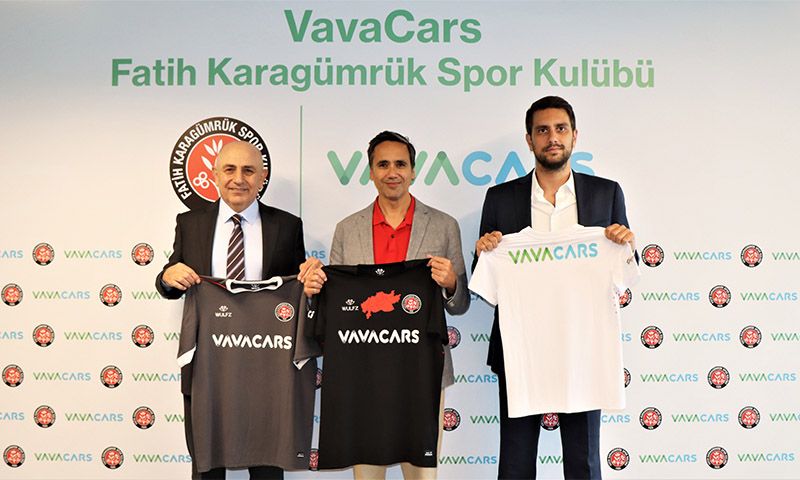
VavaCars also sponsored Fatih Karagümrük’s women’s team for the 2022-23 season. In 2023, the renewed club partnership brought representatives and players to the VavaCars office, where employees could talk with them and take photographs. Football became a meeting place as well as advertising space.
These episodes add texture without requiring a story about his private loyalties. What we can see is Merritt representing the business in a recognisably local public life: clubs, shirts, colleagues and an Istanbul office. The entrepreneur who dealt with art authentication now stood behind a table of football kit.
As of the executive roster updated in July 2026, Merritt remained VavaCars’ CEO. The company’s stated mission continued to centre on trust, simplicity and convenience in Turkey. Those words had accumulated a history by then: purchase centres, online sales, home deliveries, funding rounds and an overseas operation that closed.
The useful measure of Merritt’s ambition lies in the decisions attached to those words. A seller needs a price they can act on. A buyer needs a car that matches its description. A colleague needs leadership that will acknowledge the work, including when a plan fails. His public career brings all three demands into view. Building trust, it turns out, leaves quite a lot to build.