Achmad Alkatiri once worked out how to make a plate of fried rice last beyond the meal itself. As a university student in Bandung, he sometimes had Rp100,000 to cover two weeks. The nasi goreng came with free crackers. He saved those for another day, when he would buy rice and peanut sauce at a satay stall, without the satay. Dinner acquired a second act. The crackers had a better retention rate than many customers.
Years later, the founder known as Mad described that arrangement while looking through photographs of himself at 21. He remembered the arithmetic as part of learning to keep going under uncertain circumstances. It is a small, practical recollection, well suited to someone whose later business would involve making money, products and people stretch further.
Today, his questions concern a much larger economy. Indonesia has factories, designers, consumers and online marketplaces. Why should it remain principally the place where somebody else’s goods are made? Why should the name people remember belong elsewhere? Hypefast, the company he launched in January 2020, gives those questions a working address.
A route out of Ambon
Alkatiri was born and raised in Ambon, in Maluku, eastern Indonesia. His childhood included the conflict of 1999. His family’s house was burned down, and he spent several months in a refugee camp. In his account of growing up, schooling lagged behind what children in Jakarta were learning. The distance between the two places was educational as well as geographical.
A high-school exchange in Australia introduced him to technology, the internet and the possibilities of a business built around them. He later chose a scholarship at Telkom University in Bandung and directed his career toward technology and marketing. He has described those choices as preparation for eventually becoming a founder. The executive jobs that followed were steps along that route.
His early career took him through travel businesses Wego and Accorhotels. He joined Shopee in 2015, when the marketplace launched, and spent two years there. By September 2017, he was being named chief marketing officer of Lazada Indonesia. At 28, he had moved from an island upbringing to a job at the centre of the country’s online shopping economy.
Even then, his public ambitions extended beyond large cities. At Lazada, he spoke about helping small businesses in the regions develop and giving more people across the archipelago access to products online. The geography mattered. An expanding digital economy could draw a larger map of opportunity than the one he had known at school.
The ceiling above a successful shop
Working inside marketplaces put Alkatiri close to local brand founders. He saw businesses that could sell and owners who understood their customers, yet struggled to secure the talent, capital and operational efficiency needed to grow. In his explanation of Hypefast’s beginnings, he had spent more than six years around those founders and their problems.
That distinction is central to his work. Finding buyers proves something valuable about a product. Running a bigger business requires additional skills and resources. A founder might know precisely which size, style or price a customer wants and still need help building the organisation that can deliver it repeatedly. Alkatiri’s proposed partner would bring several missing pieces together.
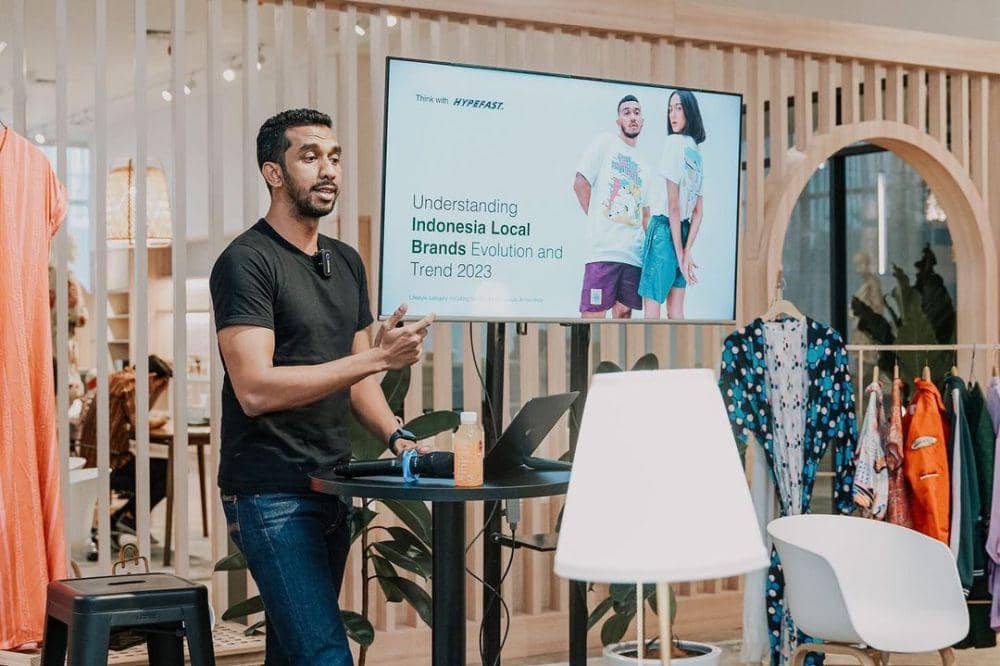
Hypefast would supply capital, retail expertise and shared infrastructure. Its brands could retain their founders in management, preserving their connection to local tastes. The premise depended on that knowledge: the people who had built demand were still useful once the company became larger. Buying a brand did not require buying its founder a farewell cake.
Leaving a senior marketplace role nevertheless required a difficult conversation at home. Alkatiri has recalled debating the decision with his family before choosing to start his own business. He believed entrepreneurship could let him create a wider impact. Hypefast was his attempt to turn years of proximity to other people’s businesses into responsibility for one of his own.
A marketing executive watches the bill
The company’s name suggests haste. Its early operating preferences were more measured. Alkatiri placed profitability among the filters for choosing brands and tried to keep marketing spending proportionate to revenue. A lower rate of spending also bought time to select partners. After working with large marketing budgets, he was choosing how carefully to use his own.
He applied similar care to investors. In the early account of his approach, time and mentorship mattered alongside money and valuation. He acknowledged gaps in his knowledge and sought investors who would work with him. Jungle Ventures and Monk’s Hill Ventures became part of Hypefast’s backing. An experienced marketing executive could still need another person at the table.
By November 2021, Hypefast announced a portfolio of more than 25 brands and full profitability. Those were early company claims, tied to that moment in its development. They describe how quickly the proposition attracted partners; they also established profitability as part of the public promise against which later decisions would be judged.
“You need to build a resilient mindset and be antifragile.”Achmad Alkatiri, November 2023
The price of staying in business
The difficult chapter arrived before any stock-market ambition. In August 2023, Hypefast disclosed layoffs affecting 30 percent of employees. Alkatiri identified higher merchant fees, logistics costs and the economic outlook among the pressures behind the decision. The aim was to preserve profitability and move toward positive free cash flow while sustaining revenue growth.
His later account described two rounds of staff reductions in 2023. Some departing employees had joined when the company was only months old. He rejected the suggestion that doing it a second time made it easier. The candour complicates the founder’s preferred vocabulary of resilience. A company’s continued existence can carry consequences for people who helped build it.
He also told a revealing story about being quiet online. A shareholder had heard someone ask whether Hypefast still existed because its founder rarely posted on LinkedIn. Alkatiri returned to the platform to explain the work and the difficult year. The anecdote belongs to an industry in which silence can look suspicious and a status update can be mistaken for a balance sheet.
A conversation has its own distribution network
Alkatiri’s interest in other founders has continued outside acquisitions. On 30 May 2024, he joined Indonesian Brands Social Night, organised with Modena in South Jakarta. The gathering brought brand owners together to exchange experiences and build relationships. Hypefast described these evenings as a regular part of its effort to strengthen the local brand community.
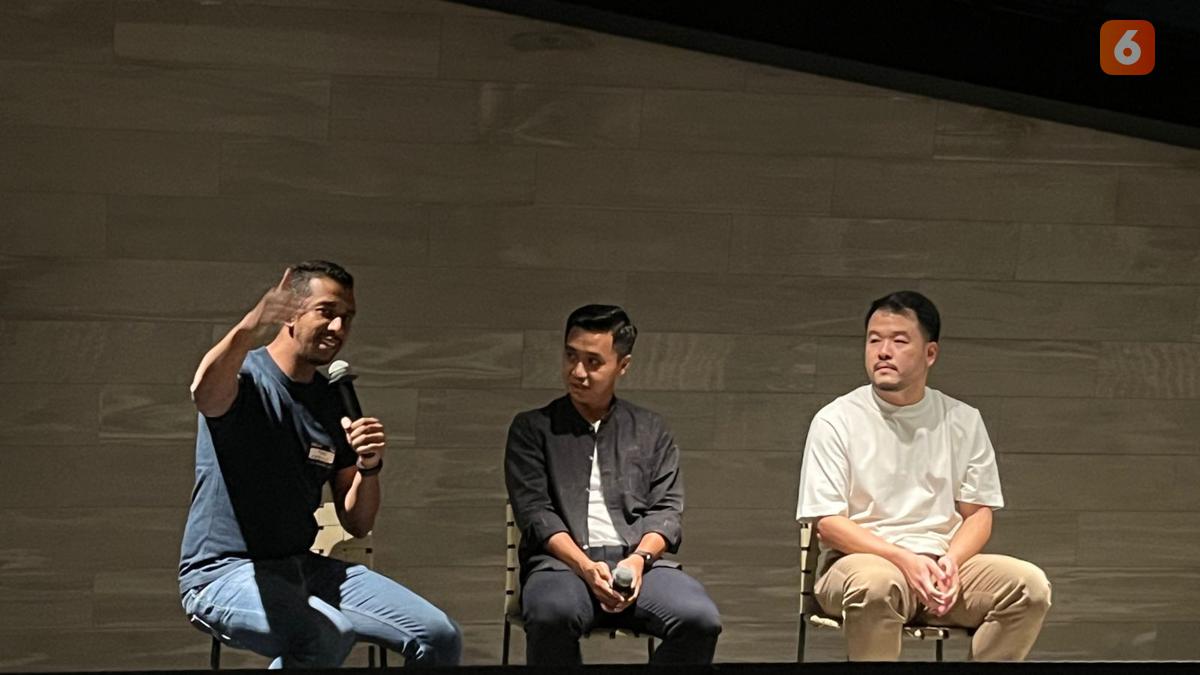
His marketing advice that year had a similar emphasis on proximity. He encouraged brands to understand specific customers, work with smaller influencers who had close relationships with their audiences, and use customer-created content. Physical stores and events could also give people an experience beyond another advertisement arriving on a screen.
The argument became harder to sustain on sentiment alone. By March 2025, he was warning of a “Local Brand Winter”, with competition from foreign brands, particularly Chinese businesses, putting pressure on Indonesian companies. Hypefast’s own analysis described a gap in marketing resources. He was asking local founders to be more resilient while explaining why the contest had become more expensive.
Patriotism could supply an ambition, but customers still had to choose a product. At a November 2024 discussion with Jacquelle Beauty and Sarinah, he drew attention to how difficult consumers could find distinguishing Indonesian brands from Chinese ones. For someone trying to make a country recognisable through its brands, that was a particularly awkward problem.
Twenty-one million products later
Alkatiri’s recap of 2024 reported full-year profitability, positive cash flow and more than 21 million products sold. Online and offline channels both contributed. The physical network had passed 9,000 points across Indonesia, Singapore and Malaysia. The business that began around online-native brands was doing a considerable amount of work away from the checkout screen.
2024 figures reported by Alkatiri in his annual recap. Company-reported figures.
More than 63,000 hours of livestream selling across Shopee and TikTok formed another part of that account. Selling a product now included a presenter, a camera and repeated demonstrations, alongside distribution partners and physical retail. Behind the idea of a house of brands was an increasingly varied collection of everyday jobs.
His description of the team included another figure: seven out of ten managers were women. He also reported a salary gap of less than three percent between women and men within each company grade. Those were his stated measures of the organisation’s employment practices, part of the broader impact he wanted the business to have.
Building for the next label
In January 2026, Hypefast announced a roadmap targeting an IPO in mid-2027. It described a greater emphasis on manufacturing, distribution and direct contact with customers. Dedicated brand websites and an offline network exceeding 10,000 retail points in Indonesia were part of that plan. The public listing remained a target, with operating infrastructure presented as the preparation.
“You need agile infrastructure.”Achmad Alkatiri, January 2026
- 01Make
In-house production capabilities
- 02Move
Physical retail and distribution
- 03Meet
Brand websites and direct customer contact
His Q1 2026 update reported net income up 319 percent year on year and net cash flow up 237 percent. Bohopanna recorded approximately US$7 million in quarterly revenue, he said. These measures covered different parts of the business: profit, cash and one brand’s sales. They offered a more specific account of progress than a single undifferentiated growth number.
Alkatiri has continued taking the discussion back to education. He delivered a keynote at Telkom University’s alumni entrepreneurship dinner in September 2025. A year later, Hypefast announced campus talks in Yogyakarta about the operations behind building a house of brands. The subjects follow the same question that brought him into entrepreneurship: what happens after a good idea finds its first customers?
There is room for ordinary preferences in this national ambition. His favourite television show is The Office; his preferred ice cream is vanilla. He wants Indonesia to be known for brands, and has described an ambition to build a homegrown group in the tradition of Unilever or P&G. The claim is large. The work underneath it remains specific: choose the partner, watch the cost, make the product, reach the customer, then earn the next purchase.