freemium
(28)
MAKA made the blank page optional
A Chinese design platform found a useful shortcut: let professionals make the templates, then let everybody else get on with the marketing.

Webs made room for the rest of us
A website builder born in a closet helped ordinary people get online. Its rise, $117.5 million sale and eventual retirement reveal the promise - and the unfinished bargain - of the free website.
Eezy made free a business.
A designer put free graphics in one place. Eezy grew by making them easier to find, easier to use, and worth paying for.

Malwarebytes wants to catch the click.
It earned its reputation cleaning up infected computers. Now Malwarebytes is moving closer to the moment things go wrong: the message, the link, and the split-second decision to trust them.
ClassDojo made the classroom a conversation
A little green monster helped teachers bring parents into the school day. The business grew by keeping that connection free - and finding things families would pay for at home.
Skype made distance cheap. Staying useful cost more.
Skype made a call across an ocean feel ordinary. Its rise, expensive changes of ownership, and final move to Teams reveal how easily a simple idea can become complicated.

Hujiang built the audience. Then came the bill.
A free language-learning community became a sprawling education business. Hujiang’s story shows how far a useful habit can travel - and why an audience is only the beginning.
Prodigy Education makes practice worth playing
Prodigy turned math practice into a world of wizards, pets, and battles. Its real experiment is whether the desire to keep playing can become the desire to keep learning.
Picsart turned the phone into a studio. Now it wants the whole production line.
A photo-editing app born in Armenia learned that making things is social. Its next bet: the same people who remix a selfie will need to run a campaign.

Allstar gives your best game a second life
The clever part of Allstar happens after the match: game data becomes a shareable video, with the editing work done in the cloud. Its business grew by making that small act of showing off easier.
OkCupid made dating a question of values
A photograph starts the conversation. OkCupid built a business around what comes next: the beliefs, boundaries, and peculiarities that make two people worth introducing.

Lose It! made calorie counting easy. Commitment took longer.
A food diary became a consumer business by making meals easier to record. Its more surprising discovery: people sometimes need a slower beginning to keep going.

Tally built a business by giving the forms away
A hotel startup lost its customers. Its founders kept the paperwork - and turned a familiar irritation into a customer-funded form builder with a very generous front door.
DWG FastView put CAD in your pocket. Quiet costs extra.
Gstarsoft made technical drawings portable with a viewer for phones, browsers and PCs. Its next design problem was the advertising that got between people and their work.
QuillBot found a business in the sentence you almost wrote
A college project became a writing business by giving people another way to say what they meant. Now QuillBot is betting that the same audience wants help creating much more than sentences.

The Classroom That Outgrew Its Business Model
Edmodo gave teachers a private corner of the social internet and attracted more than 90 million registered users. The harder lesson came later: a classroom can be full while the company behind it struggles to pay the bills.
Hinge wants you to leave. The business keeps growing.
The dating app rebuilt itself around better dates, then turned that promise into a $691 million annual business. Its next test is making paid visibility, AI assistance and a timely goodbye work together.
Duolingo Built a Billion-Dollar Habit Out of Five-Minute Lessons
The green owl did not win by promising fluency overnight. It won by making tomorrow's five-minute lesson feel harder to skip than today's - then built subscriptions, testing and AI conversation on top of that habit.
They Fought Every Weekend About Where to Camp. So They Built the Map.
Sarah Smith and Kevin Long kept fighting over where to camp. Their fix - a crowdsourced map of every campground in America - now pulls in tens of millions of visits a year and more than 12 million reviews.
Tailwind Bet the Company on Pinterest. A Million Small Businesses Bet Back.
The Oklahoma City company started life as a wedding-planning site, pivoted to the one social network everyone underestimated, and quietly built a marketing suite that now runs on autopilot for more than a million merchants.

Bumble Is Rebuilding the First Move
The women-centered dating company is shrinking its paying base on purpose, rebuilding its app with AI and betting that fewer bad interactions can lead to more real dates.

Candle
Candle is a San Francisco-based consumer social app that helps couples and close friends grow closer in about five minutes a day through one shared, random challenge - a question, debate, drawing or photo prompt, mini game, or local date idea. Founded by ex-Apple engineer Alex Ruber and ex-Twitter/Asana engineer Parth Chopra, the Y Combinator (Fall 2024) startup pivoted from an AI shopping tool and reached over a million users and a $1M+ annual revenue run rate within roughly six months of launch.
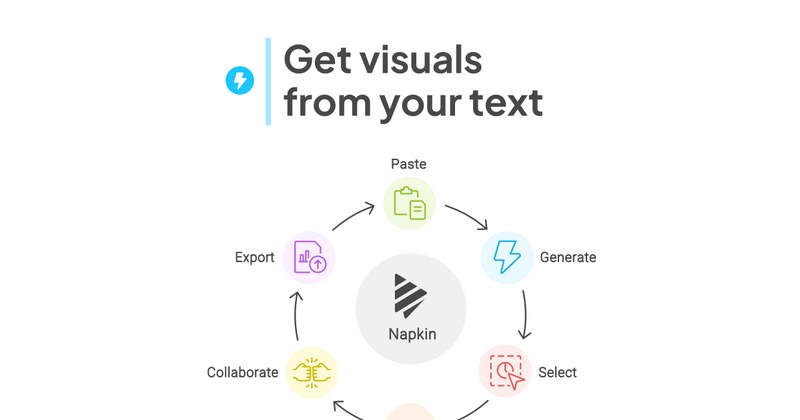
Napkin AI
Napkin AI turns plain text into editable visuals - diagrams, flowcharts, infographics, mind maps - in about five seconds. Built by two ex-Google engineers who previously co-founded the children's learning platform Osmo, Napkin uses an orchestrator LLM and a 'design agency' of specialized sub-agents to do the work most knowledge workers used to outsource to a designer or a PowerPoint smart-art menu.

Agile CRM
Agile CRM is a Dallas-based, bootstrapped SaaS company founded in 2013 that offers an all-in-one CRM platform combining sales, marketing automation, and customer service tools. Targeting small and medium-sized businesses, it provides enterprise-grade features — contact management, email campaigns, helpdesk ticketing, lead scoring, and 50+ integrations — at a fraction of the cost of Salesforce or HubSpot. With a free plan supporting up to 10 users, paid tiers starting at $8.99/user/month, and 15,000+ customers worldwide, Agile CRM has grown to $2.7M in annual revenue entirely without external funding.
Bitrix24
Bitrix24 is an all-in-one online workspace that bundles CRM, project management, HR, communication, and AI automation into a single platform. Launched in 2012 and used by over 15 million organizations in 16 languages, it is the only major CRM in the world that prices per organization rather than per user - a structural bet that has made it a go-to for SMBs and growing teams that refuse to pay headcount taxes to their software stack.

Brilliant.org
Brilliant.org is an interactive STEM learning platform that teaches math, science, data, and computer science through hands-on problems instead of passive video. Founded in 2012 by Sue Khim, the San Francisco-based company has grown to roughly 10 million learners and operates on a freemium subscription model with 90+ guided courses.

Quizlet
Quizlet is an American education technology company that built the world's most-used flashcard app and is now retooling itself as an AI-powered study coach. Founded in 2005 by a 15-year-old high schooler studying for a French final, it has grown into a platform used by tens of millions of students each month across more than 130 countries.

The keyboard was never the point.
Wispr Flow began with a device for silent speech. Its second act asks a smaller, sharper question: can you say something once and send it without fixing it?