Anil Jason was trying to make exam questions. His senior thesis explored a machine that could vary questions from one semester to the next, or produce multiple-choice questions from an article. Hidden inside that ambitious project was a smaller capability: saying something again, differently. The smaller capability turned out to have a rather larger audience.
- QuillBot began with paraphrasing, serving people who knew what they meant but wanted help expressing it.
- A public demo on Reddit helped establish demand before venture money arrived.
- Free tools attract users; Premium and team subscriptions sell greater access and control.
- The company now offers creation tools beyond writing. Human judgment still has a job.
01 / The useful piece of the impossible project
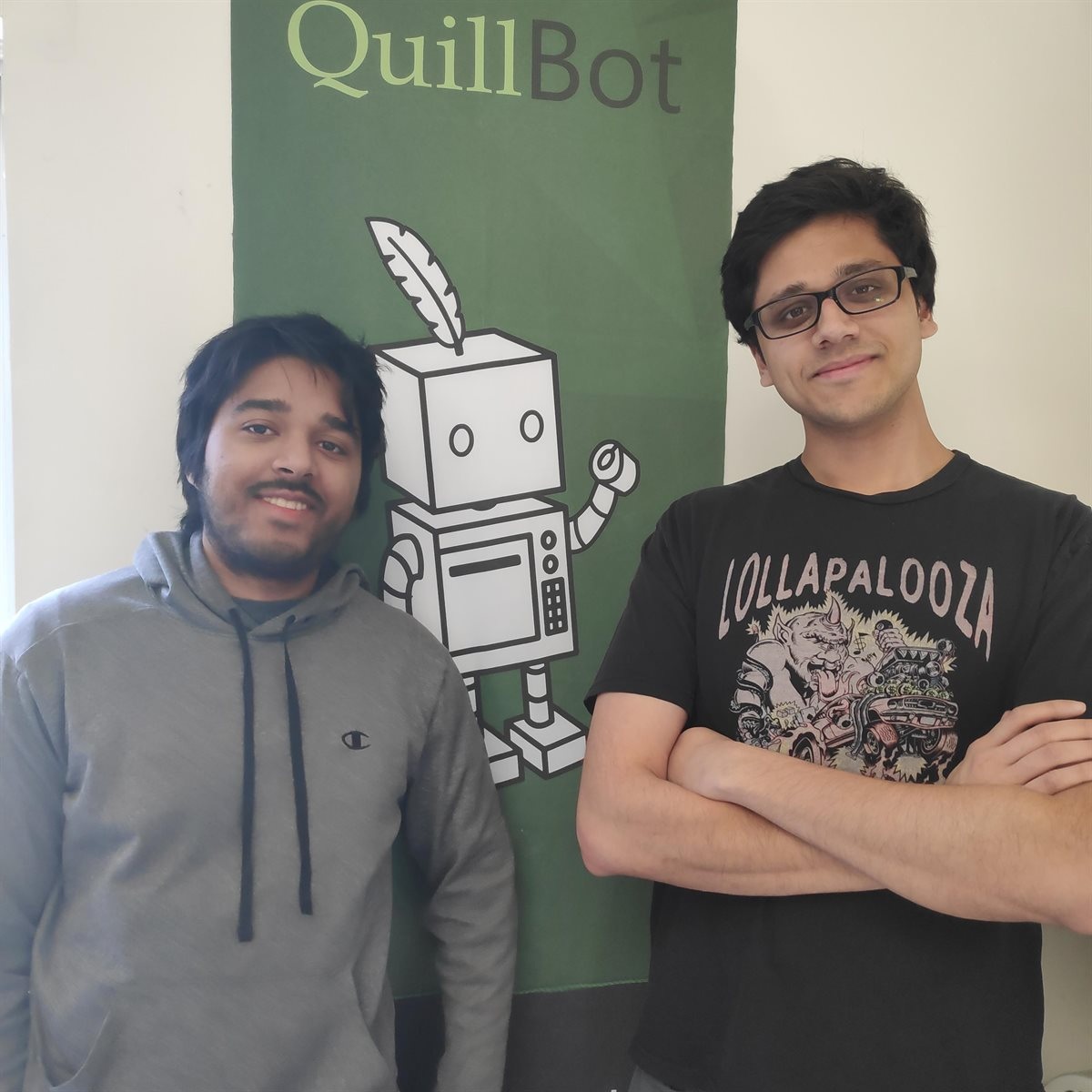
At the University of Illinois, Jason’s question-generation work led toward paraphrasing. The university’s 2019 account describes a transition toward the gap the team saw in that market. With David Silin and Rohan Gupta, he built what became QuillBot. The company dates its founding to 2017.
A conventional thesaurus offers alternatives to a word. This tool offered alternatives to a sentence. For an English learner, that difference matters: vocabulary alone cannot tell you how an expression fits together. An alternative sentence makes the relationship between words visible. It offers something to compare with the original.
“They enforced customer discovery, which is an absolute necessity.”Anil Jason on iVenture, 2019
Jason credited the university’s iVenture accelerator with that discipline, along with $10,000 in equity-free support. A technical demonstration was becoming a product shaped around a reader’s difficulty. The lesson is pleasantly unfashionable: a useful feature may deserve a business of its own before the larger invention is finished.
02 / Reddit said yes. The bills arrived anyway.
In a later Ness Labs interview, Gupta remembered the first QuillBot as a one-page demonstration. “The first version of QuillBot was quite janky,” he said. Reddit users responded to the concept despite the rough AI. English learners were an especially receptive audience.
That reception created a practical problem: popularity had costs. Gupta said the team introduced a Premium subscription to cover them and bootstrapped to more than one million monthly active users before raising venture funding. A working demo gave people a reason to arrive; a paid version gave the company a way to keep serving them.
There were distractions. In his Starter Story account, Gupta described three Y Combinator rejections and regretted the attention spent pursuing admission. He also thought the founders had waited too long to expand the team. The early constraint was partly organizational: people had to build, improve, and support a product that was already attracting users.
The April 2020 financing was led by GSV Ventures and Sierra Ventures, with Service Provider Capital participating. Sierra reported a $4.25 million seed round. Its investment argument drew a distinction between helping people write correctly and helping them construct better sentences, with control over tone and fluency.
That distinction explains QuillBot’s foothold beside grammar software. Correctness is a necessary ambition. It is also a modest one. A sentence can obey every rule and still leave its reader searching for the point.
03 / The business is in the second version
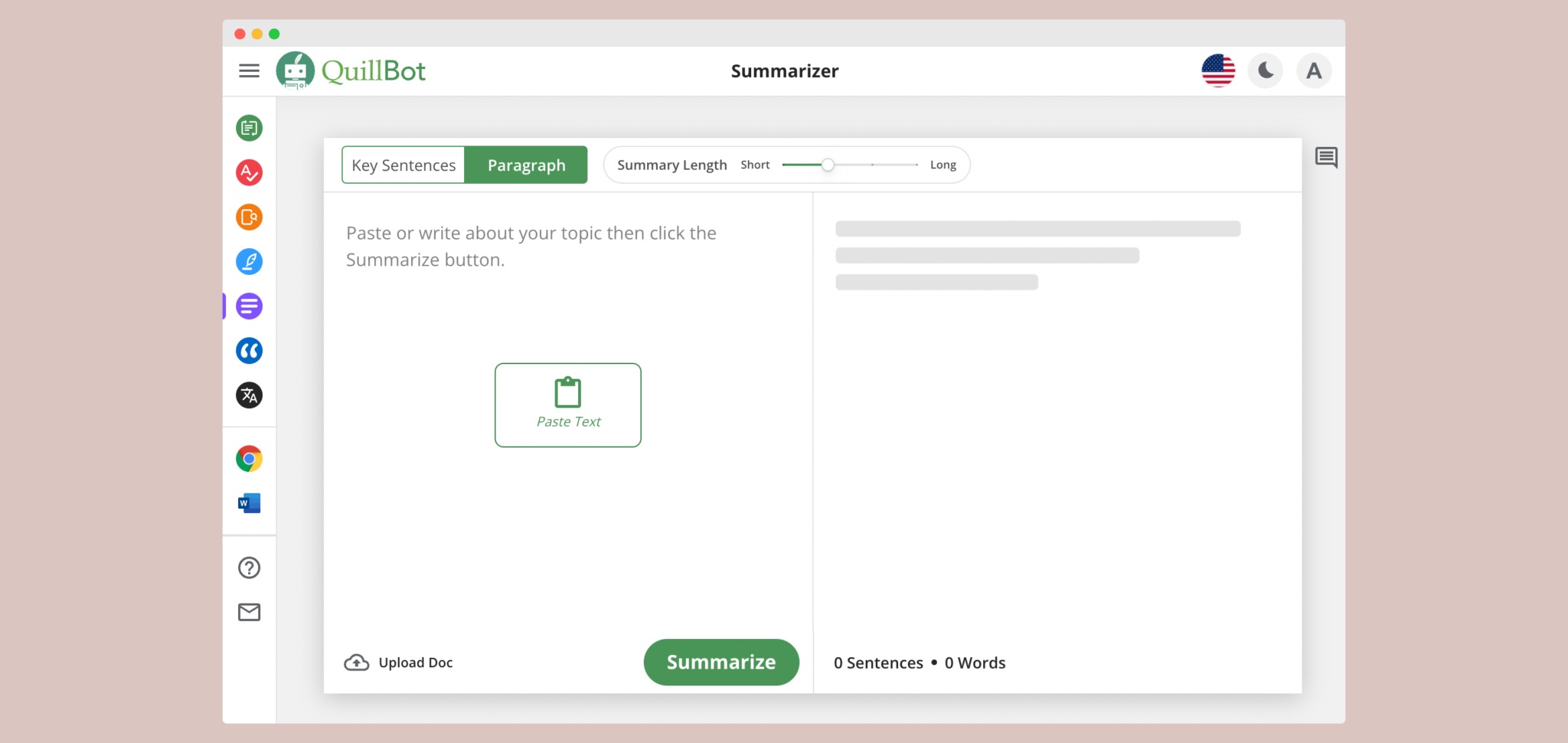
Open the Paraphraser and the proposition becomes concrete: supply text, choose a mode, inspect another version. Standard and Fluency are available free. Other modes aim at different effects, including simpler, more formal, more academic, shorter, or longer writing. The user arrives with material and chooses how to reshape it.
The synonym slider is a revealing detail. Move it toward fewer changes and the tool promises a closer rephrase; move it toward more changes and it offers greater variation. Clicking a word brings up alternatives. The interface treats revision as a set of decisions, rather than a single instruction to make everything sound impressive.
For a student, that may mean comparing phrasing in a draft. For someone working in a second language, it may mean expressing an idea with fewer awkward turns. For a professional, it may mean shortening a memo before another professional is condemned to read it. These are plausible workflows, not promises that the software understands every intention.
Grammarly is an obvious alternative in writing assistance; Sierra explicitly used it as evidence that consumers would pay for better writing. General-purpose chat assistants can also rewrite a passage. QuillBot’s distinctive starting point is the visible revision task: paste a passage, select a style, compare the result, and make choices within it. That is a reason to try it, rather than evidence that it will outperform every competitor.
04 / One paragraph becomes a whole workflow
Once someone is revising a paper, the next needs are easy to recognize. There may be grammar to correct, an article to condense, and a reference to format. QuillBot’s Grammar Checker addresses spelling, grammar, and punctuation. Its Summarizer extracts shorter accounts and key points from longer material. Its Citation Generator formats references in more than 1,000 styles.
The tools solve different problems. A summary can help a researcher decide which full document deserves attention. A citation generator can spare a writer some formatting drudgery. Neither task establishes that a source is persuasive, relevant, or accurately represented. A neatly dressed reference can still be a poor witness.
- Find the pointSummarize to orient yourself, then read the relevant original passages.
- Make a comparisonParaphrase your own draft and check what each revision changes.
- Check the detailsReview grammar and verify citation metadata against the source.
- Own the resultKeep the wording that preserves your intended meaning.
Translation widens the audience further. The current Translator page advertises more than 50 languages. Browser extensions, mobile apps, desktop apps, and a Word add-in bring assistance closer to places where writing already happens. The commercial logic is straightforward: frequent small tasks can make a writing tool a habit.
The free Paraphraser currently accepts up to 125 words per input in two modes. The USD Premium page advertises $8.33 per month when billed annually; regional prices and checkout terms can differ. Premium adds broader access and advanced recommendations. Team plans add centralized billing, user administration, and usage information. The decision to pay depends on the task and its frequency, not merely on how many buttons a subscription unlocks.
05 / A humanizer meets a detector
Two products capture the peculiar state of contemporary writing. QuillBot offers an AI Humanizer, which reworks language to sound more natural, and an AI Detector, which estimates whether text may have been generated by AI. The same suite helps alter prose and assess its apparent origins.
These functions should not be confused with the Plagiarism Checker. That product looks for textual overlap and offers reports; the current Premium allowance is 25,000 words per month. A detection score asks a different question from a similarity report. Neither one decides whether a writer has followed a particular assignment’s rules.
“Never rely on AI detection alone for decisions impacting someone's career or academic standing.”QuillBot’s AI Detector technology guidance
QuillBot’s own guidance makes the limit explicit. For students and educators, the sensible use is investigation and conversation, with the actual work and applicable rules in view. Rewording someone else’s idea also leaves the obligation to attribute it intact. A new arrangement of words does not confer ownership of the thought.
The same care applies to ordinary revision. If a passage depends on technical precision, a delicate qualification, or an unusual personal voice, every substitution needs inspection. If the argument itself is weak, more fluent sentences may conceal the weakness. The tool is most useful when the writer can judge the alternatives it supplies.
06 / The next bet is bigger than writing
Course Hero acquired QuillBot in August 2021, when an announcement described nearly seven million monthly active users. The parent is now Learneo. Scribbr and LanguageTool are fellow writing businesses in that family; QuillBot’s history credits the combined writing vertical with more than 56 million monthly active users in 2023. That combined figure should not be mistaken for QuillBot’s audience alone.
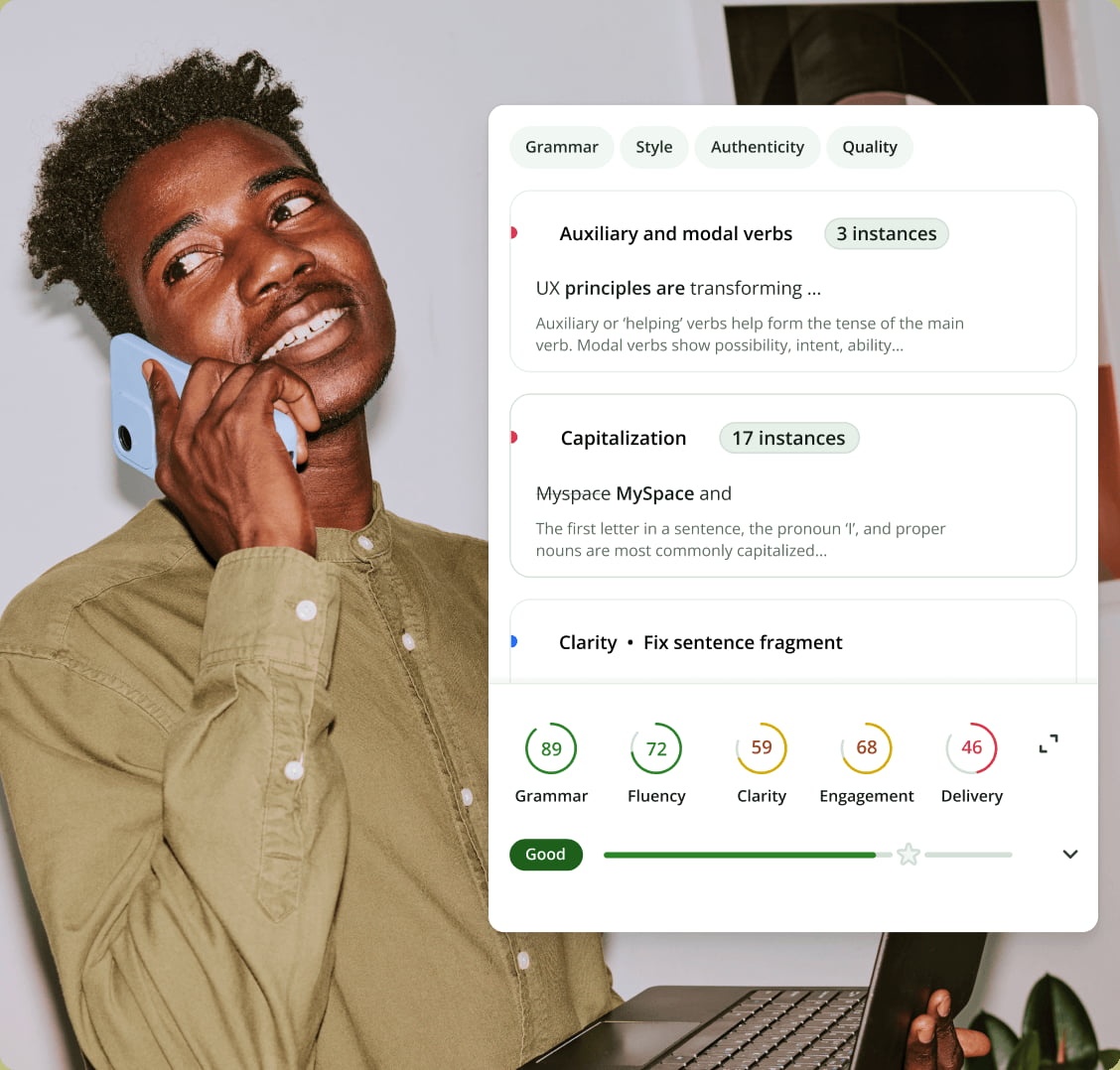
QuillBot’s current About page reports 35+ million monthly active writers. Its newer proposition goes beyond revision: chat, visual creation, presentations, documents, and PDF tools now appear alongside the original writing suite. The company’s history dates its expansion into audio, image, and search tools to 2025 under CEO Andrew Grauer.
That ambition brings a new test. A small tool can explain itself in one interaction. A creation platform has to make many interactions worth returning to. QuillBot’s original advantage was a specific moment of usefulness: someone had a sentence and wanted another way to express it. Its broader products will have to earn similarly clear reasons to exist.
There is something worth copying here, for a founder as much as a writer. Find the part that helps. Put it where someone can compare the result. Watch what they do next. A better version is valuable because a person can recognize the improvement. The final judgment belongs at the desk.
Keep exploring
Try the tools, compare plans, or browse the writing blog. Read Gupta’s founder interview and the 2021 acquisition announcement.
Follow QuillBot on LinkedIn, X, Facebook, and Instagram. Watch tutorials and product videos on its YouTube channel.