Three days in a cafeServer crashed by day one$13.5M raisedForbes 30 Under 30Princeton '23Perplexity & burstinessProfitable in 18 months500% ARR growth Three days in a cafeServer crashed by day one$13.5M raisedForbes 30 Under 30Princeton '23Perplexity & burstinessProfitable in 18 months500% ARR growth
Builder · AI Detection · GPTZero

Edward Tian

He taught a machine to recognize the fingerprints of other machines - and millions of teachers showed up overnight.

CO-FOUNDER & CEO, GPTZERO // PRINCETON CS + JOURNALISM // ETOBICOKE, CANADA

EXHIBIT A Edward Tian, co-founder and CEO of GPTZero
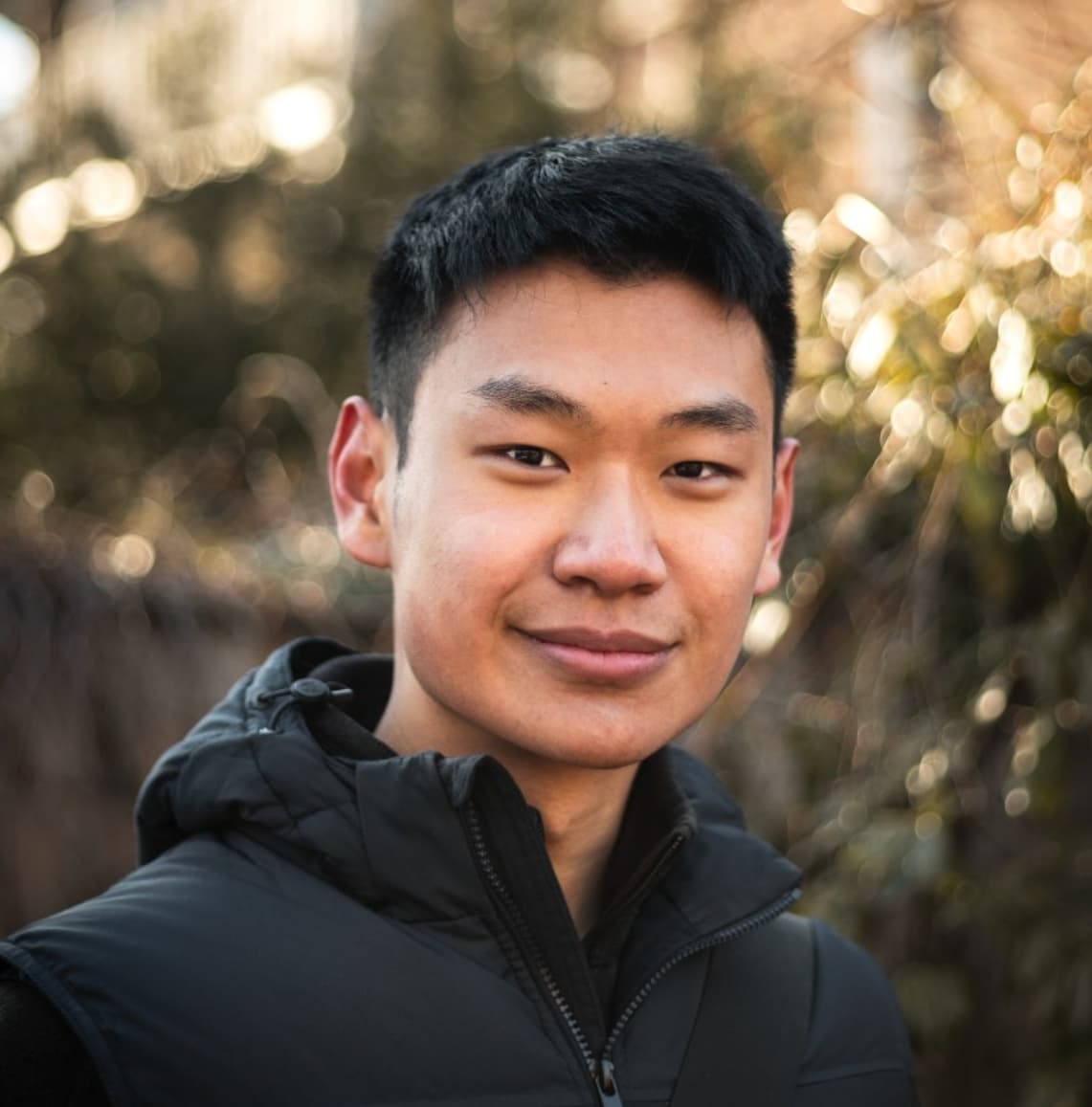
The cafe project that crashed its own server. Now it tells human from machine for a living.

The Dispatch

A detector, written in three days, that the whole internet was waiting for.

Over the 2023 New Year holiday, Edward Tian sat in a cafe and wrote a small app that could guess whether a paragraph was written by a person or by ChatGPT. He called it GPTZero. He posted it. Within days, roughly 30,000 people - mostly teachers - rushed in and crashed the Streamlit server it was running on. He had not raised money. He had not hired anyone. He was still a senior at Princeton with a thesis to finish.

That timing was not luck. While most of the world met large language models the week ChatGPT went public, Tian had already spent a year inside Princeton's Natural Language Processing Lab studying how to detect the output of GPT-3, ChatGPT's quieter predecessor. So when the panic about machine-written essays arrived, he was not reacting. He was ready. The tool that took three days to write had been years in the making.

Today GPTZero is the part of the AI story that nobody saw coming: not a model that writes, but a referee that reads. It has raised $13.5 million, turned profitable inside 18 months, and become a reflex check for educators, recruiters, and grant agencies trying to answer a single nagging question - who actually wrote this?

"There should be aspects of human writing that machines can never co-opt."

- Edward Tian
By The Numbers
3
days to write v1
$13.5M
total raised
~30K
users on day one
500%
ARR growth, H2 2024
Before The Cafe

A journalist and a computer scientist, in the same person.

Most founders pick a lane. Tian refused to. At Princeton he studied computer science and journalism at once, and took a course with John McPhee, the nonfiction writer who has spent a career proving that the human sentence is a precise instrument. That pairing - the engineer who can build the detector, the writer who knows exactly what is worth protecting - is not a footnote to GPTZero. It is the entire thesis.

His resume before the company reads like a tour of the institutions GPTZero would later serve. He researched synthetic data at Microsoft AI. He worked as an investigative journalist at the BBC. He started out as a data science intern at Andela, building analytics and running surveys in East Africa. Each stop taught a different half of the same lesson: machines can generate language, and somebody needs to keep it honest.

  • Microsoft AI - synthetic data research
  • BBC - investigative journalist
  • Andela - data science intern, East Africa
  • Princeton NLP Lab - detecting GPT-3 text, pre-ChatGPT
  • John McPhee's seminar - the craft of the human sentence
  • Forbes 30 Under 30 - Toronto, with co-founder Alex Cui
Under The Hood

Two words explain the whole machine: perplexity and burstiness.

GPTZero does not read for meaning. It reads for rhythm. Human writing wanders, surprises itself, and varies its pace. Machine writing tends toward the smooth and the predictable. Tian's tool measures exactly that texture.

Perplexity

How surprising the word choices are. People reach for the unexpected word; models reach for the likely one. Low surprise is a tell.

Burstiness

How much that surprise varies sentence to sentence. Humans spike and dip; machines hum at one even level. Flat is a flag.

The Arc

From a crashed server to a profitable company, fast.

2019

Princeton begins

Starts a double focus on computer science, natural language processing, and journalism.

2021

Detecting GPT-3

In Princeton's NLP Lab, researches how to spot machine-written text - before ChatGPT exists. Interns at Microsoft AI and the BBC.

Dec 2022

The first version

Posts an early GPTZero web app. 30,000 people swarm it and crash the Streamlit host almost immediately.

2023

It becomes a company

Writes the production tool over the New Year, raises a $3.5M seed, and lands on Forbes 30 Under 30 with co-founder Alex Cui.

2024

Series A & profit

Raises a $10M Series A led by Footwork's Nikhil Basu Trivedi. Profitable, millions of users, 500% ARR growth in the back half of the year.

Sept 2024

Beyond all-or-nothing

Launches authorship tracking, moving the conversation from "AI or not" to a more nuanced picture of how a document was actually written.

The Mission

Not anti-AI. Pro-knowing-the-difference.

Tian is careful about the framing. GPTZero is not a campaign against artificial intelligence; it is a campaign for transparency about it. The danger he names is not that machines can write, but that we lose the ability to tell when they have. His backers signal the same stakes: journalism leaders Mark Thompson (the former chief of the New York Times, BBC, and CNN) and Tom Glocer (the former CEO of Reuters) are among the investors.

The customer list has quietly outgrown the classroom that started it. Teachers still come, but so do hiring managers reading cover letters, government procurement teams, grant-writing organizations, and even the people labeling data to train the next generation of models. The referee, it turns out, is needed everywhere the writing matters.

"We're just trying to avoid a world where the entire internet is AI-generated content."

- Edward Tian
The Fine Print

Small details, large person.

The Rolodex

Where to find him.

Sources: Wikipedia, The Daily Princetonian, South China Morning Post, The Daily Beast, Yahoo Finance, GPTZero.me, ASU+GSV Summit. Facts drawn from public reporting; where the record is silent, this page stays silent too.