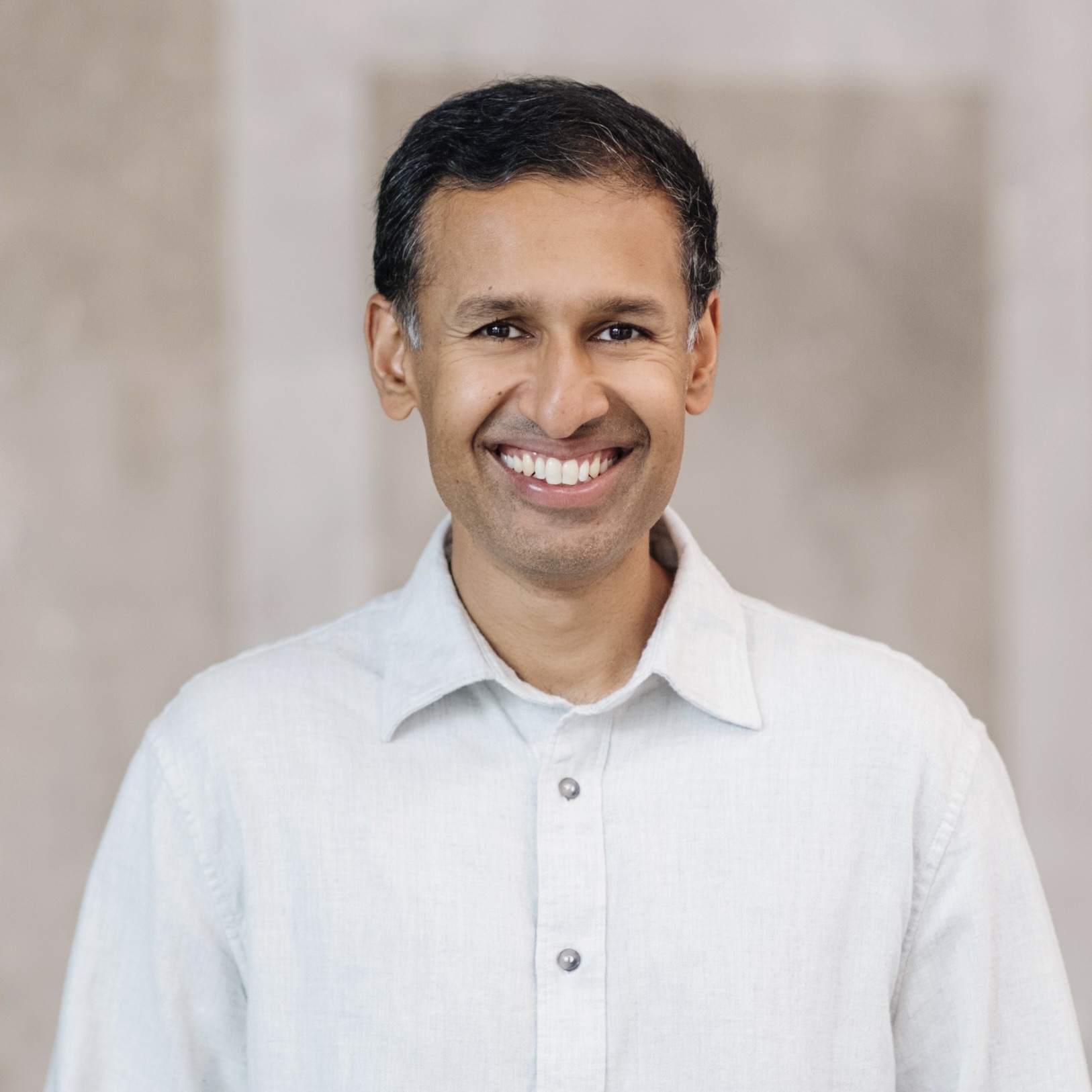
The Outsider Who Bets on Learners
Nikhil Basu Trivedi does not fit the standard VC mold. He studied molecular biology at Princeton - not computer science, not economics. He describes himself as "an outsider in America with brown skin and a different accent." He founded a company as a college sophomore, joined venture capital before most of his peers had their first real job, and then built something nobody asked for: a venture firm that publishes its investment theses publicly before making bets.
Today he is Co-Founder and General Partner at Footwork Ventures, the San Francisco-based firm he started with Mike Smith in 2021. Footwork closed a $175M Fund I in its inaugural year, then raised a $225M Fund II in February 2025. The portfolio now spans 23+ companies across consumer tech, enterprise SaaS, health, and AI applications - with check sizes typically in the $1.5M to $8M range, meaning Footwork is often in the room when a company is just a small team and a promising idea.
Before Footwork, there was Shasta Ventures - eight years that shaped his investing DNA. He joined as an associate at 23, the youngest person on the investment team, and left as Managing Director. In that time, he backed Canva (now valued north of $40 billion), ClassDojo, Frame.io, The Farmer's Dog, Lattice, and Brigit. He also missed Figma. Dylan Field came to him early. The product wasn't live yet. Nikhil passed. He talks about it openly in interviews, which is unusual candor in an industry built on curating wins and quietly burying misses.
The Canva investment is its own chapter. Nikhil had a rule: traction first. Show him customers. Show him usage. Show him love. Canva had none of those things yet - no revenue, no launch. He invested anyway. Something about the clarity of the product vision, the size of the market being attacked, and what he could see about the founding team's speed of learning told him the rule needed an exception. He was right. It is one of the most celebrated consumer software companies of the last decade.
The "slope of learning" framework is central to how Nikhil evaluates founders. He says he tries to assess it in the first thirty minutes of meeting someone. Not what they know on day one - that's irrelevant. It's the rate at which they learn, the speed at which they incorporate new information, the sharpness with which they identify what they got wrong and course-correct. This is not a new idea, but Nikhil has made it the cornerstone of his sourcing and evaluation in a way few other investors articulate as clearly.
There is also the write-in-public model, which sets him apart from most GPs who keep their investment theses locked up as proprietary alpha. Nikhil publishes essays analyzing breakout companies - what made them work, what category they opened up, what their growth tells us about human behavior - and then invests in founders building similar products. The newsletter, called "Next Big Thing," runs on Substack with 18,000+ subscribers. He has publicly committed to never charging for it. It is part signal, part generosity, part brand, and part genuine belief that transparency makes the venture ecosystem better.
His family background is not incidental to who he is. His father Shanker Trivedi spent seventeen years at NVIDIA, helping grow the Datacenter and ProViz businesses from under half a billion dollars to $195 billion. His mother Anuradha Basu is a Professor of Entrepreneurship at San Jose State. His grandfather was a Minister of State in India. His great-grandfather, Gaganvihari Lallubhai Mehta, served as India's Ambassador to the United States from 1952 to 1958. There is something in the lineage - a comfort with institutions, a respect for building things that outlast you, and a drive to represent something larger than yourself.
Founding Footwork involved its own deliberate ritual. In 2020, Nikhil texted Mike Smith - a friend, fellow investor, and eventual co-founder - with a simple question: "Would you ever consider starting a venture firm?" They spent a year in conversation before committing. Before signing anything, they answered 37 questions to each other. Compatibility questions. Philosophy questions. Questions about how they handle conflict, how they think about returns, what kind of firm they want to build. The 37-question process became its own story - evidence of a man who does not move without thinking first, who treats partnerships with the same rigor he brings to investments.
He has been contrarian on AI in a moment when most of his peers are chasing every deal with "AI" in the deck. In 2023, on the 20VC podcast with Harry Stebbings, he predicted that 99% of investments in AI startups would go to zero - not because AI isn't transformative, but because competitive noise, inflated valuations, and a lack of genuine product-market fit will wash out most of the current wave. He is not anti-AI. He is pro-rigor. The distinction matters.
He also makes a pointed argument about fund size. Small funds outperform large funds, he says, and AUM is a vanity metric. This is not a modest claim - it is a direct critique of how much of the venture industry is organized. Footwork's positioning as a relatively small, thesis-driven firm is not a limitation; it is a deliberate choice rooted in a belief about where returns actually come from.