They Fought Every Weekend About Where to Camp. So They Built the Map.
Sarah Smith and Kevin Long kept fighting over where to camp. Their fix - a crowdsourced map of every campground in America - now pulls in tens of millions of visits a year and more than 12 million reviews.
Every Friday, the same argument. Sarah Smith and Kevin Long were the kind of couple who camped nearly every weekend, and nearly every weekend they burned an hour bickering over where to go. The good sites were a mystery. The bad ones were a gamble. Guidebooks were out of date and the internet, oddly, had almost nothing useful about the thing millions of Americans do every summer: sleep outside. In 2013, Smith decided the fix was not a truce. It was a database.
That database is now The Dyrt - a Portland, Oregon company that runs what it calls the largest campground directory in the United States. More than 50,000 campgrounds, cross-referenced with over 12 million reviews, photos and tips written by campers who actually stayed there. Roughly 30 million people visit each year, and in 2023 it was the most-downloaded camping app in the country - well ahead of the federal government's own Recreation.gov. On the App Store and Google Play it carries a 4.8-star rating from more than 122,000 reviewers. The name, for the record, is a stylized spelling of dirt - the stuff you pitch a tent on.
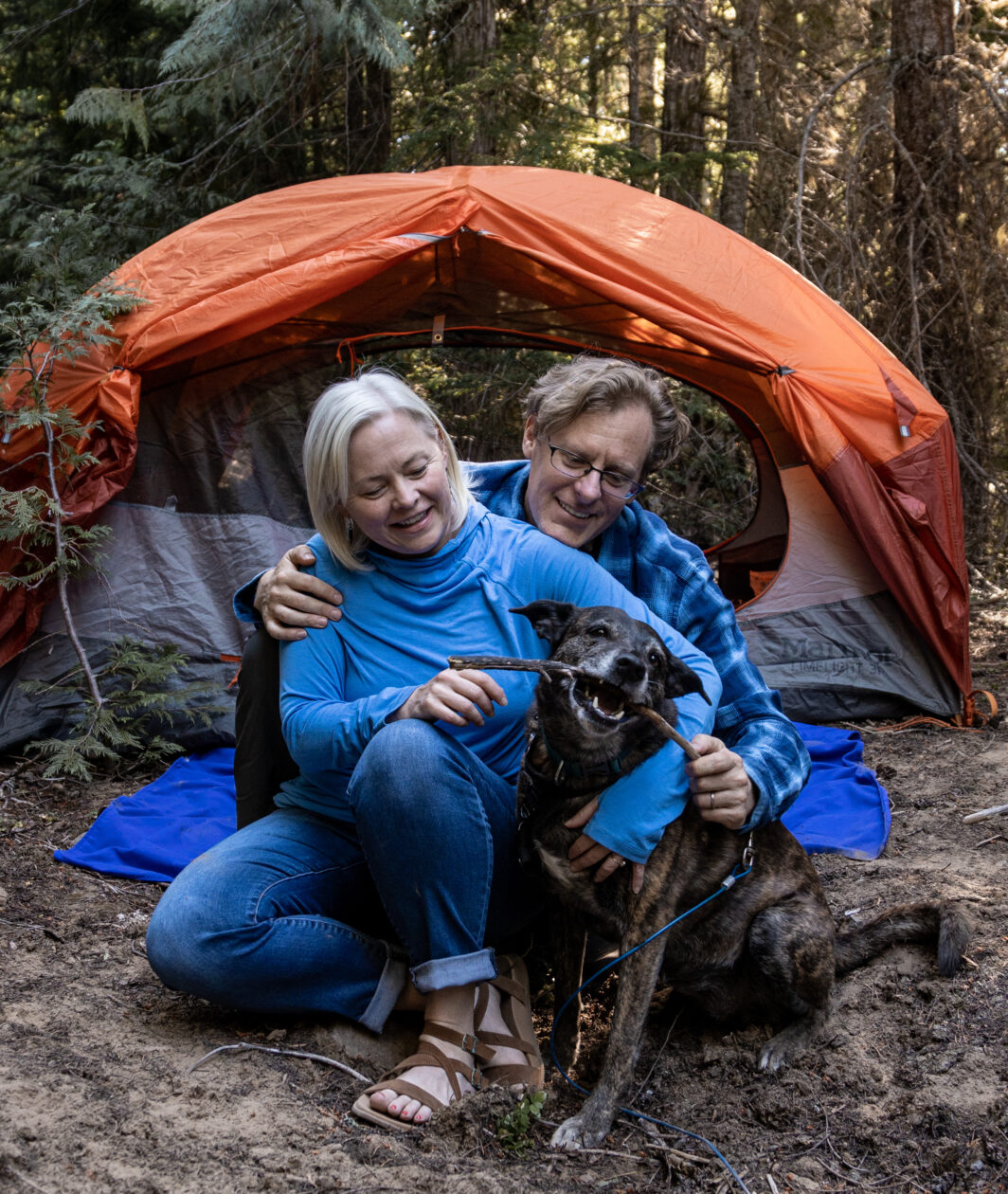
What The Dyrt actually is
Strip away the pine-scented branding and The Dyrt is an information company. Its product is structured answers to the questions that decide whether a trip is good or miserable: Will my RV fit? Is there cell signal? Are dogs allowed? Is the "lakeview" site actually a gravel pad next to a dumpster? None of that lives in a government reservation portal. It lives in the heads of people who camped there last month - and The Dyrt's whole design is a machine for getting it out of their heads and onto a map.
It covers the full spread of camping, not just the postcard version: national and state parks, private campgrounds, RV parks, and the free, unmarked "dispersed" sites on public land that most apps ignore entirely. For a tent camper, an RV retiree, and a vanlifer, it is often the same starting screen.
That breadth is not an accident. Smith spent her early years chasing the data no one else bothered to collect - overnight parking spots, dump stations, water fill-ups, thousands of free car-accessible sites tucked into national forests. The bet was that if The Dyrt answered the boring logistical questions as well as the pretty ones, it would become the reflex, the app you open before you have even decided where you are going. A decade in, the numbers suggest the bet paid off: the founders like to joke that the busier the company gets, the less they get to camp themselves.
The flywheel: reviews beget reviews
A directory is only as good as its data, and camping data rots fast. The Dyrt's answer is a supply engine most people mistake for marketing: state-by-state review contests that hand out camping gear to contributors. Every incentivized review makes a listing more complete, which makes the app more useful, which brings the next camper, who leaves the next review. Twelve million entries later - up from around 8 million in 2023 - that loop is the company's real moat. The Dyrt does not own a single campground. It owns the trust of the people who slept in them.
Give away the map, sell the compass
The business model is freemium, and it is unusually well drawn. The free tier is not a crippled demo - it is genuinely the biggest campground database on the internet, which is exactly why the paid tier converts. The Dyrt PRO costs $59.99 a year (30-day free trial) and adds the features you crave once you are already 40 miles down a forest road with no bars: offline maps of the entire database, public-land layers for finding free dispersed sites, a road-trip planner that strings the best-reviewed sites along your route, discounts at more than 1,000 partner campgrounds, and in-app booking with no added fees.
The single feature most PRO reviewers rave about is almost anticlimactic: an alert. Good campsites book out months ahead, but people cancel constantly. Dyrt Alerts watch a sold-out campground and ping you the instant a spot opens. It is a small notification that quietly justifies the whole $60.
| Feature | Free | PRO · $59.99/yr |
|---|---|---|
| Search 50,000+ campgrounds | ✓ | ✓ |
| Read & write reviews | ✓ | ✓ |
| Offline maps | · | ✓ |
| Public-land / dispersed layers | · | ✓ |
| Road-trip planner | · | ✓ |
| Sold-out cancellation alerts | · | ✓ |
| Campground discounts | · | ✓ |
Beyond subscriptions, revenue stacks in two more places: advertising on the free app, and a quieter B2B line selling listing tools and advertising to campground owners who want to claim and manage how they show up. Public estimates put annual revenue in the low millions.
Running a startup from a van
In 2021, as The Dyrt was growing fast, Smith and Long did something most CEOs only romanticize: they moved into a camper van and ran the company cross-country, working from the campgrounds and RV parks their users live in, dog Brandy at their feet. It doubled as the most honest product research imaginable - feeling the dead cell zones, the sold-out heartbreak, the joy of a well-reviewed find. Long was blunt about the cost of the fantasy.
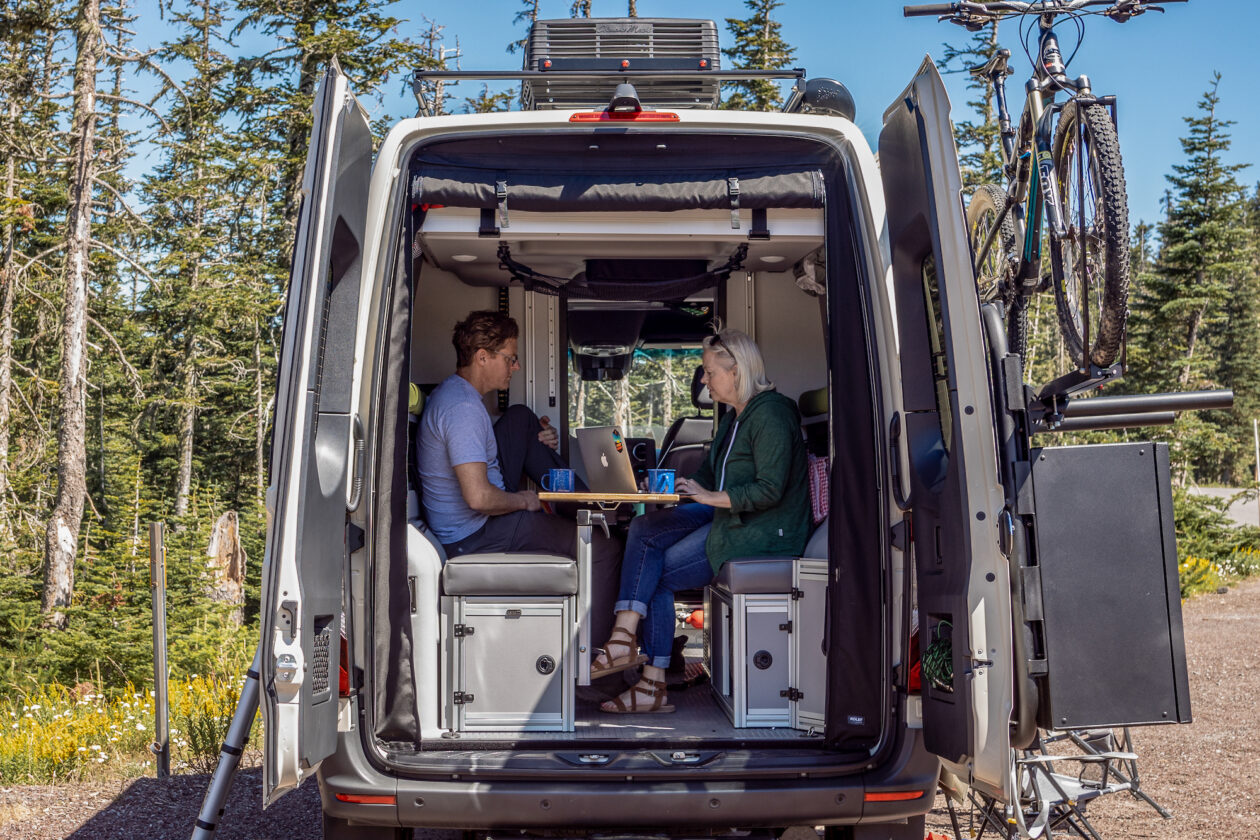
That same year, the company launched commission-free bookings for campground owners and closed an $11 million Series B led by Silicon Valley's Realization Capital Partners, whose Kevin Iudicello joined the board - part of a total of roughly $20.8 million raised since a 2016 seed round from Portland Seed Fund. The round, per the founders, was signed somewhere around Durango, Colorado. The plan: nearly double the team. That team is fully remote, with a policy Long sums up simply.
Where it sits in a crowded woods
Camping tech is not empty. Hipcamp rents out private land like an Airbnb for the outdoors. Campendium and iOverlander have loyal RV and overlanding followings. AllStays, RV LIFE and Roadtrippers each own a slice of the trip-planning map. Recreation.gov is where you actually book federal sites. The Dyrt's wedge is breadth plus reviews: it tries to be the first screen for every kind of camper, and the depth of its user-generated content is hard for a newer entrant to copy quickly. You can raise money to build a map. You cannot raise money to fake twelve million honest reviews.
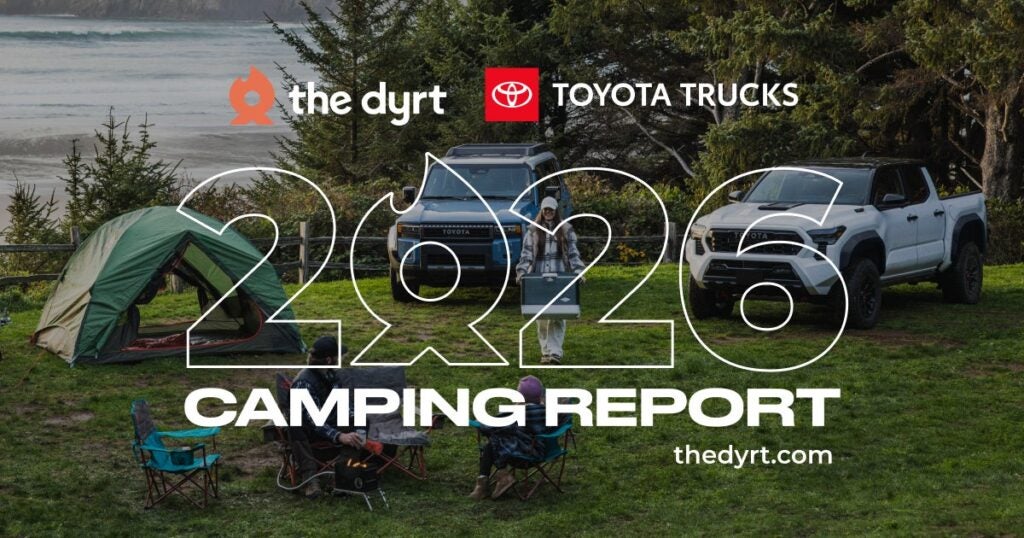
That data has become a media asset in its own right. The company's annual Camping Report - presented by Toyota Trucks - translates raw app usage into the kind of numbers journalists quote every spring. The 2026 edition counted 82.4 million campers in 2025, the second-highest on record. It is a low-cost marketing engine that also reinforces The Dyrt's authority over the category, and it has helped land the company on the Inc. 5000 list four years running.
What a builder can steal
The playbook here travels well beyond camping. Start with a real, recurring pain you personally have - the argument you keep having. Ship the ugliest possible version; The Dyrt began as a plain WordPress site. Build a supply engine so your content compounds instead of decaying. Give the free product away so generously that the paid one sells itself. And find the single moment your customer feels powerless - a sold-out site, a dead map - and charge for the fix. It will not work for everyone: this is a seasonal, US-centric market with thin margins and giants like Google Maps lurking at the casual end. But for one obsessive audience, served completely, it built something a competitor cannot simply outspend.