A fishing guide has two jobs. One involves reading water, finding fish and helping a stranger have a good day. The other involves calendars, unanswered messages, card payments and a website that needs attention. The first job produces photographs. The second can quietly consume the evening. Guidesly’s business rests on a sensible observation: the person who knows where the fish are should have some help with everything else.
- Book outdoor trips through Guidesly; run the guide business through Guidesly Pro.
- Calendars, websites, payments and marketing share one platform.
- Published booking fees depend on where the customer comes from.
- Jack AI puts trip photographs to work after the guests go home.
The customer with two jobs
For guests, Guidesly is a way to find and book an outdoor professional. Fishing remains central, while the marketplace also lists hunting, diving and other activities. Search starts with ordinary holiday questions: where, when, how many people, what kind of trip? The company’s fishing explanation adds more particular choices, including target species and guides experienced with children. A novice and a trophy hunter can want very different things from the same stretch of water.
Guidesly says it checks guides’ credentials and licenses, provides reviews and brings payment into the booking process. Those features address a familiar purchasing problem: the guest must choose an experience before experiencing it. A photograph of a large fish is pleasing evidence, but it is a poor substitute for knowing the price, meeting place and guide’s availability.
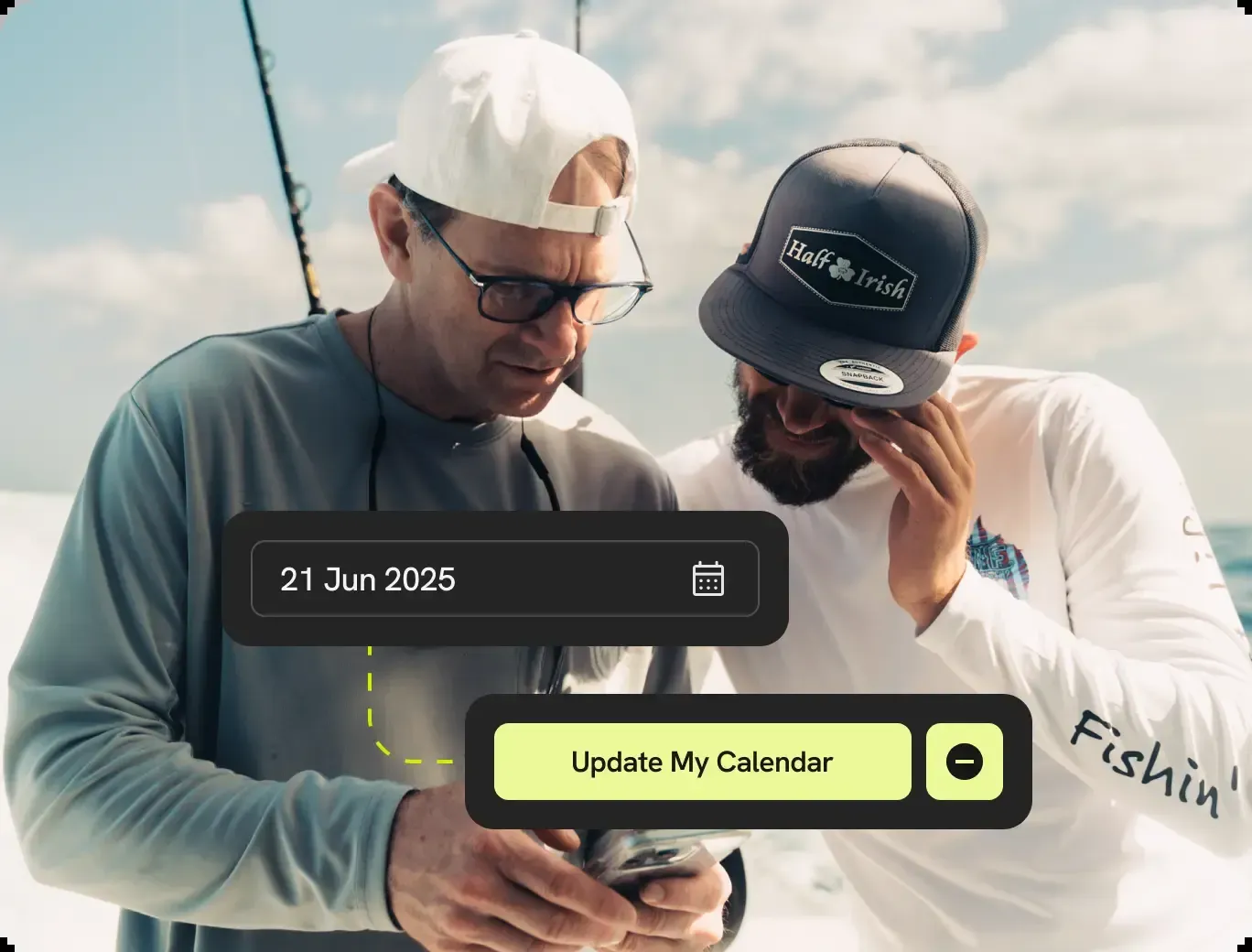
The other customer is the operator. Guidesly Pro gives that person a mobile calendar, trip management, customer records and tools for taking payment. Its current site advertises synchronization with Google, Outlook and FishingBooker. That last name is revealing. A guide can use Guidesly while keeping another marketplace listing; the product has to accommodate the business the guide already has.
A website before a bigger marketplace
David Lord’s June 2020 introduction described a lifelong interest in fly fishing and the pleasure of trips with family and friends. He had built internet businesses before. Guidesly offered a chance to put that experience behind something he liked doing. His daughter, Taylor Lord, is the company’s cofounder and Head of Product. The family connection is a charming detail; the useful connection is between someone who understands the outing and someone responsible for making its software work.


In February 2022, Guidesly introduced custom websites without a website-building charge. Guides could show rate cards, galleries, target fish and reports in their own business’s presentation. By June, the company said it had built more than 130 sites. This was a concrete service for the supply side of the marketplace, with a benefit even before a new guest arrived through Guidesly.
The rate cards show how closely the software follows its trade. A guide can offer different trip lengths, seasonal availability and guest counts, plus fees for a mate or bait. A generic appointment slot struggles to describe all that. Guidesly’s expertise appears in these small accommodations: representing the outing accurately enough that fewer details need negotiating later.
The funding followed the same practical direction. A $4 million seed round in 2022 supported guide tools and marketplace growth. Winning a $1 million 43North investment in 2023 brought Guidesly into Buffalo’s accelerator community. By its January 2025 announcement, the company identified Buffalo as headquarters and had raised a $9.5 million Series A led by Aspen Capital Group. AI and expansion into more outdoor activities were named uses of the money.
The same trip, three different bills
Guidesly Pro’s published pricing makes the exchange unusually legible. There are no upfront software fees; the platform earns through transactions. The price changes with the booking channel. That makes it worth asking how guests actually find a particular guide.
For a guide who wants the bundled website, operations and marketing support, paying as bookings arrive can be attractive. For an operator with a full calendar of returning clients, percentage fees warrant closer arithmetic. Compare the annual cost with maintaining separate services. “Free to join” tells you about the starting line, rather less about a busy season.
Give the photograph another job
Jack AI, announced in June 2025, extends the bundle into post-trip marketing. Trip material becomes reports, website updates, social posts and emails. The insight is straightforward: a guide already has evidence of the day’s work. The software can help turn it into material that sells another day.
“Jack AI is saving me an hour after every trip.”Rich Adler / Tuna Wahoo Charters
Testimonial published by Guidesly Pro
A company-authored AWS account explains the machinery and its limitations. Fish identification needs specialist models, especially where labeled examples are scarce. The system adds location and species context to reduce mistaken interpretations. Guides can review content or enable automatic publishing. The authors estimate infrastructure costs of roughly ten to fifty cents per generated report; that is a production cost, separate from booking fees.
The lesson another business can copy is the sequence: capture work already happening, preserve its context, then reuse it across customer communications. Better inputs matter. A confident sentence about the wrong fish is still the wrong fish.
The boat still needs a captain
Guidesly’s newer partnerships extend the business beyond discovery. Its 2026 Sport Fishing Championship agreement proposes bookable event experiences. Booking Protection, launched in May, lets guests add coverage for specified disruptions to non-refundable trips, with claims handled by ViCoverage. Both moves address the arrangements surrounding the outing.
Software can make those arrangements easier. It cannot supply local judgment, calm water or a patient teacher. Guidesly’s proposition works best when an operator has administrative work to remove and enough bookings to justify the transaction costs. The guest still buys the guide’s expertise. The company is betting that expertise becomes easier to sell when its owner spends less time maintaining the machinery around it.